1 free read left. Create a free account for unlimited reading + AI research.
Create free accountWhitepaper Journal of Games Criticism
1 free read left. Create a free account for unlimited reading + AI research.
Create free accountWhitepaperJournal of Games Criticism
Distilling the key insights…
This analysis examines the disciplinary genealogy of game studies, arguing that the field has historically struggled with an insular, fragmented identity. By visualizing the field’s scholarship through a taxonomic framework—categorized by research focus, objects of study, theoretical approaches, and academic disciplines—the study seeks to move beyond the traditional, often irreconcilable divide between viewing games as social metaphors and as social instruments. The authors propose that game studies must evolve to address the increasing convergence of rules and interfaces, which has transformed games from representational texts into active, procedural instruments of social control.
The research identifies a fundamental shift in the nature of gaming: as games transitioned from physical, metaphorical artifacts like chess to digital, code-based systems, they moved from reflecting social dynamics to actively shaping them. This transition is exemplified by the rise of gamification, where game logic is embedded into public infrastructure, such as traffic law enforcement and transit systems. In this new paradigm, the game interface becomes invisible, and the rules function as law, effectively erasing the traditional boundaries between play and lived experience.
To address these developments, the study advocates for a more rigorous, interdisciplinary approach to scholarship. It suggests that by mapping the connections between material studies, social practice, and institutional implementation, researchers can better understand the broader societal implications of pervasive game logic. The authors conclude that as games become increasingly instrumental in governing human behavior, the primary task of game studies is to render these invisible rules visible and configurable, thereby serving as a critical bulwark against the potential dystopian consequences of totalized gamification.
Journal of Games Criticism · 2026
Journal of Games Criticism · 2026
Journal of Games Criticism · 2025



Journal of Games Criticism · 2025
Journal of Games Criticism · 2025
Journal of Games Criticism · 2025
Journal of Games Criticism · 2024
Journal of Games Criticism · 2024
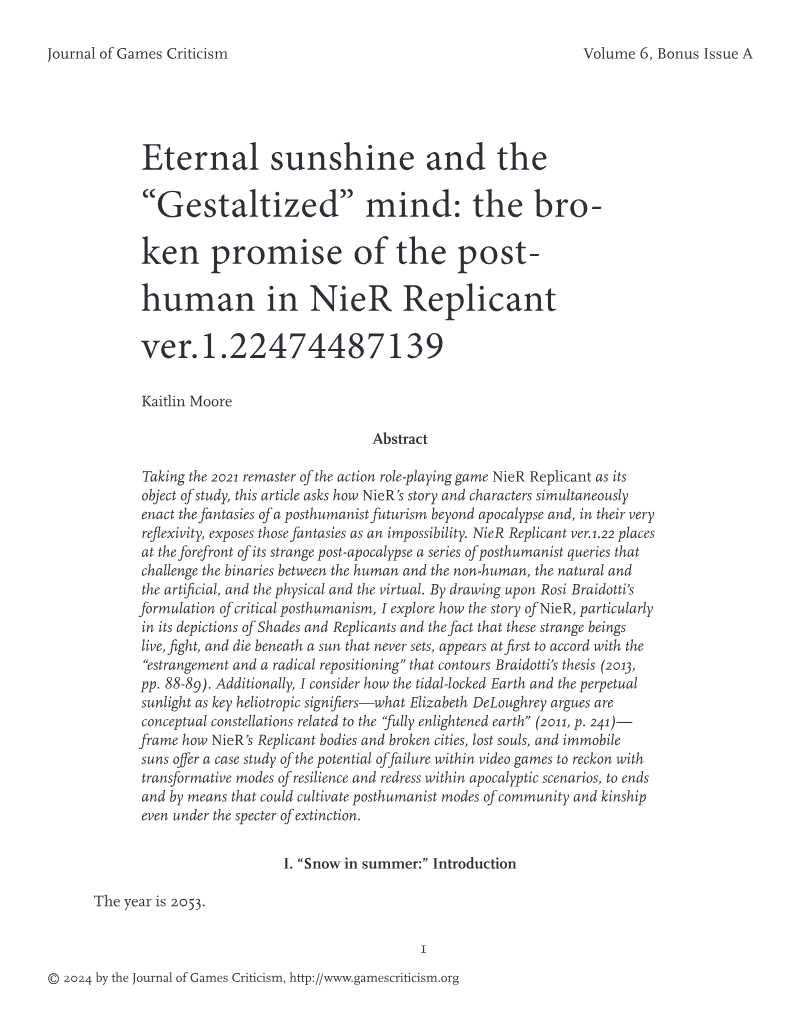
Journal of Games Criticism · 2024
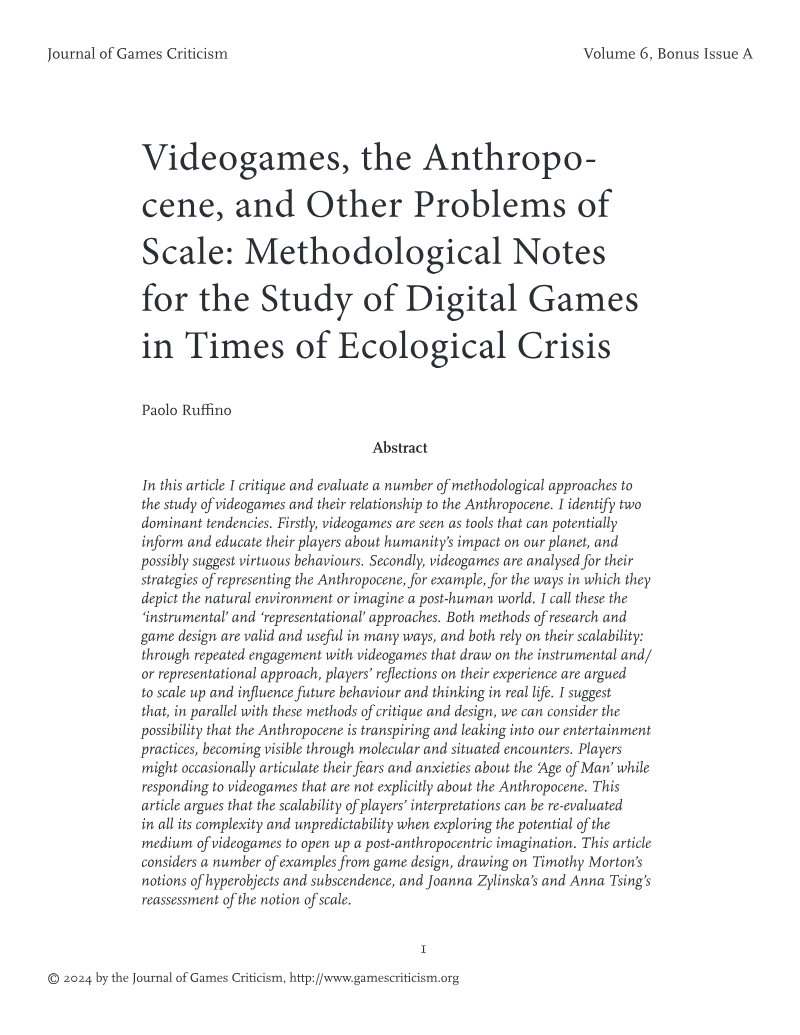
Journal of Games Criticism · 2024
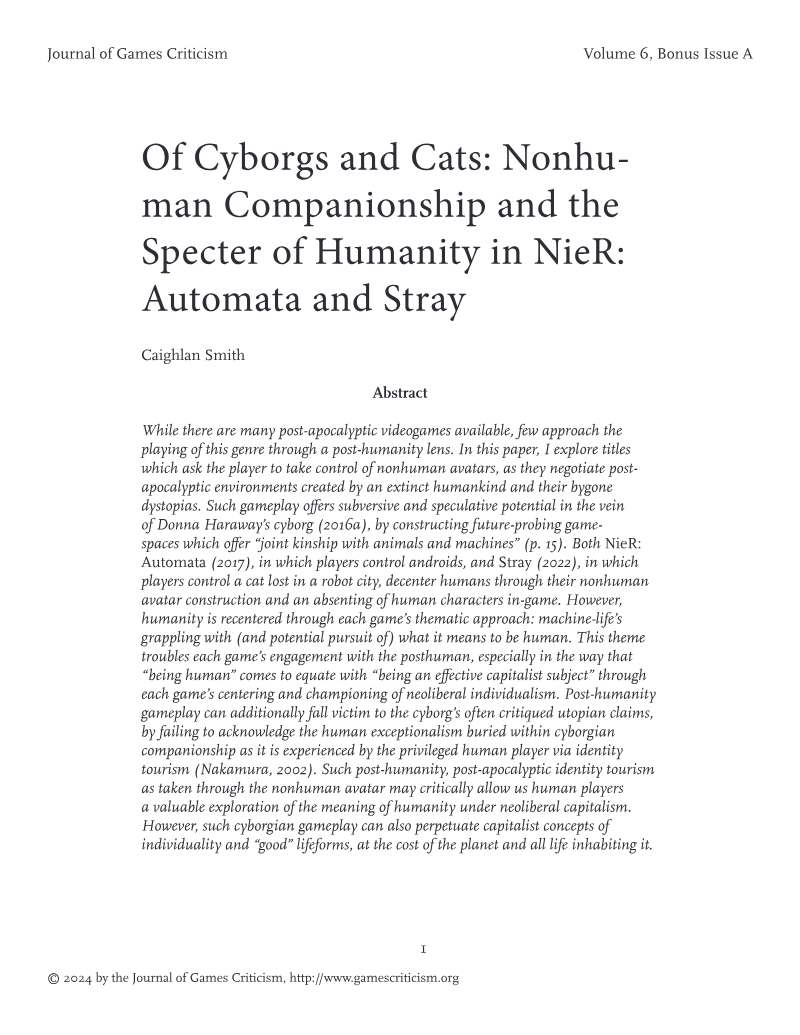
Journal of Games Criticism · 2024
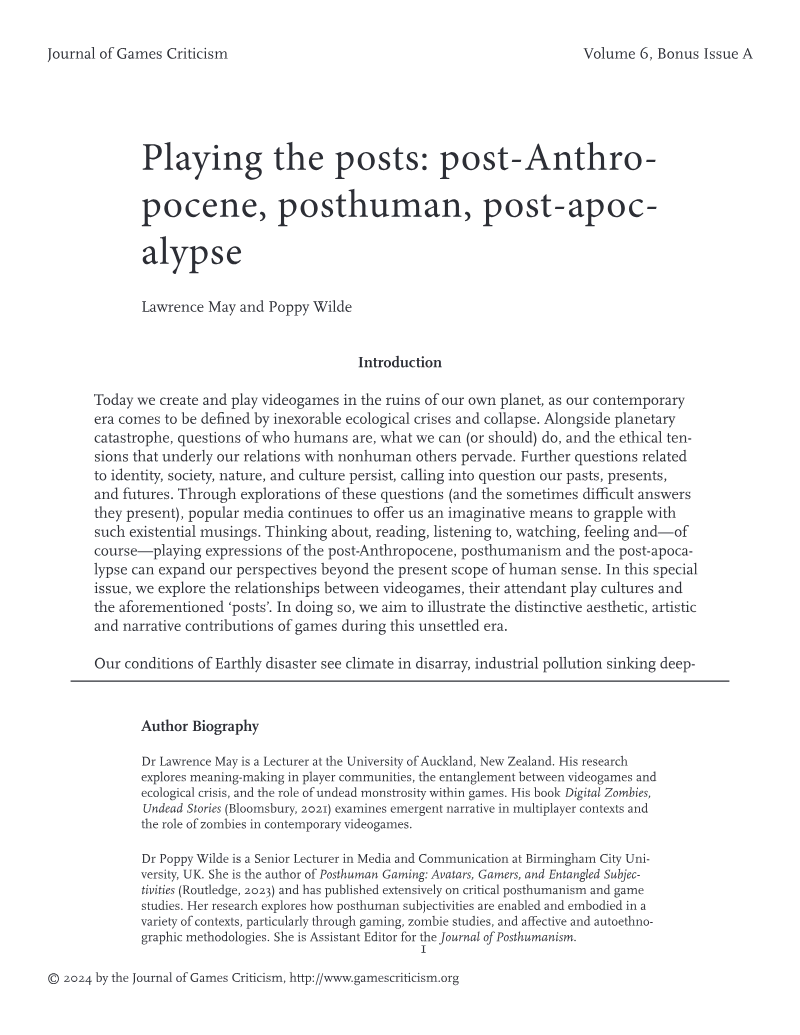
Journal of Games Criticism · 2024
International Journal of Role-Playing · 2026