1 free read left. Create a free account for unlimited reading + AI research.
Create free accountArticle Journal of Games Criticism
1 free read left. Create a free account for unlimited reading + AI research.
Create free accountArticleJournal of Games Criticism
Distilling the key insights…
Explanatory game criticism serves as a structured framework to facilitate tangential learning, addressing the limitations of self-directed education in the digital age. While video games naturally encourage players to explore historical, political, and scientific themes, the lack of curated guidance often leads to reliance on unreliable sources like Wikipedia or superficial information dumps. This analytical approach shifts the focus of criticism from the game’s design or artistic merit to the audience’s understanding of the real-world material referenced within the game. By providing vetted information and academic context, this method acts as a bridge between entertainment and formal inquiry.
The methodology is exemplified by the column Critical Intel, which has provided weekly analysis since 2012. The approach is defined by four core pillars: fostering tangential learning, combating misinformation, engaging readers with real-world issues, and creating enduring reference materials. Rather than critiquing developers, the author targets the reader, using games as a cultural lens to explore complex topics such as military doctrine, feminist theory, and international economics. This process encourages readers to internalize critical thinking skills, effectively modeling academic inquiry through accessible, source-backed writing.
Despite its educational potential, the model faces challenges regarding economic viability in a media landscape that prioritizes viral content over long-form analysis. Furthermore, the effectiveness of this approach relies on the reader’s willingness to engage with provided citations. Nevertheless, by treating games as cultural products rather than isolated consumer goods, explanatory criticism offers a sustainable way to transform gaming experiences into meaningful opportunities for intellectual growth and historical literacy.
Each row is a game or company this document names, each column a document, oldest first. A mark means that document names it. Select a row to see those documents.
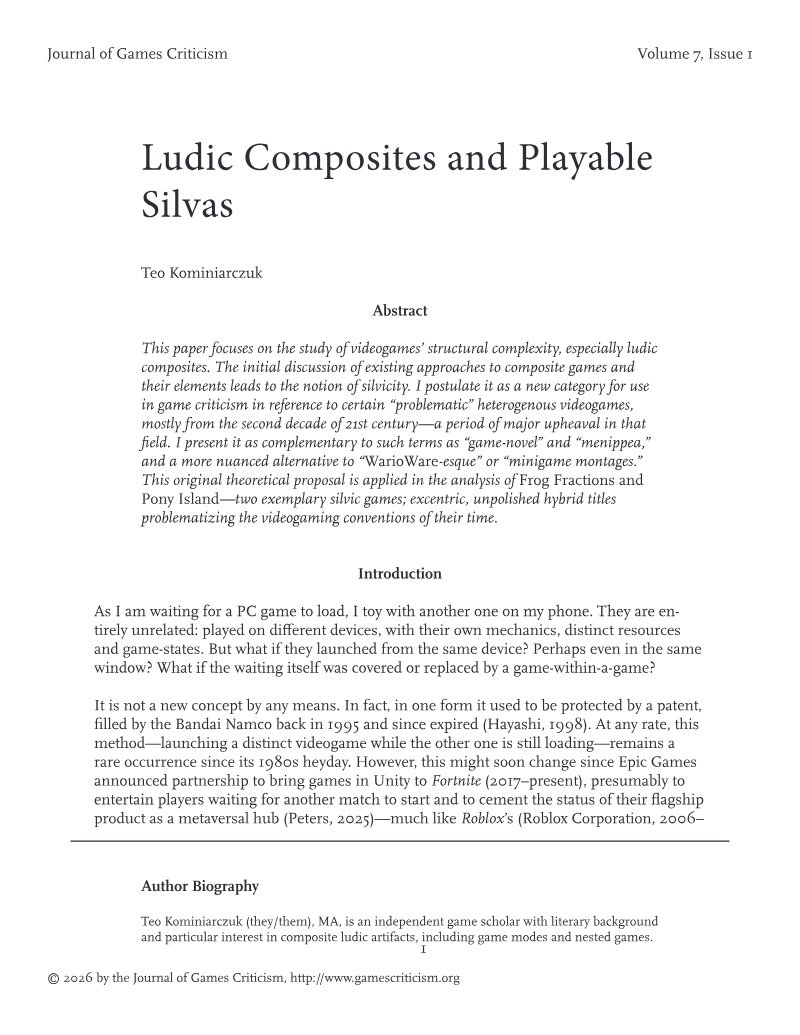
Journal of Games Criticism · 2026
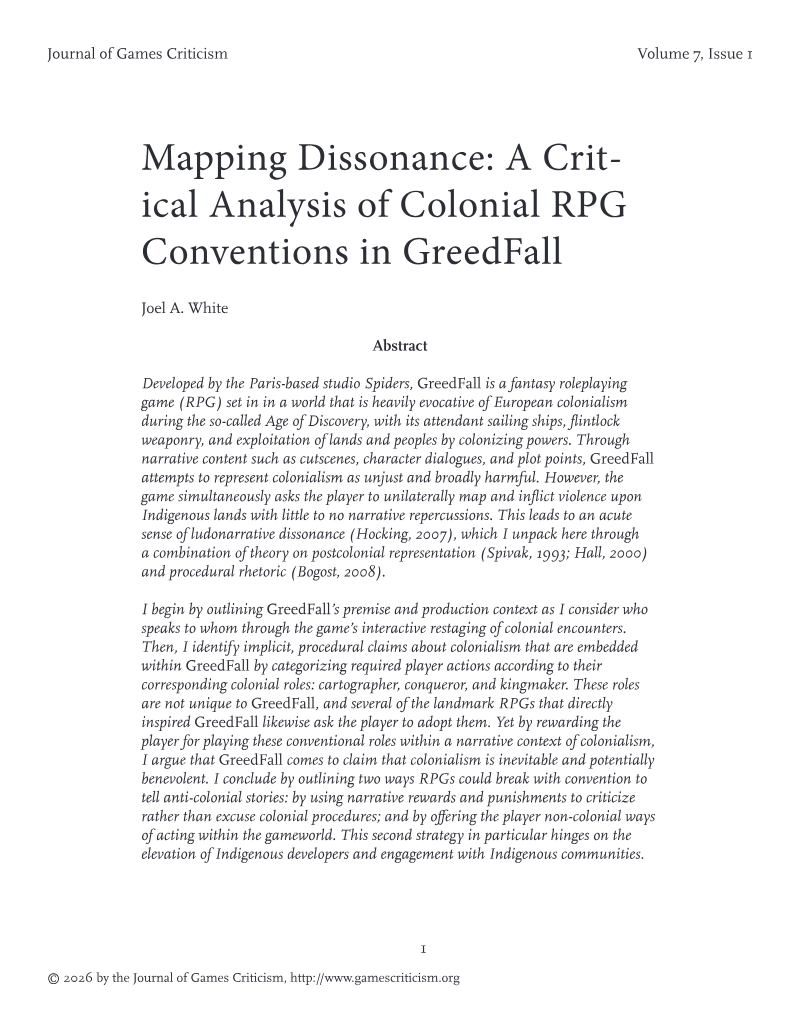
Journal of Games Criticism · 2026
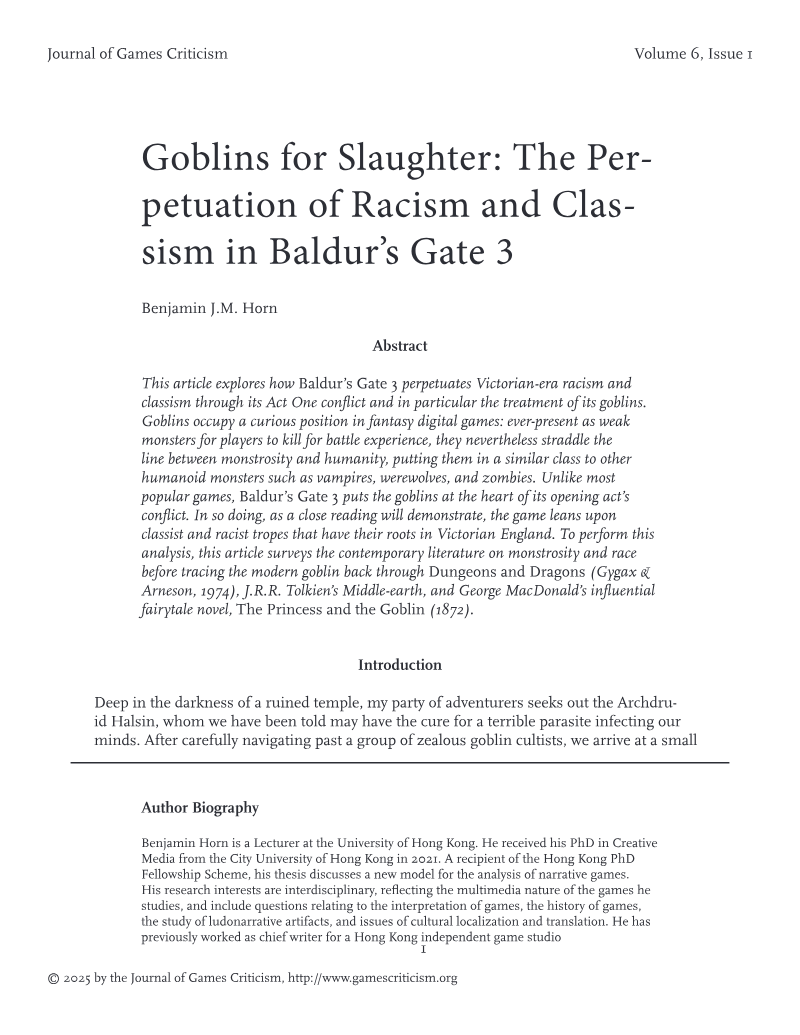
Journal of Games Criticism · 2025
Journal of Games Criticism · 2025



Journal of Games Criticism · 2025



Journal of Games Criticism · 2025
Journal of Games Criticism · 2024
Journal of Games Criticism · 2024
Journal of Games Criticism · 2024
Journal of Games Criticism · 2024
Journal of Games Criticism · 2024
Journal of Games Criticism · 2024
gamevironments · 2026