1 free read left. Create a free account for unlimited reading + AI research.
Create free accountArticle Journal of Games Criticism
1 free read left. Create a free account for unlimited reading + AI research.
Create free accountArticleJournal of Games Criticism
Distilling the key insights…
Newton and the Apple Tree serves as a primary case study for a multidisciplinary framework designed to analyze how fictional characters elicit affective responses in players. By integrating Jaak Panksepp’s theory of seven primary emotions with the specific design conventions of Japanese visual novels, the analysis demonstrates that character affectivity is not merely a byproduct of narrative but a systematically engineered outcome of audiovisual and structural choices. The research posits that elements such as chara-moe aesthetics, internal focalization, and nonlinear temporal progression are strategically coded to trigger distinct neurobiological states, effectively bridging the gap between player immersion and character-driven engagement.
The game functions as a complex genre hybrid, blending melodrama, science fiction, and erotic content to cultivate a multi-layered emotional experience. Rather than treating explicit material as an isolated feature, the design integrates these elements as conditioned rewards within a broader affective architecture. By leveraging dating-simulation tropes alongside sophisticated audio cues, the narrative fosters deep-seated bonds that transcend the immediate gratification typically associated with the eroge genre. This approach shifts the focus from simple consumption to a sustained, neurobiologically grounded interaction between the player and the digital subject.
Ultimately, this model provides a robust lens for understanding how interactive media constructs emotional resonance. By mapping specific stimuli to primary emotions like seeking, care, and lust, the study establishes that the depth of player involvement is directly tied to the game’s temporal and narrative complexity. These findings offer a transferable methodology for evaluating character design and affective engagement across diverse forms of interactive art, highlighting the efficacy of combining affective neuroscience with traditional media analysis to decode the mechanics of player-character relationships.
Each row is a game or company this document names, each column a document, oldest first. A mark means that document names it. Select a row to see those documents.
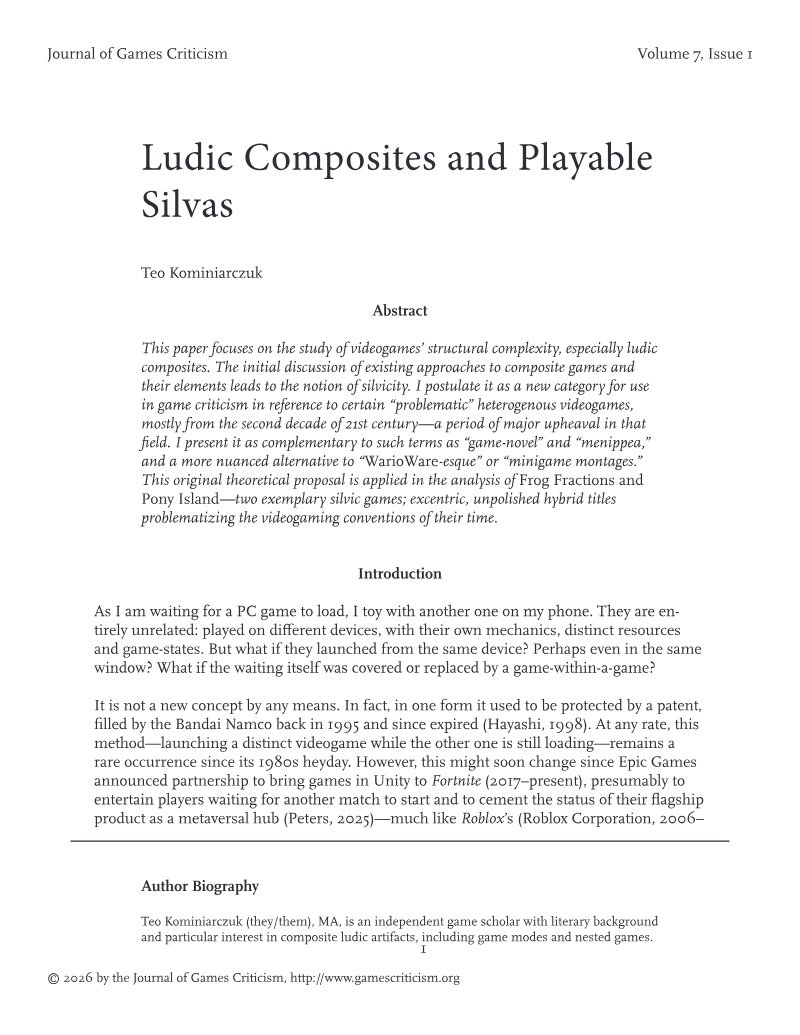
Journal of Games Criticism · 2026
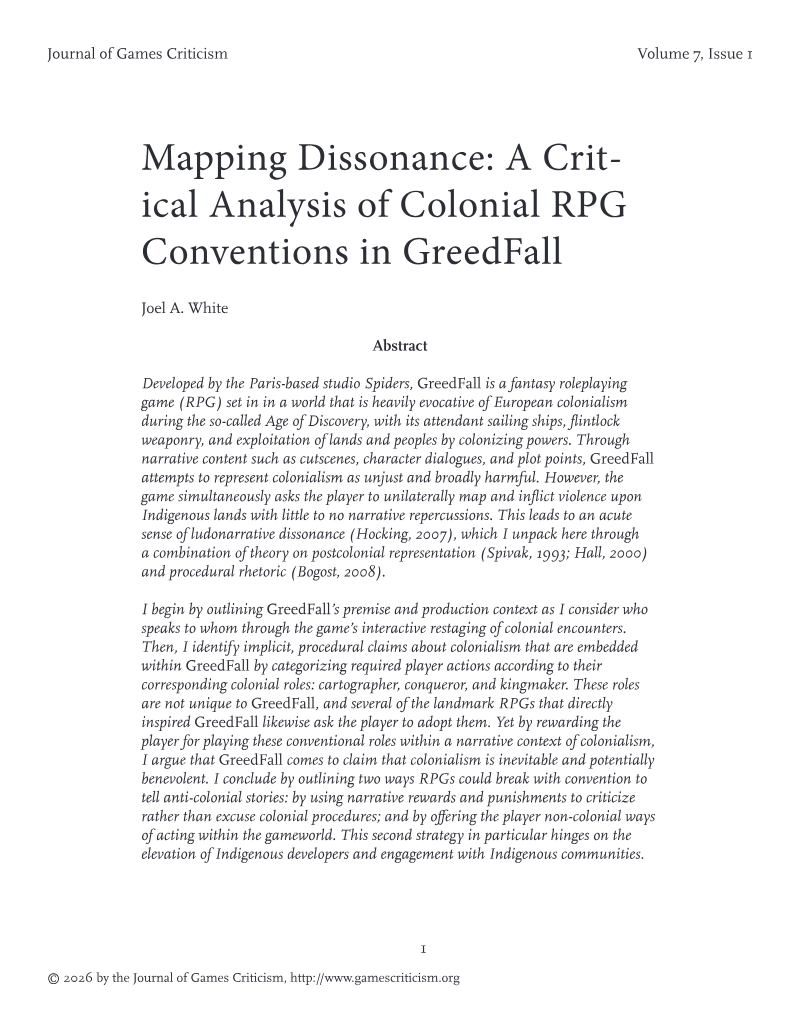
Journal of Games Criticism · 2026
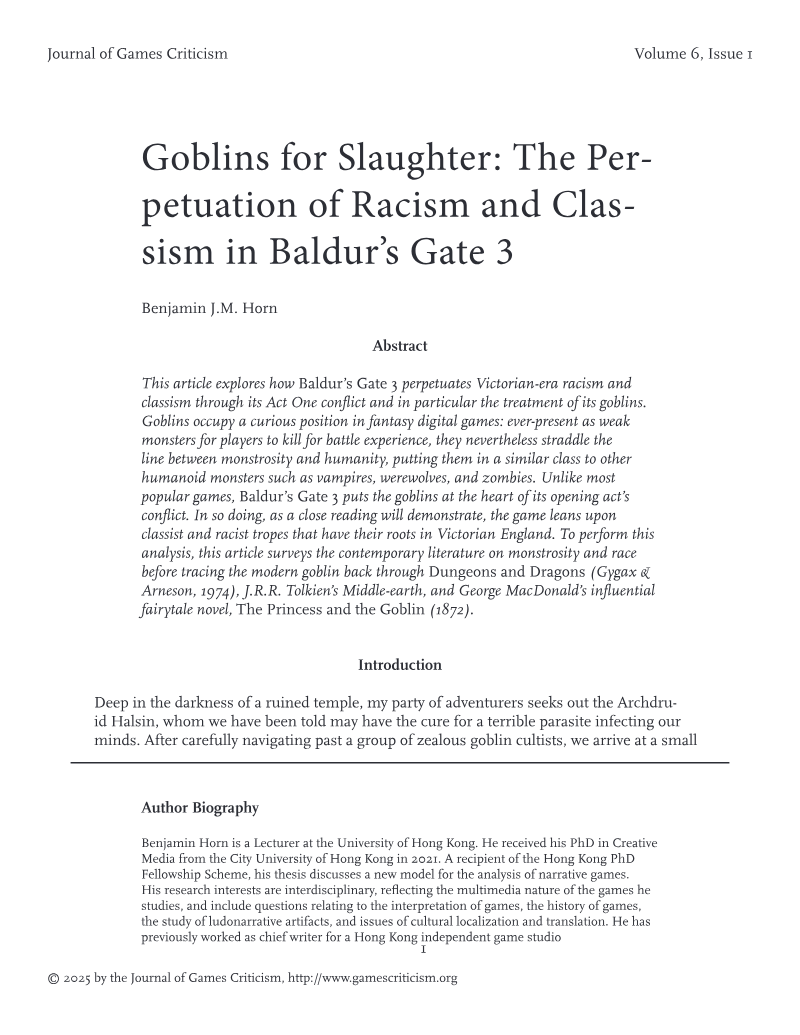
Journal of Games Criticism · 2025
Journal of Games Criticism · 2025
Journal of Games Criticism · 2025

Journal of Games Criticism · 2025

Journal of Games Criticism · 2024
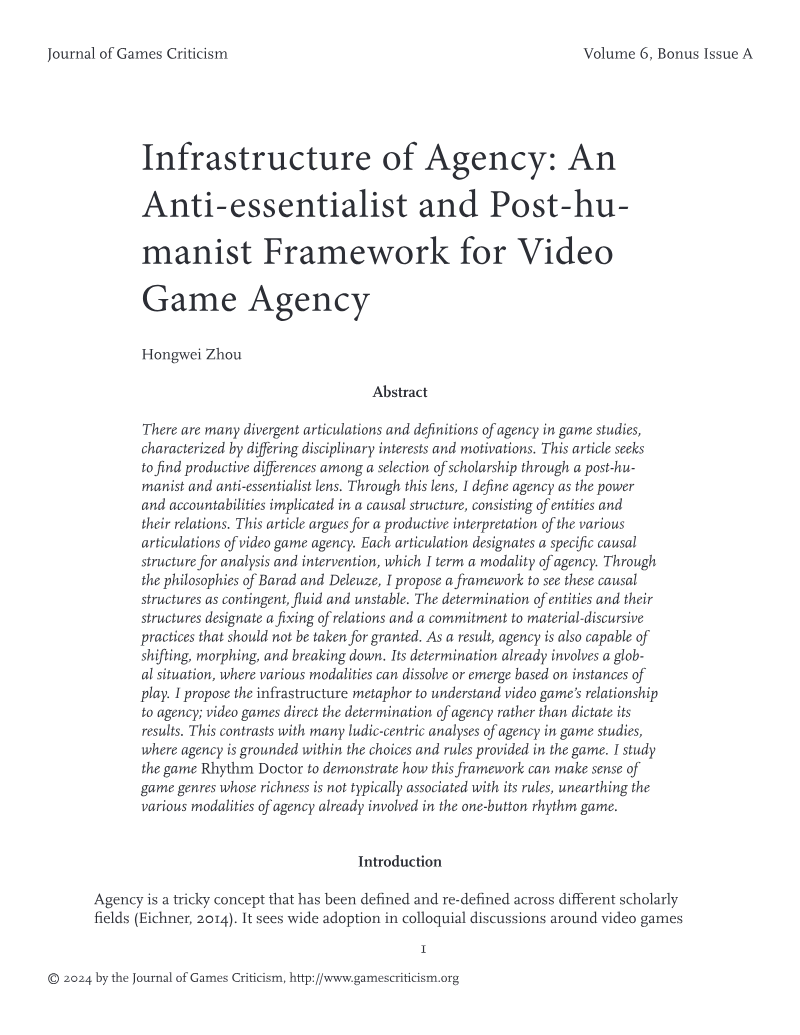
Journal of Games Criticism · 2024

Journal of Games Criticism · 2024
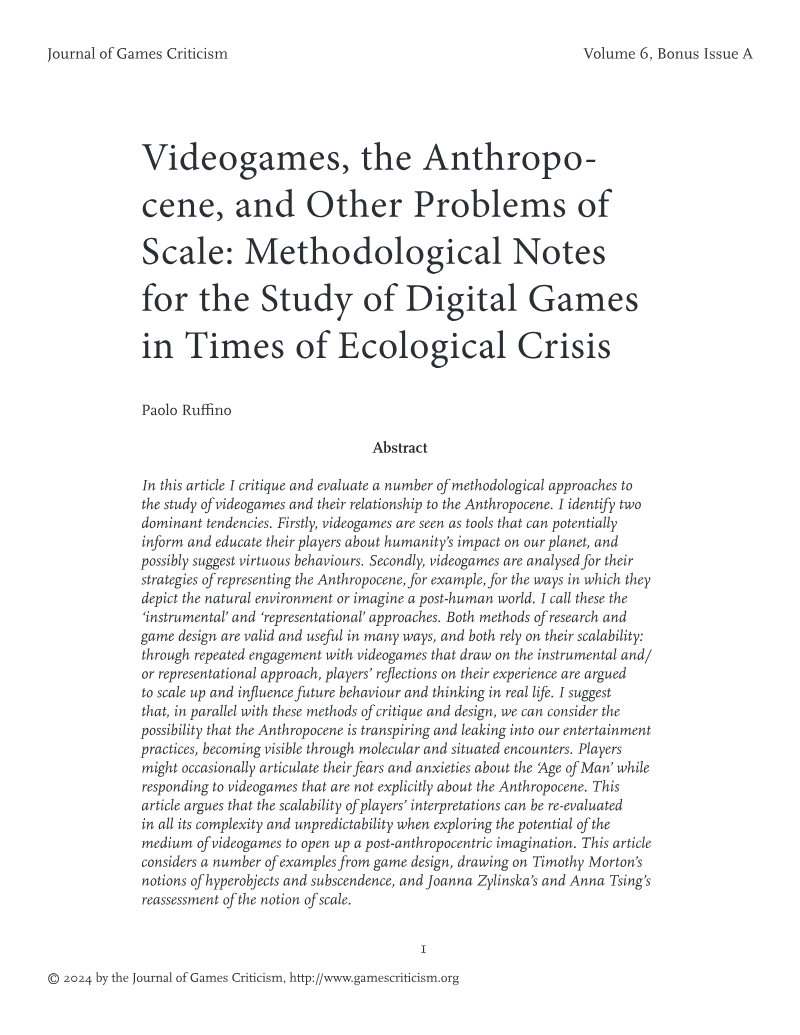
Journal of Games Criticism · 2024
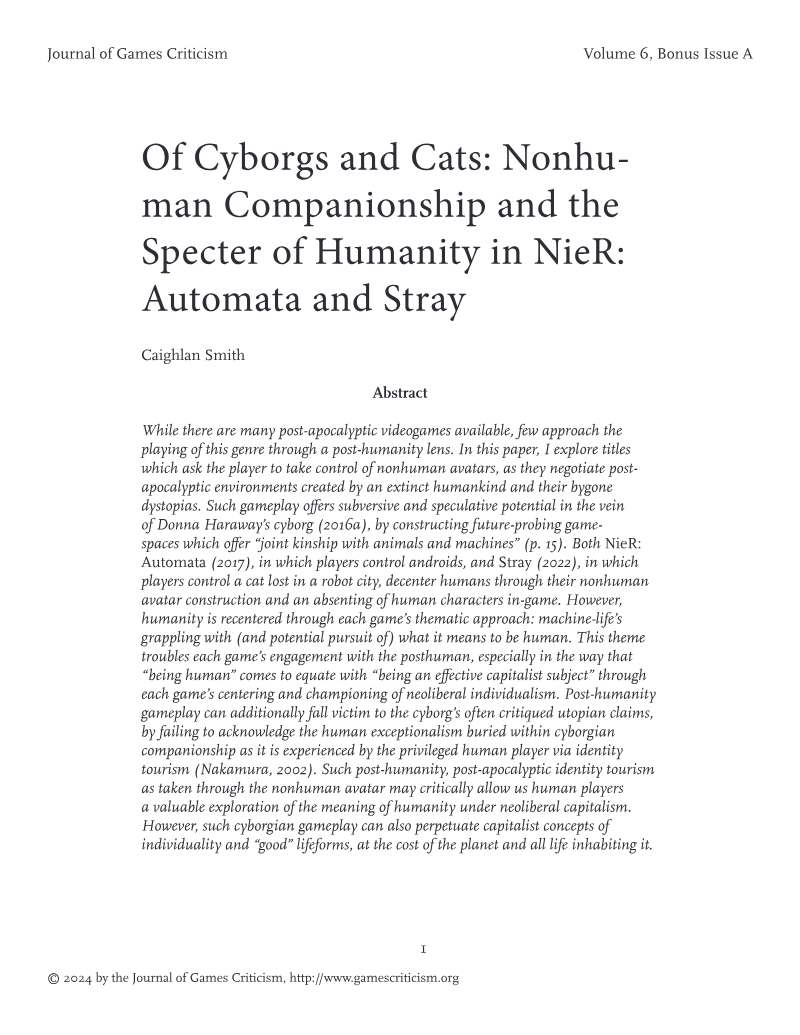
Journal of Games Criticism · 2024
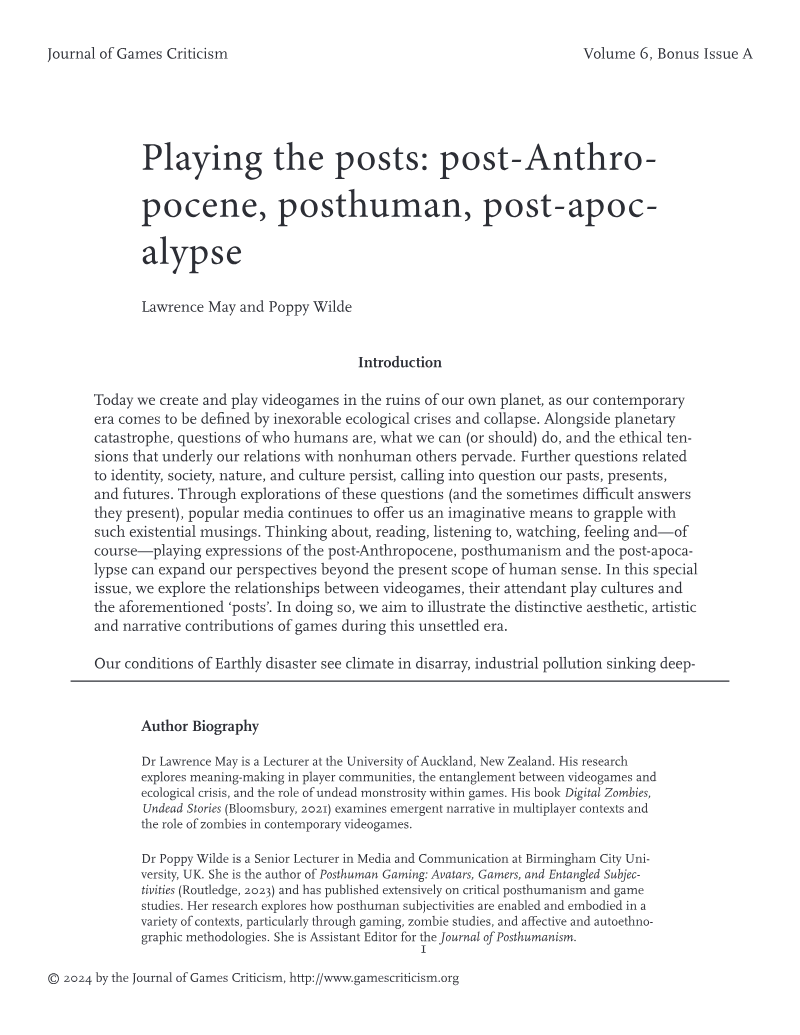
Journal of Games Criticism · 2024
Journal of Games Criticism