1 free read left. Create a free account for unlimited reading + AI research.
Create free accountArticle Journal of Games Criticism
1 free read left. Create a free account for unlimited reading + AI research.
Create free accountArticleJournal of Games Criticism
Distilling the key insights…
The uncanny valley functions as a critical psychological boundary within modern interactive entertainment, serving to preserve the essential distinction between virtual fiction and objective reality. By maintaining a perceptible gap between digital representations and human life, this effect sustains the magic circle of play, a protected space that allows users to engage in aggressive or masochistic gameplay without the moral weight or guilt inherent to real-world actions. The industry’s ongoing pursuit of absolute photorealism is therefore a misguided objective that threatens to dissolve this necessary distance, potentially undermining the very foundation of the gaming experience.
Player engagement with digital environments frequently mirrors complex sado-masochistic dynamics, where pleasure is derived from the ritualistic, rule-bound struggle to exert control over challenging or punishing gameplay. This interaction facilitates a form of self-transcendence, enabling individuals to temporarily detach from their corporeal existence through the mediation of an avatar. By applying Freudian frameworks to these digital interactions, it becomes clear that the player’s satisfaction is deeply rooted in the controlled navigation of difficulty and the psychological safety provided by the uncanny.
Ultimately, the uncanny valley acts as a structural safeguard for the current nature of gaming. If graphical fidelity reaches a point where virtual entities are indistinguishable from living beings, the psychological buffer that permits the safe exploration of transgressive or difficult themes may collapse. The preservation of this uncanny gap is not a technical failure but a vital component of the medium, ensuring that games remain a distinct, transformative space for human experience rather than a direct, and potentially problematic, reflection of reality.
Journal of Games Criticism · 2026
Journal of Games Criticism · 2026
Journal of Games Criticism · 2025
Journal of Games Criticism · 2025



Journal of Games Criticism · 2025



Journal of Games Criticism · 2025
Journal of Games Criticism · 2024
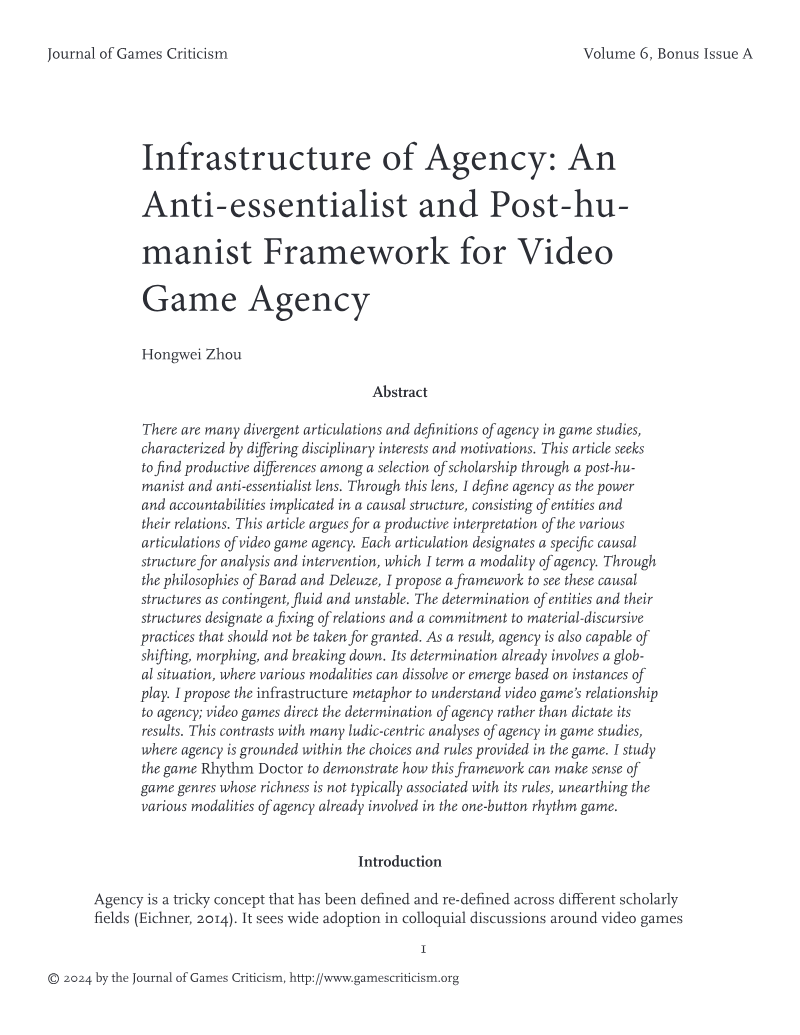
Journal of Games Criticism · 2024
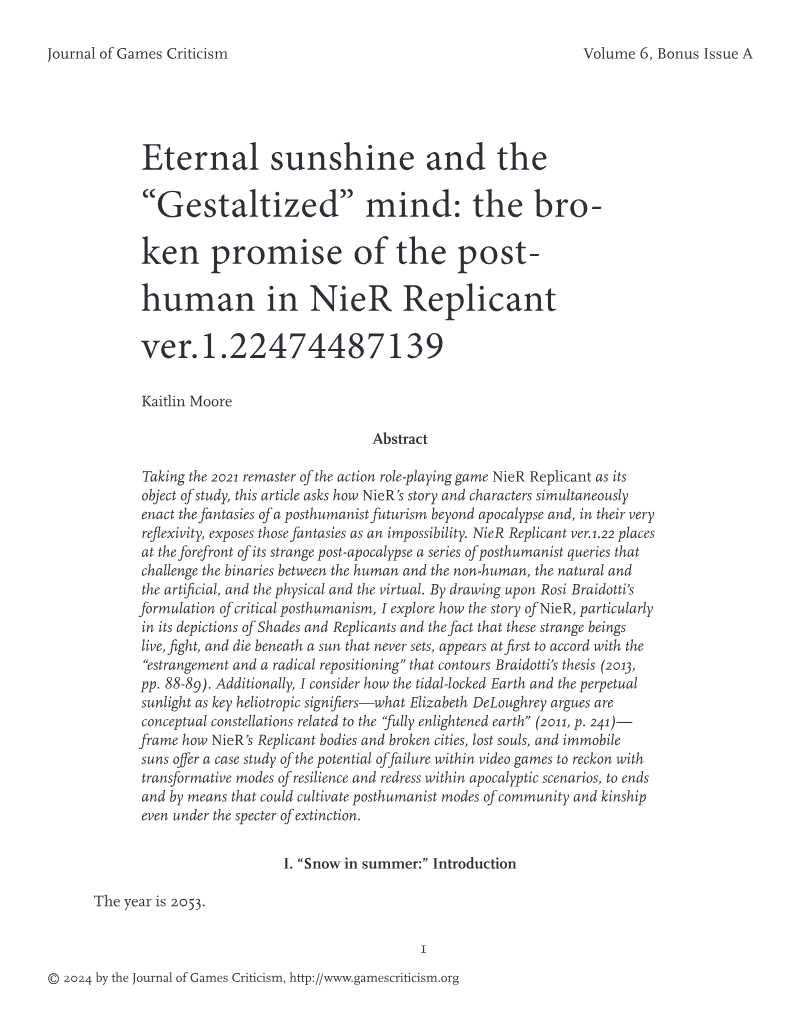
Journal of Games Criticism · 2024
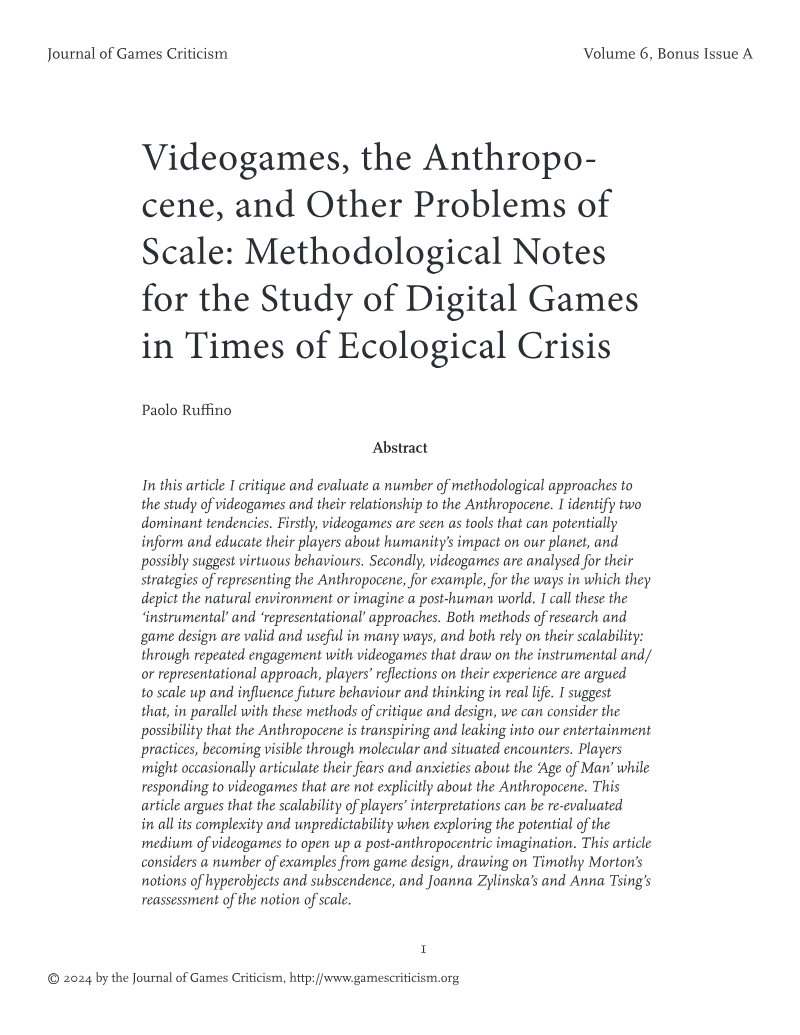
Journal of Games Criticism · 2024
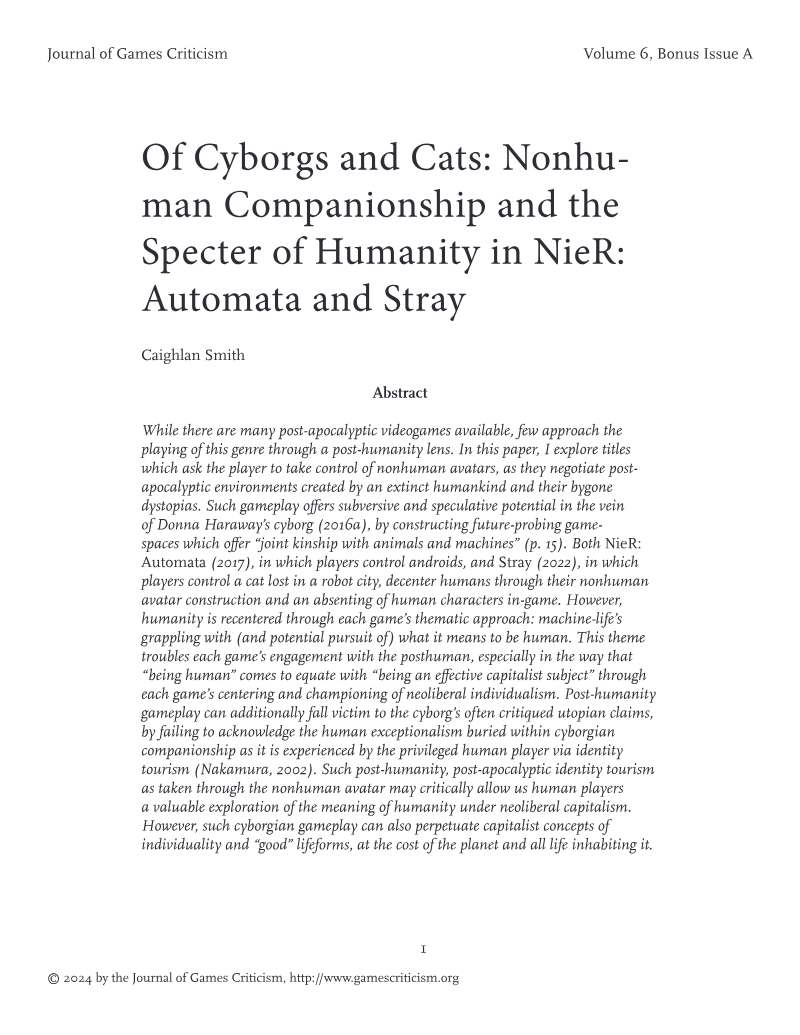
Journal of Games Criticism · 2024
Journal of Games Criticism · 2024
International Journal of Role-Playing · 2026