1 free read left. Create a free account for unlimited reading + AI research.
Create free accountArticle Journal of Games Criticism
1 free read left. Create a free account for unlimited reading + AI research.
Create free accountArticleJournal of Games Criticism
Distilling the key insights…
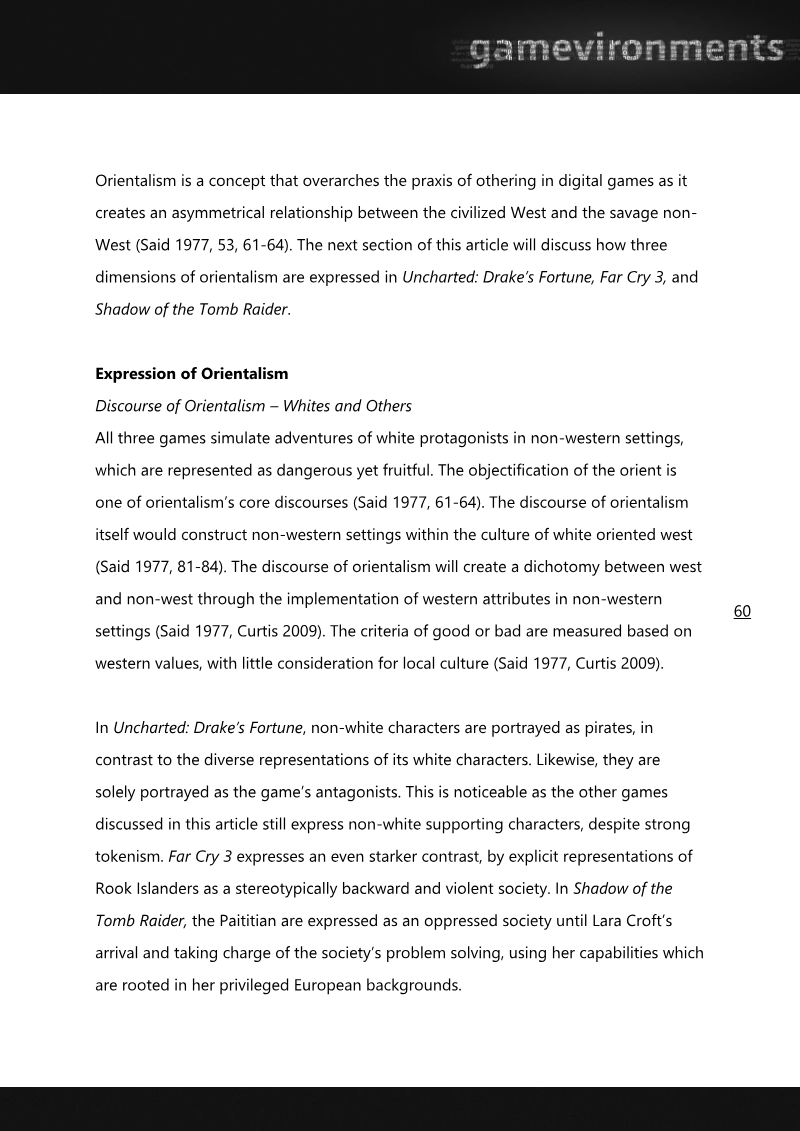
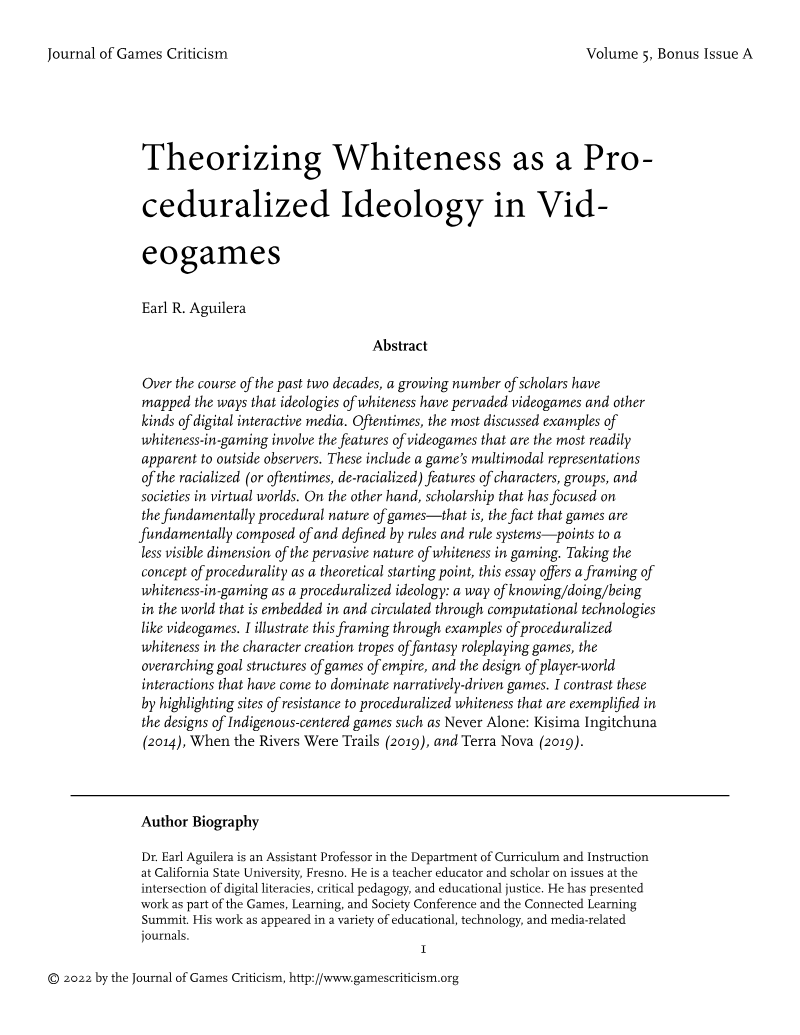
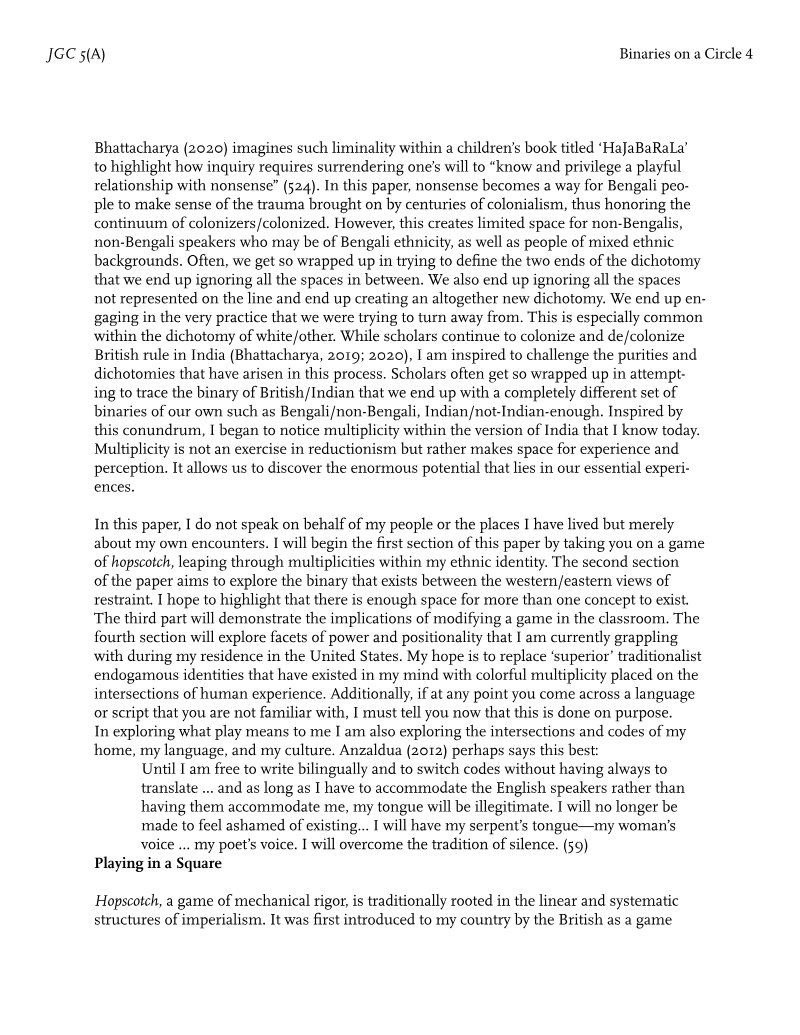
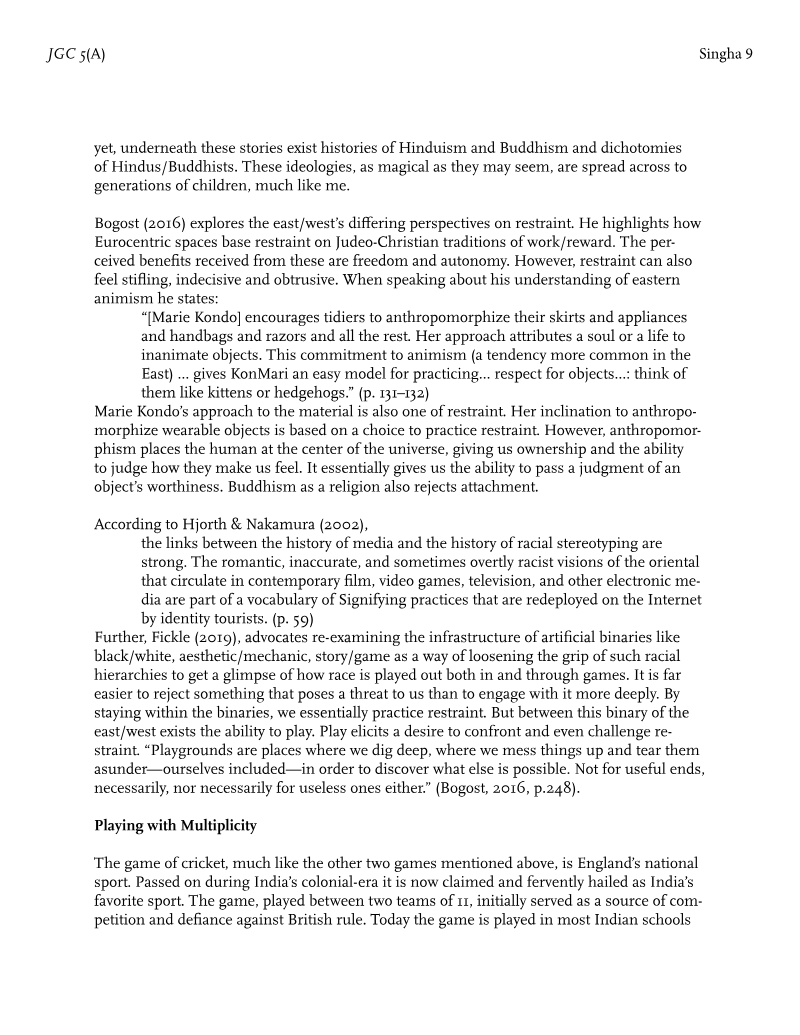
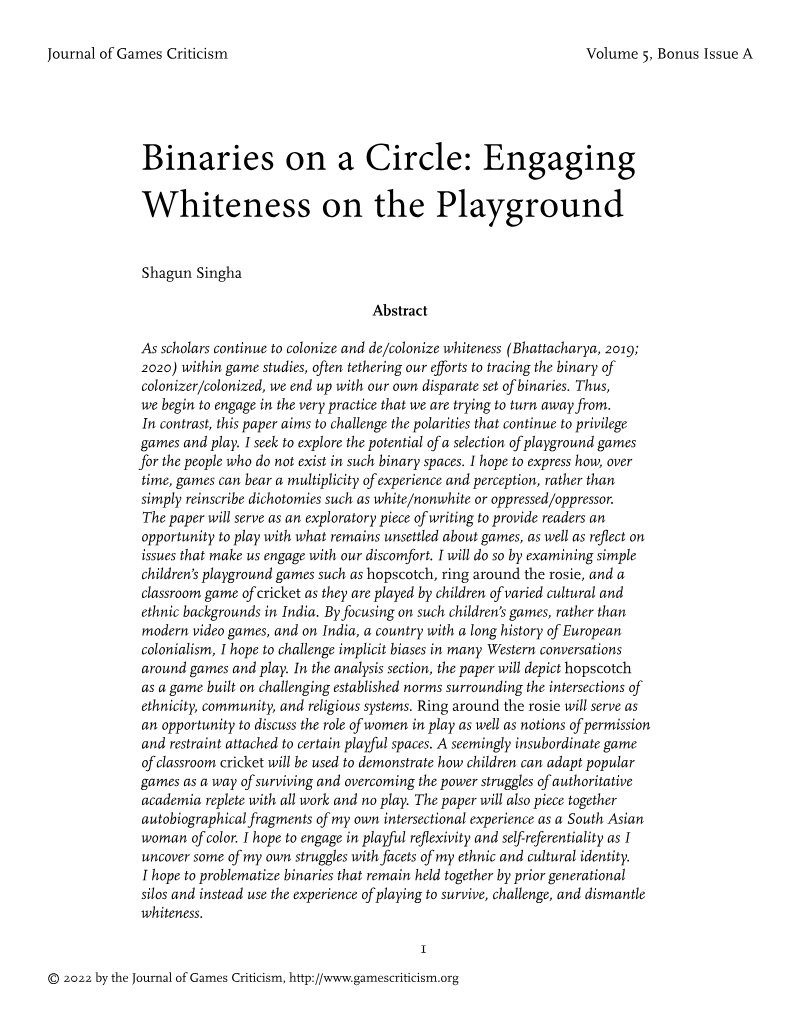
This collection of scholarly essays examines the pervasive influence of Whiteness and coloniality within the global video game industry, arguing that gaming functions as a colonial project that reinforces European racial hierarchies. The primary thesis posits that Whiteness is not merely a demographic category but a structural, historically shifting set of oppressive practices that dictate game design, economic decision-making, and academic discourse. By framing games as "racial pedagogical zones," the analysis highlights how the industry’s reliance on a "White default" character and Eurocentric narratives serves to marginalize non-White populations and maintain unequal power dynamics.
The scope of this work is international, spanning the intersections of game studies, digital culture, and critical race theory. The contributors utilize a variety of methodologies, including qualitative analysis of game mechanics, ethnographic reflection, and case studies of specific titles and platforms. Key findings indicate that structural Whiteness impacts the industry through the "racializing logic of capital," where diverse content is frequently dismissed as a financial risk, and through the normalization of White protagonists, which essentializes non-White identities. The research also identifies how digital distribution platforms and game development processes perpetuate colonialist expansion and domination.
Beyond documenting systemic exclusion, the collection emphasizes the importance of "surviving Whiteness" as a form of resistance. It highlights the efforts of Black, Indigenous, and other creators of color who utilize self-determined praxis to challenge hegemonic norms. By showcasing alternative design practices and critical modding, the authors argue for a move beyond mere survival toward a reimagining of gaming culture that dismantles colonial structures. Ultimately, the work serves as an archival resource for understanding how racial inequalities are institutionalized in digital spaces and provides a framework for future scholarship to address these deep-seated disparities.
Journal of Games Criticism · 2026
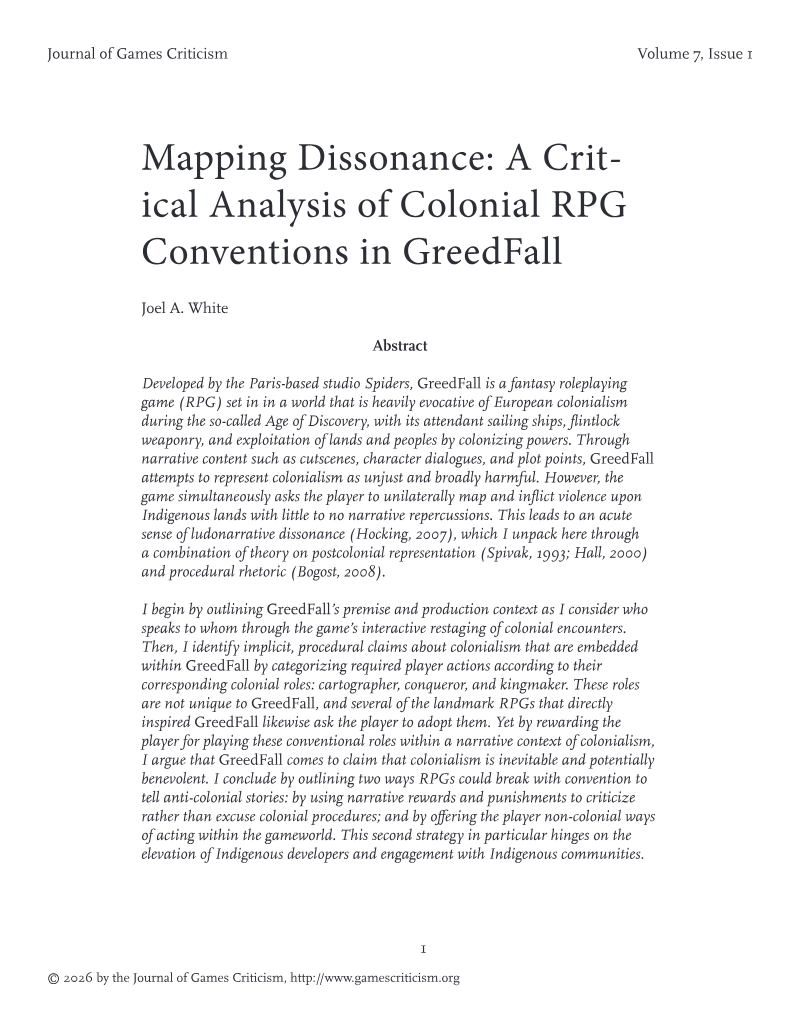
Journal of Games Criticism · 2026
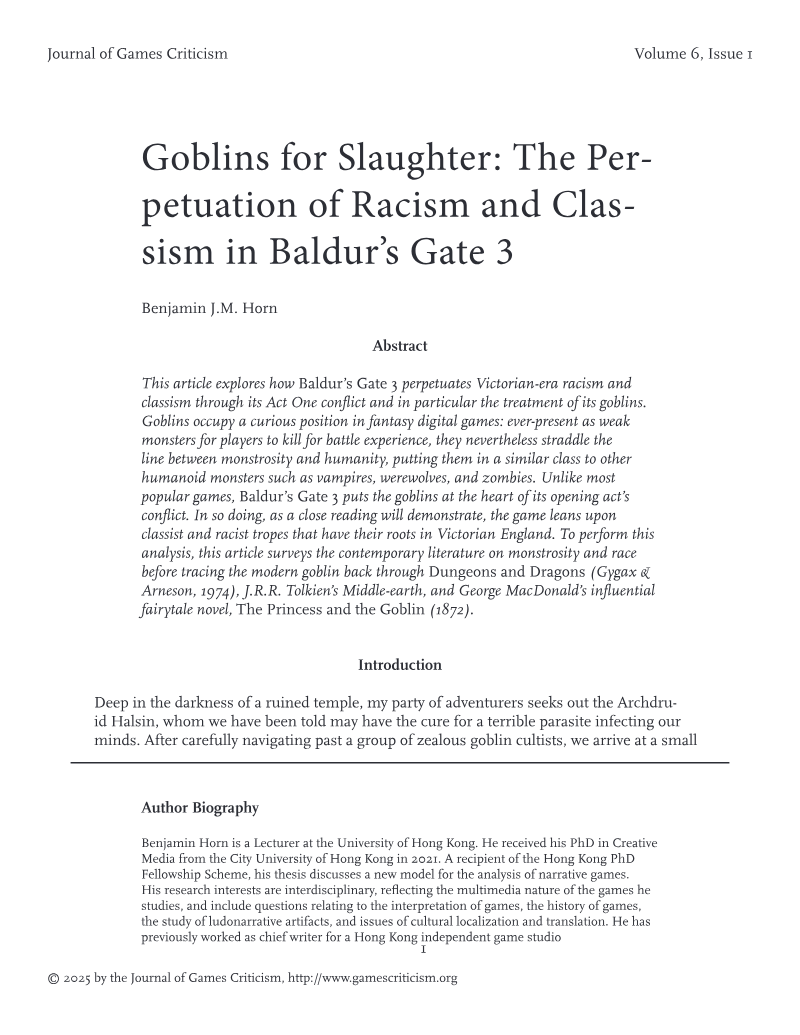
Journal of Games Criticism · 2025
Journal of Games Criticism · 2025



Journal of Games Criticism · 2025



Journal of Games Criticism · 2025
Journal of Games Criticism · 2024
Journal of Games Criticism · 2024
Journal of Games Criticism · 2024
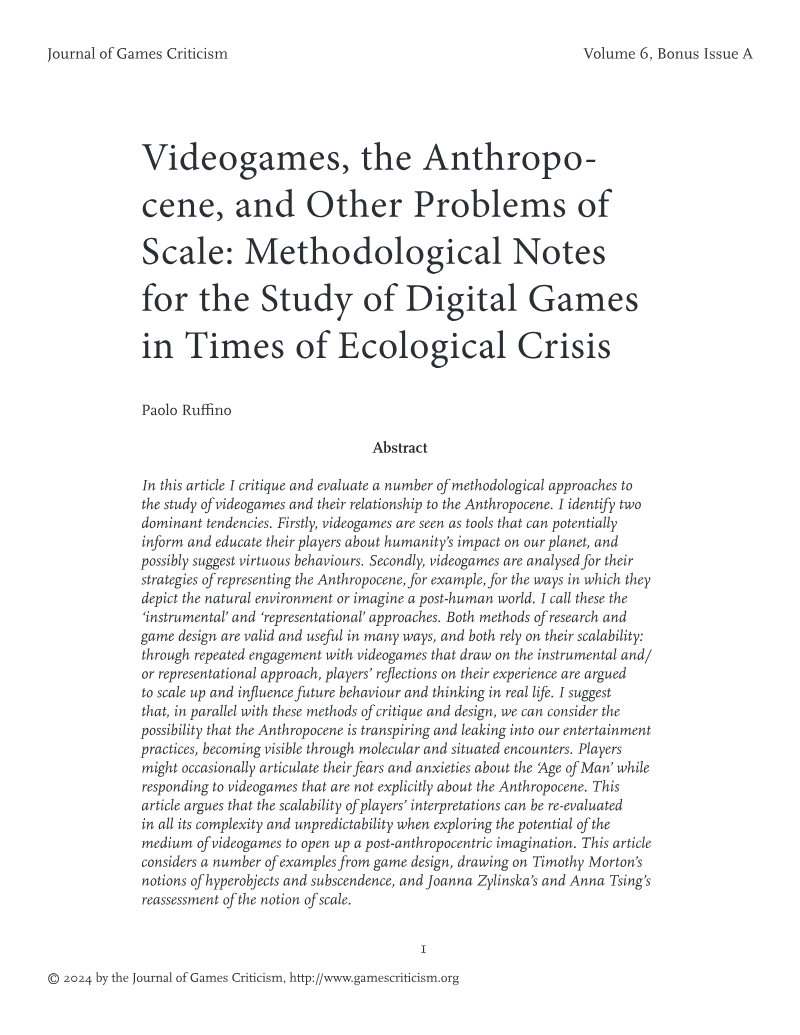
Journal of Games Criticism · 2024
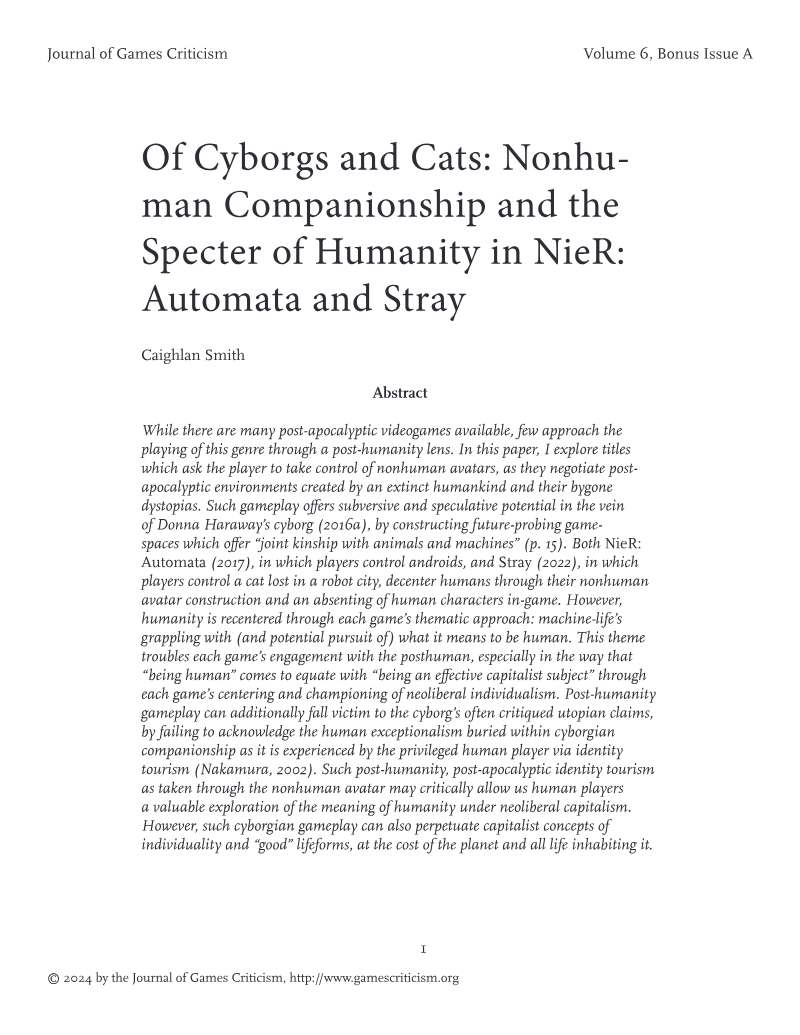
Journal of Games Criticism · 2024
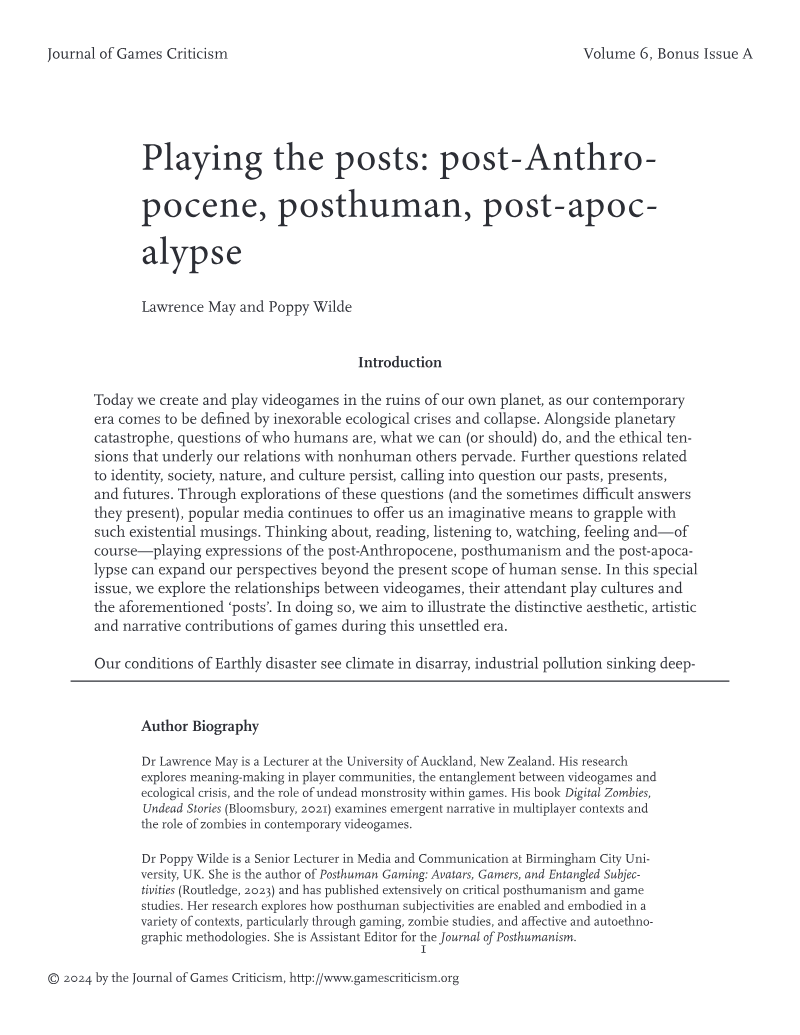
Journal of Games Criticism · 2024
National Taipei University of Technology · 2021