1 free read left. Create a free account for unlimited reading + AI research.
Create free accountArticle Journal of Games Criticism
1 free read left. Create a free account for unlimited reading + AI research.
Create free accountArticleJournal of Games Criticism
Distilling the key insights…
Videoludic trauma represents a significant departure from traditional understandings of play as a safe, bounded activity, characterizing instead those instances where horror games transcend the reality-fiction divide to leave lasting emotional imprints. By integrating trauma studies, bleed theory, and phenomenology, this analytical framework identifies how specific interactive experiences can overwhelm players, resulting in non-cathartic, persistent psychological distress. Unlike conventional horror that relies on positive discomfort, these experiences function through a destabilizing feedback loop where the game’s atmosphere and mechanics induce a state of hypervigilance that lingers well beyond the conclusion of the play session.
The survival horror title Cry of Fear serves as the primary case study for this phenomenon, illustrating how design choices—such as the subversion of audio-visual cues, the omission of warning systems, and the implementation of visceral first-person combat—externalize the protagonist’s suicidal ideation and psychological fragmentation. By forcing players into a position of complicity with the protagonist’s existential angst, the game creates an intense space of affective vulnerability. This process effectively collapses the distance between the player and the avatar, transforming the act of play into a deeply distressing encounter that challenges the boundaries of traditional horror flow.
Ultimately, the study posits that videoludic trauma is a profoundly subjective experience, shaped by the intersection of narrative, sensory input, and individual player perception. While the analysis focuses on the specific mechanics of Cry of Fear, it advocates for a broader, autoethnographic approach to future research. Understanding how these digital narratives interact with external historical and cultural contexts remains essential, as the capacity for games to inflict genuine psychological discomfort necessitates a more nuanced, embodied methodology for evaluating the long-term impact of interactive media on the human psyche.
Journal of Games Criticism · 2026
Journal of Games Criticism · 2026
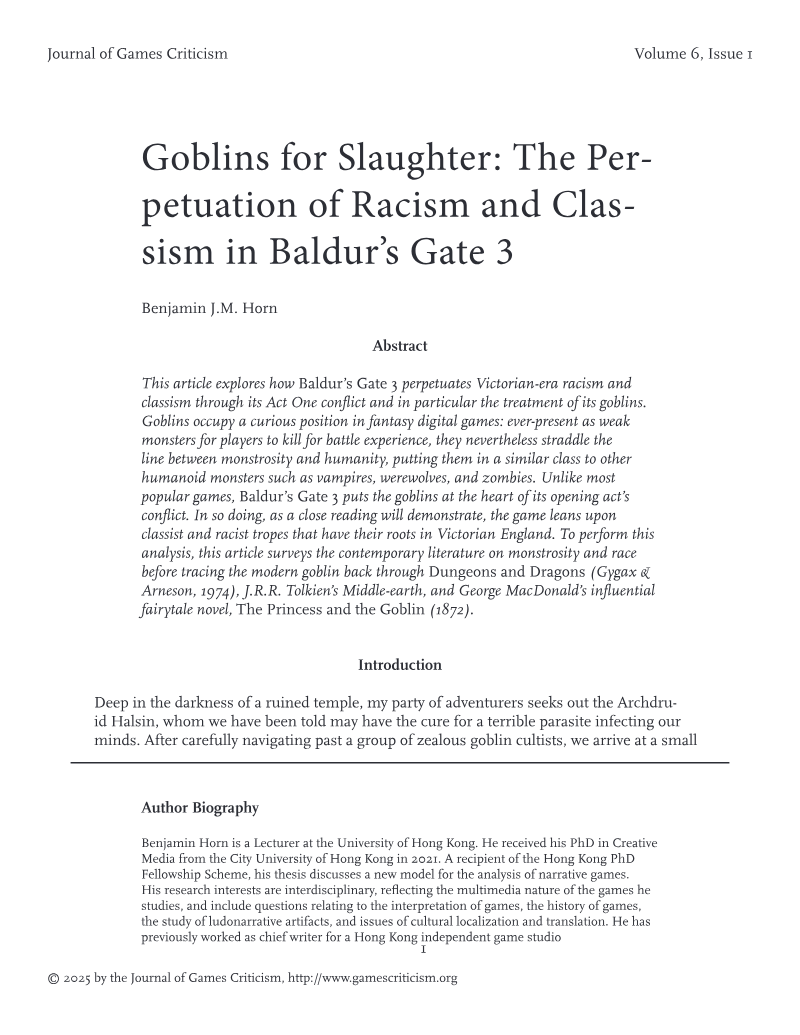
Journal of Games Criticism · 2025
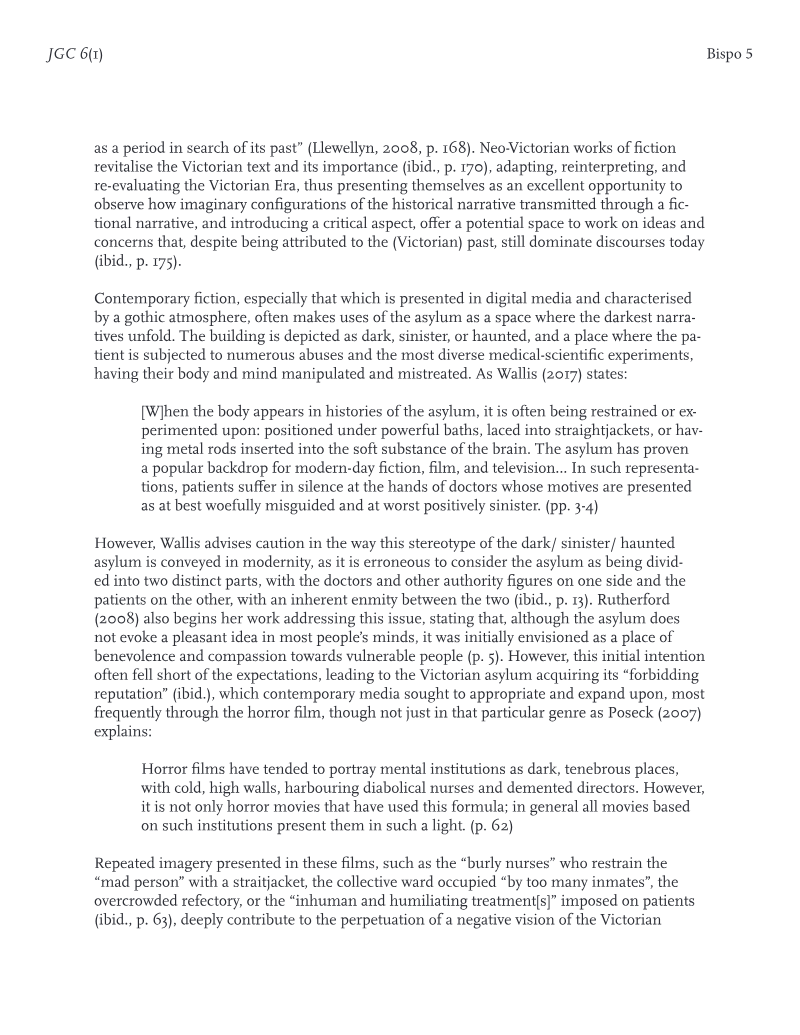
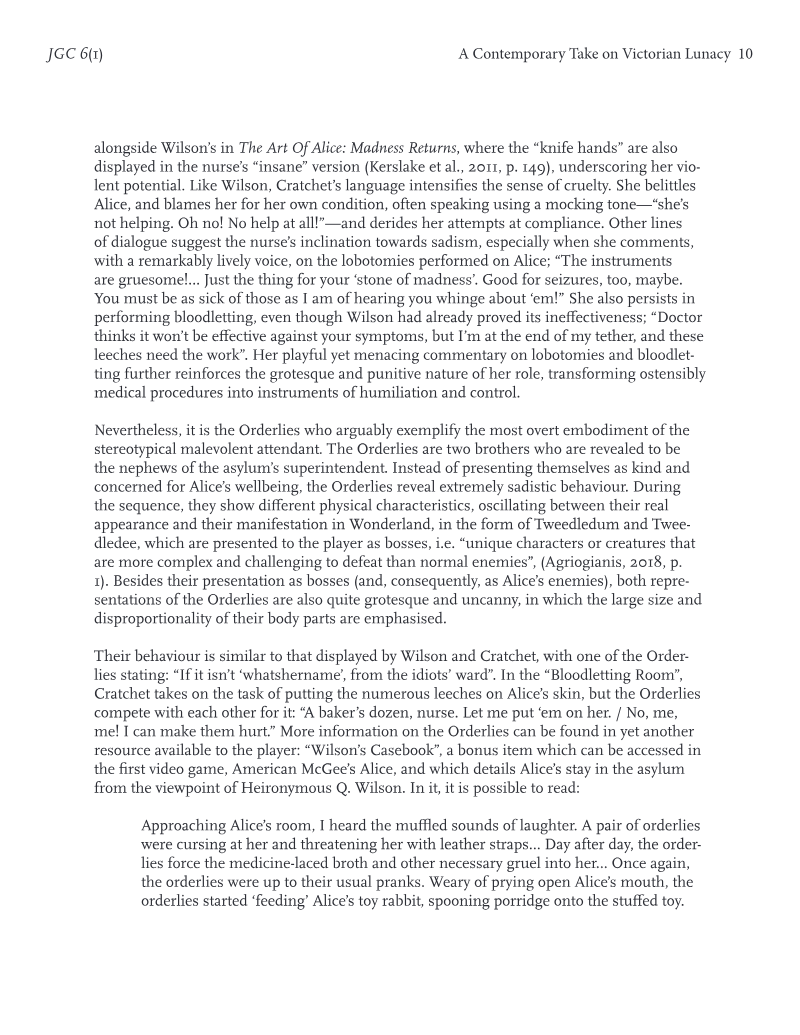
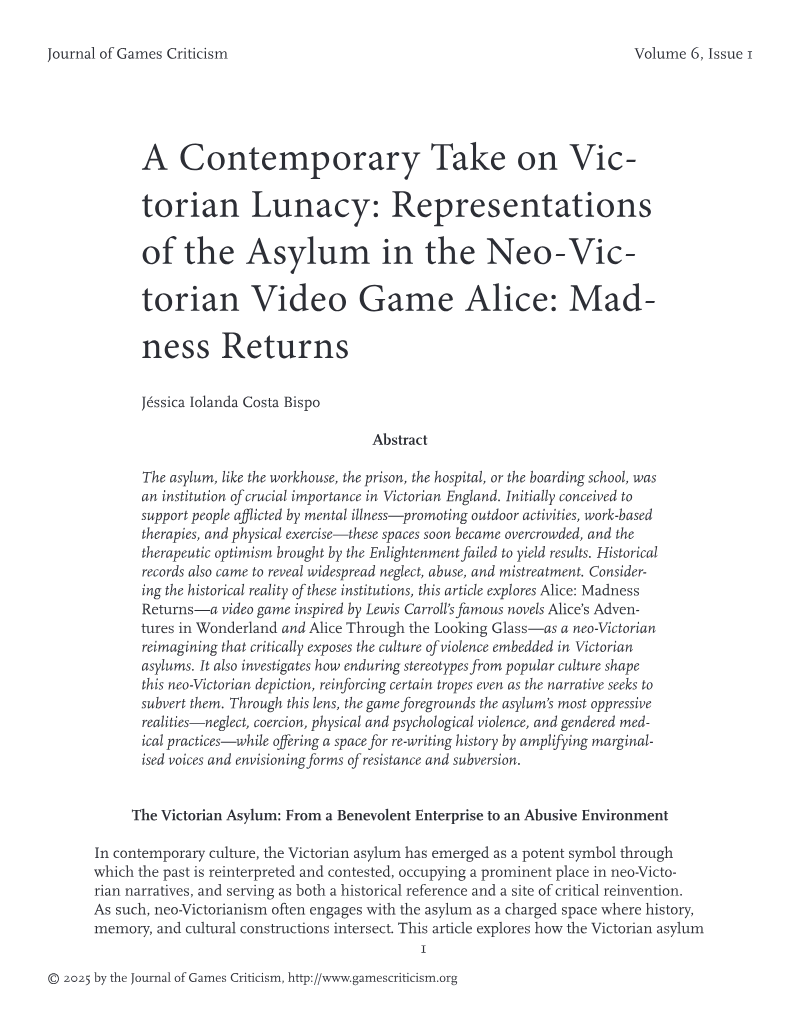
Journal of Games Criticism · 2025



Journal of Games Criticism · 2025



Journal of Games Criticism · 2025

Journal of Games Criticism · 2024
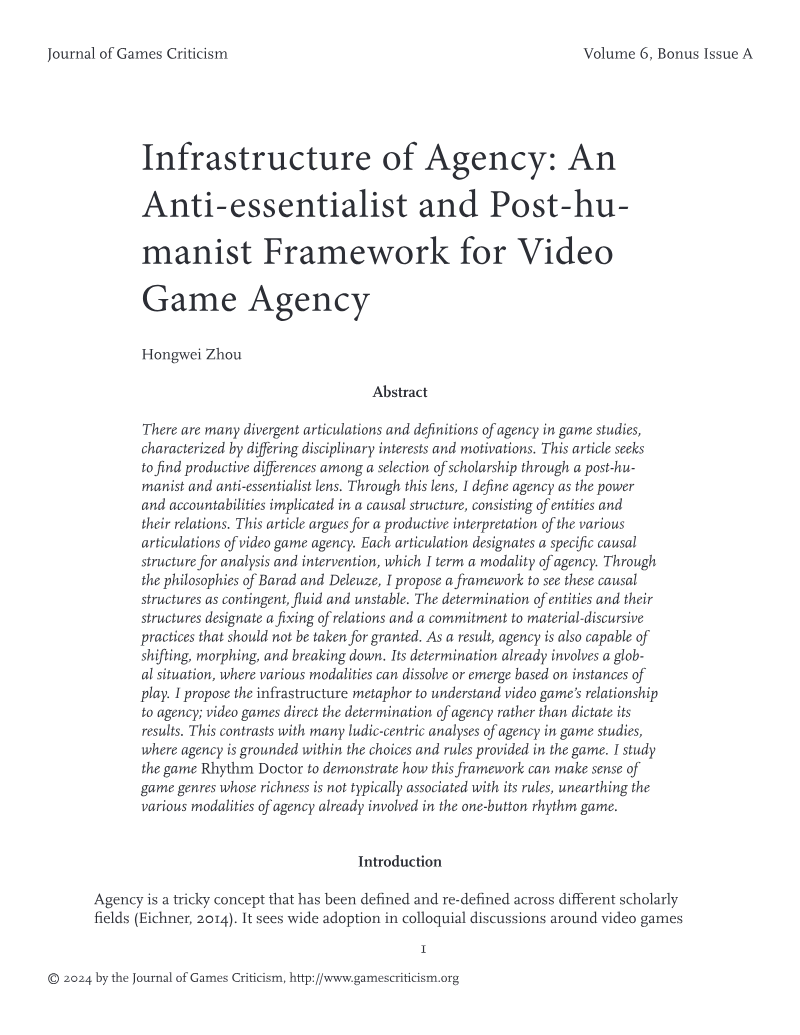
Journal of Games Criticism · 2024
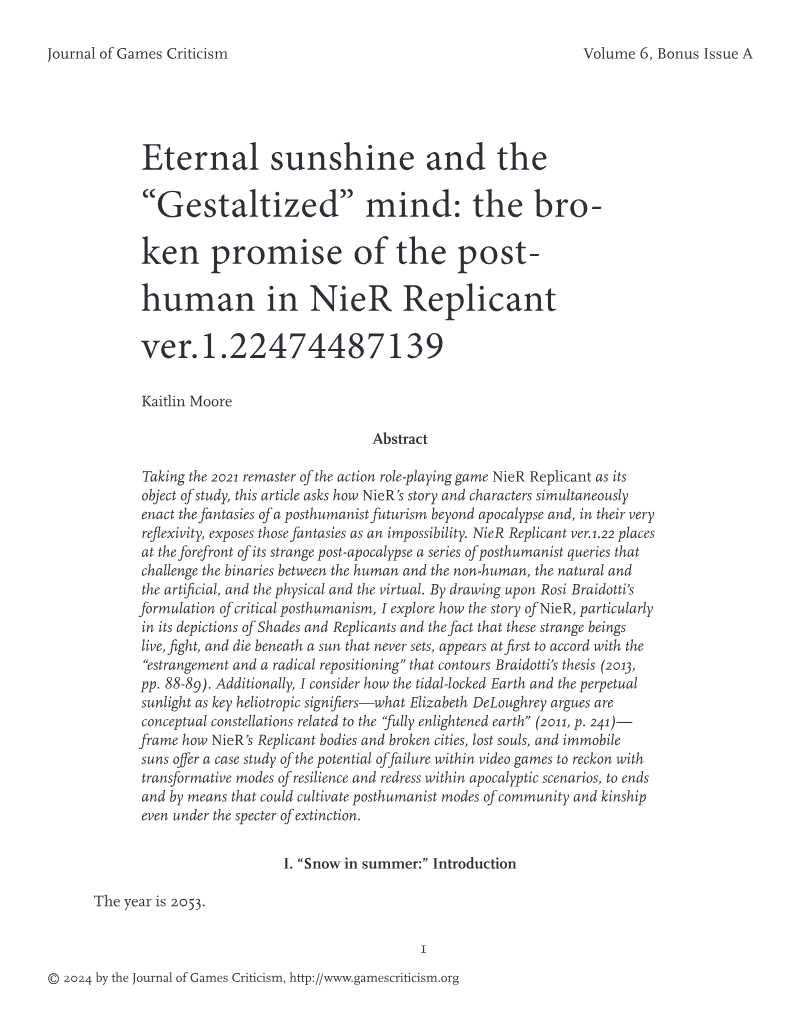
Journal of Games Criticism · 2024
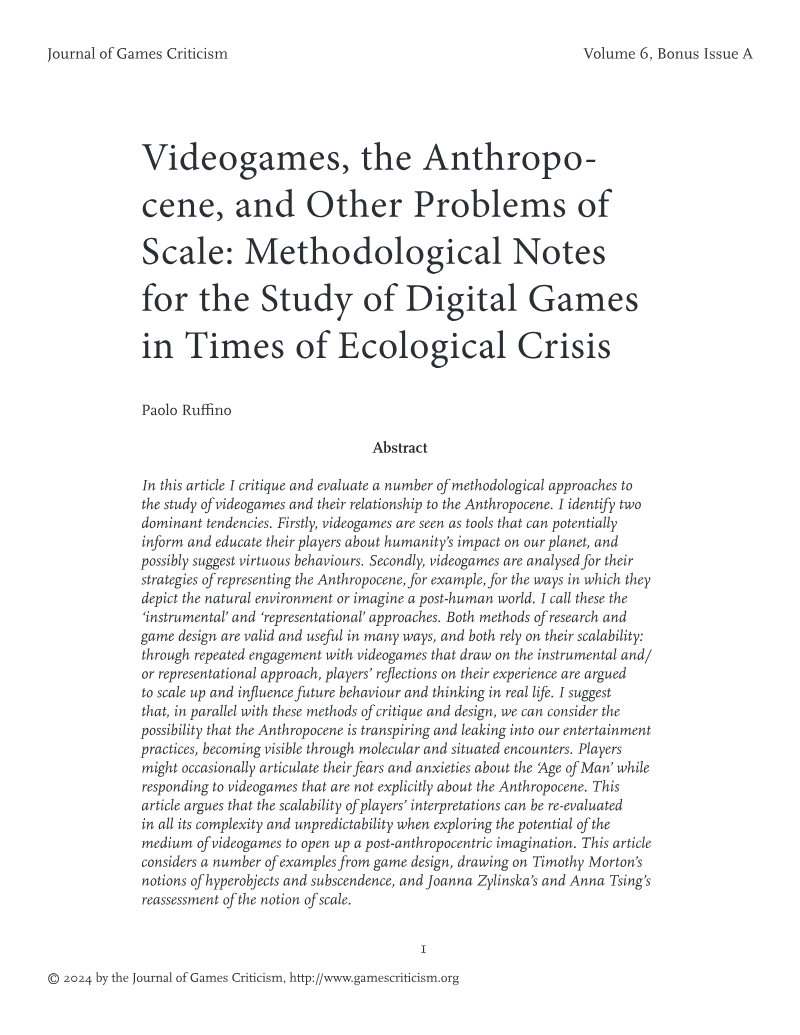
Journal of Games Criticism · 2024
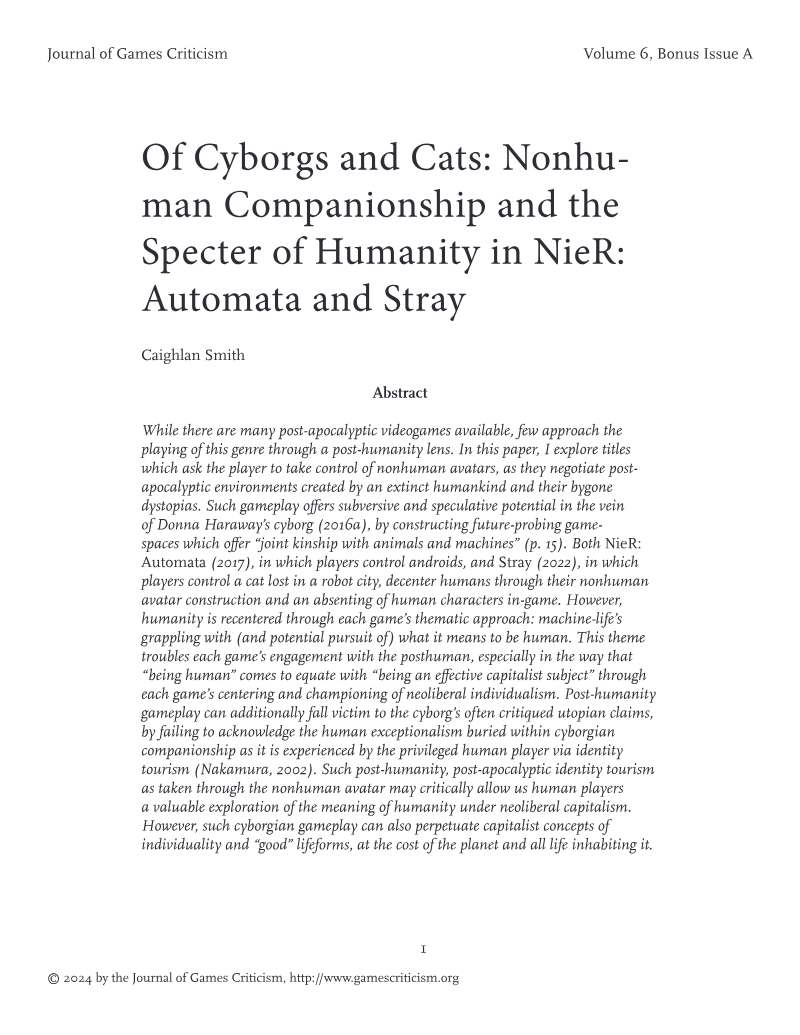
Journal of Games Criticism · 2024
Journal of Games Criticism · 2024
DiGRA · 2026