1 free read left. Create a free account for unlimited reading + AI research.
Create free accountArticle Journal of Games Criticism
1 free read left. Create a free account for unlimited reading + AI research.
Create free accountArticleJournal of Games Criticism
Distilling the key insights…
Post-apocalyptic video games are increasingly moving away from narratives of total destruction to embrace themes of ecological recovery and nonhuman agency. By centering vegetation as active, dynamic collaborators rather than passive environmental backdrops, titles such as Plants vs. Zombies and Cloud Gardens challenge traditional anthropocentric perspectives. These games function as critical possibility spaces that combat plant-blindness, forcing players to engage with the complexities of sustainability, resource scarcity, and the intricate entanglements between human and nonhuman life.
The core thesis posits that virtual gardening serves as a potent tool for fostering ecocritical awareness. By positioning the post-Anthropocene as a site of resilience and growth, these simulations encourage players to reflect on their environmental responsibilities. While these digital experiences remain inherently human-centric in their mechanics, they effectively demonstrate how game design can facilitate a shift toward posthuman thinking. The integration of resource management and environmental stewardship within these settings highlights the potential for games to serve as meaningful platforms for ecological reflection.
Despite this progress, current industry standards often fall short of representing the nuanced inter-plant dynamics, such as competition and complex biological conflict, that define real-world ecosystems. To fully realize the potential of these digital environments, developers should prioritize the integration of plant-thinking into core mechanics. Bridging the gap between virtual simulations and real-world botanical engagement offers a pathway to further decenter human influence. By evolving these design practices, the industry can better utilize interactive media to reimagine human relationships with the natural world and promote a more profound understanding of ecological interconnectedness in an era of climate uncertainty.
Each row is a game or company this document names, each column a document, oldest first. A mark means that document names it. Select a row to see those documents.
Journal of Games Criticism · 2026
Journal of Games Criticism · 2026
Journal of Games Criticism · 2025



Journal of Games Criticism · 2025
Journal of Games Criticism · 2025
Journal of Games Criticism · 2025
Journal of Games Criticism · 2024
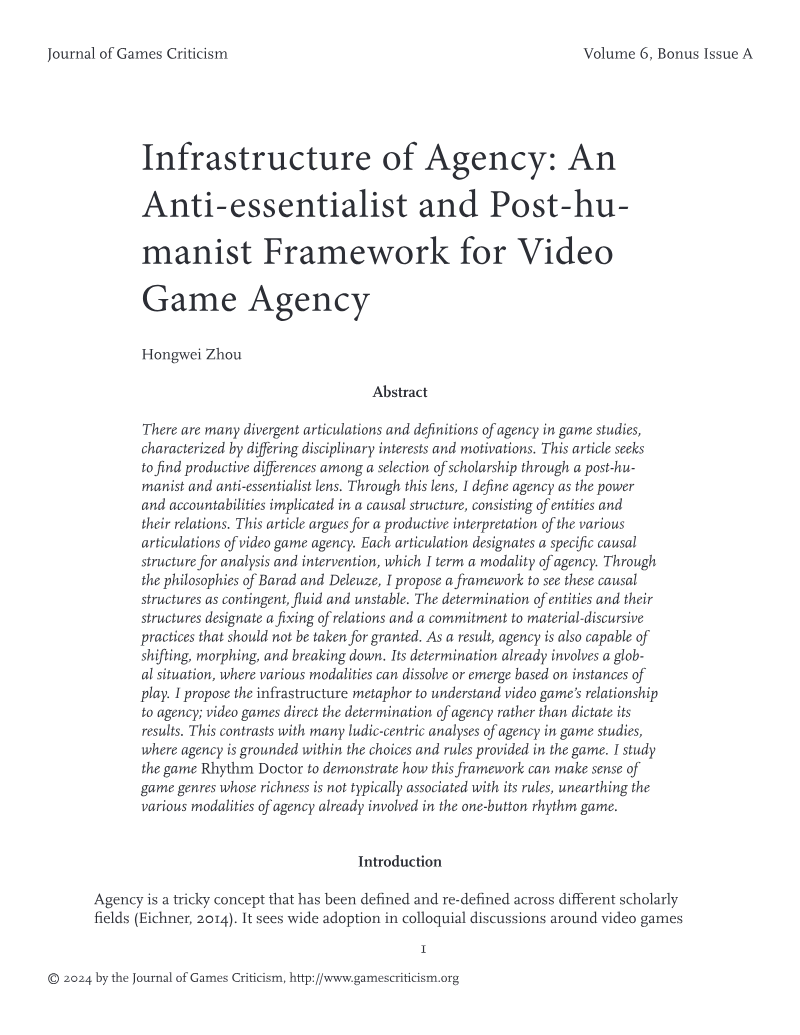
Journal of Games Criticism · 2024
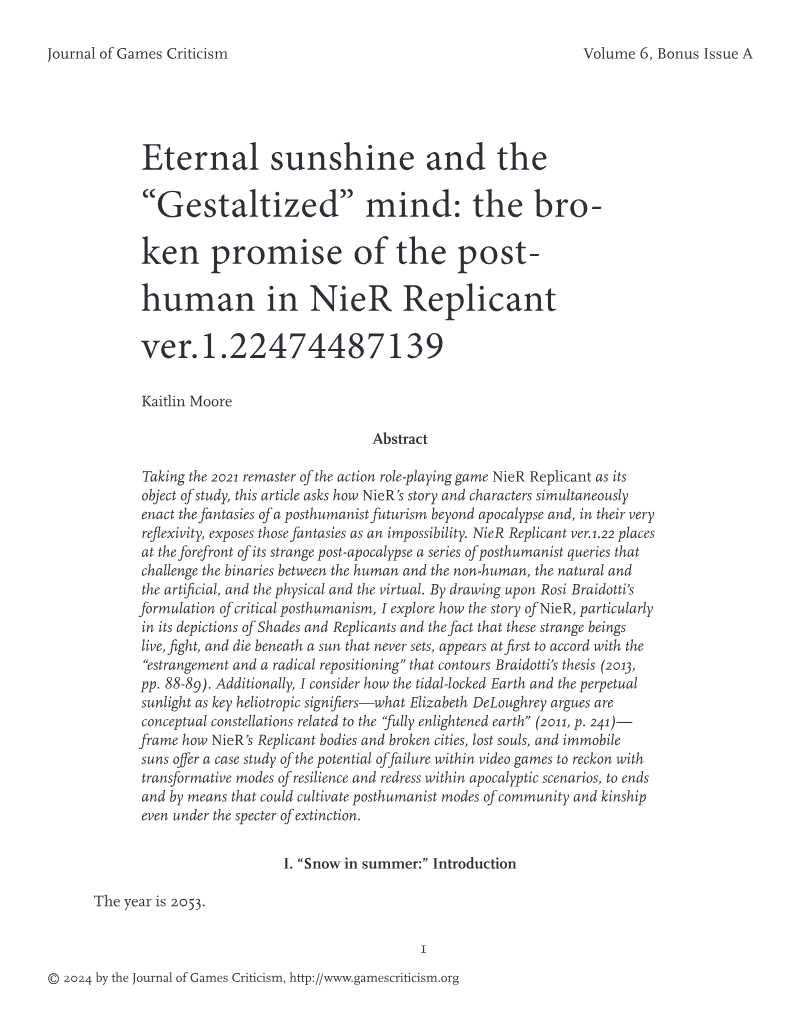
Journal of Games Criticism · 2024
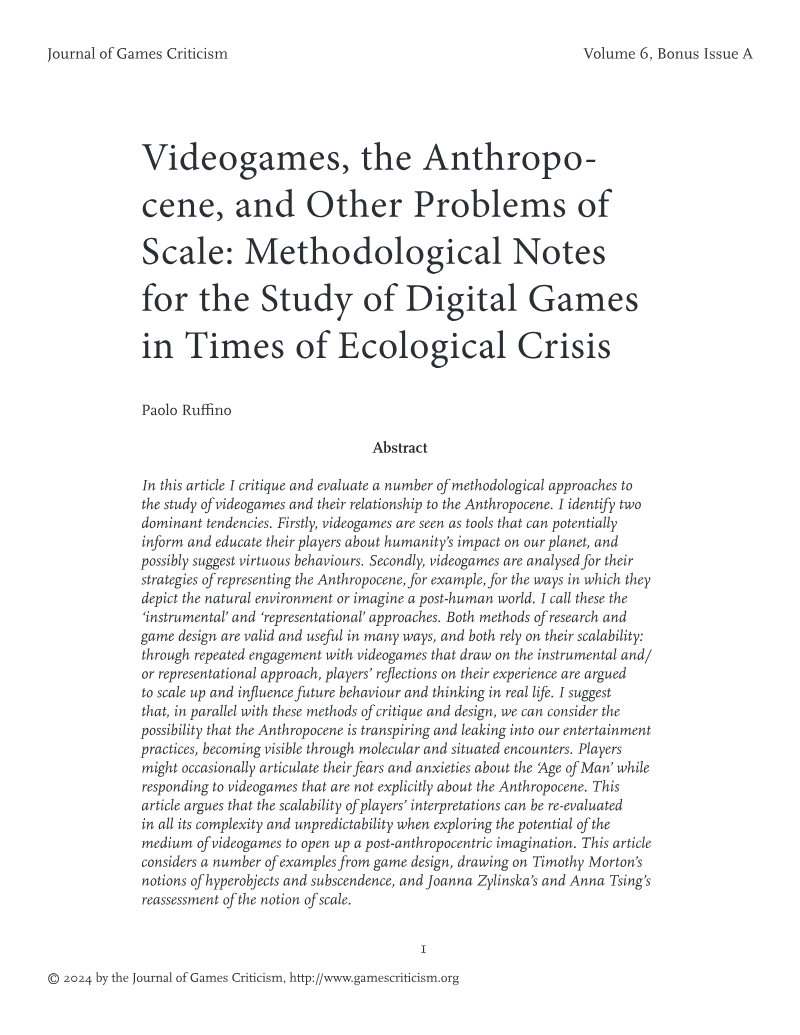
Journal of Games Criticism · 2024
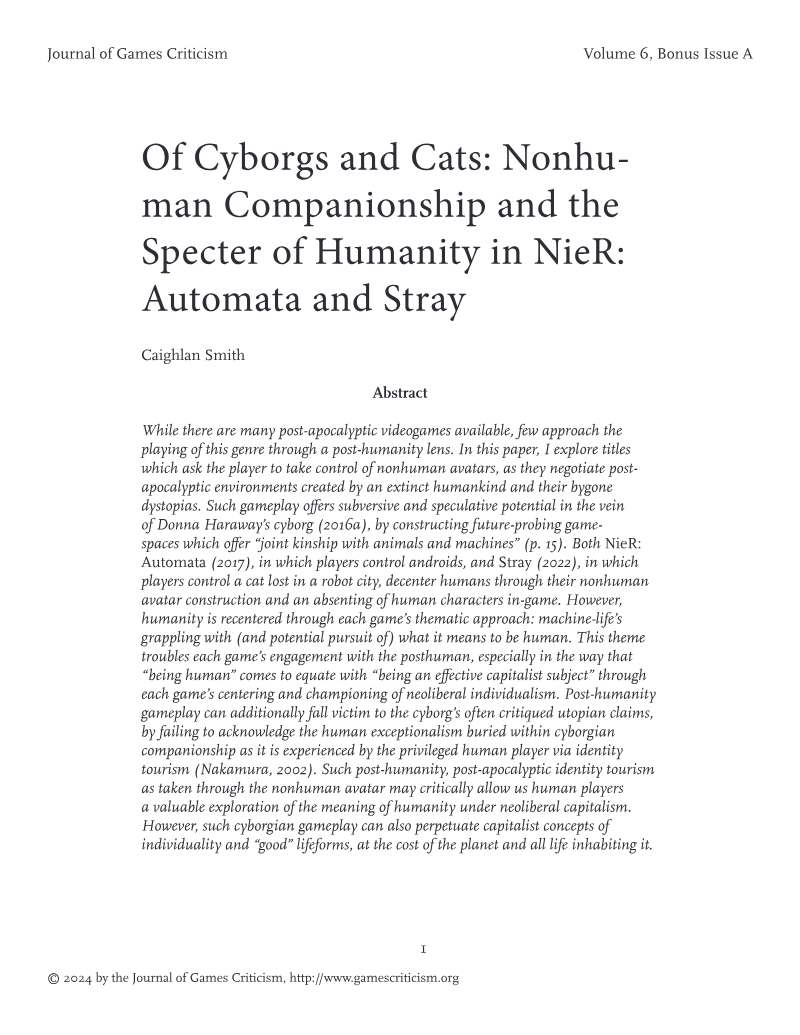
Journal of Games Criticism · 2024
Journal of Games Criticism · 2024
DiGRA · 2025