1 free read left. Create a free account for unlimited reading + AI research.
Create free accountArticle Journal of Games Criticism
1 free read left. Create a free account for unlimited reading + AI research.
Create free accountArticleJournal of Games Criticism
Distilling the key insights…
The vast majority of gamers consistently prioritize altruistic and heroic paths when navigating moral choice systems, frequently aligning their in-game decisions with their real-world ethical frameworks during initial playthroughs. While players demonstrate a willingness to explore villainous or neutral trajectories during subsequent sessions, this behavior remains secondary to a primary preference for virtuous gameplay. This trend persists across demographics, indicating that internal moral alignment serves as a more significant driver of player behavior than the mechanical incentives or rewards typically integrated into game design.
Although many players express interest in the narrative potential of playing as a villain, they often report discomfort with extreme moral transgressions and frustration with binary systems that penalize nuanced or neutral decision-making. These findings suggest that current industry standards for moral choice mechanics often fail to resonate with the player base, as rigid good-versus-evil structures frequently clash with the desire for more complex, authentic role-playing experiences. Consequently, the data indicates that players are increasingly seeking systems that offer greater depth rather than simple moral dichotomies.
To better align with player behavior, developers should transition away from simplistic morality meters toward more sophisticated narrative frameworks. Implementing faction-based systems or perspective-shifting storylines allows for a more nuanced exploration of ethics, effectively challenging a player’s definition of the right choice without forcing them into uncomfortable or binary extremes. By moving toward these complex models, the industry can better accommodate the player's natural inclination toward moral consistency while simultaneously providing the depth required for meaningful, long-term engagement in narrative-driven titles.
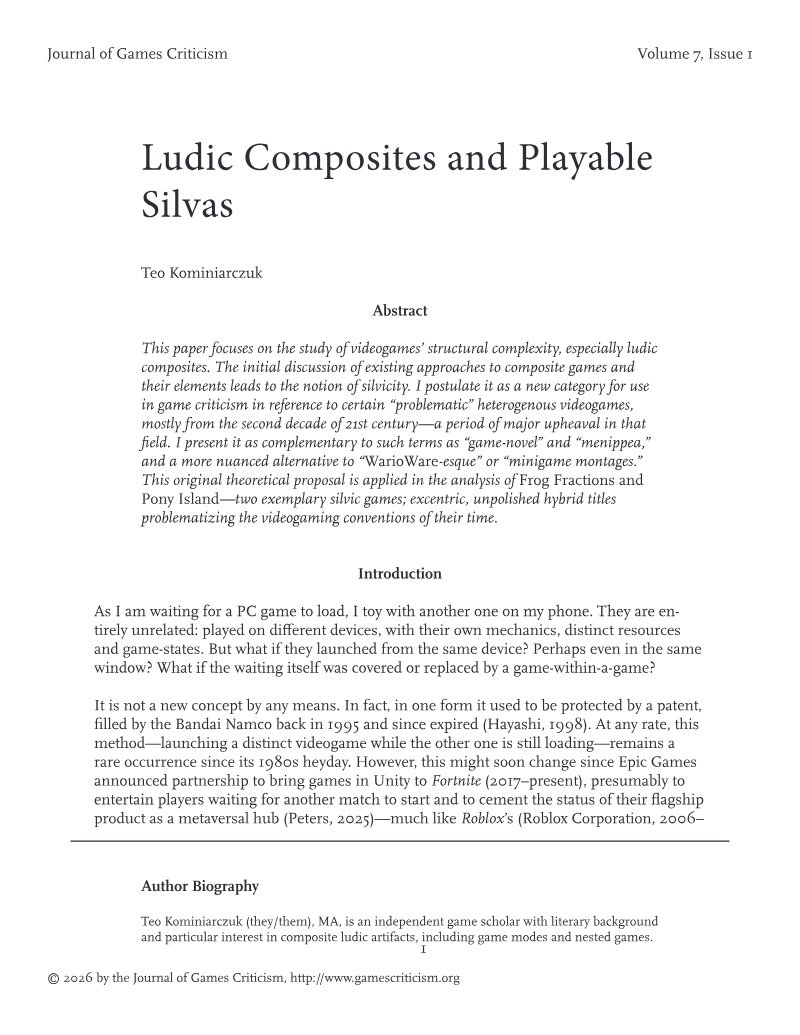
Journal of Games Criticism · 2026
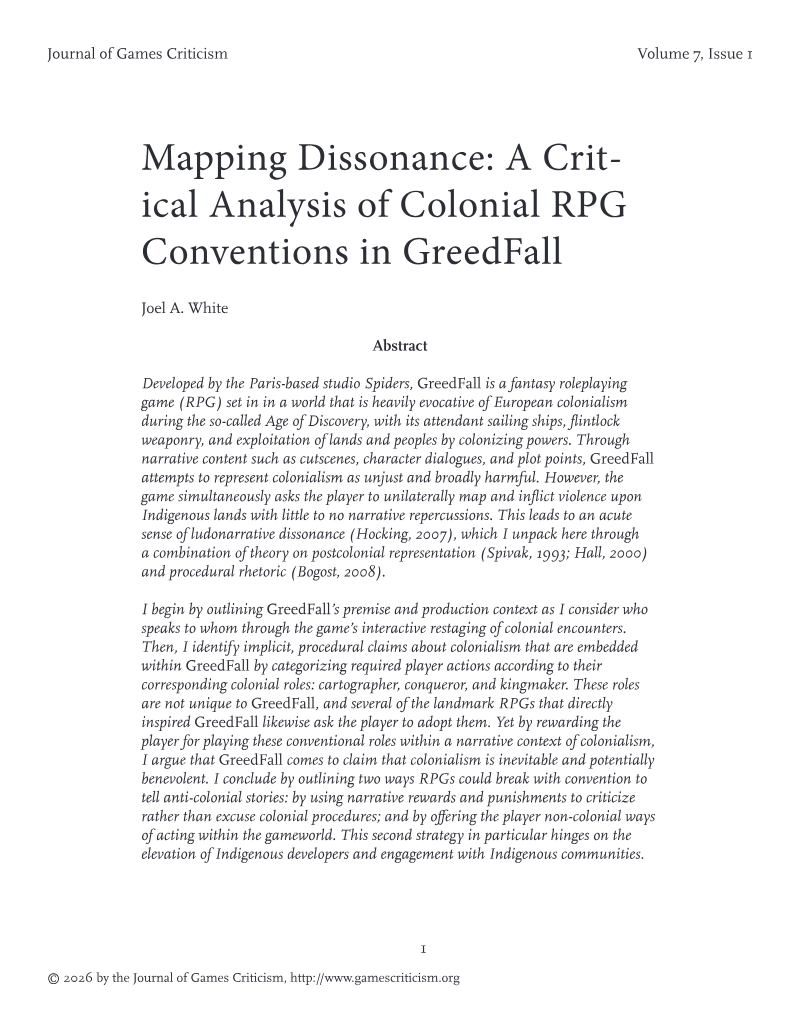
Journal of Games Criticism · 2026
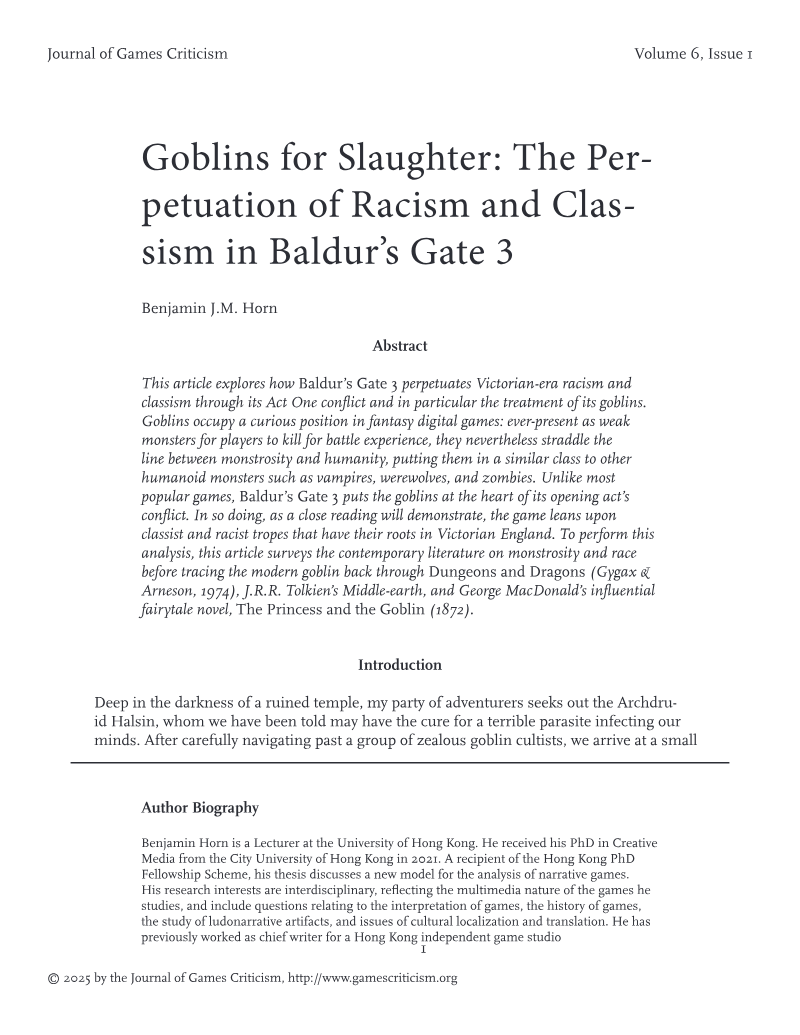
Journal of Games Criticism · 2025
Journal of Games Criticism · 2025
Journal of Games Criticism · 2025
Journal of Games Criticism · 2025

Journal of Games Criticism · 2024
Journal of Games Criticism · 2024
Journal of Games Criticism · 2024
Journal of Games Criticism · 2024
Journal of Games Criticism · 2024
Journal of Games Criticism · 2024
DiGRA · 2026