
European Conference on Games Based Learning (ECGBL)
Annual European conference on game-based learning and serious games; its proceedings are published open access (CC BY) by Academic Conferences International.
Documents
Engagement Strategies in a Peer-Quizzing Game: Investigating Student Interactions and Powergaming
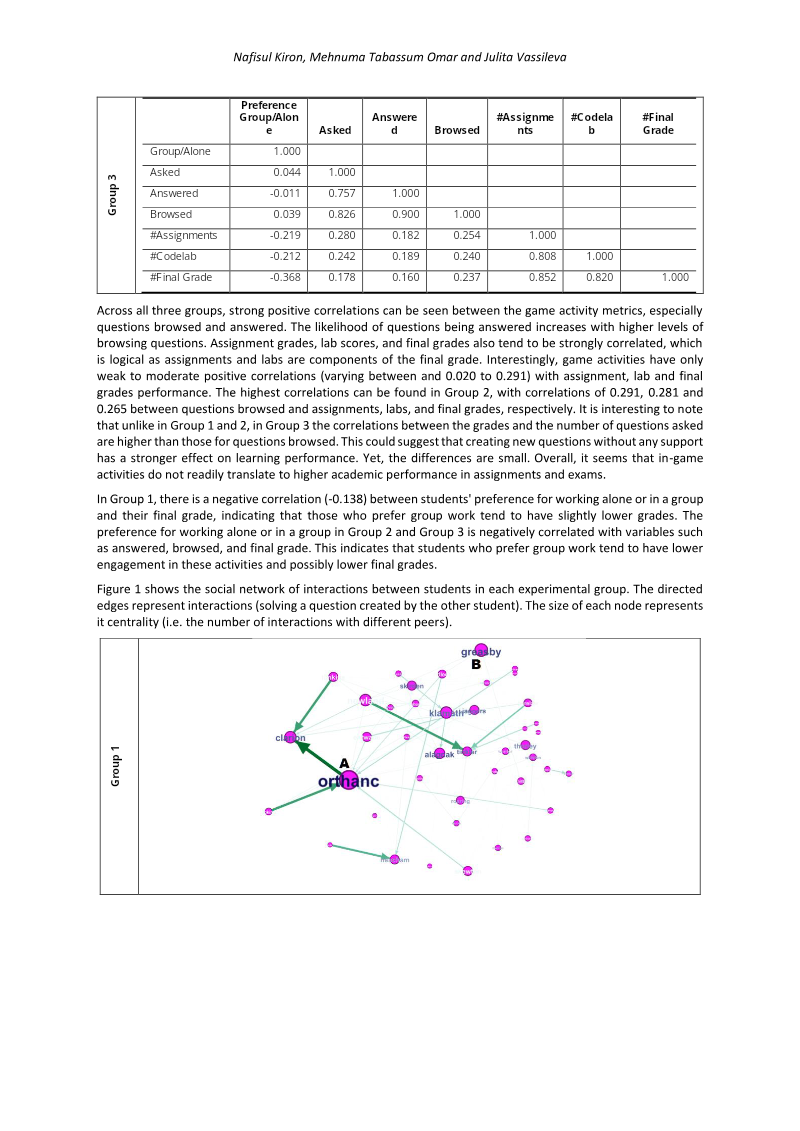
This study examines powergaming, the practice of excessively exploiting a game's mechanics for advantage, within ToQ, a peer-quizzing game used with first-year programming students.
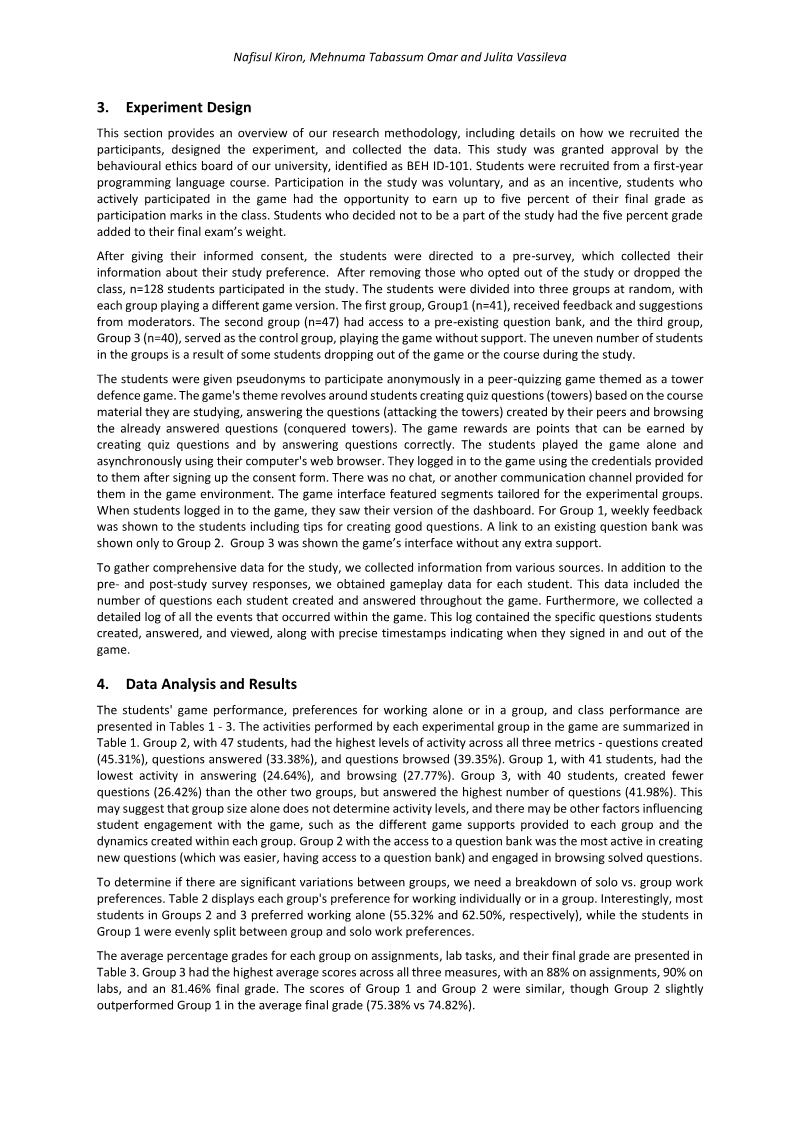
- Activity and academic achievement were not aligned: Group 2, with the highest activity levels, earned only average grades (75.38%), while the lower-activity control Group 3 achieved the highest final grades (81.46%), versus 74.82% for Group 1.
- Powergaming, the excessive exploitation of game mechanics in the ToQ peer-quizzing game, was not harmful as the authors expected; powergamers' heavy question creation (45.31% of Group 2's activity) enriched the game's resources and sustained engagement.
- The quality and type of engagement appear to matter more than sheer quantity, with Group 3's balanced mix of question types coinciding with higher grades and Group 1's heavy reliance on multiple-choice questions coinciding with the lowest averages.

New Age Mages: An Interactive Way to Explore and Subvert Gender Biases
New Age Mages is a tabletop role-playing game designed for younger players to explore and subvert gender biases through an indirect, immersive experience.
- New Age Mages is a tabletop RPG that teaches gender bias indirectly through an elemental magic system in which "waxing" magicians are favored and "waning" magicians are dismissed, serving as an analogue for gender roles.
- A playtest with 13 experienced TTRPG players found a statistically significant decrease in Sexist Attitude scores after about two hours of play (Wilcoxon p = 0.03), with nine of thirteen participants showing reductions.
- Transcendent Attitude scores changed negligibly and were deemed unreliable as a measure (Cronbach's α = 0.58, p = 0.86), so the study's conclusions rest on the Sexist Attitude results.
Rekindling Connections to Languages Through Socio-Cultural Immersion Using Game-Based Learning and Virtual Reality: Cipher VR Case Study
This paper presents Cipher VR, a virtual reality language learning game designed to reconnect learners with the Irish language through folklore, mythology, and immersive gameplay.
- Cipher VR is a virtual reality language learning game that teaches Irish through folklore and myth, aiming to counter student disengagement, limited everyday use of the language, and perceptions that it is less essential than global languages.
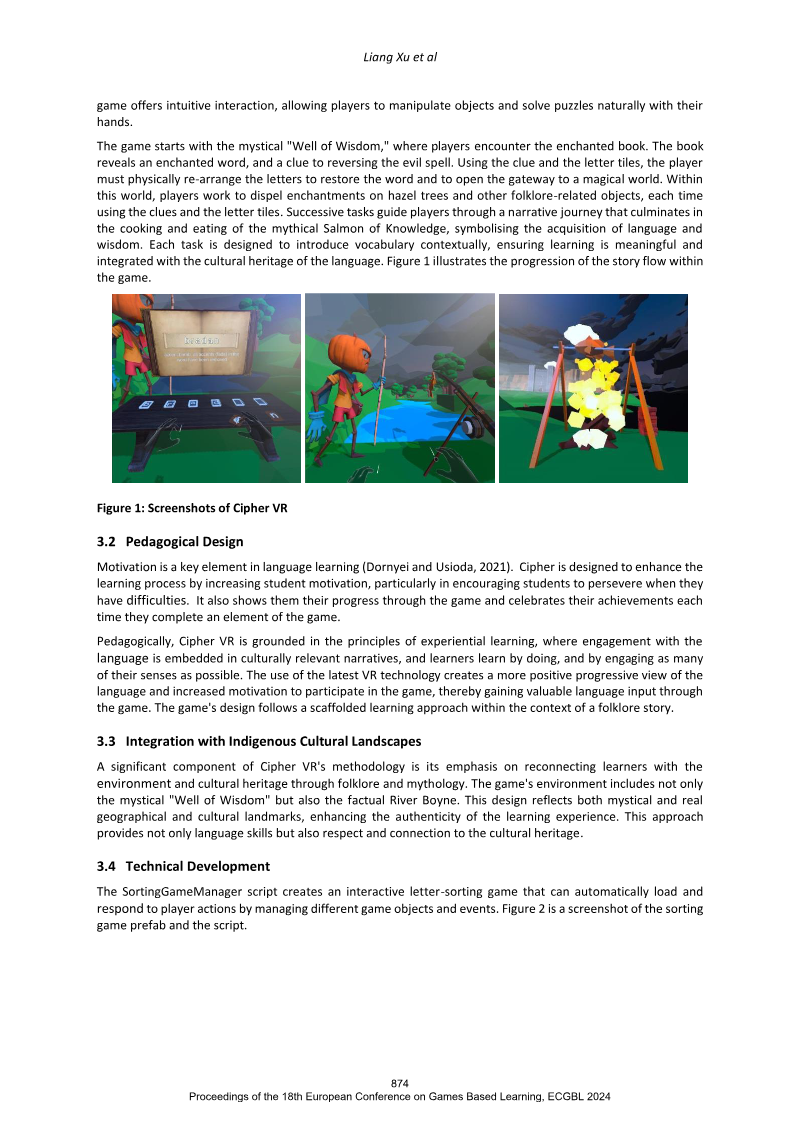
- The game extends an earlier screen-based version called Cipher, using hand-tracking, OpenXR, and the XR Interaction Toolkit so players physically rearrange letter tiles to reverse spells and progress toward the mythical Salmon of Knowledge.
- Vocabulary is embedded in culturally grounded narratives aligned with the primary school curriculum, with settings that include mythical locations and the real River Boyne.
The Ideological Dilemma in Using Games in Global Citizenship and Development Education
This paper, authored by Paul Keating of the Technological University of the Shannon, examines the tension between the values embedded in commercial computer games and the principles of Global Citizenship and Development Education.
- The paper argues that the dominant ideologies in the games industry, including neoliberal market logic, state control, and uncritical open-source advocacy, conflict with critical Global Citizenship and Development Education, yet games can still be reclaimed as spaces for decolonised, socially progressive learning.
- Commercial world-building and 4X games have frequently embedded colonial, militaristic, and exploitative narratives, which the author identifies as a core obstacle to using them in development education.
- The gaming sector's rapid growth was accelerated by the COVID-19 pandemic, and corporations are pushing toward an integrated "Metaverse."
Exploring Play as the Nexus of Games and Playfulness
This paper proposes a theoretical framework for understanding the relationship between games, playfulness, and play, and applies it to the practice of playful learning in higher education.
- Games are defined as objective, rule-bound problem-solving systems with a goal and lusory rules set in an unreal context, while playfulness is a subjective, light-hearted attitude applicable to any activity; play is the nexus where the two meet, occurring when a learner engages with a game playfully, voluntarily, and for enjoyment.
- The central argument is that games and facilitated playfulness each carry distinct benefits, and combining them produces synergistic effects, including a normalisation of failure as a route to learning.
- The authors tested their framework on a literature review of 1,090 English-language journal articles (1973–2022, retrieved from Scopus) on play in higher education, from which they derived a provisional taxonomy of seven playful learning approaches: roleplay, simulations, traditional play, play worlds, ludification, playmaking, and alternate realities.
Integrating Learning and Serious Game Design: The Development and Application of the Learning and Game Integration (LGI) Framework Using the 'Blackout' Serious Game
The Learning and Game Integration (LGI) Framework is presented as a unified, four-stage model for designing serious games that combine educational content with game mechanics and real-world case studies.
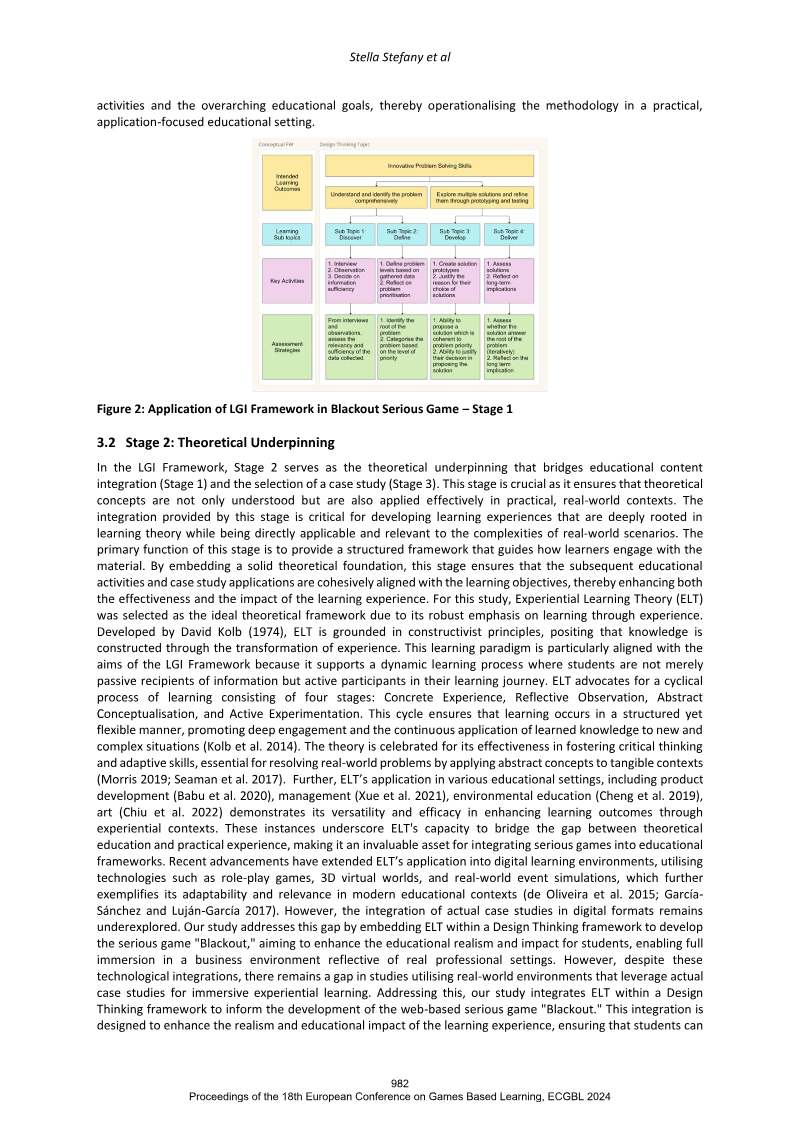
- The Learning and Game Integration (LGI) Framework is a unified four-stage model (educational content integration, theoretical grounding, case study selection, and game design) linked by iterative feedback, aiming to tie educational goals, theory, and authentic cases directly to game design.
- The authors argue that existing serious-game frameworks, including ATMSG, the Four-Dimensional Framework, RETAIN, and LM-GM, do not provide an integrated approach connecting educational goals, theory, and real cases to game design.
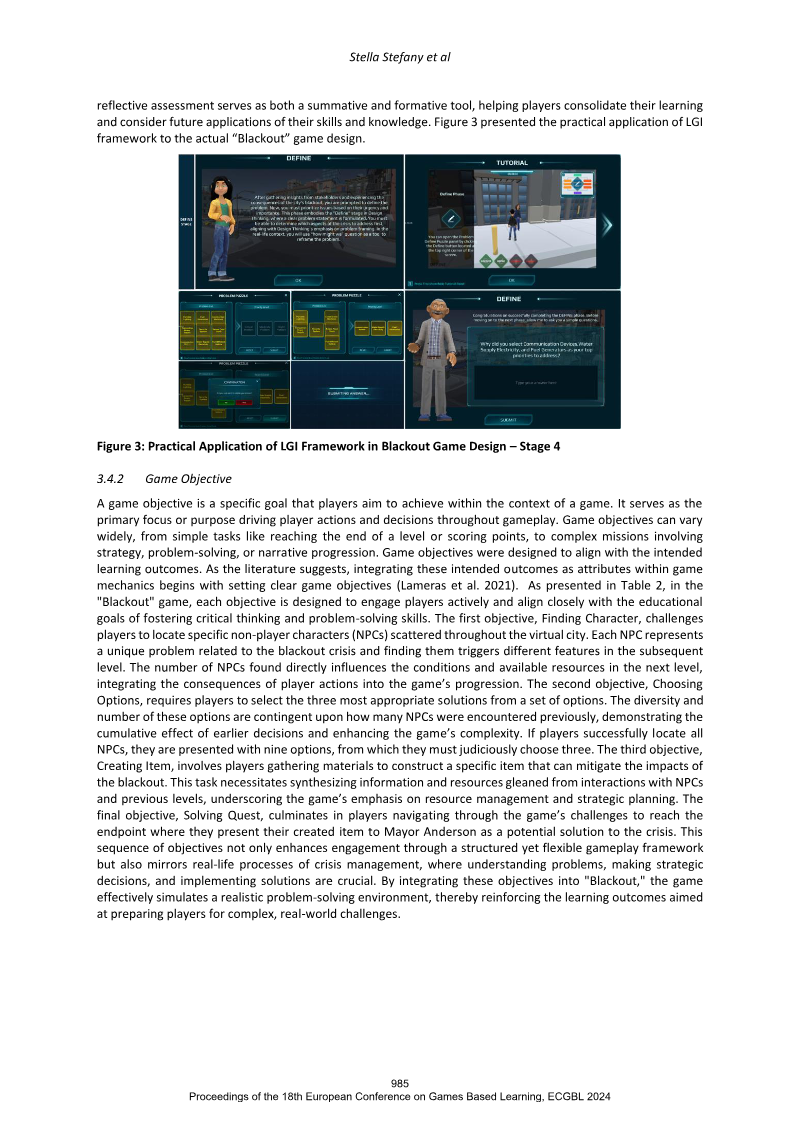
- The framework is illustrated by 'Blackout,' a web-based 3D serious game teaching Design Thinking to university students, set around the 2012 Indian blackout and compressing a six-hour crisis into a 30-minute real-time limit.
Gaming the Industrial Revolution: Participatory Design with Historical Data for Classroom Learning
"Gaming the Industrial Revolution" presents the design and rationale of Industrial Re:evolution, a classroom simulation game built to teach the causes of the Industrial Revolution in England and Wales between 1600 and 1851 across 19 regions.
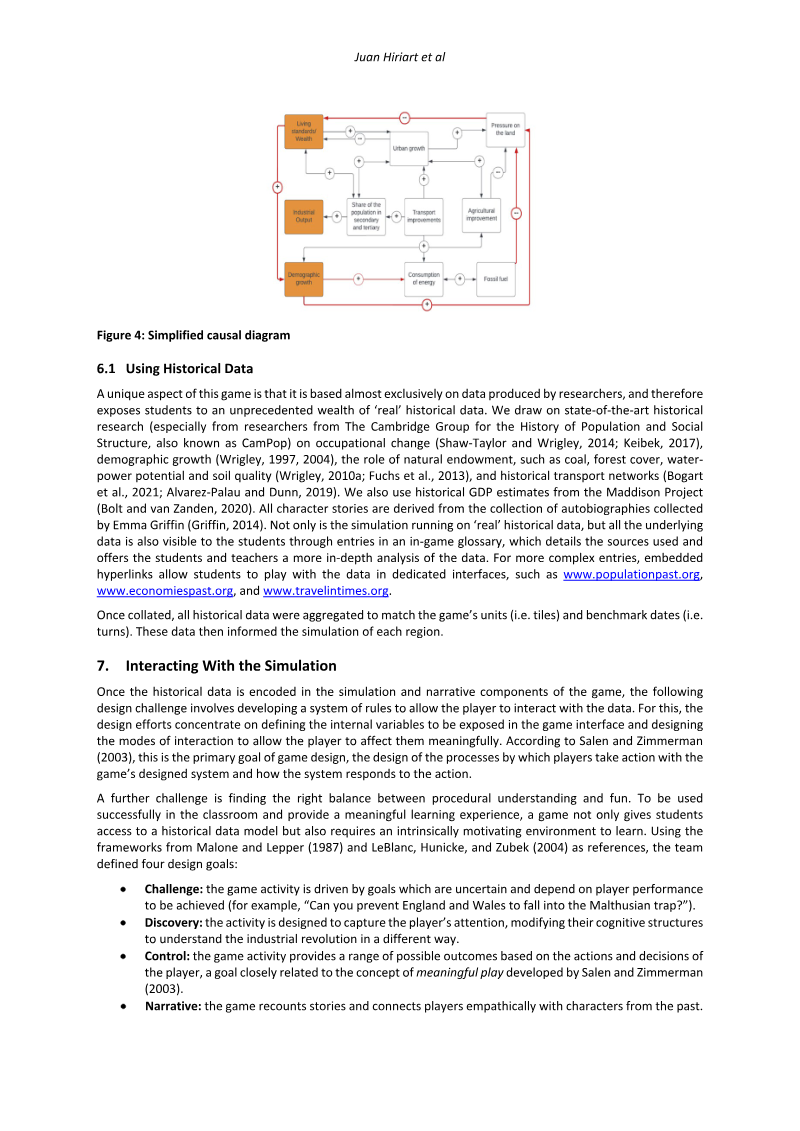
- The report presents Industrial Re:evolution, a classroom simulation covering England and Wales from 1600 to 1851 across 19 regions, motivated by teacher reports that the Industrial Revolution has become hard to teach due to its data-heavy, multifactor complexity and a reliance on individual biographies over underlying concepts.
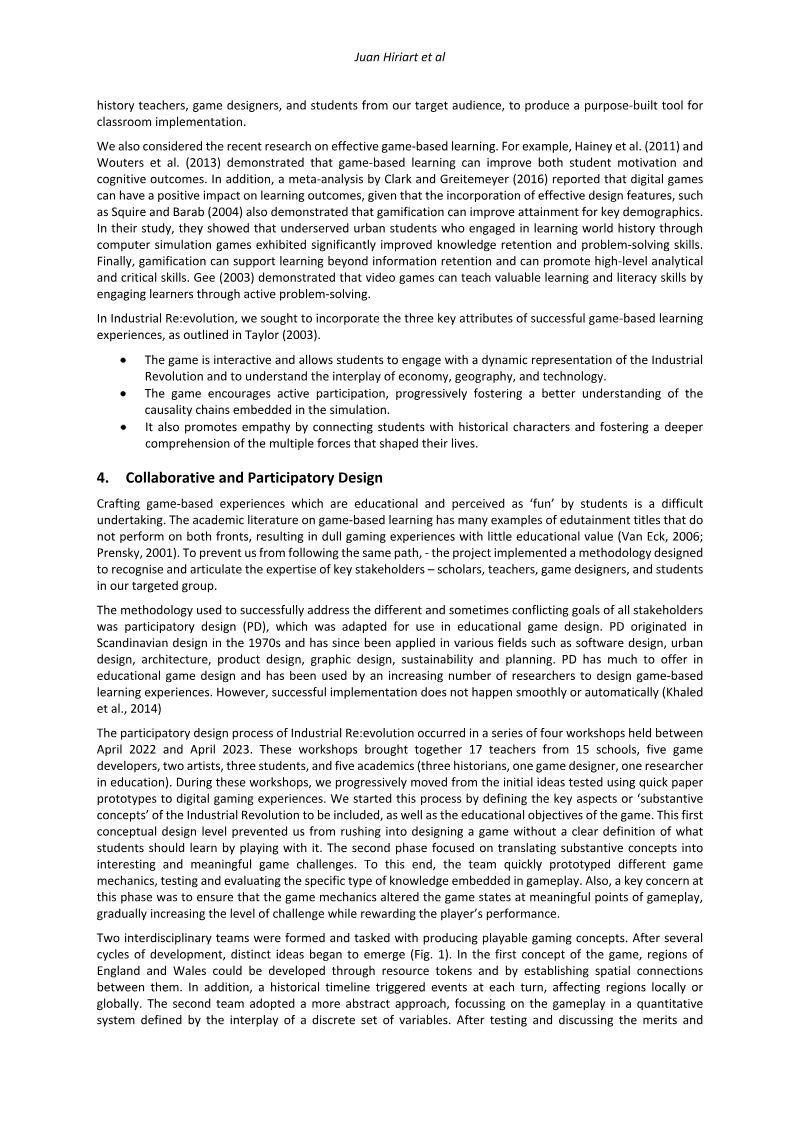
- The game was co-designed between 2019 and 2023 through four participatory workshops involving teachers, game developers, artists, students, and academics, with teacher surveys setting content priorities: the Malthusian trap, pre-industrial development, geography, and Empire.
- The simulation is built on established historical datasets, including CamPop, the Maddison Project, and Emma Griffin's autobiographical collection, and uses 25-year turns in which players manage population migration, labour allocation, and resource trade while historical events are triggered.
Exploring Current Challenges and Opportunities in Media Literacy Skills for Youth: Stakeholders' Perspectives
Media literacy has become a pressing concern for young people, particularly during periods of crisis when misinformation spreads rapidly.
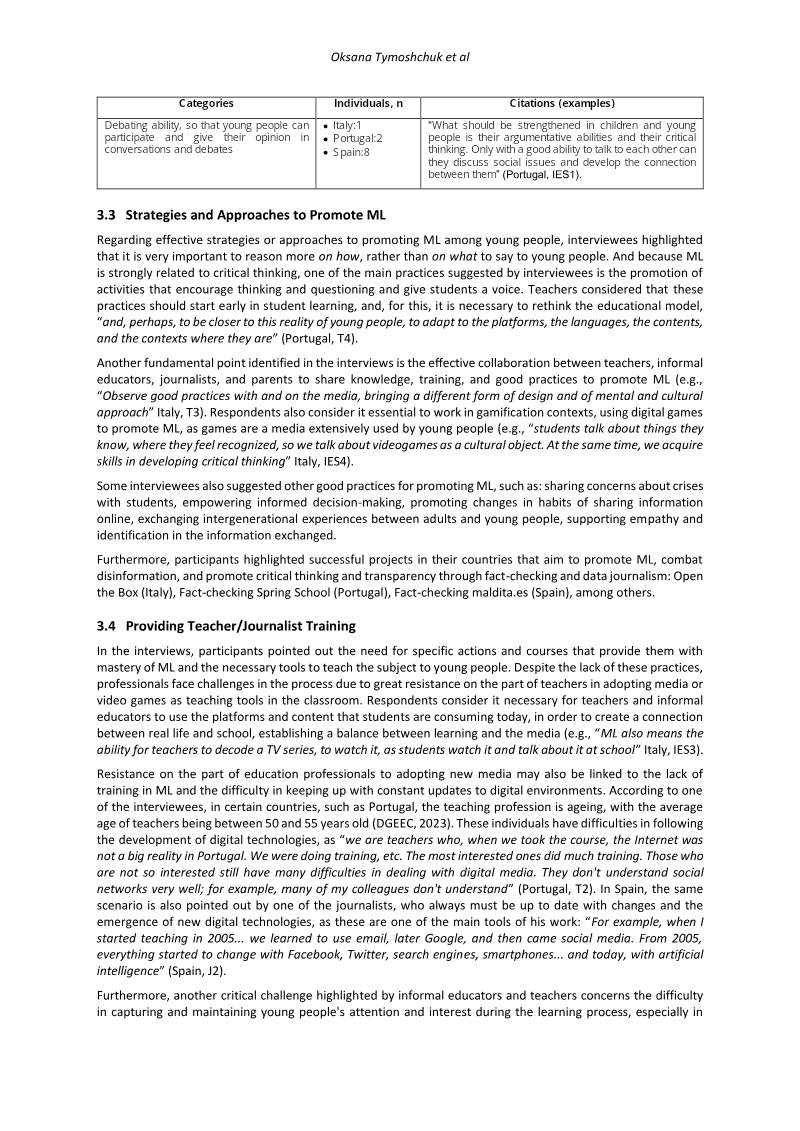
- Media literacy is viewed by educators, journalists, and informal educators as essential for telling reliable information from falsehoods, especially during crises when misinformation spreads quickly.
- Core competencies identified by stakeholders are critical thinking, information filtering, and recognition of online threats.
- Interviewees reported significant shortfalls: inadequate training for educators, difficulty engaging young audiences, and difficulty keeping pace with fast-evolving digital environments.
Serious Games for Vocational Training
The SG4BB research project developed an integrated platform for discovering, integrating, and evaluating educational games for vocational education and training (VET), with the main contribution being a metadata-driven search system and middleware linking games to learning management systems.
- The SG4BB project built an integrated platform for discovering, integrating, and evaluating educational games for vocational education and training, centred on a metadata-driven search system and middleware linking games to learning management systems.
- The platform extends the Serious Games Metadata Format (DIN SPEC 91380), which powers the Serious Games Information Center portal, and uses the xAPI standard to connect games with learning management and learning record stores.
- The platform targets qualification levels 4 to 7 of the European Qualifications Framework, with a German focus and reference to international occupational classifications.
Learning from Designing a Board Game for Policy Thinking in Computer Science
"The Policy Maker" is a non-digital board game designed by computer science students in a Gameful Design course to teach policy thinking to first-year students in a "Ways of Thinking in Informatics" course.
- The Policy Maker, a non-digital asymmetric board game where investors build monopolies and a policy maker with a secret goal tries to stop them, was designed by computer science students to teach policy thinking in a first-year informatics course.
- In the first classroom iteration, 78 students who played The Policy Maker rated it as more entertaining, recommendable, and interesting than the 108 students who played other Policy Thinking games, and most agreed it deepened their understanding of policy thinking.
- The weakest outcome was knowledge gain of new concepts, especially among students with prior board game experience, showing that engagement advantages do not automatically translate into conceptual learning.
A Preliminary Study of Context Integration as a Determinant in the Effectiveness of Digital Mathematics Games
This preliminary study examines whether the narrative context of a digital mathematics game affects how students engage with and learn from it, using two games that teach ratio and proportion through opposing environmental themes.
- Students in this preliminary study showed clearly greater interest in the industrial-context game (power plants, factories, budget management) than in the green-context game, with only one student naming tree planting as its most appealing feature.
- The two games were identical in gameplay, artwork, and problem parameters and differed only in narrative theme (green energy, reforestation, and clean water versus thermal power, chemical factories, and deforestation), isolating narrative context as the variable under study.
- Many students focused on the dependent variable such as energy output rather than the quantitative relationship between money and energy, and some initially guessed answers by trial and error before shifting to proportional reasoning in later levels.
Design of a Serious Game to Teach Esports Concepts and Career Pathways
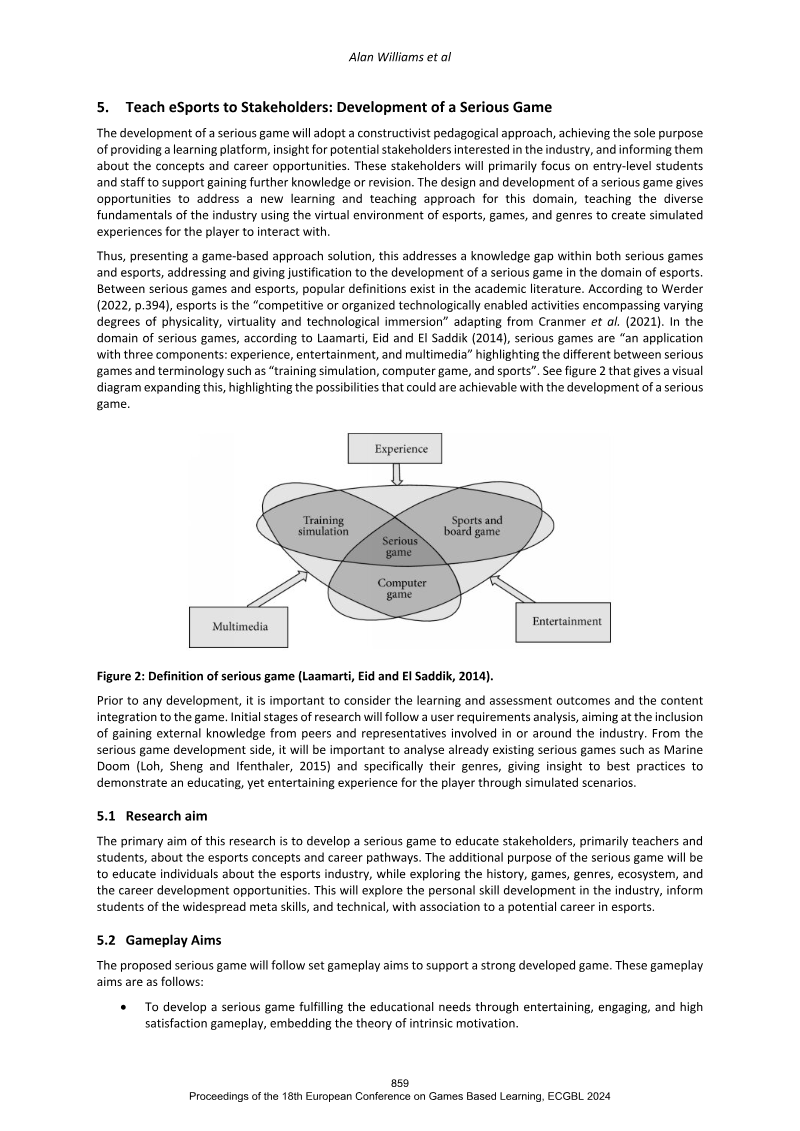
This paper presents a conceptual design for a serious game intended to teach players about esports, including its history, competitive game genres, industry ecosystem, and career pathways.
- The paper argues that serious games are an underexplored way to teach students, teachers, and newcomers about esports, a field that has grown from a niche spectator activity into a billion-dollar sector with roles in education, content creation, event management, and business.
- Prior esports research has concentrated on psychology, health, business management, and performance, leaving educational game design as a gap that this project aims to fill.
- The authors cite a projected games industry revenue of $455.60 billion in 2024 and a serious games market of $11.67 billion as supporting evidence for the sector's scale.