1 free read left. Create a free account for unlimited reading + AI research.
Create free accountArticle European Conference on Games Based Learning (ECGBL)
1 free read left. Create a free account for unlimited reading + AI research.
Create free accountArticleEuropean Conference on Games Based Learning (ECGBL)
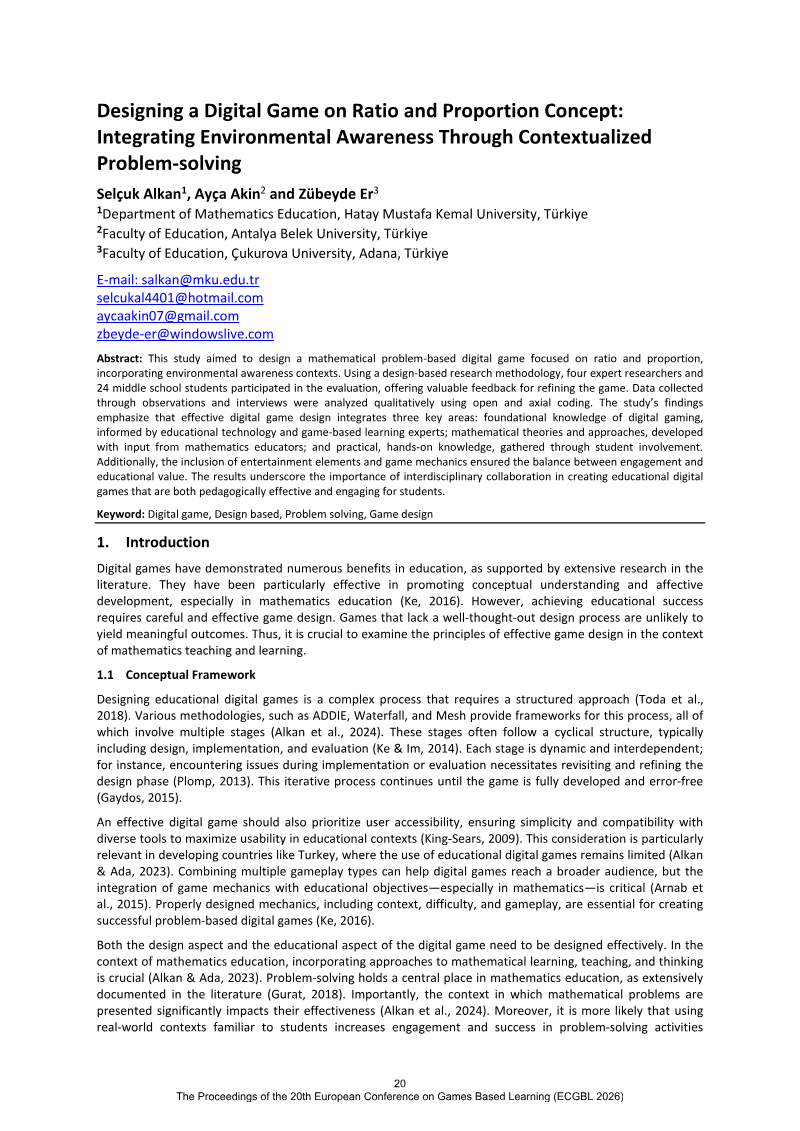
The study compared two digital games teaching ratio and proportion, differing only in their narrative theme.
This preliminary study examines whether the narrative context of a digital mathematics game affects how students engage with and learn from it, using two games that teach ratio and proportion through opposing environmental themes. One game frames the mathematics around green energy, reforestation, and clean water, while the other frames it around unregulated industrial development such as thermal power plants, chemical factories, and deforestation. Apart from the narrative context, gameplay, artwork, and problem parameters were held constant. The authors situate their inquiry in Turkey, which they characterize as a developing country with a collectivist culture and public attitudes that prioritize energy supply and economic growth over environmental concerns, arguing that this sociocultural context may shape how students respond to different game narratives.
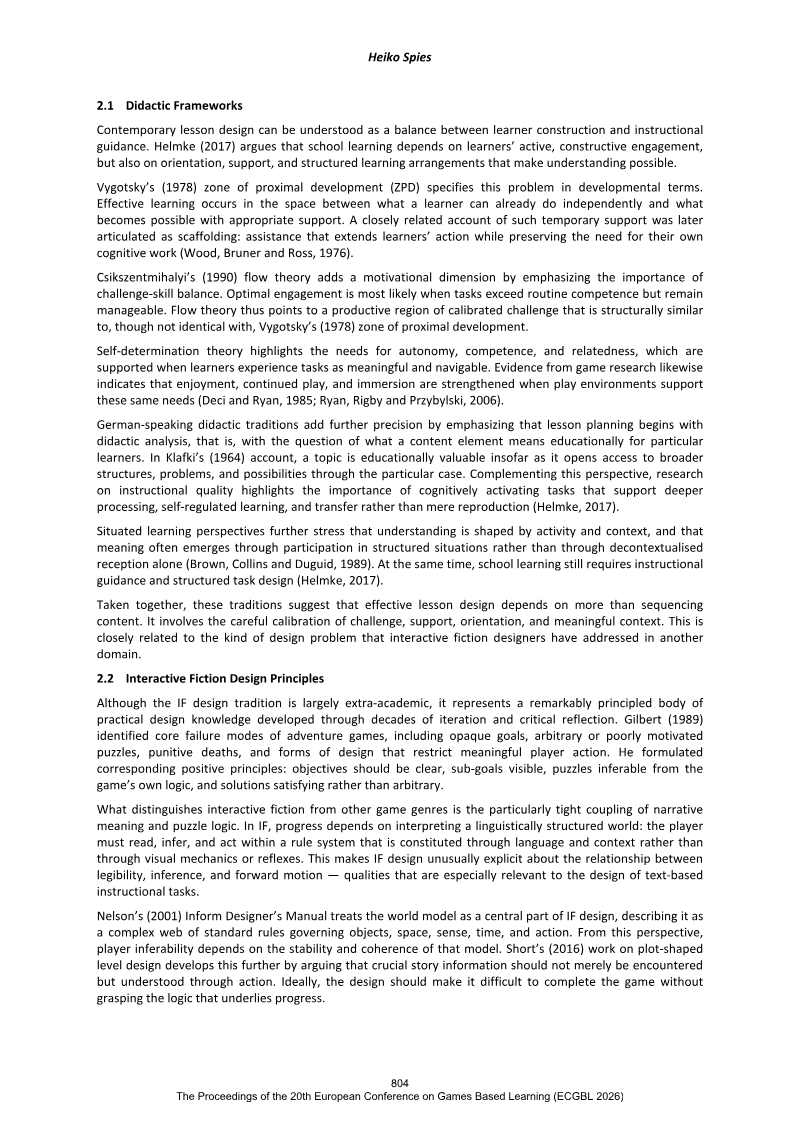
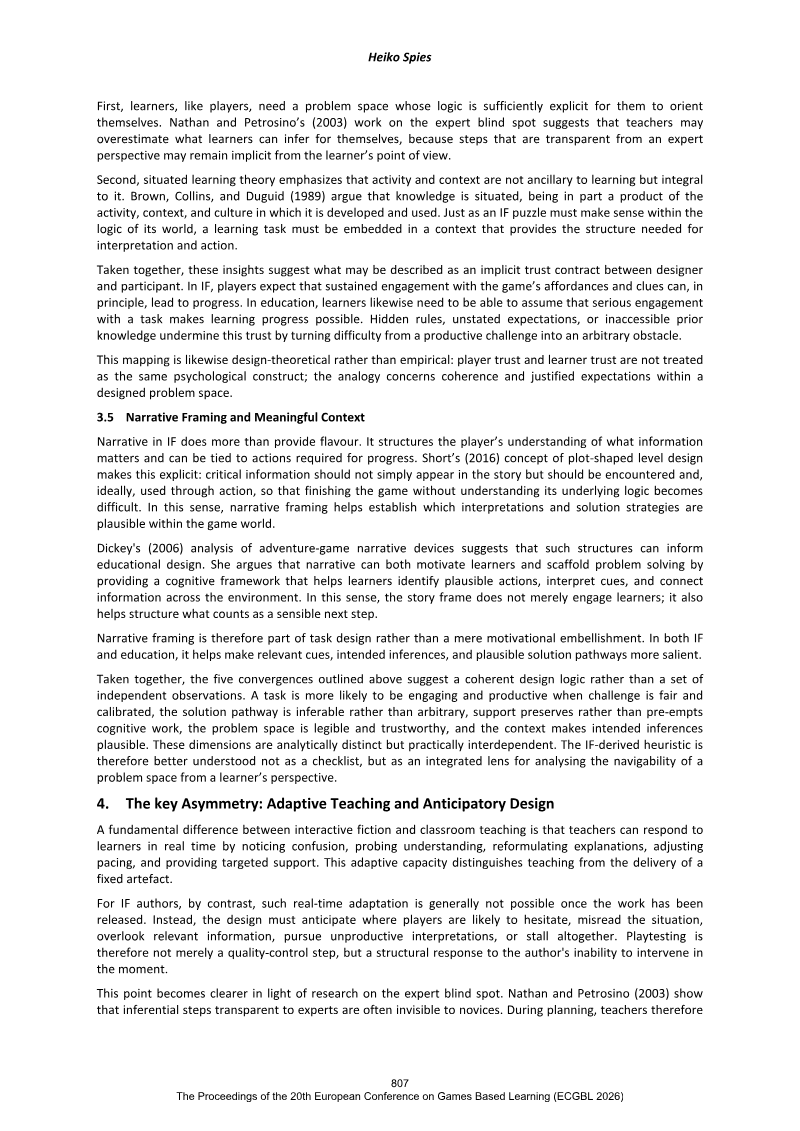
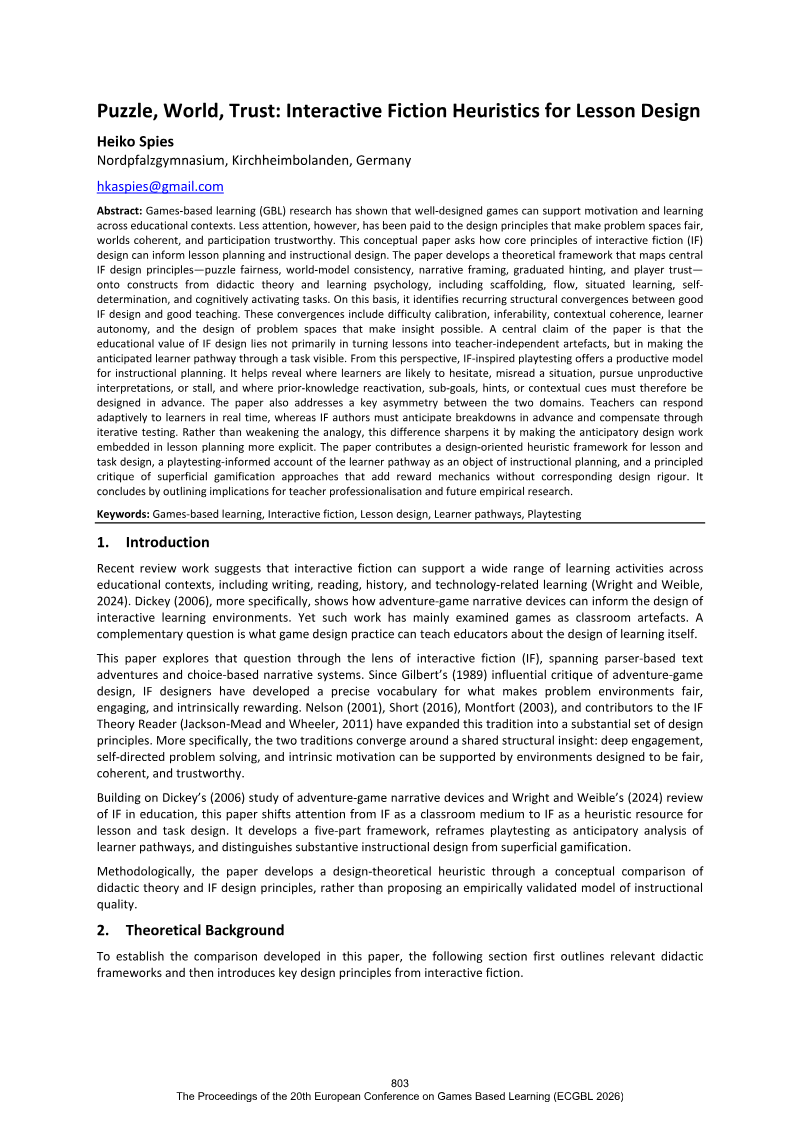
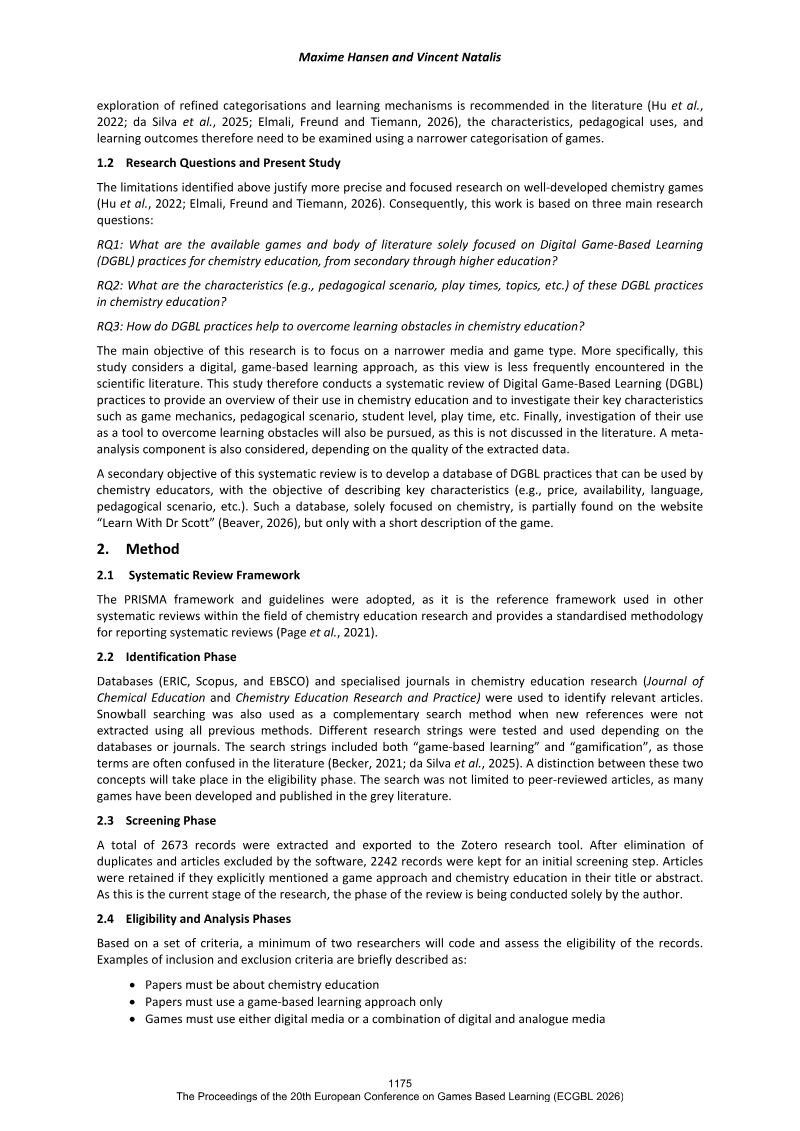
The study adopted a qualitative case study design within a larger experimental project conducted during the 2023–2024 academic year. The sample comprised 15 gifted eighth-grade students aged 12 to 14, identified through a score threshold on the Anadolu Sak Intelligence Scale. Seven students played the industrial-context game and eight played the green-context game, working individually or in groups of two or three. Data came from screen recordings of gameplay, researcher observations of problem-solving strategies, and focus group and individual clinical interviews, which were analyzed through open, axial, and selective coding in a grounded-theory approach.
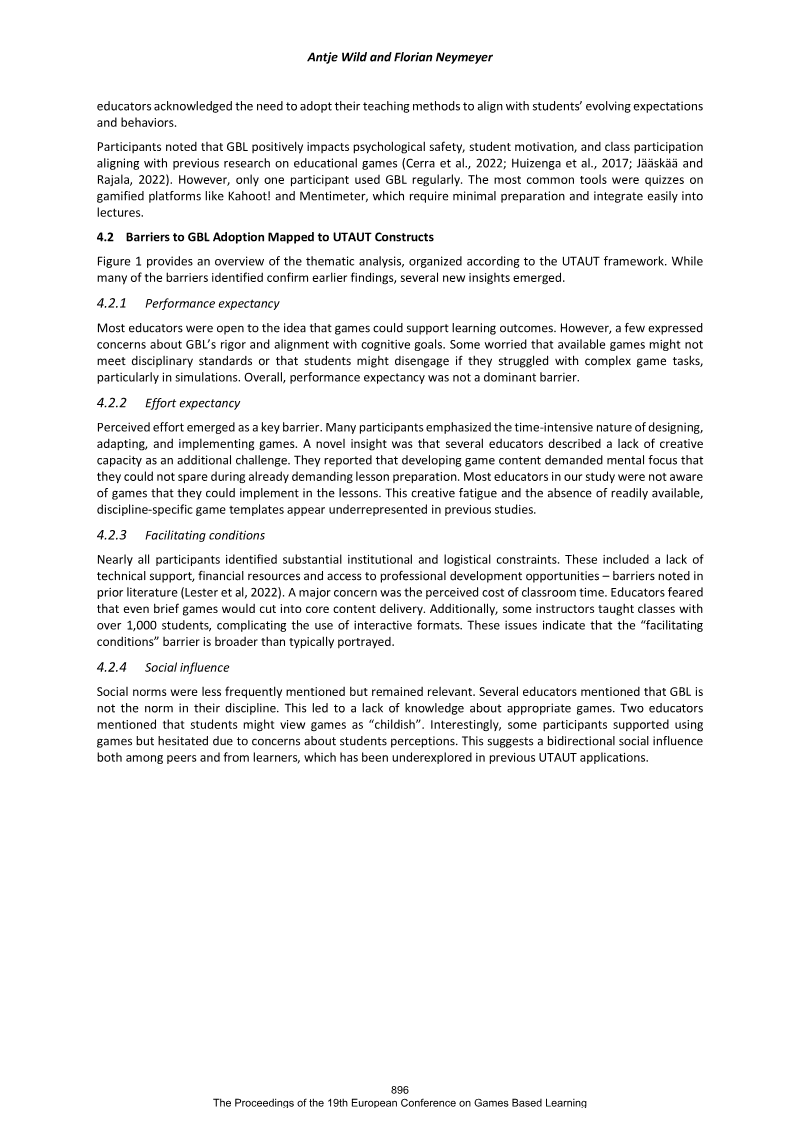
The preliminary findings indicate that students expressed greater interest in the industrial-context game, citing its focus on power plant construction, factory building, and budget management, while only one student singled out tree planting as the most appealing feature of the green-context game. Observations further showed that many students concentrated on the dependent variable, such as energy output, rather than the quantitative relationship between money and energy, and that some initially guessed answers by trial and error before shifting to proportional reasoning in later levels. The authors interpret the preference for the industrial narrative as reflecting national energy concerns and suggest that both contexts may have directed attention toward energy production rather than environmental awareness. Given the small, purposively selected sample, the authors frame these results as tentative and recommend larger studies of mathematics outcomes and environmental learning across educational levels in developing countries.



European Conference on Games Based Learning (ECGBL) · 2026



European Conference on Games Based Learning (ECGBL) · 2026



European Conference on Games Based Learning (ECGBL) · 2026



European Conference on Games Based Learning (ECGBL) · 2026



European Conference on Games Based Learning (ECGBL) · 2026



European Conference on Games Based Learning (ECGBL) · 2026



European Conference on Games Based Learning (ECGBL) · 2026



European Conference on Games Based Learning (ECGBL) · 2026



European Conference on Games Based Learning (ECGBL) · 2026



European Conference on Games Based Learning (ECGBL) · 2026



European Conference on Games Based Learning (ECGBL) · 2026



European Conference on Games Based Learning (ECGBL) · 2026
European Conference on Games Based Learning (ECGBL) · 2026