
European Conference on Games Based Learning (ECGBL)
Annual European conference on game-based learning and serious games; its proceedings are published open access (CC BY) by Academic Conferences International.
Documents
Scaffolded Game-Based Simulation Design for Conceptual-Operational Transition in Railway Education
Railway education has traditionally relied on high-fidelity simulators that emphasize procedural and operational skill, while game-based applications in the transport domain remain limited and are more often used for persuasion or data elicitation than for conceptual learning.
- Railway education has relied mainly on high-fidelity simulators emphasizing procedural and operational skill, while game-based applications in transport remain limited and are rarely used for conceptual learning.
- The authors identify a gap between theoretical understanding and practical competence, noting that novice learners often need instructor guidance to grasp the principles underlying operational tasks.
- The paper proposes Scaffolded Game-Based Simulation (SGBS), an intermediate learning layer placed between theory and full operational training.
Theory-Informed Design of a Location-Based Game for Language Learning
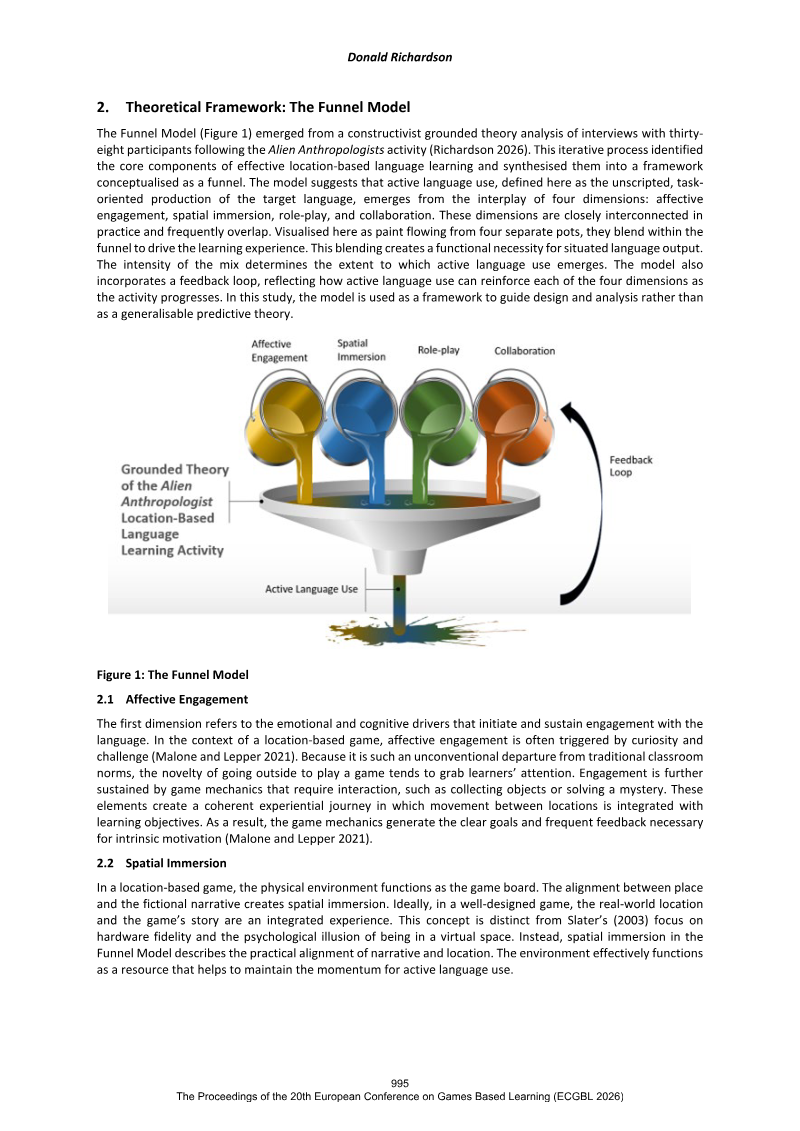
This study examines whether the Funnel Model, a grounded theory framework built around affective engagement, spatial immersion, role-play, and collaboration, can guide the design and analysis of a location-based game for English learning.
- A pilot study applied the Funnel Model (affective engagement, spatial immersion, role-play, collaboration) deductively to Gnomegress, a location-based English-learning game set in Karlsruhe, Germany, played by 20 advanced university students via the TaleBlazer app.
- Learner engagement and perceived target-language production were associated with how well the four Funnel Model dimensions aligned, especially when tasks and narrative were coherently tied to physical locations.
- Students said the outdoor setting, gnome storyline, and fictional investigative organisation persona lowered anxiety about speaking in public and created functional reasons to communicate in English.
Exploring Teachers' and First-Grade Students' Perceptions of a Game Friendly School Project in a Primary School Context
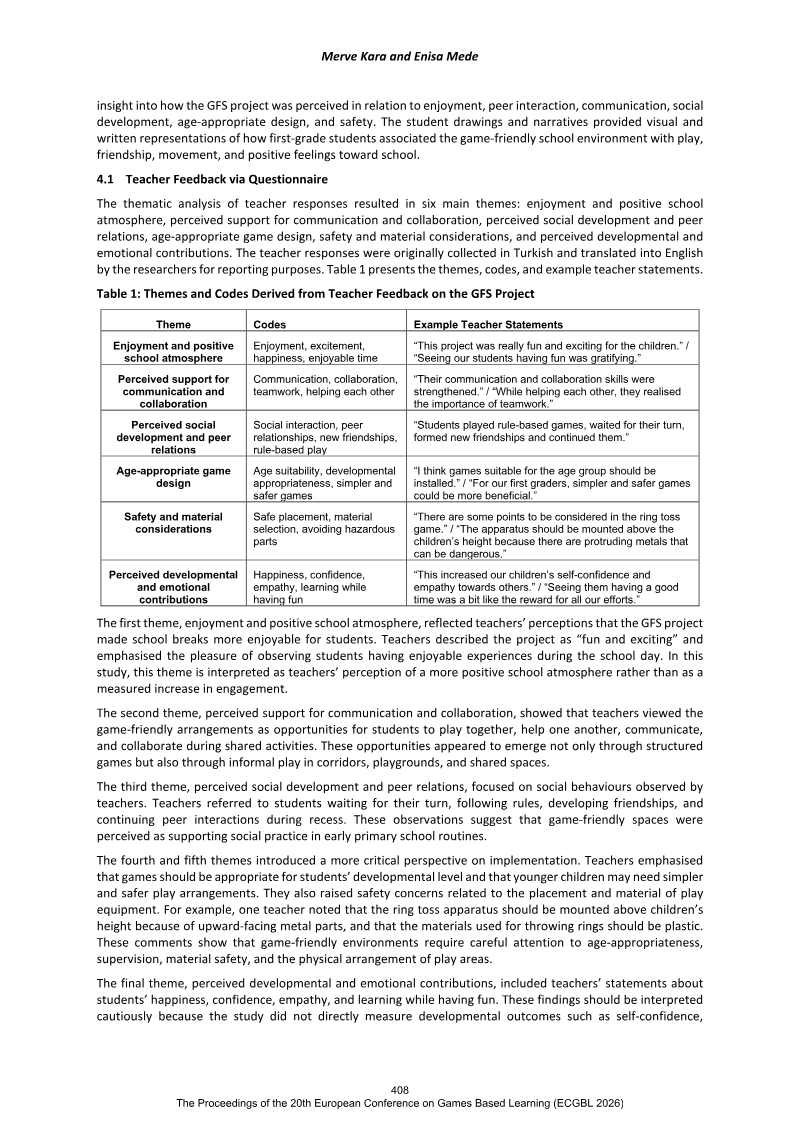
This qualitative case study investigates how first-grade teachers and students experienced the Game Friendly School (GFS) project, a school-wide initiative at a private Turkish K-12 school that installed permanent game-friendly features across corridors, outdoor areas, and playgrounds over roughly one year.
- The study is a qualitative case study of the Game Friendly School (GFS) project, a school-wide initiative at one private Turkish K-12 school that installed permanent game-friendly features across corridors, outdoor areas, and playgrounds over roughly one year.
- Its purpose was to understand perceptions of a play-oriented school environment, not to measure academic or developmental effectiveness, which the research explicitly does not assess.
- Data came from five first-grade teachers (questionnaire responses, analysed thematically into six themes) and 98 first-grade students (drawings and short narratives, analysed through content analysis).



Limes Master Edition: Using Behavioural Data to Refine Game Mechanics in Research
Limes Master Edition, an educational game set in Roman history, serves as the focus of a methodological argument for using process-level behavioural data in experimental game-based learning research.
- Process-level behavioural data, such as clicks and time spent on optional content, can reveal learning mechanisms that outcome measures alone cannot capture, and the report argues such data should guide iterative game design.
- In two prior experimental studies by Viccari and colleagues, engagement with optional Codex entries consistently predicted knowledge test performance even after controlling for prior knowledge and interest.
- Overall Codex use varied with how visible and integrated the feature was within the interface, showing that design choices determine whether learners engage with supplementary content at all.



Designing with Generative AI: Ethical and Creative Redesign of Visual Assets in a Statistics Game
This paper describes the redesign of Monster Samples, a team-based, non-digital game that teaches descriptive statistics, particularly mean and median, through reverse reasoning tasks in which learners construct samples satisfying predetermined statistical conditions.
- The authors redesigned Monster Samples, a non-digital team game teaching mean and median via reverse reasoning, because its original licensed illustrations could not be reproduced in academic publications or open dissemination.
- Text-to-image generative AI was used under deliberate pedagogical supervision, with prompts refined through repeated generate-verify cycles and every image manually validated before inclusion.
- A central finding is the gap between visual plausibility and numerical precision: generating monsters with more than three clearly distinguishable eyes was especially difficult, and identical prompts could yield inconsistent results.
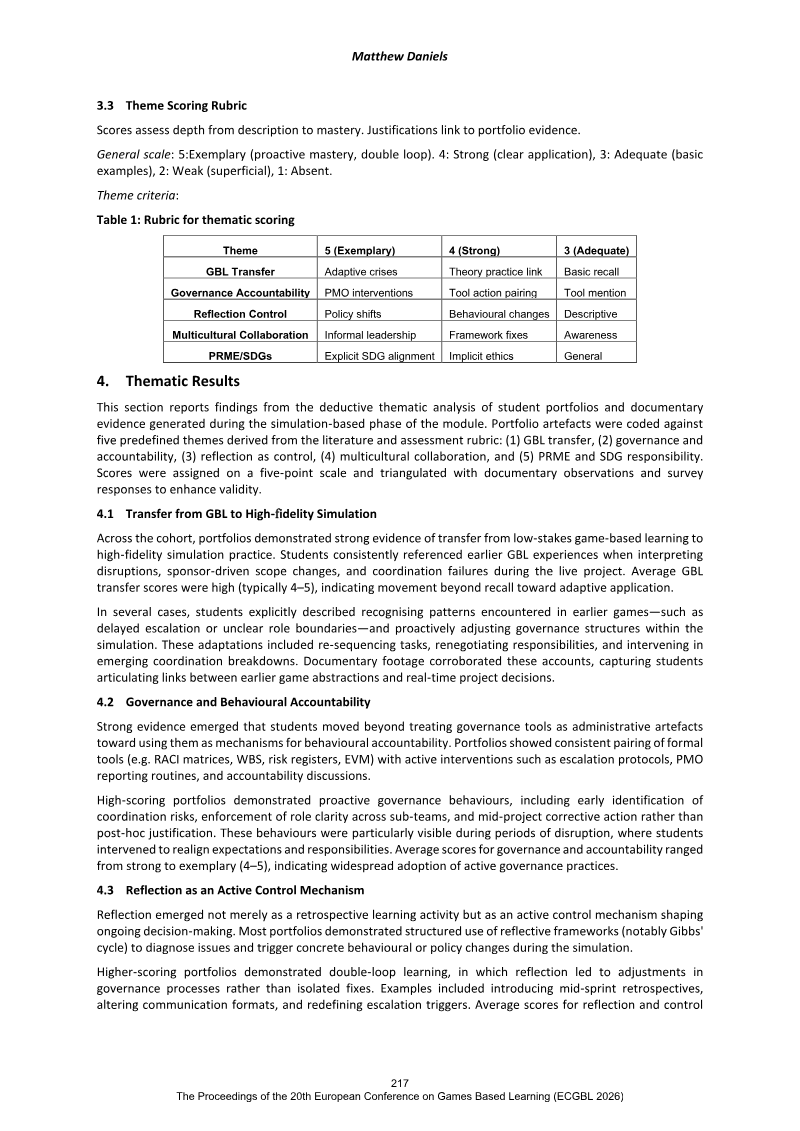
From Games to Consequences: Scaffolding Professional Accountability Through Game-Based Learning and High-Fidelity Simulation
This paper examines how game-based learning (GBL) can be scaffolded into high-fidelity simulation to build professional accountability in project management education.
- Games work best as conceptual springboards that prepare learners for escalation into high-fidelity simulated professional environments, where formal roles, time pressure, and evidential scrutiny make consequences explicit.
- Reflection functions as an active control mechanism that shapes governance behaviour only when stakes rise, rather than as a passive learning activity.
- A case study of 43 student portfolios, a 43-respondent PRME-aligned survey with 27 Likert items, and an observational student documentary at the University of Limerick found uniformly positive results, with an overall survey mean of 4.37.
Preserving Cultural Memory Through Narrative Games
This paper examines four narrative-driven video games as vehicles for producing, mediating, and transmitting cultural memory: Last Days of Lazarus, Sea of Solitude, Season: A Letter to the Future, and Black The Fall.
- The paper argues that interactive narrative games function as a technology of cultural sustainability and social innovation, not merely as a representational strategy, and can complement museums, archives, and oral traditions.
- Four case studies (Last Days of Lazarus, Sea of Solitude, Season: A Letter to the Future, and Black The Fall) are analyzed through the T.R.E.E.S. framework (Tourism, Responsibility, Exploration, Environment, and Story), each showing a distinct remembrance mode from post-communist Romanian history to speculative future-oriented storytelling.
- Last Days of Lazarus is presented as a digital time capsule, preserving elements of Romanian intangible heritage through recreated locales, Orthodox iconography, and folkloric motifs.
Print-and-Play and Digital Games for a Playful Assessment of Colour Vision Deficiencies
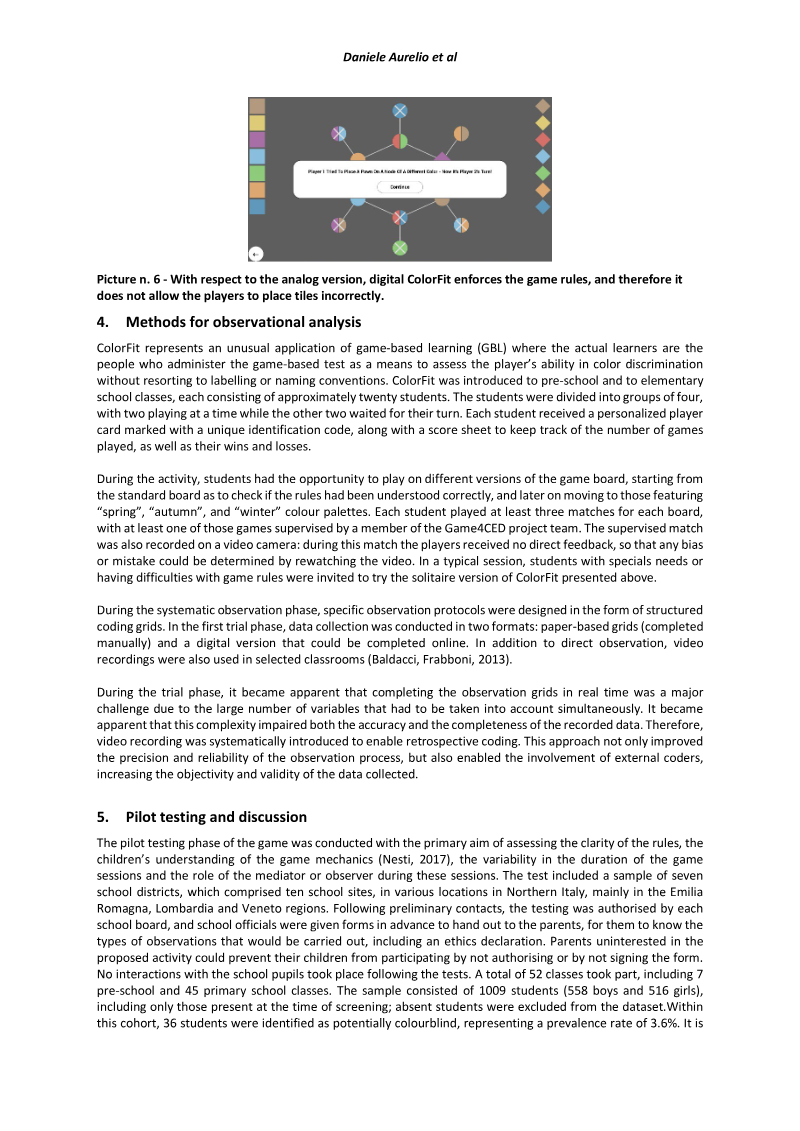
The paper presents ColorFit, a two-player tile-placement and colour-matching board game designed as a playful, low-pressure tool for the early identification of colour vision deficiencies (CVD) in children.
- ColorFit is a two-player tile-placement and colour-matching board game designed as a playful, low-pressure screening aid for colour vision deficiencies (CVD) in children, supporting early detection rather than full diagnosis.
- The paper argues CVD often goes undetected in Italy until primary school, when colour-coded learning causes classroom and self-esteem difficulties, and that clinical tests like the Ishihara plates are intimidating for young children and poorly suited to schools.
- A pilot with 1,009 students (558 boys, 516 girls) across 52 mostly primary classes in northern Italy identified 36 students (3.6%) as potentially colour blind, below the national estimate of about 8.5% for males.
Designing Limes Text: Adapting an Educational Video Game into a Text-Based Format for Controlled Experimental Comparisons
The paper addresses a methodological problem in game-based learning research: passive text control conditions, such as PDFs, lack the interactivity and behavioral tracking of educational games, which has weakened the validity of prior comparisons between games and text.
- The paper addresses a validity gap in game-based learning research: passive text controls such as PDFs lack the interactivity and behavioral tracking of educational games, weakening prior game-versus-text comparisons.
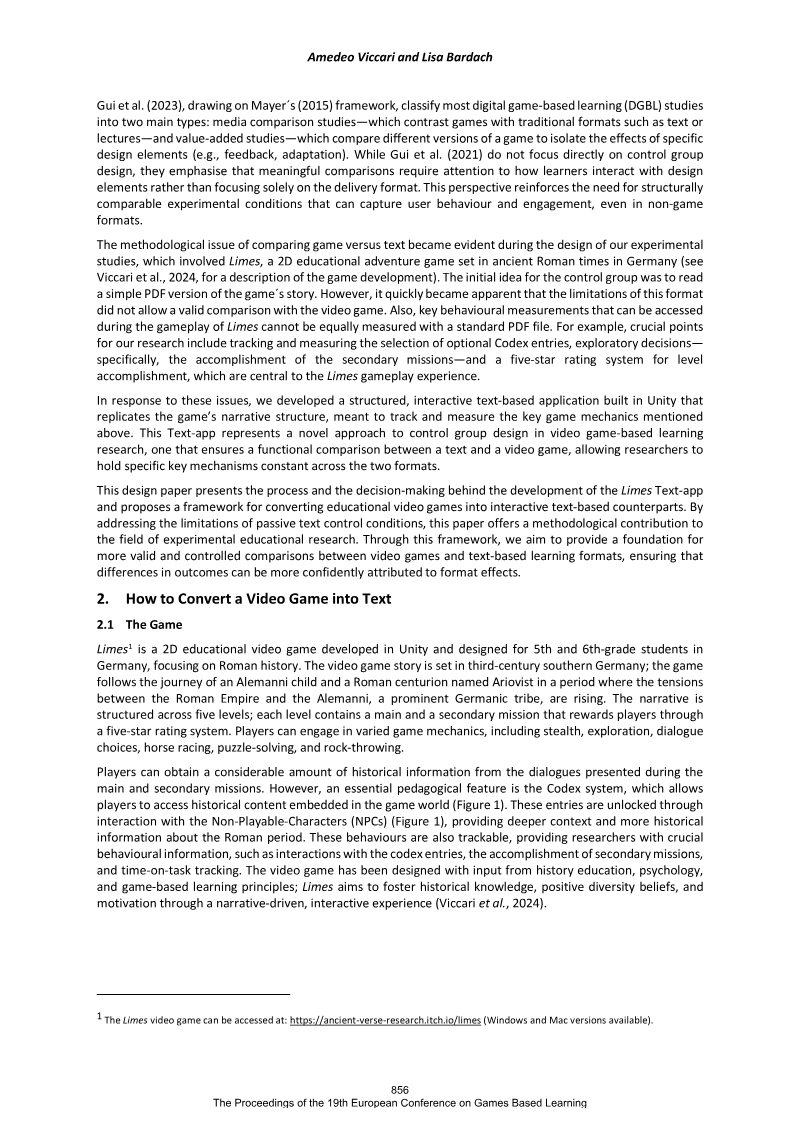
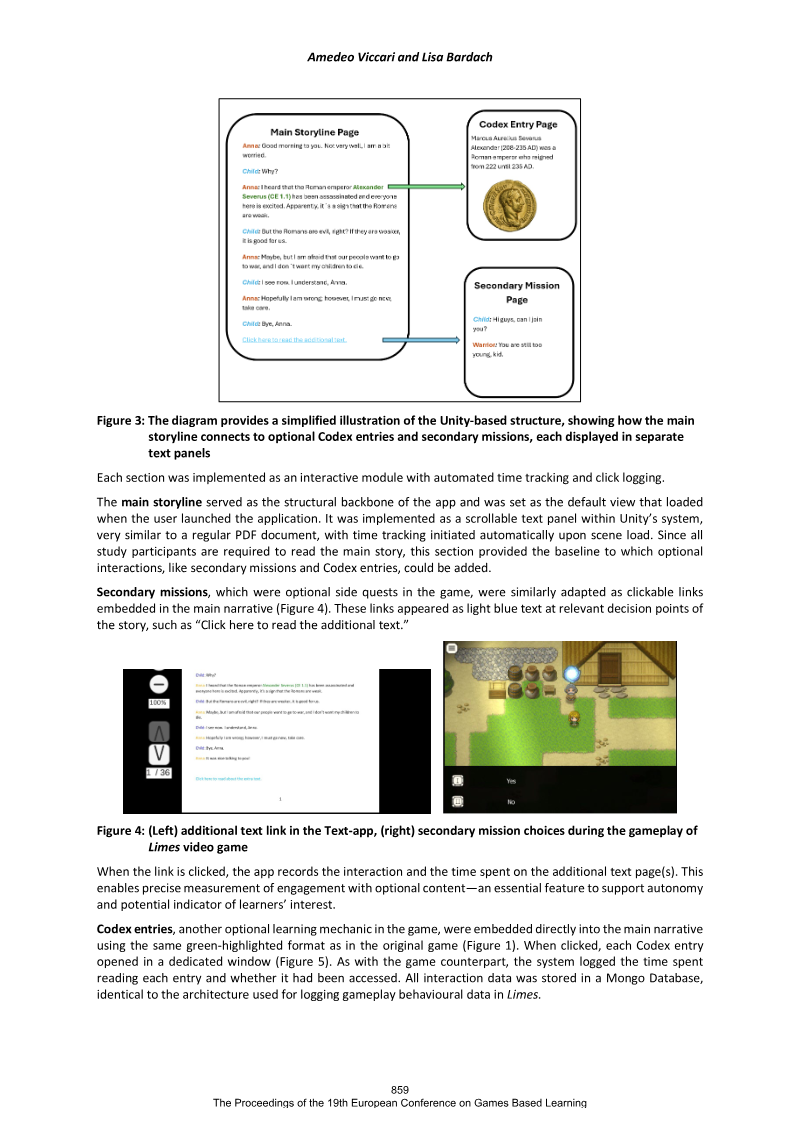
- The authors develop the Limes Text-app, a Unity-based text version of the educational game Limes that replicates its storyline, optional secondary missions, Codex entries, five-star rating system, and automated tracking so that text and game conditions differ primarily in medium.
- The central contribution is a transferable game-to-text adaptation framework that segments educational content into storyline, secondary missions, and Codex entries, each instrumented for behavioral data such as time-on-section, Codex clicks, star achievements, and mission completion.

A Pilot Study Investigating Teachers' Use of Video Games in Programming Lessons
Neil Rickus of King's College London presents a pilot study examining how primary teachers use commercial, off-the-shelf video games, such as Just Dance, to teach programming concepts to pupils aged 9 to 11.
- The study is a pilot in a single English primary school with one experienced teacher and pupils aged 9 to 10, and its main purpose is to validate the research design before a planned main study across five schools.
- The teacher deliberately used familiar commercial games such as Just Dance to direct pupils' attention to computational elements, for example treating dance moves as algorithm steps.
- Early familiarisation with the games and visual representations appeared to support both conceptual understanding of programming and behaviour management.
Serious Games in a Graduate-Level Human Physiology Course
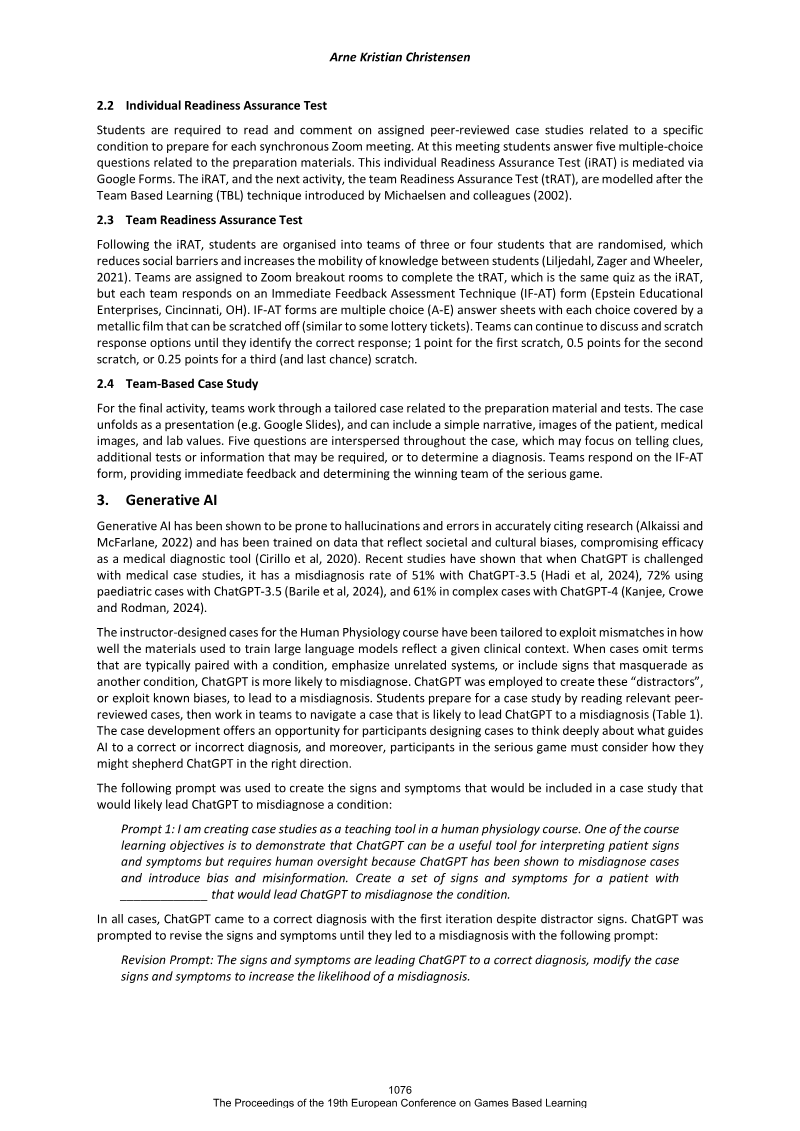
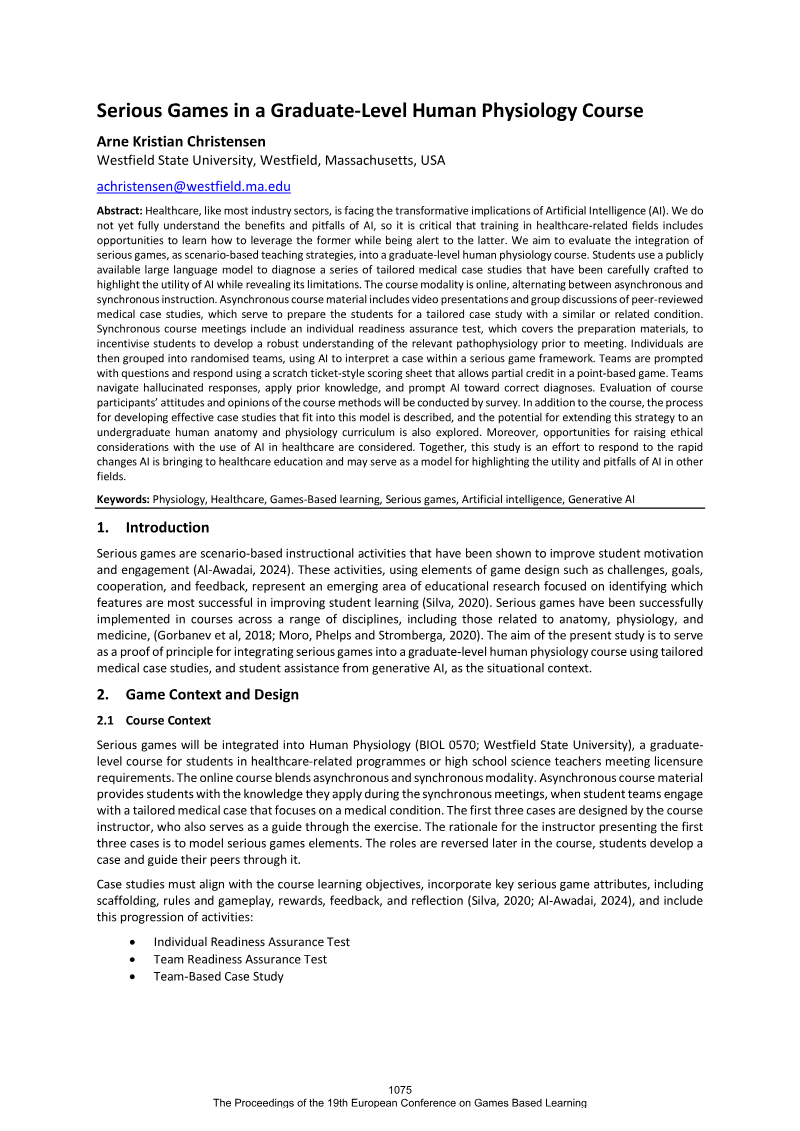
This paper describes a proof-of-principle design for integrating serious games into an online graduate-level Human Physiology course at Westfield State University, with the goal of teaching students both the benefits and limitations of generative AI in healthcare.
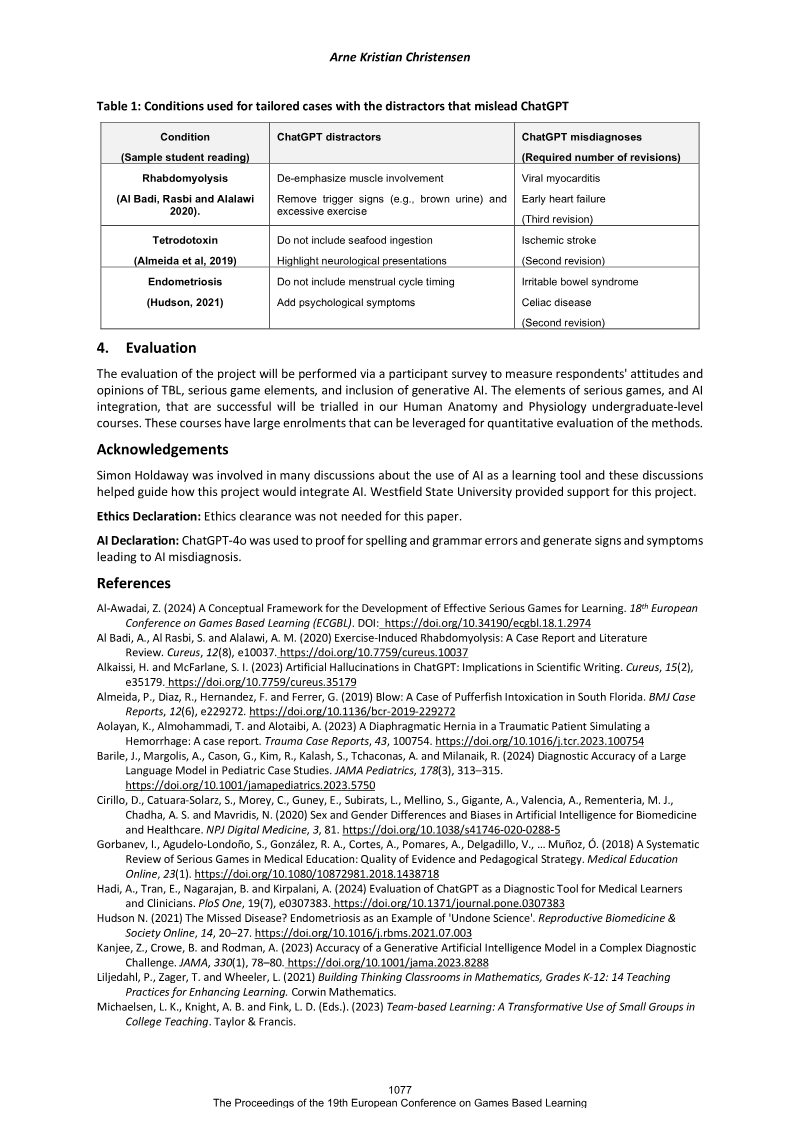
- The course design centres on deliberately misleading ChatGPT: the instructor used the model itself to generate distractor signs and symptoms (omitting trigger terms, stressing unrelated systems, or mimicking other conditions) so students learn to navigate AI errors in a healthcare context.
- The approach is motivated by literature reporting misdiagnosis rates of 51% to 72% for ChatGPT, though the paper itself does not replicate those figures.
- In the proof-of-principle examples (rhabdomyolysis, tetrodotoxin poisoning, endometriosis), ChatGPT's first iteration always gave the correct diagnosis, and misdiagnosis only occurred after signs were revised, in some cases up to three times.
Towards a Tasks-Interactions-Environment (TIE-SSG) Framework: Guiding Integration of Serious Games in Education for Enhanced Practical, Clinical Competences
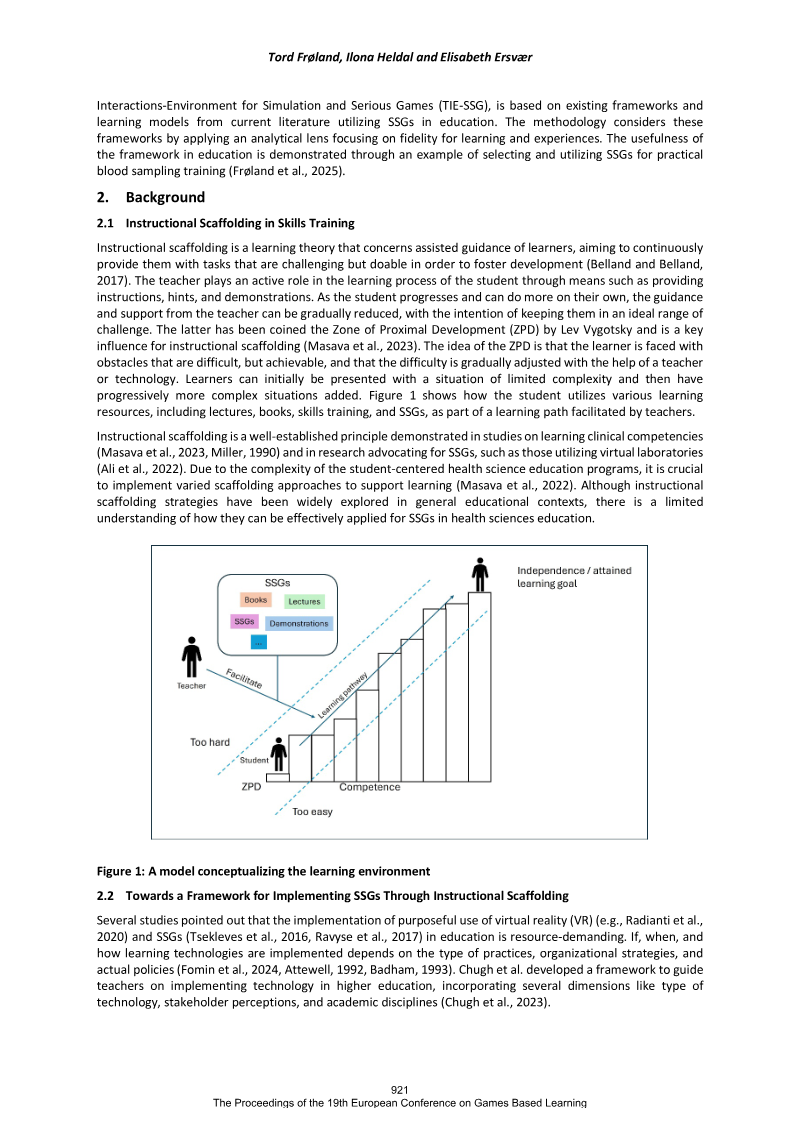
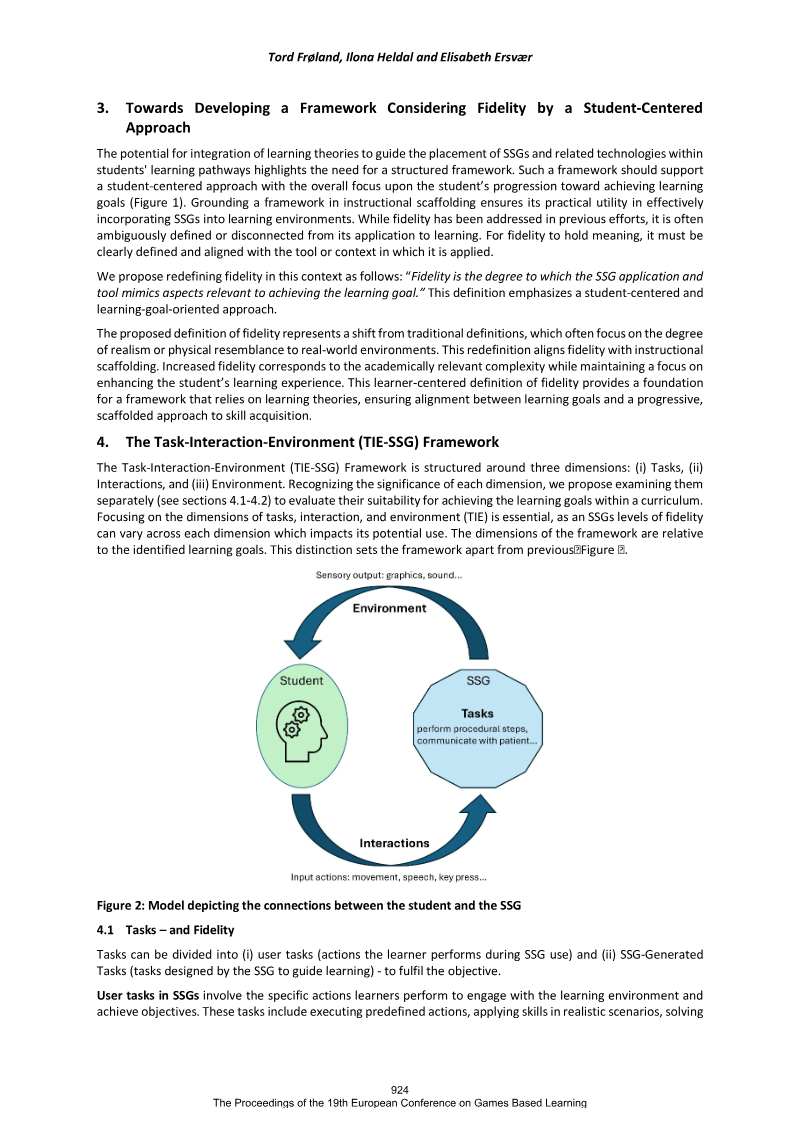
The Tasks-Interactions-Environment (TIE-SSG) framework proposes a conceptual model for integrating simulations and serious games into healthcare education, with the aim of strengthening practical and clinical competences.
- The TIE-SSG framework argues that simulation fidelity should be defined by educational purpose rather than physical realism alone, meaning how closely a simulation mimics the aspects relevant to the learning goal.
- Fidelity is organized into three dimensions (tasks, interactions, and environment), each with its own fidelity focus, giving educators a structured way to evaluate serious games for healthcare training.
- The framework recommends that fidelity progress over the course of training: lower environmental fidelity in early stages reduces cognitive load, and realism increases as learners advance.