
European Conference on Games Based Learning (ECGBL)
Annual European conference on game-based learning and serious games; its proceedings are published open access (CC BY) by Academic Conferences International.
Documents
Localized Leaderboards Improve Motivation, Engagement, and Skill Learning in Employee Training
A preliminary experimental study examines whether localized leaderboards, which display a learner's ranking relative to nearby peers rather than the full organizational population, can improve motivation, engagement, and skill acquisition in phishing awareness training.
- Localized leaderboards, which rank learners against nearby peers rather than the whole organization, were compared with global leaderboards and no leaderboard in a preliminary study of 24 employees at a Saudi government educational organization.
- The localized group achieved a 100% training completion rate versus 75% in the other two groups, and averaged 8.13 quiz attempts compared with roughly 3.0 to 3.25 for the comparison groups.
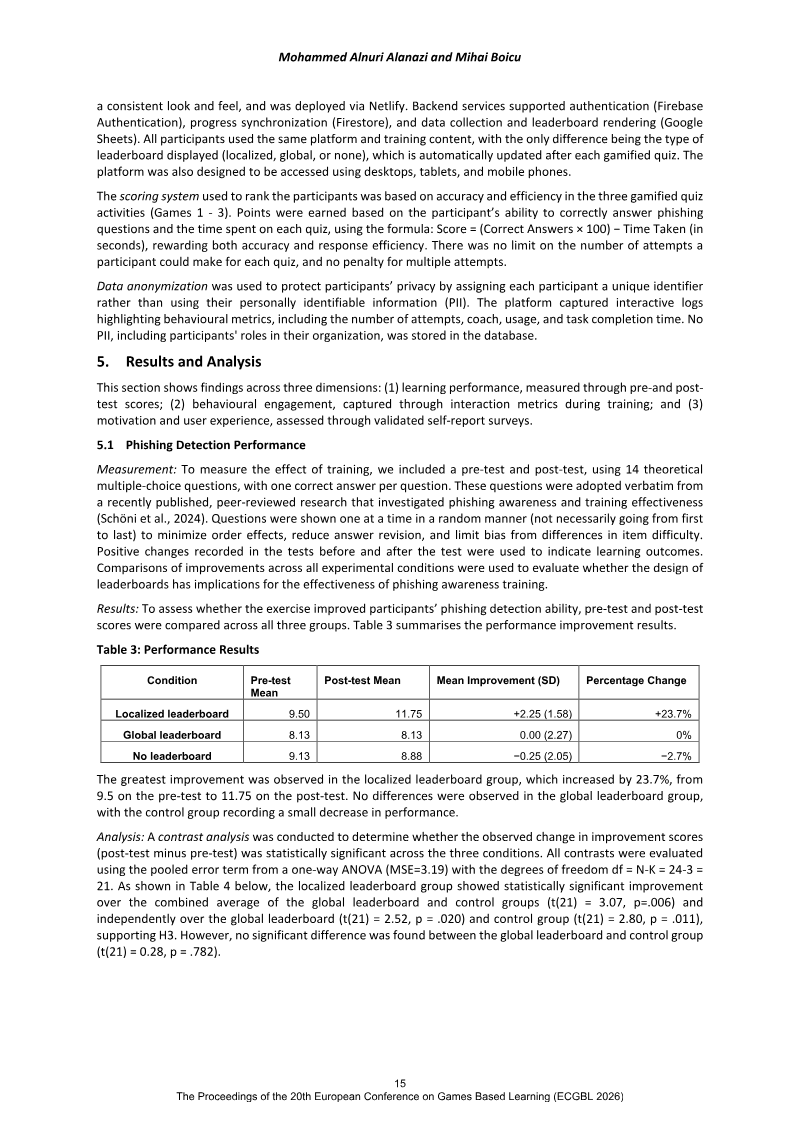
- Phishing detection scores rose 23.7% from pre-test to post-test in the localized group (9.50 to 11.75), while the global leaderboard group showed no meaningful gain and the control group declined by 2.7%.
A Design and Development of Serious Game for Raising Awareness About Human Trafficking
This paper presents the design and development of a serious game intended to raise awareness of human trafficking by placing players in the position of a victim rather than a hero.
- The paper proposes a serious game that places players in the role of a trafficking victim rather than a hero, using stealth mechanics (evasion and concealment, with restricted combat) to build embodied understanding of victims' vulnerability.
- The design is grounded in situated cognition, Kolb's experiential learning cycle, and empathy-driven design informed by procedural rhetoric.
- The game was built in Unity with a hybrid AI architecture: Behaviour Trees govern guards' macro-level patrol and search, while Finite State Machines handle micro-level animation and state transitions.
Preparing for the Viva Through Play: A Card-Based Game Intervention for Doctoral Students
This developmental case study introduces the viva card game, a non-digital, game-based learning intervention designed to help UK doctoral candidates prepare for the viva voce examination.
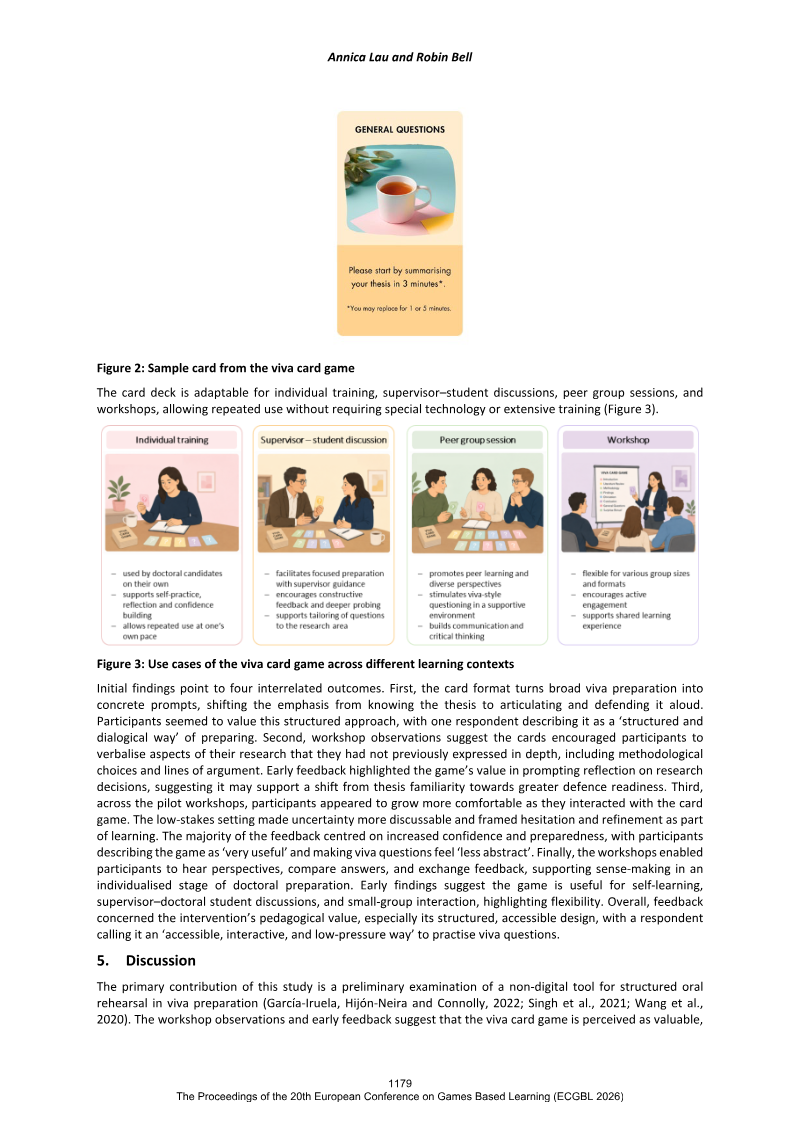
- The viva card game is a non-digital, game-based learning intervention that gives UK doctoral candidates structured, low-stakes oral rehearsal using a deck of viva-style questions organised around standard thesis sections.
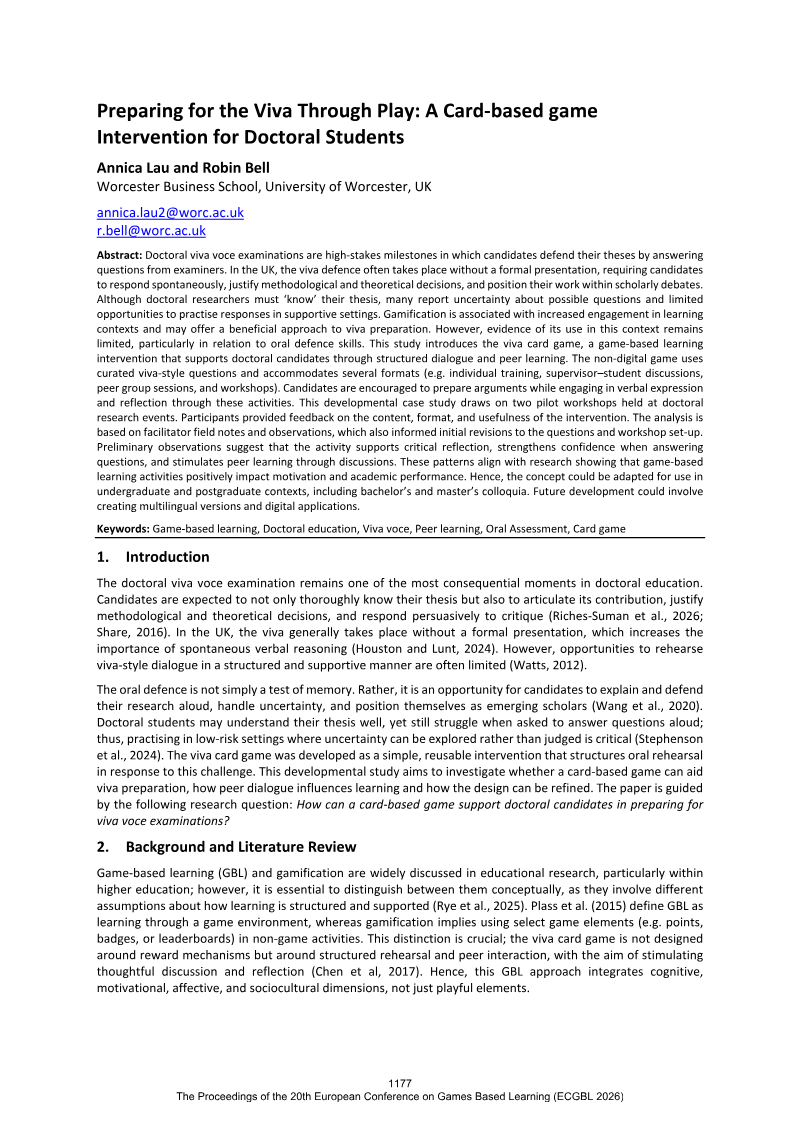
- The intervention is built on task design and peer dialogue rather than reward mechanics such as points or badges, and it can be used for individual study, supervisor-student discussion, peer groups, or workshops.
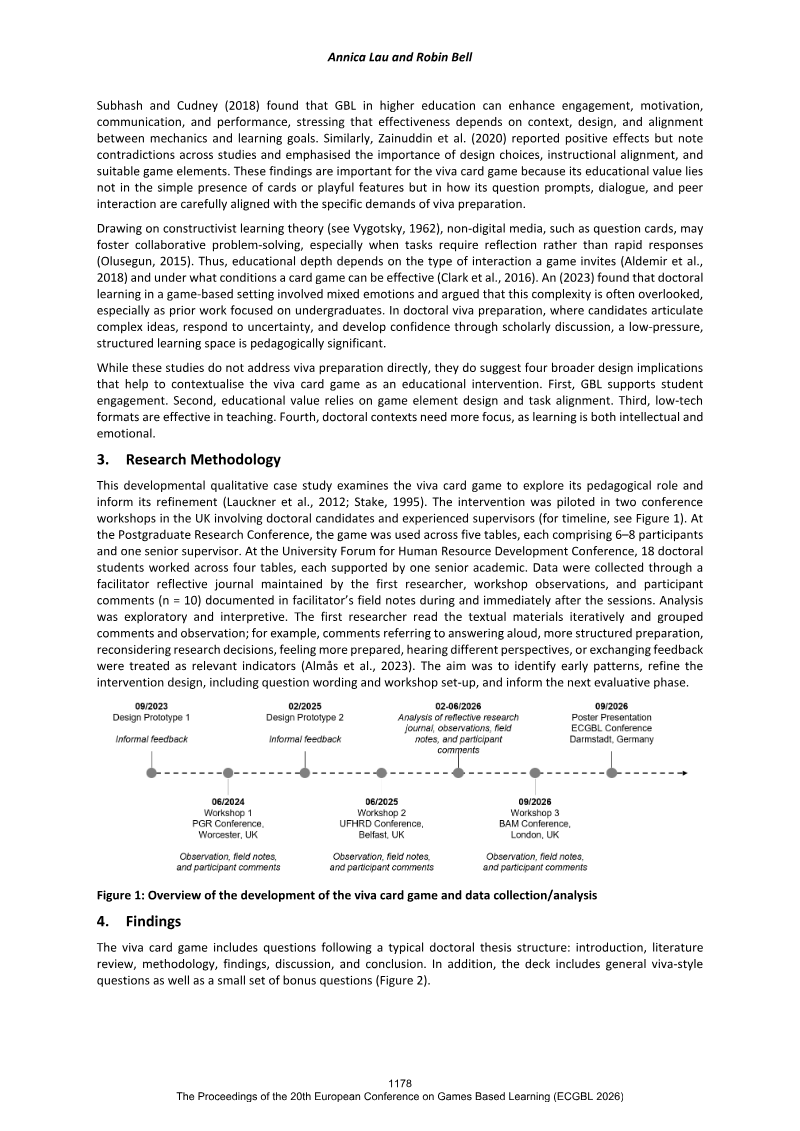
- The evidence is preliminary and qualitative, drawn from two pilot workshops (one with five tables of 6-8 participants at a postgraduate research conference, one with 18 doctoral students across four tables at a human resource development conference), plus facilitator notes and about ten participant comments.
LOOP: A Transversal Framework for Game-Based Learning Analysis and Design
LOOP is a transversal framework for analyzing and designing game-based learning, developed at the University of Caen Normandy since 2017.
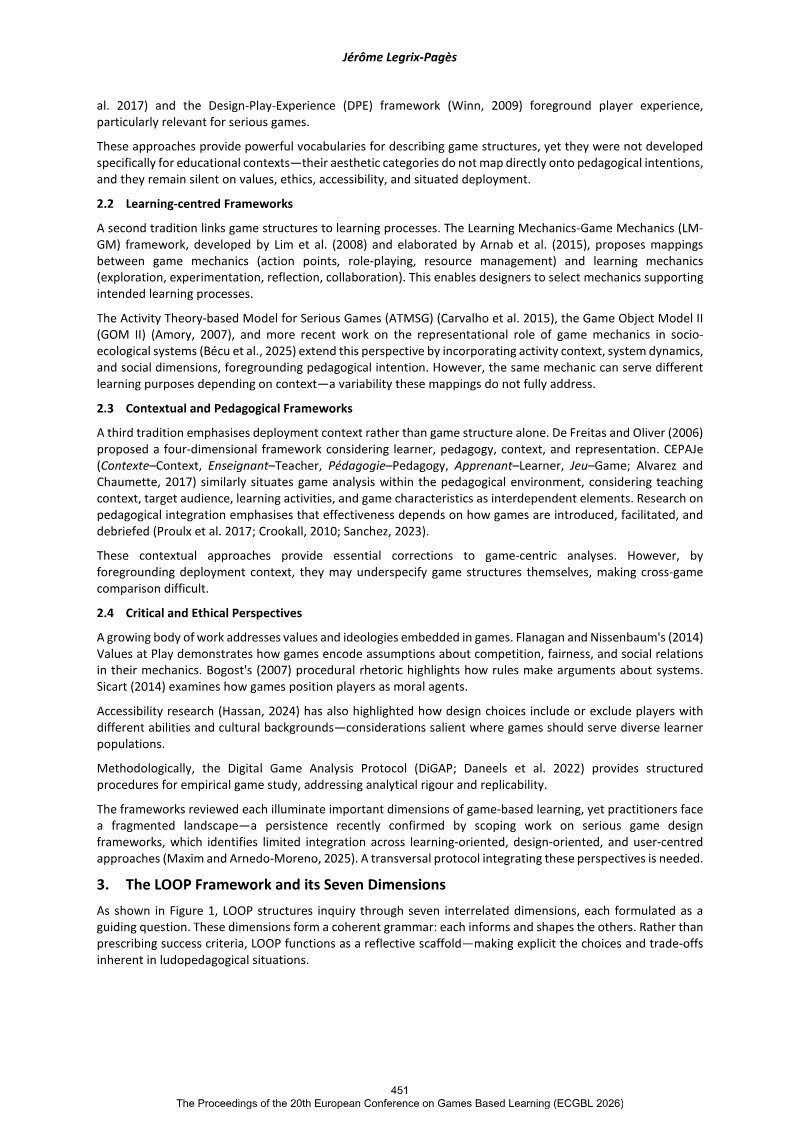
- LOOP is a seven-dimension framework (Ludicity, World, Mechanics, Experience, Values, Accessibility, Transformation) for analyzing and designing game-based learning, developed at the University of Caen Normandy since 2017 as a reflective scaffold rather than a prescriptive standard.
- The framework argues that existing approaches such as MDA, LM-GM, CEPAJe, and critical or ethical frameworks each capture only part of the picture, and none jointly integrates structural, experiential, ethical, and deployment-context considerations.
- A qualitative analysis of 372 analog games by 28 analysts found thematic alignment with LOOP ranging from 93% for Ludicity down to 51% for Transformation.
Scientific Escape Room: A Science Communication Initiative Evaluated by Generic Learning Outcomes
The Scientific Escape Room, a science communication initiative at the Federal University of Juiz de Fora in Brazil, is evaluated in this study through the Generic Learning Outcomes (GLO) framework.
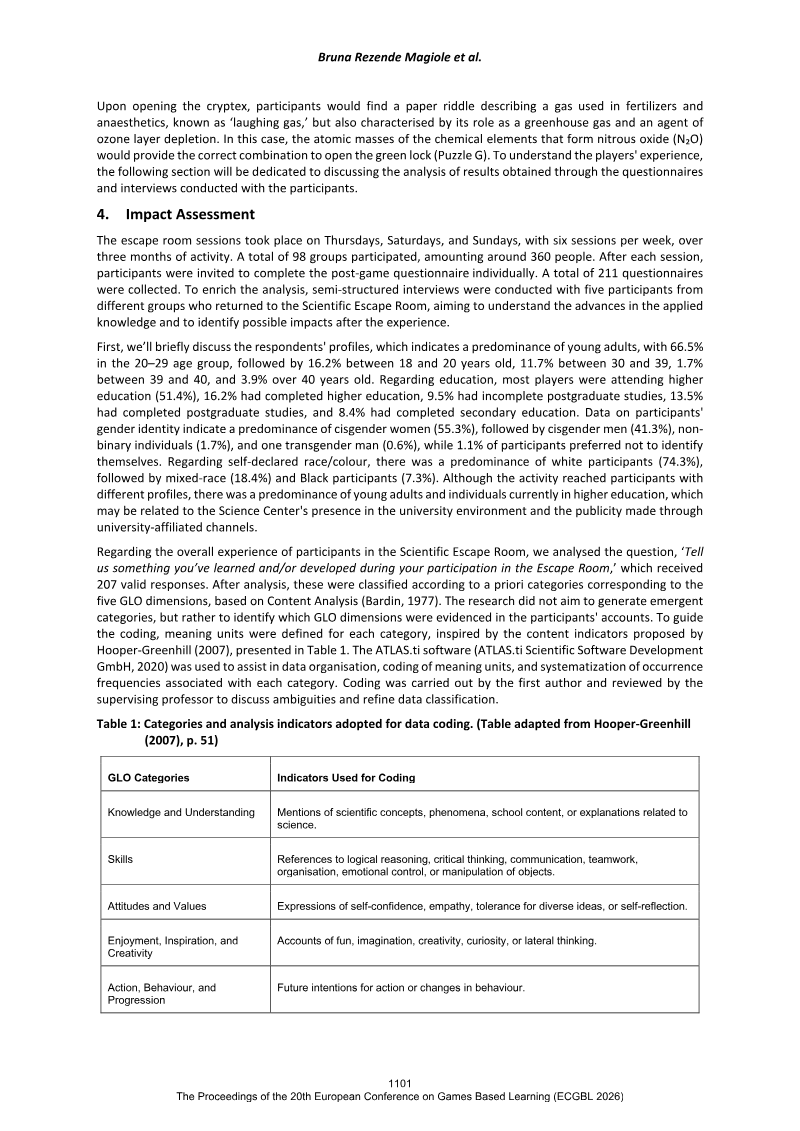
- The Scientific Escape Room, a science communication initiative at the Federal University of Juiz de Fora in Brazil, was evaluated through the Generic Learning Outcomes framework using about 360 participants across 98 groups over roughly three months, with 211 post-game questionnaires collected.
- Qualitative analysis of 207 valid open-ended responses found evidence for all five Generic Learning Outcome dimensions, with Skills cited most often (84 responses), followed by Enjoyment, Inspiration, and Creativity (38) and Knowledge and Understanding (28).
- The format was designed for adults over 18 and its participants were predominantly young adults (66.5% aged 20 to 29) and largely university-affiliated, which limits how far the findings generalise.
The ComeThinkAgain Project: Playful Computational Thinking in Primary Teacher Education Through Game Mechanics
The ComeThinkAgain Project develops a playful, game-based micro-module on computational thinking (CT) for primary teacher education, delivered as a 1-ECTS course for Swiss in-service and trainee teachers.
- The ComeThinkAgain Project is a 1-ECTS, game-based micro-module on computational thinking for Swiss in-service and trainee primary teachers, using familiar games and unplugged tactile activities rather than conventional programming.
- The central goal is to test whether teachers come to view computational thinking as a broader problem-solving competence they can carry into everyday classroom practice across subjects.
- The pilot cohort started with eight participants, and five completed the course; three withdrew, mainly due to workload.
From Blocks to Code: A Game-Based Modding Workshop for Bridging Programming Paradigms
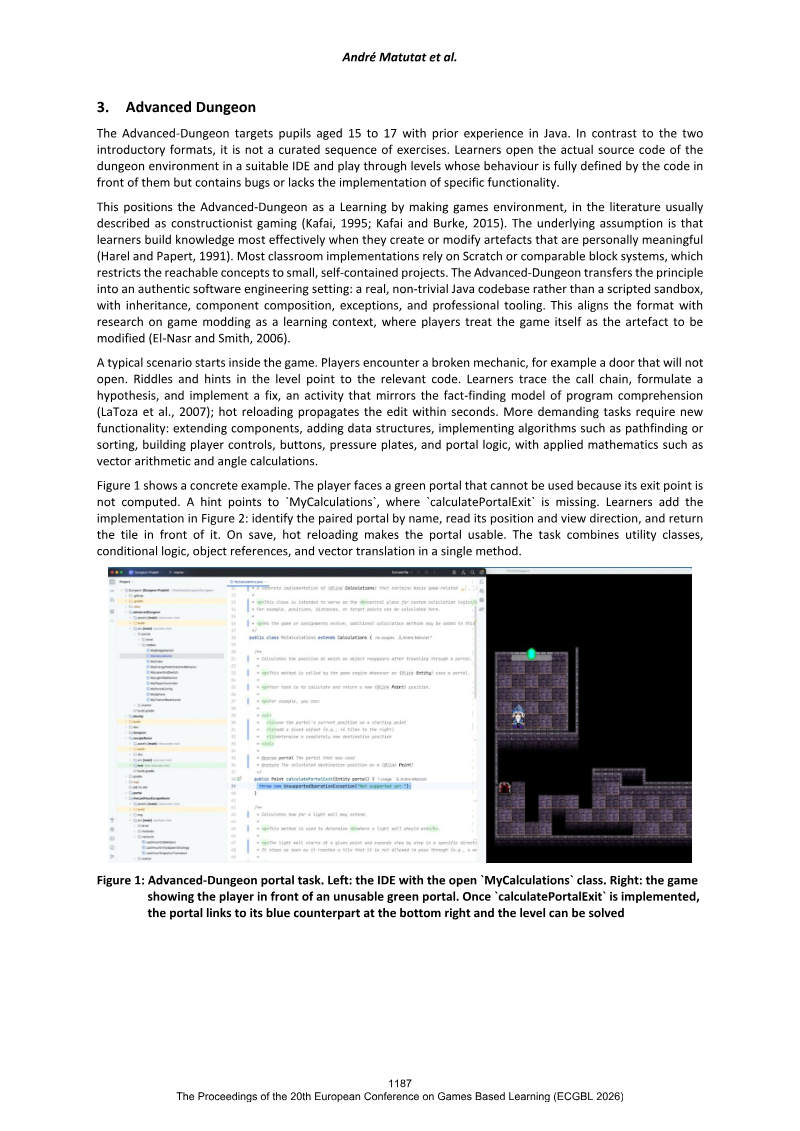
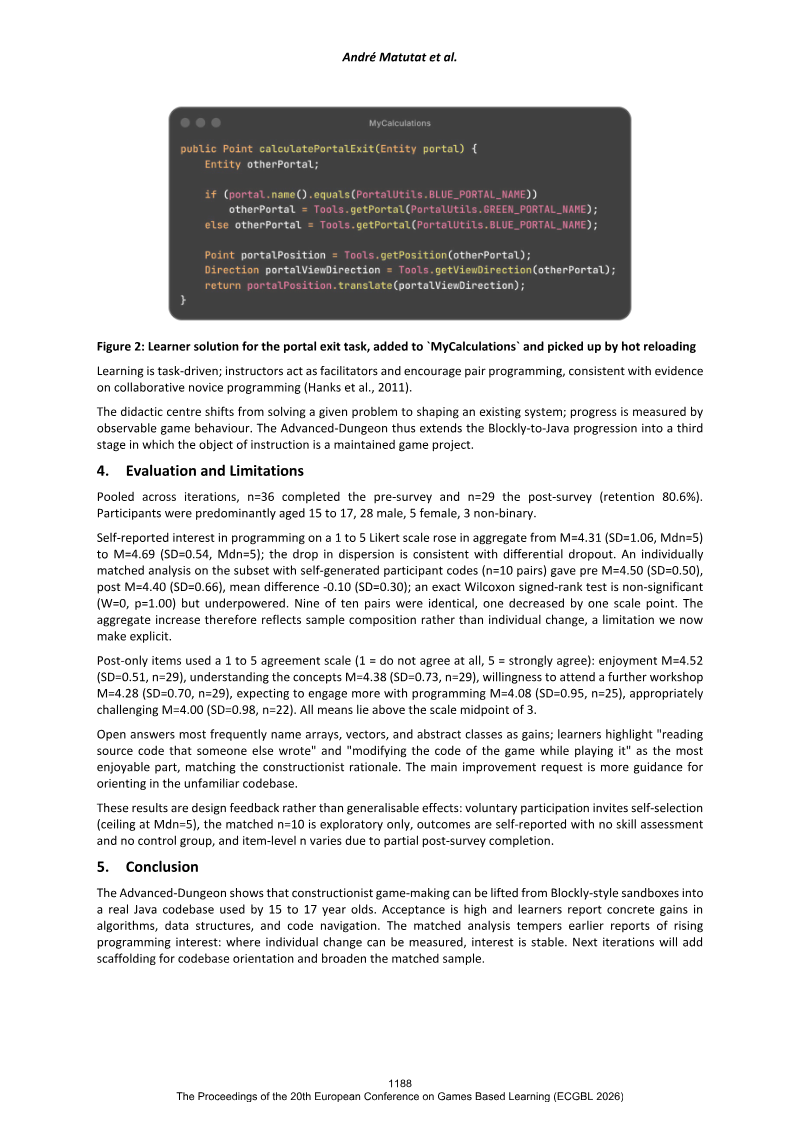
The Advanced-Dungeon is the most demanding stage of a multi-level, narrative-driven workshop concept designed to move learners from block-based to text-based and finally to project-scale Java programming within a shared open-source 2D dungeon game.
- The Advanced-Dungeon stage targets pupils aged 15 to 17 with prior Java experience, having them read, debug, and extend a real open-source 2D dungeon game's codebase rather than working through curated exercises, and implement algorithms such as pathfinding and sorting.
- The first evaluation retained 29 of 36 pre-survey participants (80.6%) at post-survey, with a predominantly male sample aged 15 to 17, and participants rated enjoyment highly (M=4.52 on a 1 to 5 scale), considered difficulty appropriate, and expressed willingness to attend further workshops.
- Participants most often reported gains in arrays, vectors, and abstract classes, and singled out modifying real game code as the most rewarding element of the workshop.
Exhibiting Advanced Mathematics with Casual Games in Science Centres
This paper examines whether casual, game-based exhibits can make advanced mathematics engaging in science centre settings, where visitors participate voluntarily, interactions are brief, and exhibits compete for attention.
- Three casual, game-based exhibits on advanced mathematics (Nash equilibrium, Voronoi diagrams, and tangents) at Sweden's Universeum science centre achieved visitor interaction rates of 36–40%, among the most engaging in the Mathrix exhibition versus 6–10% for the least engaging.
- A visitor movement study of the whole 2023 Mathrix exhibition (aimed at ages 13–18) recorded 2,383 visitor-exhibit interactions across 22 exhibits, providing the quantitative basis for the engagement comparison.
- In the Voronoi study, 20 groups playing 86 games produced conversations in which 73% concerned learning, with mathematical reasoning visible at three levels of strategic thinking.
Playing with Misinformation: A Game-Based Approach to Children's Critical Digital Literacy
This paper presents the design and early development of SafeChilDe, a role-based classroom game for children aged 10 to 12 that teaches critical digital literacy about misinformation.
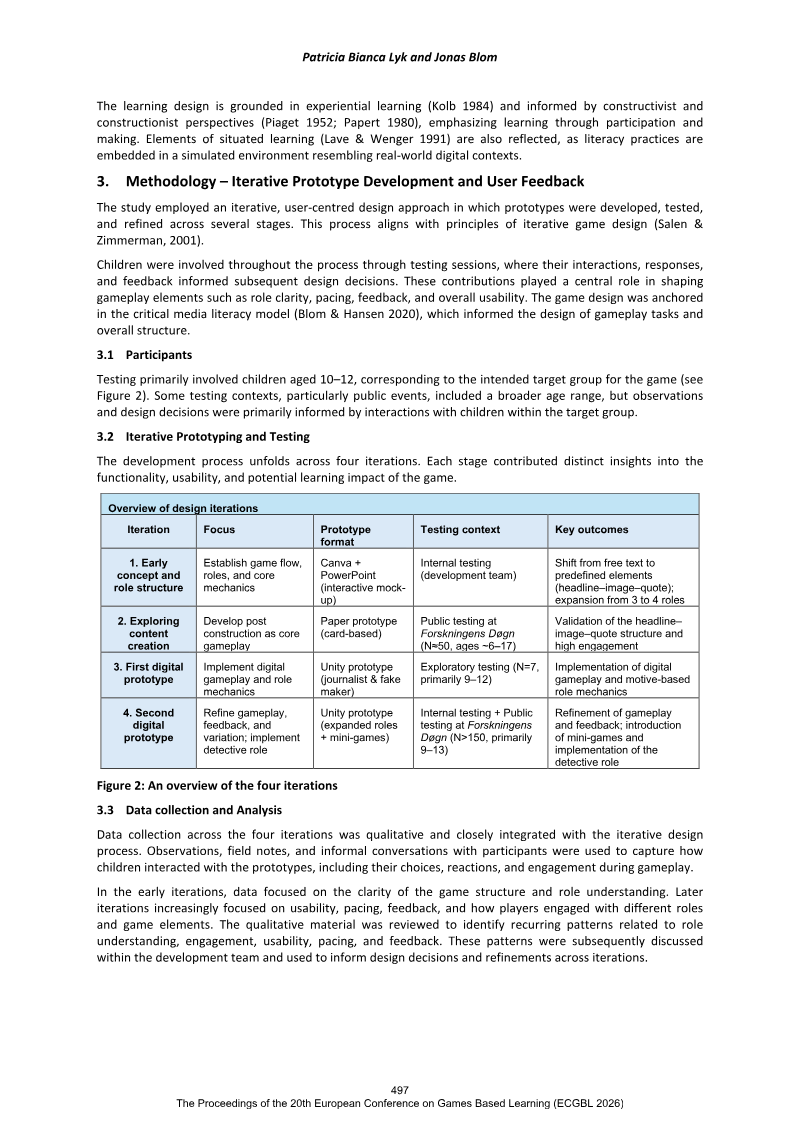
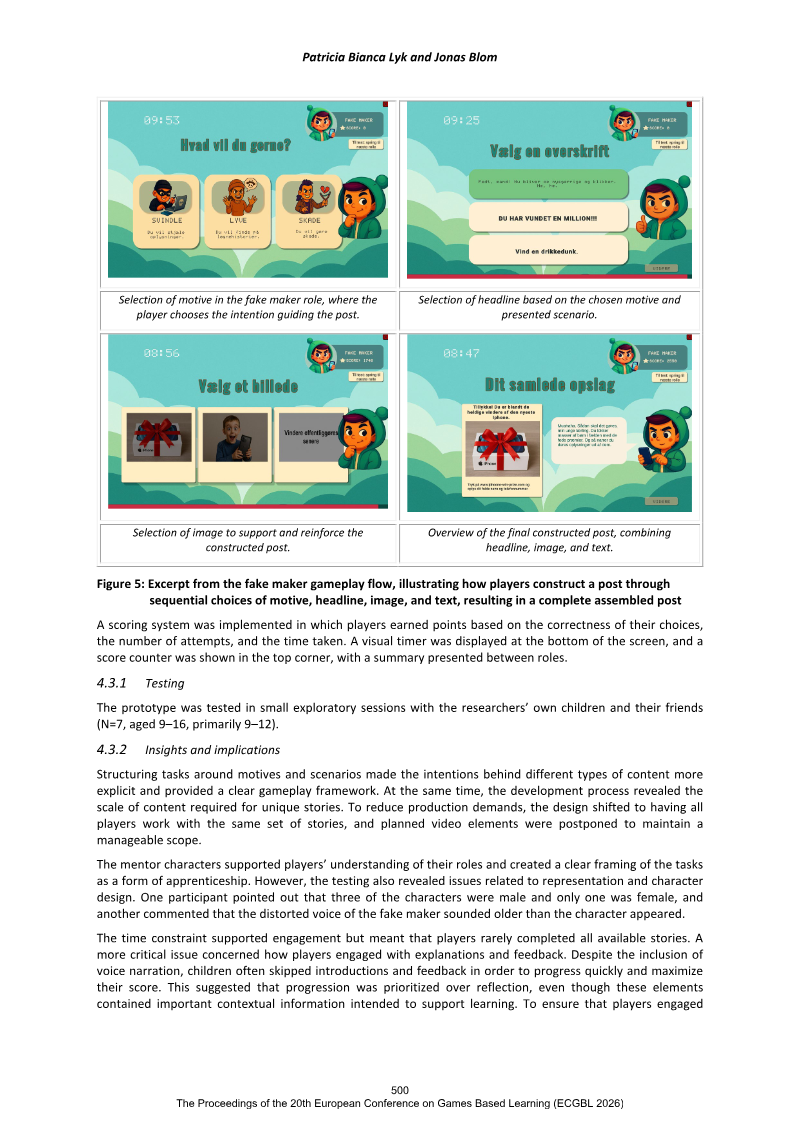
- SafeChilDe is a role-based classroom game for children aged 10 to 12 that teaches critical digital literacy about misinformation, assigning players the roles of journalist, influencer, fake maker, and detective.
- The game's central thesis is that production-oriented, participatory play can make abstract critical media literacy concepts tangible, treating critical digital literacy as a practice-based competence learned by doing rather than only by evaluating content.
- The motivating context is that nine in ten Danish children aged 5 to 12 have encountered misleading content online, yet few feel confident verifying it.
Communicating Science Through Escape Rooms: A Challenge
This conceptual protocol proposes a mixed-methods study to examine how different stakeholders in Portugal perceive, accept, or resist the use of escape rooms as a science communication (SciComm) tool.
- The study is a conceptual protocol for a mixed-methods project in Portugal examining how the public, academics, and the escape room industry perceive, accept, or resist escape rooms as a science communication tool, motivated by declining public trust in science and growing demand for participatory formats.
- Its aim is to map cognitive, emotional, and institutional factors shaping acceptance rather than to measure learning outcomes, treating stakeholder receptiveness as a prerequisite for sustainable escape room design.
- The design pairs an exploratory qualitative phase (focus groups of 5 to 8 participants, roughly 60 total, analysed via reflexive thematic analysis) with a Likert-style online survey of roughly 600 respondents, analysed in JASP and including the Portuguese Trust in Science and Scientists scale.

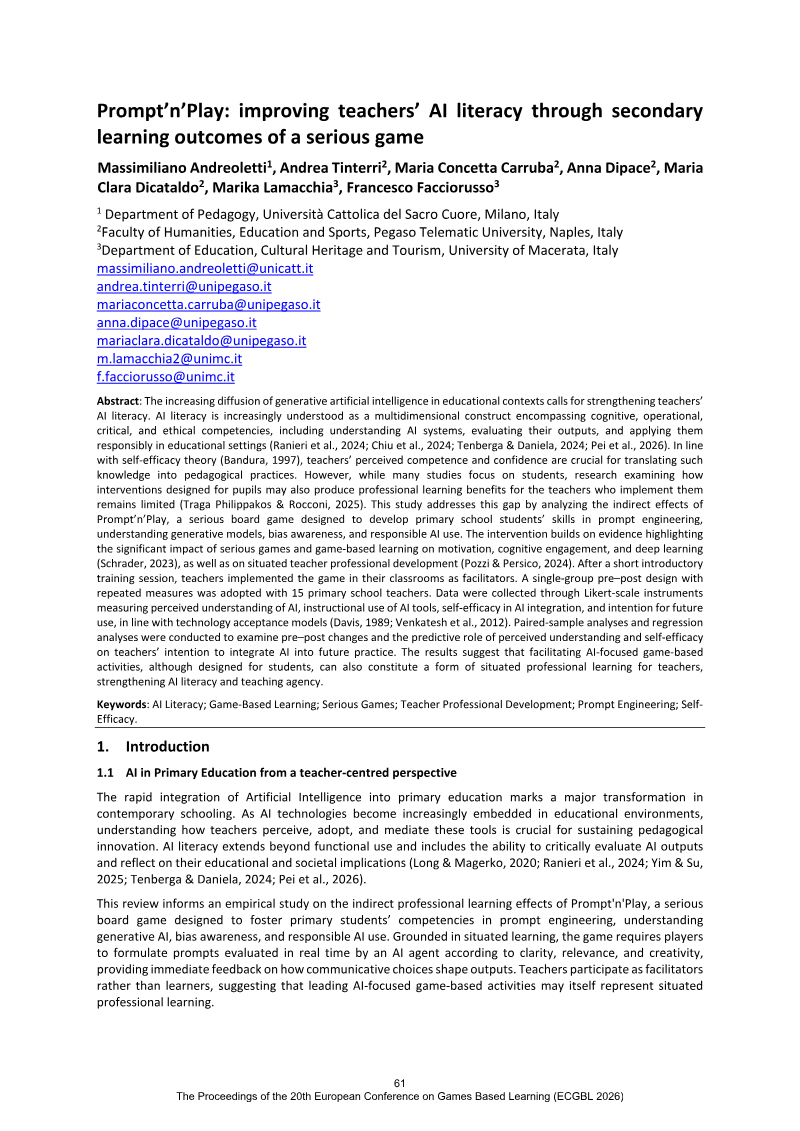
Prompt'n'Play: Improving Teachers' AI Literacy Through Secondary Learning Outcomes of a Serious Game
"Prompt'n'Play" examines whether facilitating an AI-focused serious board game for primary pupils can serve as situated professional learning that strengthens primary teachers' AI literacy and teaching agency.
- Facilitating an AI-focused serious board game with primary pupils significantly improved 15 primary teachers' perceived understanding of AI (Wilcoxon p = .018, r = .67) in a single-group pre-post study.
- Teachers' perceived didactic use of AI also rose significantly after the intervention (p = .008, r = .84), a very large effect size, suggesting game facilitation can build practical teaching agency with AI.
- Daily AI use showed only a non-significant positive trend (p = .094), so the study finds no firm evidence that teachers began using AI more in everyday life.
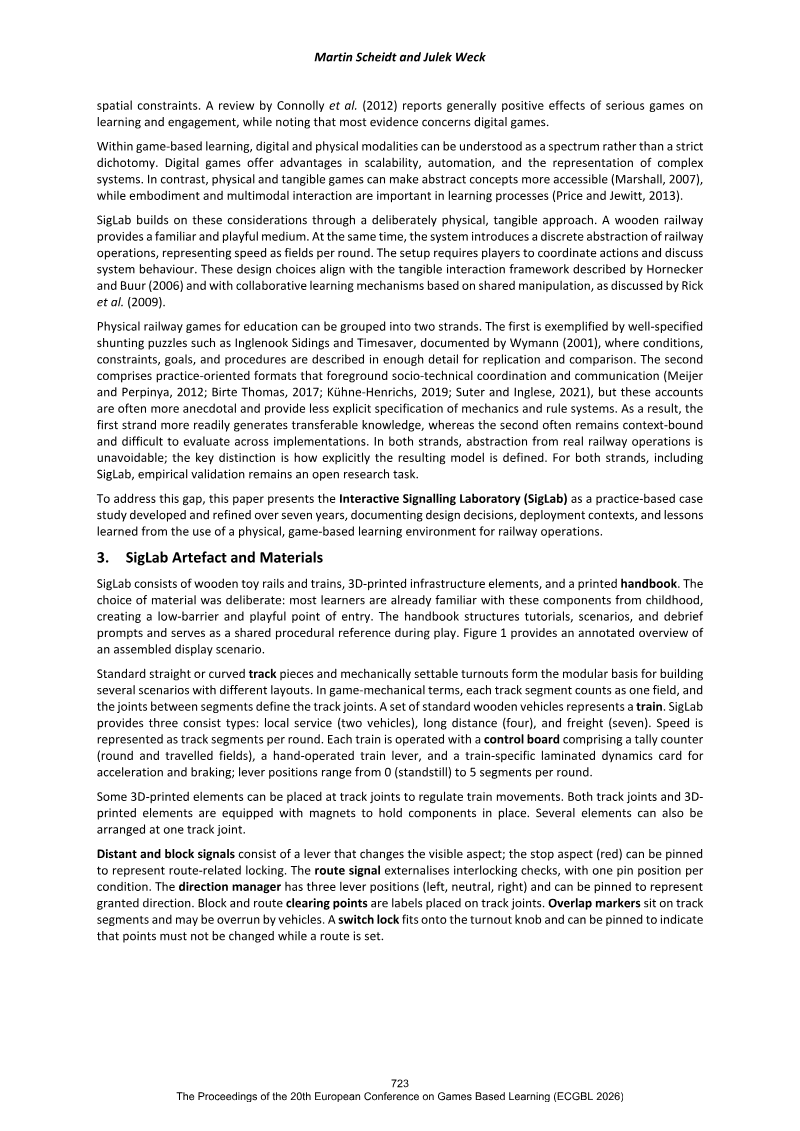
Interactive Signalling Laboratory: A Physical Serious Game for Railway Operations Education
SigLab is a physical serious game that uses a modified wooden railway to teach railway signalling and operations through collaborative, tangible play.
- SigLab is a physical serious game using a modified wooden railway to teach railway signalling and operations through collaborative, tangible play, developed over roughly seven years as a practice-based case study at TU Braunschweig.
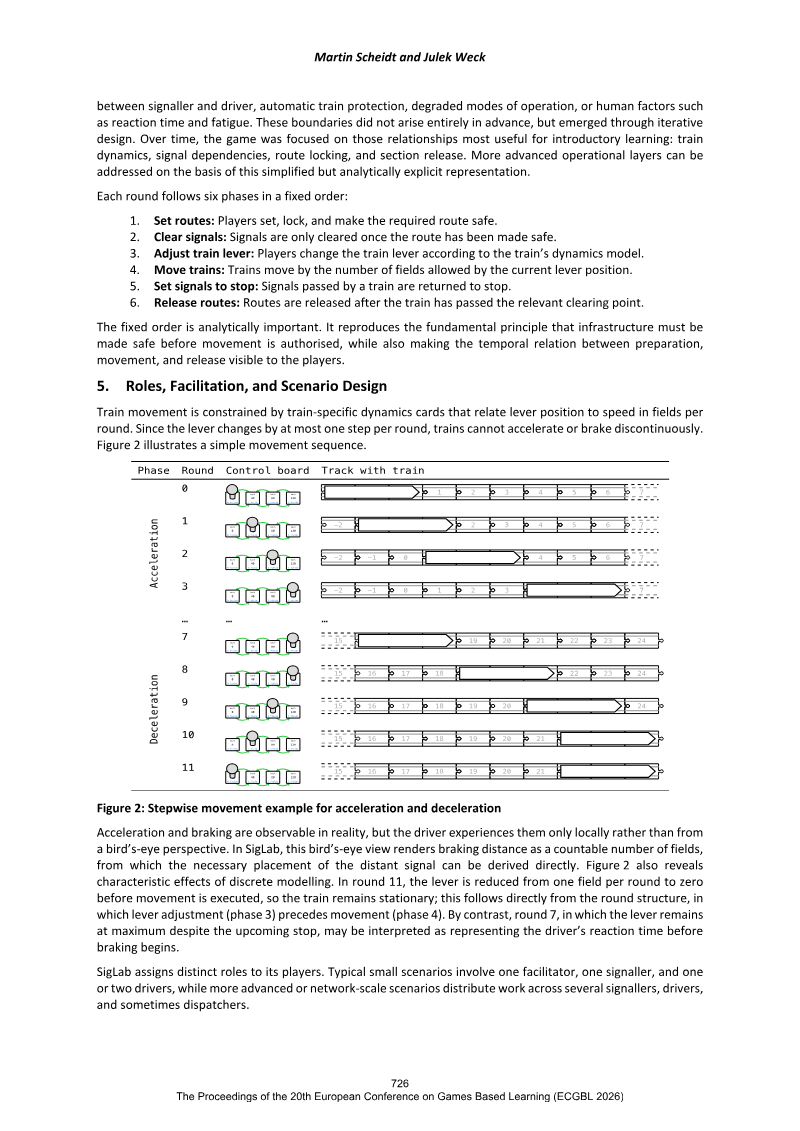
- The game abstracts continuous railway dynamics into fields and rounds with a fixed six-phase round structure, making concepts such as route safety, blocking time, braking distance, block spacing, and section release visible for discussion.
- Since 2019, SigLab has run across 14 semesters with around 350 students and has also been adopted in professional training and some EU-funded research.