1 free read left. Create a free account for unlimited reading + AI research.
Create free accountWhitepaper European Conference on Games Based Learning (ECGBL)
1 free read left. Create a free account for unlimited reading + AI research.
Create free accountWhitepaperEuropean Conference on Games Based Learning (ECGBL)
The paper argues games prepare learners for simulated professional environments. There, formal roles, time pressure and evidential scrutiny make consequences explicit.
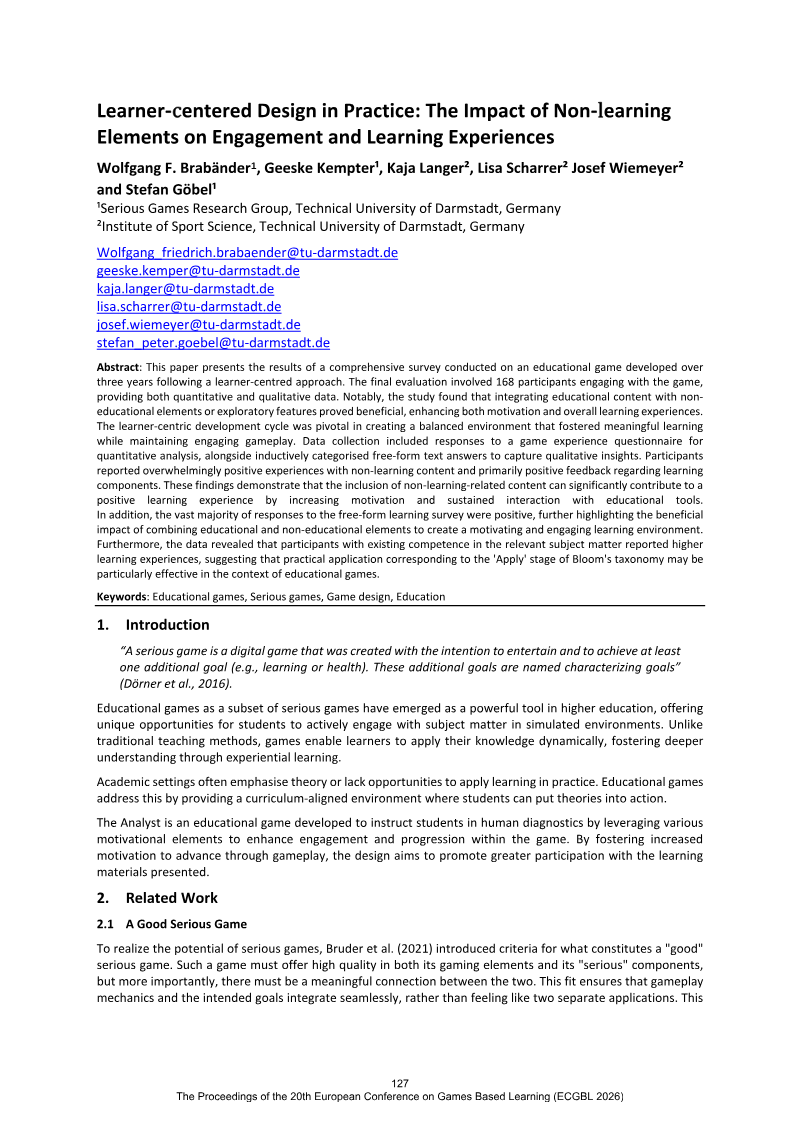
This paper examines how game-based learning (GBL) can be scaffolded into high-fidelity simulation to build professional accountability in project management education. Its central argument is that games work best as conceptual springboards that prepare learners for escalation into simulated professional environments, where formal roles, time pressure, and evidential scrutiny make consequences explicit. The study is a case study of a master's-level Project Management programme at the University of Limerick, Ireland, covering three consecutive modules in which analogue and digital games are followed by AI-supported simulations and "Project Twin" war-room exercises that replicate international project conditions.
The methodology is mixed, combining analysis of 43 student portfolios from a simulation-based module, a PRME-aligned survey of the 2026 cohort (n = 43, 27 Likert-scale items), and a student-produced documentary used as observational evidence. Portfolios were coded deductively against five literature-derived themes (GBL transfer, governance accountability, reflection as control, multicultural collaboration, and PRME/SDG responsibility) using a five-point rubric, with inter-rater agreement of 85% on a 20% sample. Survey results were uniformly positive, with an overall mean of 4.37, and the highest ratings for ethical responsibility (M ≈ 4.67) and the use of Microsoft Teams to mirror hybrid project work (M ≈ 4.74). Thematic scores were generally strong, with GBL transfer and governance accountability typically rated 4 to 5, while explicit SDG alignment was the weakest area, averaging 3 to 4.
The study's main contribution is its reframing of reflection as an active control mechanism that shapes governance behaviour only when stakes rise, and its finding that informal leadership and ethical competence emerge unevenly, often implicitly rather than through explicit labelling. For GBL practitioners, the work offers a transferable design pattern for deliberately escalating stakes from games to simulations, though the study's reliance on a single programme and largely self-reported evidence limits generalisation.
Each row is a game or company this document names, each column a document, oldest first. A mark means that document names it. Select a row to see those documents.
European Conference on Games Based Learning (ECGBL) · 2026



European Conference on Games Based Learning (ECGBL) · 2026
European Conference on Games Based Learning (ECGBL) · 2026



European Conference on Games Based Learning (ECGBL) · 2026



European Conference on Games Based Learning (ECGBL) · 2026



European Conference on Games Based Learning (ECGBL) · 2026



European Conference on Games Based Learning (ECGBL) · 2026



European Conference on Games Based Learning (ECGBL) · 2026



European Conference on Games Based Learning (ECGBL) · 2026



European Conference on Games Based Learning (ECGBL) · 2026



European Conference on Games Based Learning (ECGBL) · 2026



European Conference on Games Based Learning (ECGBL) · 2026
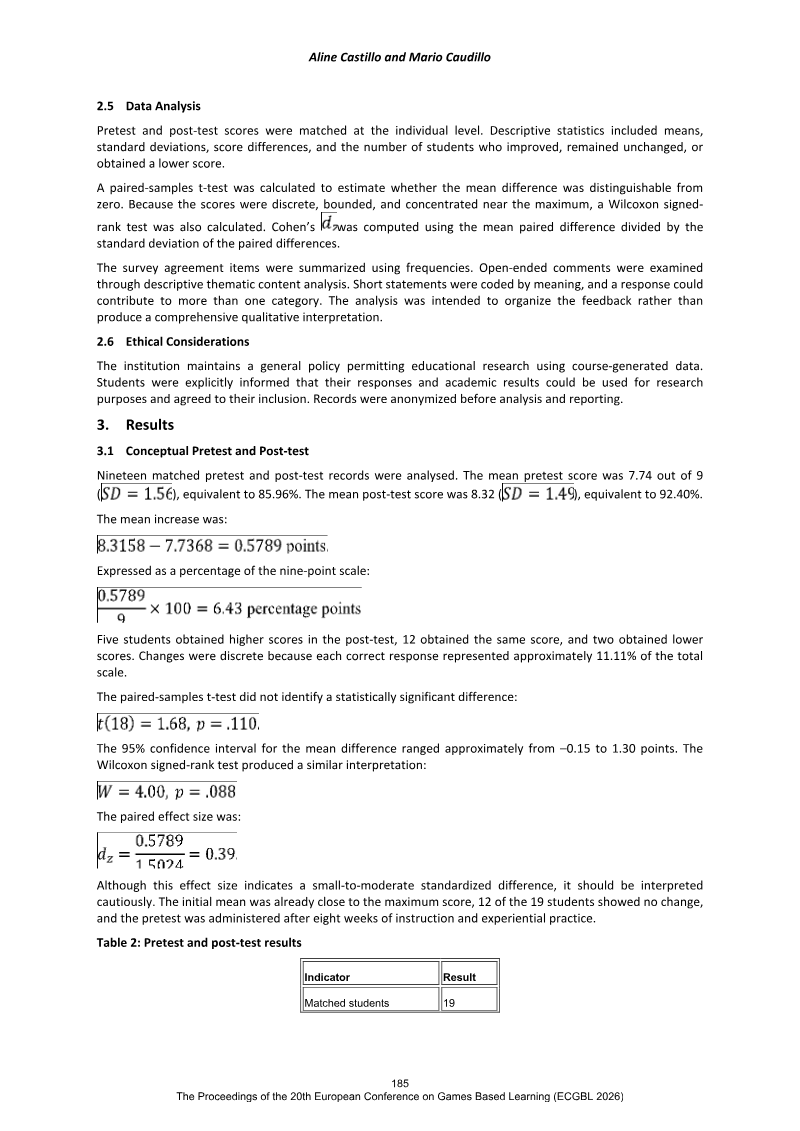
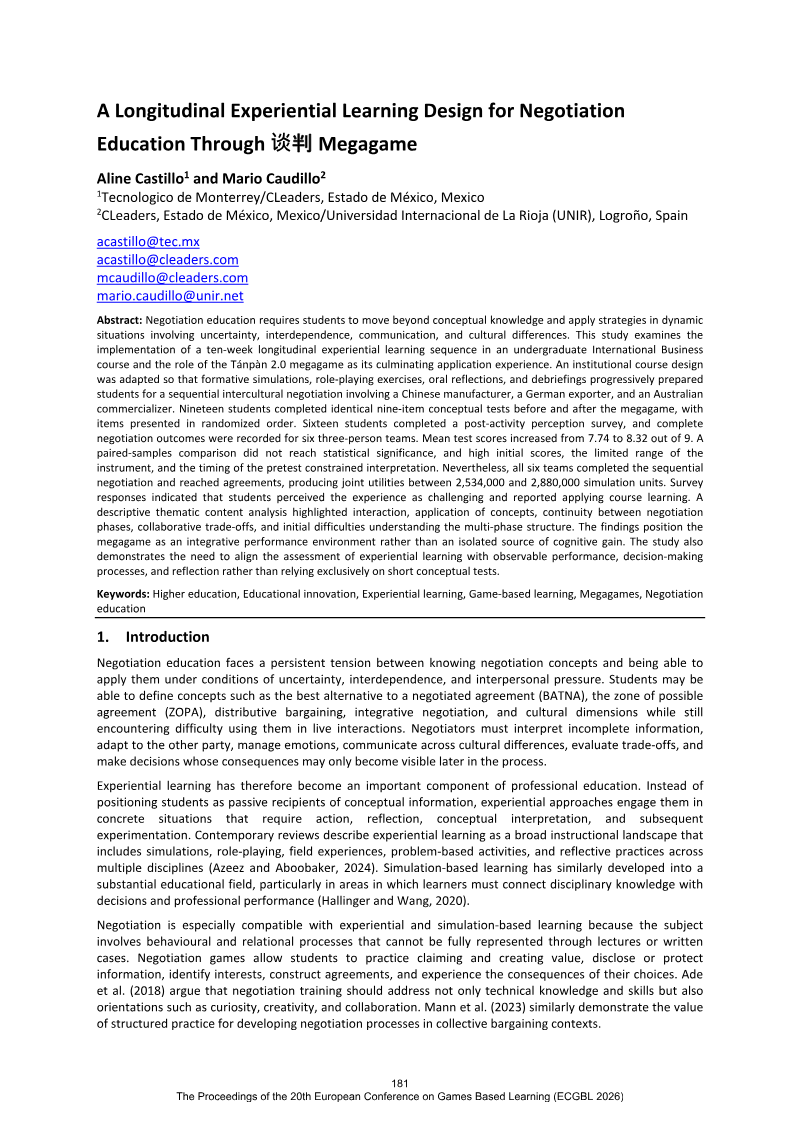
European Conference on Games Based Learning (ECGBL) · 2026



European Conference on Games Based Learning (ECGBL) · 2026
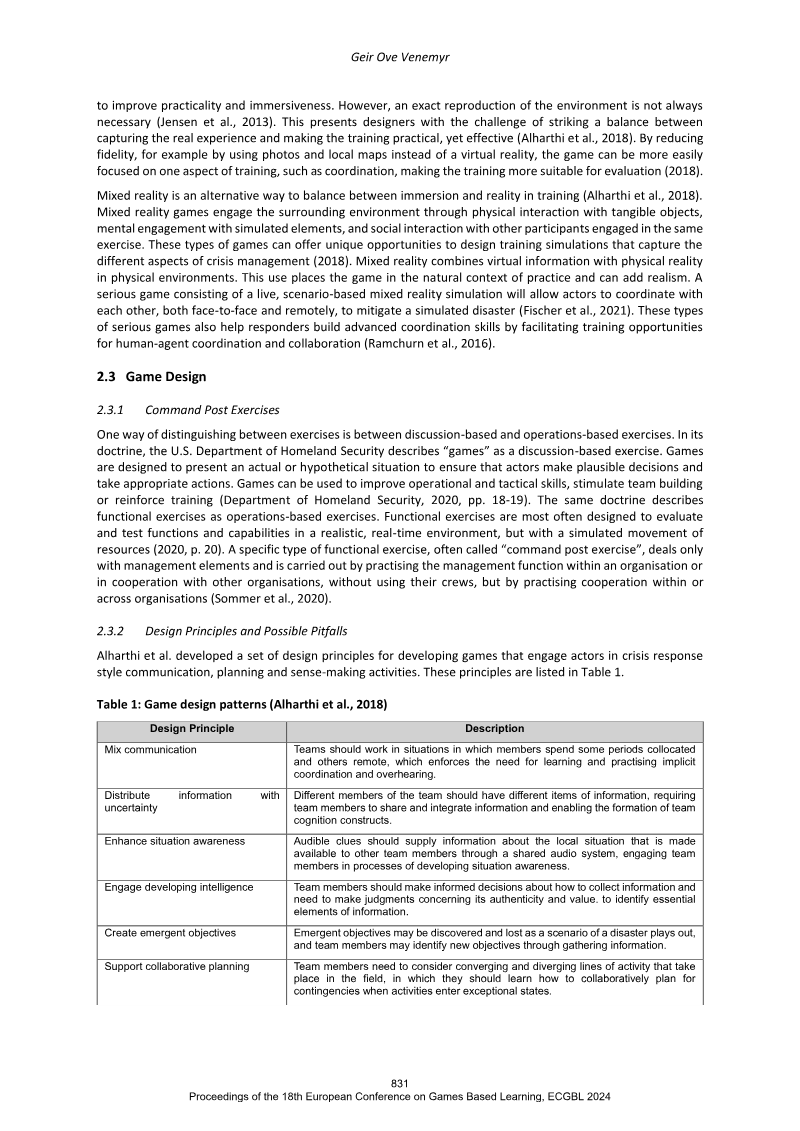
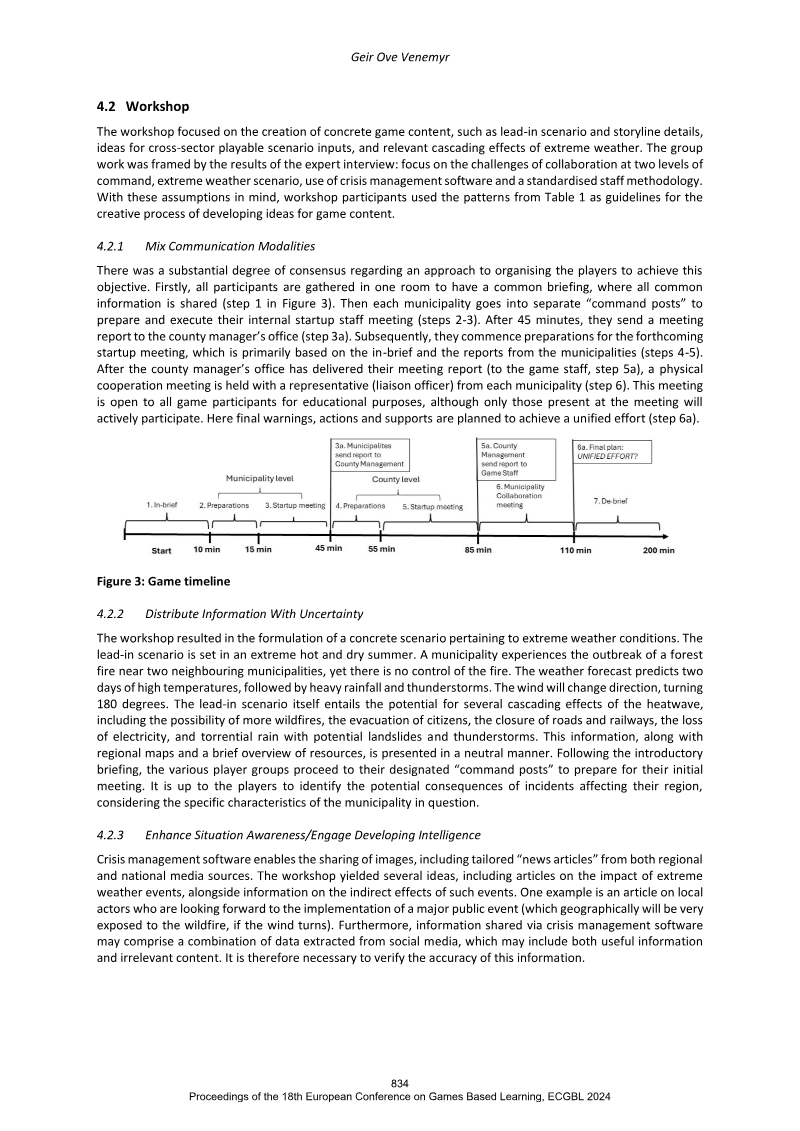
European Conference on Games Based Learning (ECGBL) · 2024