
Discord
Chat and voice platform that grew out of gaming communities. It publishes safety transparency reports, including a report on child protection under Brazil's ECA Digital law.
Documents
No published documents yet
Reports about Discord
494 documents by other writers name Discord in the title or summary.

Milk Cup Academy Launches
The Milk Cup, an all-women Fortnite competition, launched its 2025 season with a new initiative called the Milk Cup Academy.
- The Milk Cup has launched its 2025 season for women in the United States with a total prize pool of $300,000, nearly double the amount offered in its 2024 inaugural year.
- The newly announced Milk Cup Academy provides aspiring female professional players with resources including mentorship from Fortnite pros, health and wellness guidance, and monthly scrims to facilitate team building.
- The program is supported by the Milk Processor Education Program (MilkPEP) through its 'Gonna Need Milk' campaign, with operational support from tournament organizer Raidiant and content creator ThePeachCobbler.
Behind the Scenes: Milk Cup 2025
The Esports Advocate provides an in-depth look at the Milk Cup 2025, a women-only Fortnite competition, through interviews with key figures including Fortnite content creator ThePeachCobbler, Raidiant CEO Heather Garozzo, and MilkPEP Senior Marketing Manager Jennifer Grubb.
- The Milk Cup 2025, a women-focused Fortnite competition, has launched the 'Milk Cup Academy' to provide training, scrims, and professional guidance to help players transition toward international events like the FNCS.
- Approximately 60% of participants in the inaugural 2024 Milk Cup had never previously competed in an esports tournament, necessitating the introduction of dedicated player handlers to assist with logistics and professional development.
- Gonna Need Milk, the primary partner, reports that the Milk Cup has successfully increased positive brand sentiment among teens, demonstrating a measurable marketing lift from sponsoring grassroots esports initiatives.

Cross-Border Publishing: Lessons From Netease’s Once Human
The global expansion of Chinese game development is exemplified by the strategic launch of the survival title Once Human.
- NetEase achieved a peak of over 200,000 concurrent users for 'Once Human' by prioritizing a PC-first launch before expanding into a cross-platform mobile version.
- The studio opted for global self-publishing to maintain direct control over player relationships, brand messaging, and the ability to iterate rapidly based on community feedback.
- Monetization for the Western market was intentionally restrained, focusing on cosmetic items and engagement-driven systems rather than the more aggressive models often seen in mobile-first markets.
TWIG #329: Royal Match Goes All-In, Discord Shifts Gears, Call of Duty Meets Its Match
The mobile gaming industry is currently defined by a tension between aggressive, high-budget marketing strategies and the structural limitations of user acquisition economics.
- The mobile gaming industry is experiencing genre stagnation as developers prioritize high-LTV models like puzzle and 4X games to justify rising user acquisition costs.
- Aggressive, celebrity-led marketing campaigns, such as those for Royal Kingdom, are yielding diminishing returns by attracting low-value users rather than the high-spending 'whales' required for profitability.
- Major industry players are shifting toward operational efficiency, with Discord pivoting to advertising and monetization, and NetEase consolidating resources to reduce the costs of Western operations.
The State of Video Gaming in 2026
The video game industry is emerging from its 2011-2021 growth wave into a prolonged stagnation, according to a global analysis spanning that decade through mid-2025 and looking ahead to 2026.
- The video game industry is in a period of contraction, with real-term spending on content declining by approximately 12% since 2021.
- AAA production budgets have ballooned to between $200 million and $500 million, contributing to a capital-constrained environment marked by record-high layoffs and studio closures.
- A small cohort of entrenched live-service titles now dominates the market, acting as 'black holes' that consume the majority of player time and spending, making new independent launches increasingly difficult.

Why Most New Games Still Face-Plant — and How Player Insight Can Flip the Script
High-budget game development frequently falters due to a reliance on late-stage quantitative data and a fundamental disconnect between internal creative visions and actual player experiences.
- Many modern game launches fail despite development and marketing costs exceeding $200 million, primarily due to a lack of consistent player feedback and validation during the development cycle.
- LiveAware addresses the 'echo-chamber' development problem by providing a platform that captures, analyzes, and organizes player feedback from sources like Discord, YouTube, and surveys into actionable insights.
- The platform utilizes AI to surface specific player comments and gameplay issues, automatically routing them to relevant departments like art, design, or engineering via Jira integration.

Week in Mobile Games E51 - Regulators poke the Apple and Google monopoly bear
Regulatory authorities are aggressively challenging the dominance of major technology platforms, signaling a pivotal shift toward increased market transparency and interoperability.
- The European Commission has fined Apple €500 million for anti-steering policies that restricted developers from informing users about alternative, potentially cheaper distribution channels.
- A US District Court ruled that Google maintained an illegal monopoly in ad tech by using exclusionary conduct in its publisher ad servers and exchanges to suppress competition.
- Drake Star Partners' Q1 2025 report indicates a total of $3.5 billion in disclosed value across 149 private placements, with Infinite Reality securing a notable $3 billion investment.
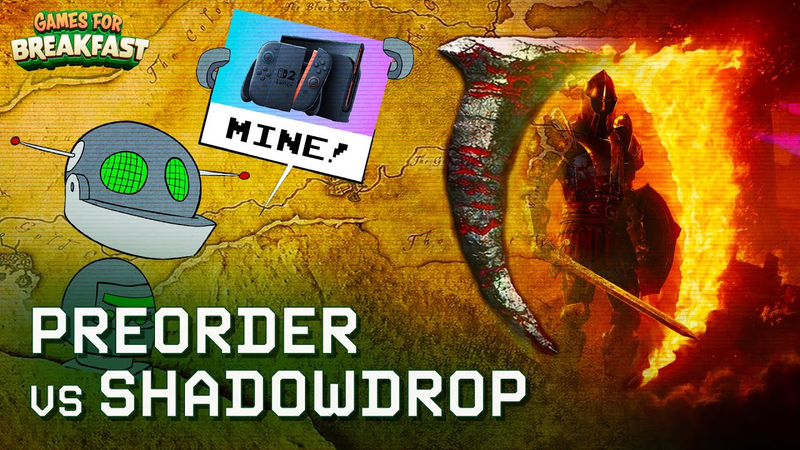
Oblivion’s Big Day, Switching 2 Better Preorders, and Healers On Strike! | Games For Breakfast
The gaming industry is currently navigating a period of significant structural and cultural transition, characterized by evolving monetization strategies, the complexities of intellectual property integration, and the persistent challenges of community management.
- Hardware manufacturers are implementing restrictive pre-order protocols, such as requiring long-term subscription histories, to mitigate the impact of automated scalping and retail infrastructure failures.
- The success of shadow-dropped remasters like Oblivion indicates that players currently prioritize nostalgic fidelity over significant mechanical overhauls.
- Integrating major external intellectual properties into established games like Magic: The Gathering creates a tension between attracting new demographics and risking the alienation of long-term players through lore dilution.
We're Not Even Halfway Through, but I Already Know My Game of the Year
This document, published on April 26, 2025, provides an overview of significant personnel changes in the gaming industry, a major game update, and a spotlight on an indie game developer.
- NetEase head of global investments and partnerships Simon Zhu has departed, while Humam Sakhnini, formerly of Activision Blizzard, has replaced Jason Citron as CEO of Discord.
- Major industry leadership transitions are being driven by a broader corporate strategy focused on cost-cutting and strategic scaling to meet shifting market demands.
- The indie game Blue Prince, developed by Tonda Ros over an eight-year period, has achieved critical success by prioritizing personal creative vision over traditional funding models.
From Growth Hacking to Lasting Impact: Lessons from Founders on Building at Scale
The document summarizes a panel discussion among early-stage founders and industry veterans on achieving sustainable growth for startups, moving beyond "growth hacking" to a more strategic, human-centered approach.
- Modern growth strategy has shifted away from 'growth hacking' toward a holistic approach that integrates community, culture, and product-led storytelling.
- Identifying 'white space' is critical for scaling, such as Alinea Invest leveraging TikTok to capture a user base that is 70% Gen Z and 90% female.
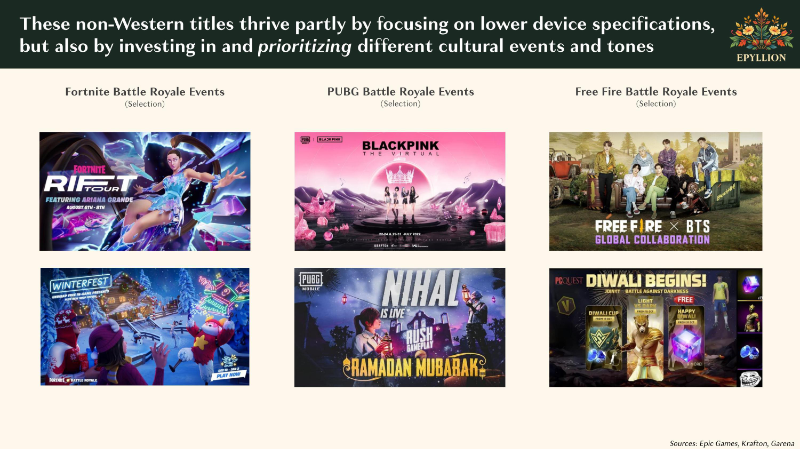
- Cultural relevance can drive global scale, exemplified by SuperGaming’s 'Indus' battle royale, which used Indian cultural heritage as a wedge to attract a worldwide audience.

Recap: Greatest tips from my conference
The Inside Conference 2025 provides a comprehensive overview of indie game marketing strategies, focusing on practical tactics for Kickstarter management, publisher outreach, and demo distribution.
- Steam developers should aim for a minimum of 7,000 wishlists before launching, with 30,000 wishlists significantly improving performance in the Steam algorithm.
- When launching a demo on Steam, enable the 'separate store page' option to allow for independent user reviews and data collection without risking the reputation of the full game's store page.
- If a publisher reaches out early, use the opportunity to flip the script by asking them to pitch their services, deal terms, and requirements, allowing you to gather market intelligence while maintaining leverage.

SONIX Raises $2.2 Million, Launches Crowdfunding Campaign
SONIX, a Switzerland-based company specializing in gaming audio solutions, announced it secured an additional CHF 1.8 million ($2.2 million USD) in a new funding round.
- Switzerland-based gaming audio company SONIX has secured $2.2 million (CHF 1.8 million) in a new funding round from undisclosed business angels, entrepreneurs, and family offices.
- The company has raised a total of approximately $7.3 million (CHF 6 million) to date.
- SONIX has launched a public crowdfunding campaign to allow gamers, creators, and brands to invest in the company, with details available via the Oomnium platform.