
DiGRA
The Digital Games Research Association: the international association of academics and professionals who study digital games. Its Digital Library holds the proceedings of the DiGRA conferences since 2002.
Documents
Casual Mobile Gameplay: On Integrated Practices of Research, Design and Play
The document argues that casual mobile games such as cubodo blur the boundary between play and everyday life, and that studying and designing them therefore requires research, design, and play to be integrated rather than separated.
Game Spaces Speak Volumes: Indexical Storytelling
Clara Fernández-Vara's DiGRA 2011 paper proposes "indexical storytelling" as a refinement of environmental storytelling, drawing on Peirce's semiotics to argue that game spaces can convey narrative through physical traces that players must interpret in order to progress.
Online Video Games in Brazilian Public Health Communication
This paper, drawn from an ongoing doctoral dissertation, examines the potential of online video games, particularly massively multiplayer online role-playing games (MMORPGs), as a channel for public health communication in Brazil.
Why Gamers Don't Learn More: An Ecological Approach to Games as Learning Environments
Linderoth's paper challenges the widely held assumption that well-designed games are inherently good learning environments.
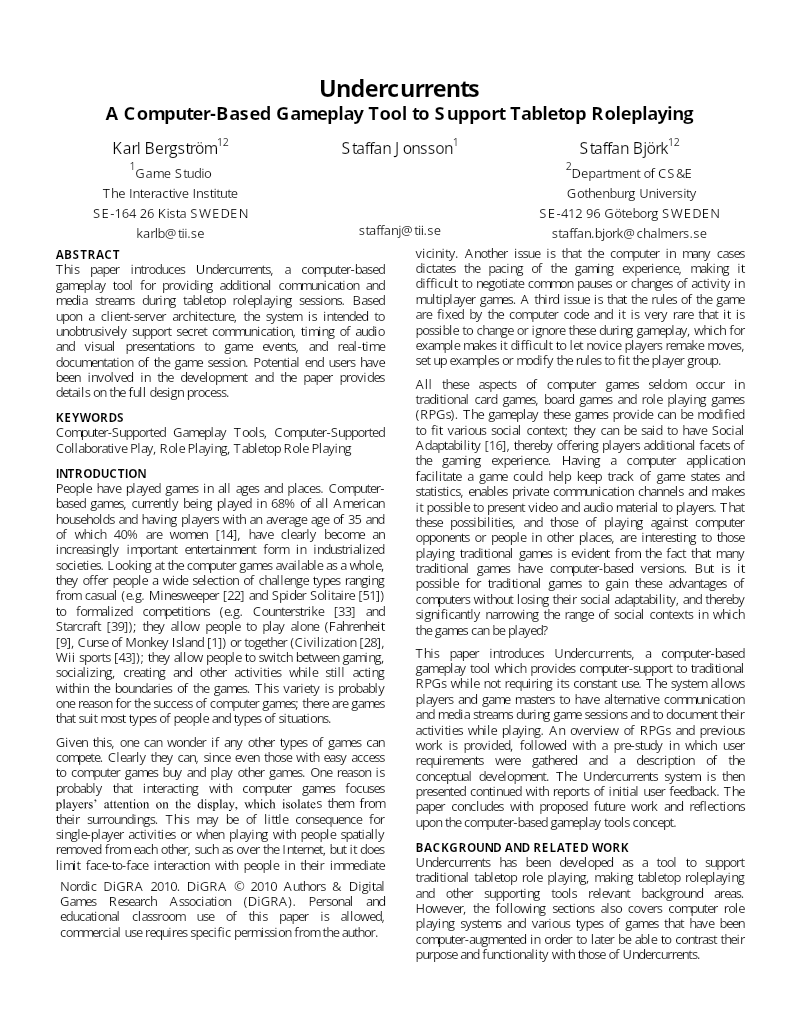
Undercurrents: A Computer-Based Gameplay Tool to Support Tabletop Roleplaying
Undercurrents is a computer-based tool designed to support tabletop roleplaying without dictating its rules, pacing, or social dynamics.
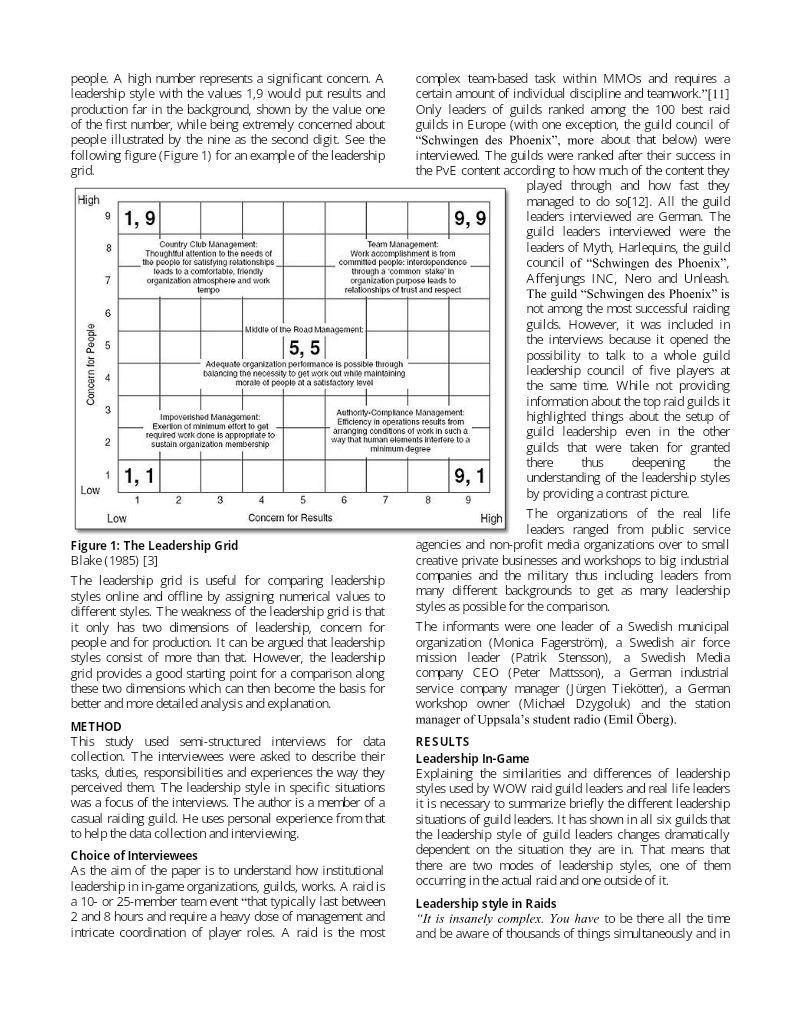
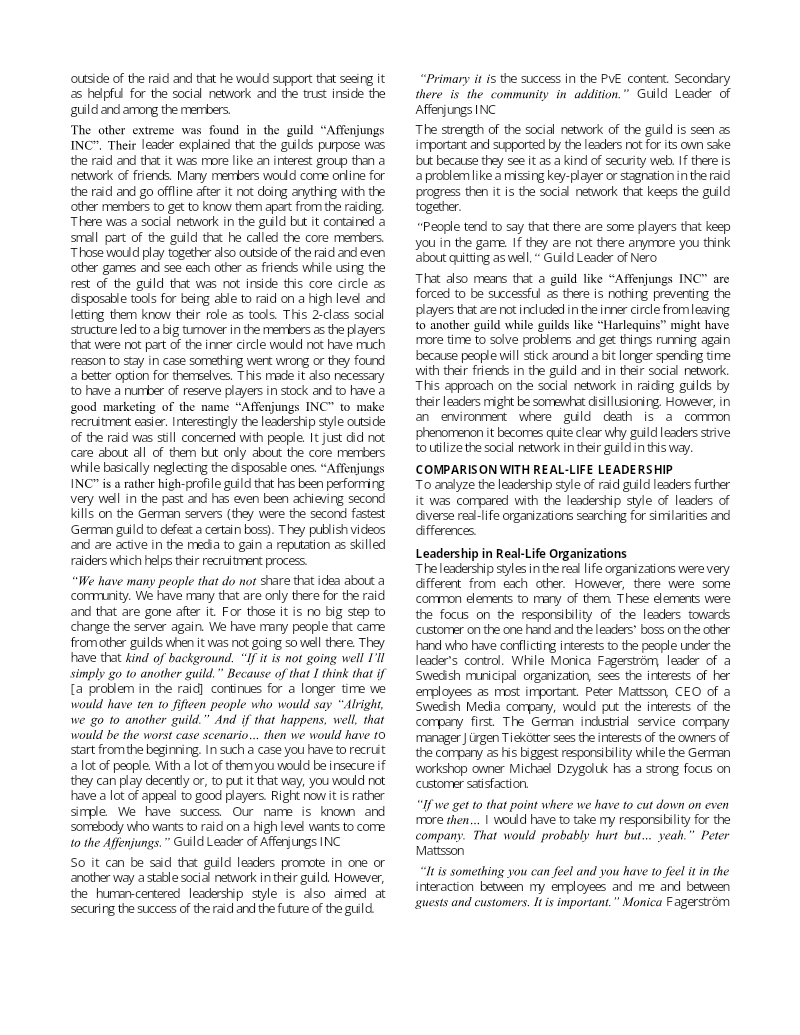
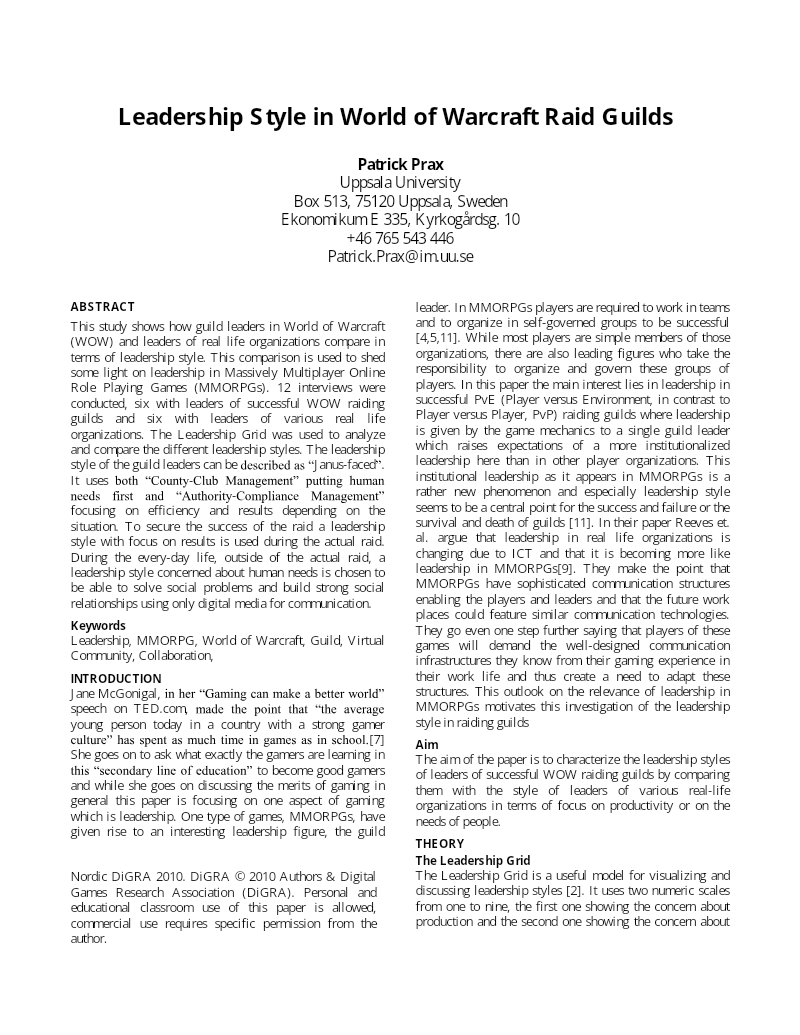
Leadership Style in World of Warcraft Raid Guilds
Patrick Prax's study examines how leaders of World of Warcraft raiding guilds manage their organizations, comparing their approaches with those found in real-life settings.
And Justice for All: The 10 Commandments of Online Games, and Then Some
This paper examines the rules that players themselves create to govern guilds in massively multiplayer online games (MMOGs) and clans in first-person shooter (FPS) games.
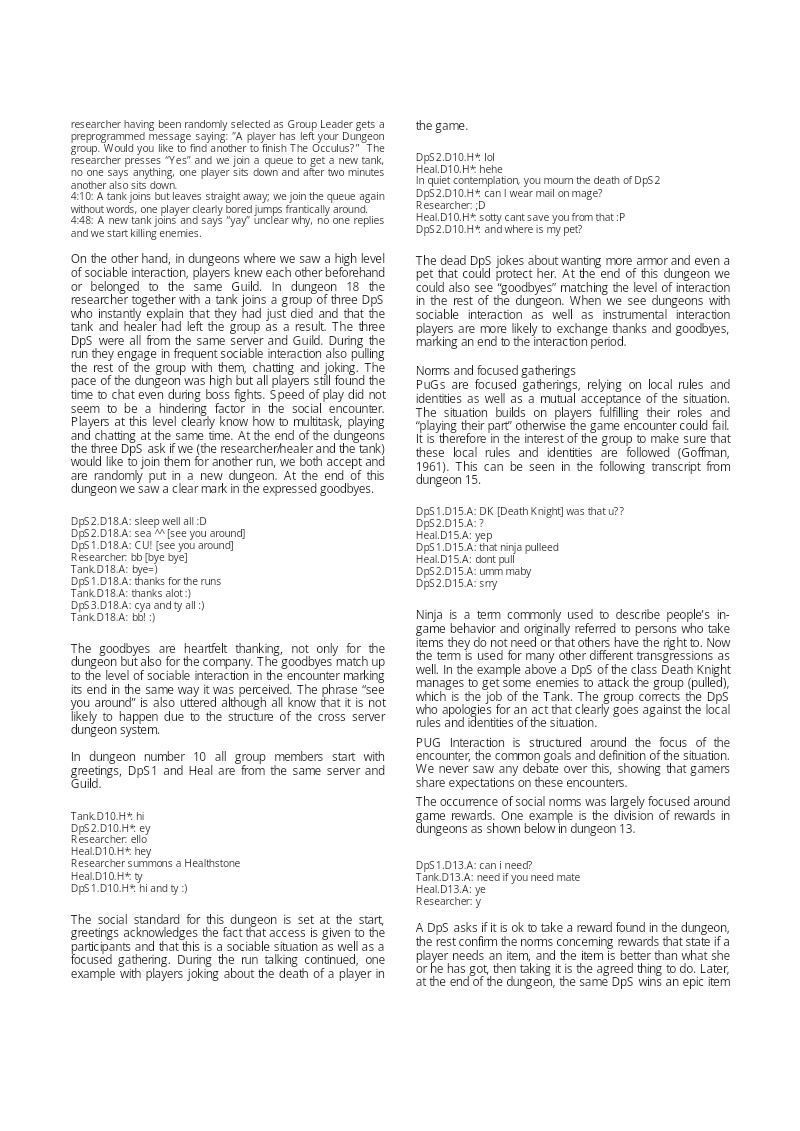
Social Play? A Study of Social Interaction in Temporary Group Formation (PUG) in World of Warcraft
Drawing on 24 recorded random dungeon runs in World of Warcraft, this study examines social interaction in pick-up groups (PUGs), the temporary teams players form to complete dungeons with strangers.
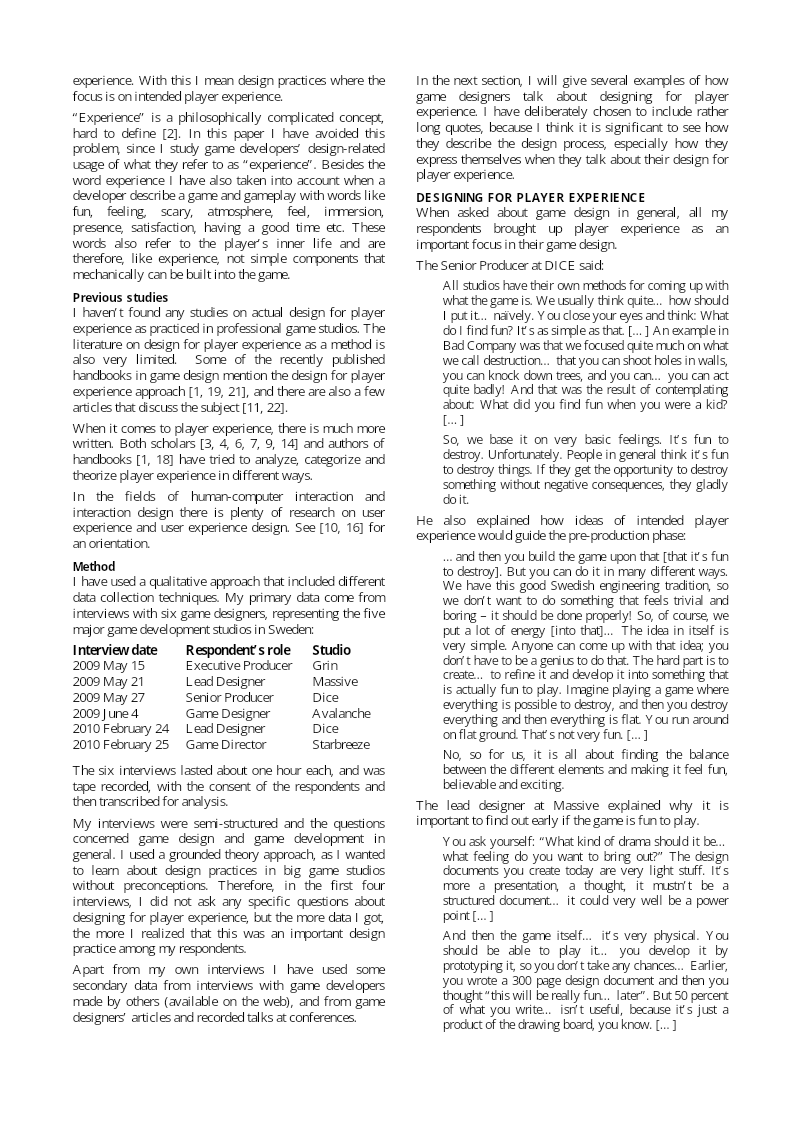
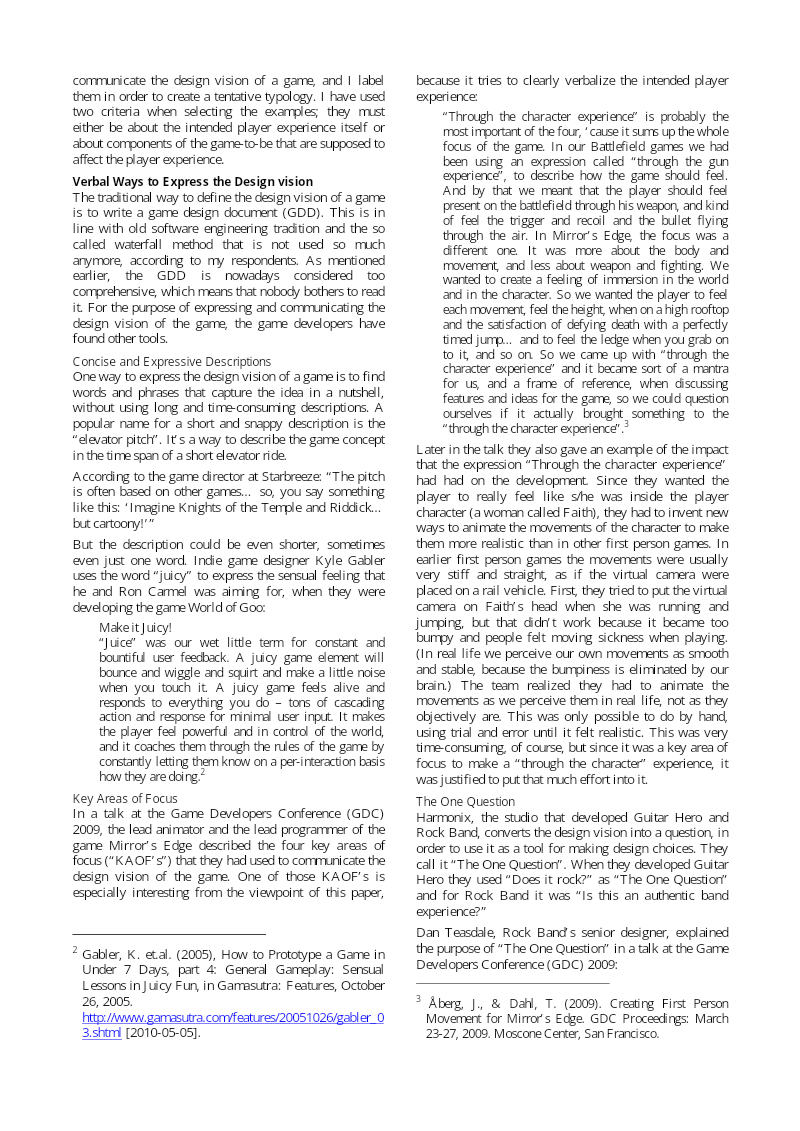
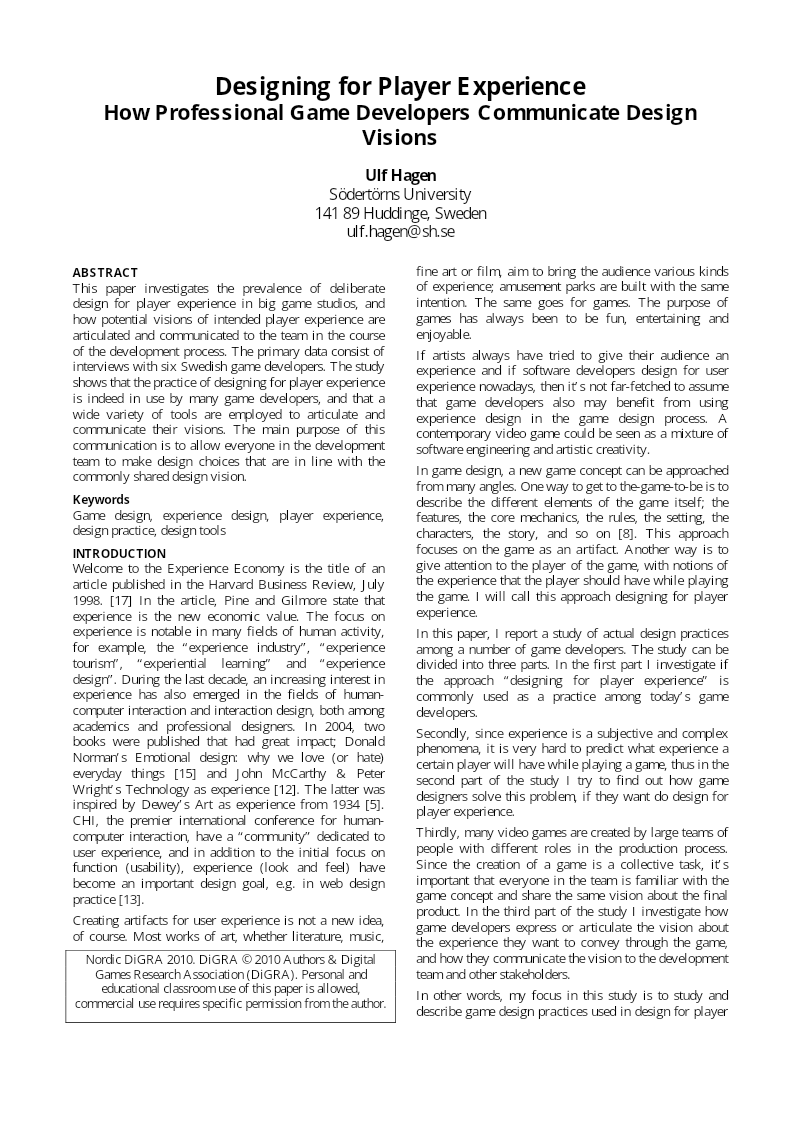
Designing for Player Experience: How Professional Game Developers Communicate Design Visions
Hagen's study examines how professional game developers articulate and communicate the intended player experience of their games, focusing on Swedish studios.
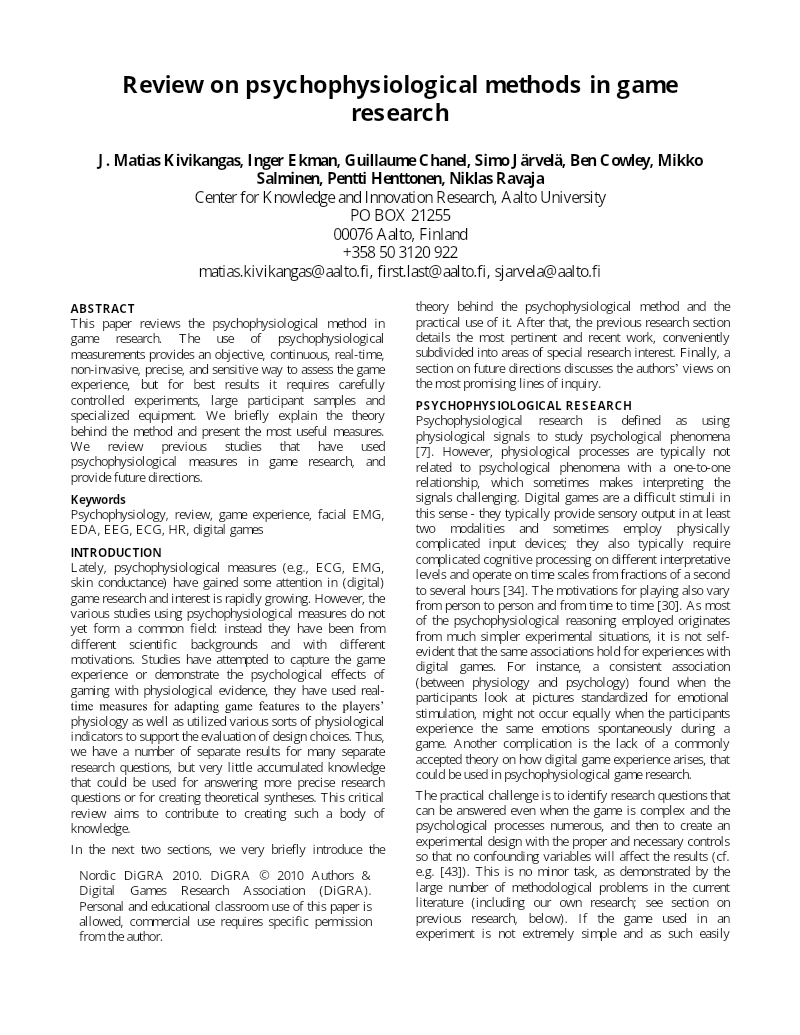
Review on Psychophysiological Methods in Game Research
Kivikangas and colleagues' review examines how psychophysiological methods, which record bodily signals such as facial muscle activity, skin conductance, cardiac activity, and brain oscillations, can be applied to the study of games and play.
On Making Good Games: Using Player Virtue Ethics and Gameplay Design Patterns to Identify Generally Desirable Gameplay Features
Björk's paper argues that a good game is one that supports its intended use, which is to cultivate good players, and it adopts Sicart's six player virtues (Sense of Achievement, Explorative Curiosity, Socializing Nature, Balanced Aggression, Care for Game Balance, and Sportsmanship) as the framework for judging that goodness.
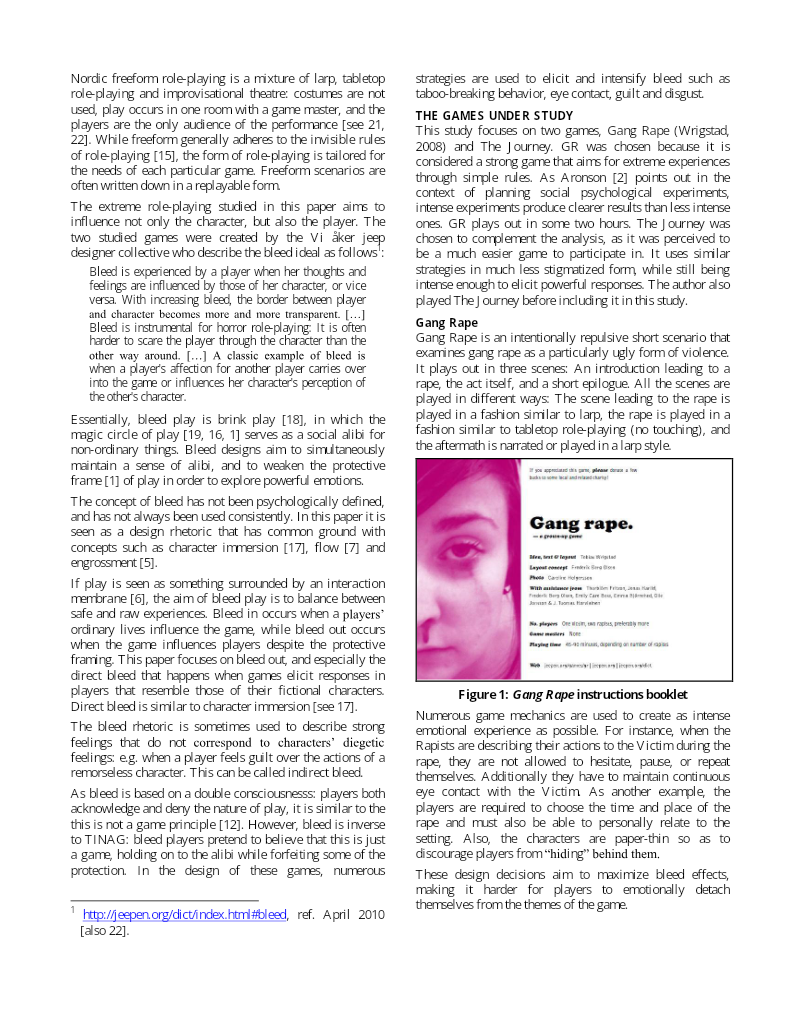
The Positive Negative Experience in Extreme Role-Playing
Markus Montola's study examines two Nordic freeform role-playing games, Gang Rape and The Journey, which are deliberately engineered to provoke horror, disgust, powerlessness, and discomfort.