
DiGRA
The Digital Games Research Association: the international association of academics and professionals who study digital games. Its Digital Library holds the proceedings of the DiGRA conferences since 2002.
Documents
MMOGs and the Future of Literature
Massively multiplayer online games (MMOGs) such as EverQuest and Star Wars Galaxies are presented as textual works that can be read as a modern extension of the realist novel.
- The report argues that MMOGs such as EverQuest and Star Wars Galaxies can be read as a modern extension of the realist novel, with meaning emerging from the collective actions of thousands of players.
- The central conclusion is that MMOGs have dialogic potential for multiple voices and shared meaning, but publisher control over intellectual property and player "citizenship" suppresses that potential, leaving their realism and social possibilities largely unrealized.
- Virtual worlds are presented as resembling the real one because both lack a fixed plot and are shaped by complex social dynamics, allowing them to function as social critique and models for society.
Tangible Pleasures of Pervasive Role-Playing
Markus Montola's paper argues that pervasive role-playing, which extends role-play beyond the magic circle of a game into everyday urban environments, offers a distinctive form of pleasure that sets it apart from tabletop, live-action, and online role-playing.
- Pervasive role-playing extends play beyond the game's magic circle into everyday urban environments, and its distinctive appeal lies in tangible, unmediated immersion in a physical fictional world rather than in tabletop, live-action, or online formats.
- The pleasure of the form comes from the experimental thrill of interacting with outsiders who are unaware a game is underway, so unwitting bystanders' unpredictable reactions intensify immersion.
- Montola defines role-playing through three elements: an interactive process of world-building, a governing power structure, and anthropomorphic characters.
Cultures of Digital Gamers: Practices of Appropriation
This essay argues that Anglo-American Cultural Studies, particularly the multi-perspective tradition of the Birmingham Centre for Contemporary Cultural Studies, can deepen understanding of digital games by examining three dimensions: the production context, the game text, and the practices through which players acquire and…
- The essay argues that a single-level analysis of digital games is insufficient, since production context, game text, and player appropriation each shape how games are made and experienced, and it proposes examining all three together.
- Production is shaped by forces beyond development itself, including industry concentration, advertising placement, publisher dependence, and state involvement, which influence what games get made and what they contain.
- America's Army, released in 2002 by a US Navy-affiliated institute, is presented as a case where a military recruitment campaign used player activity data to tailor career paths.
Controversies: Historicising the Computer Game
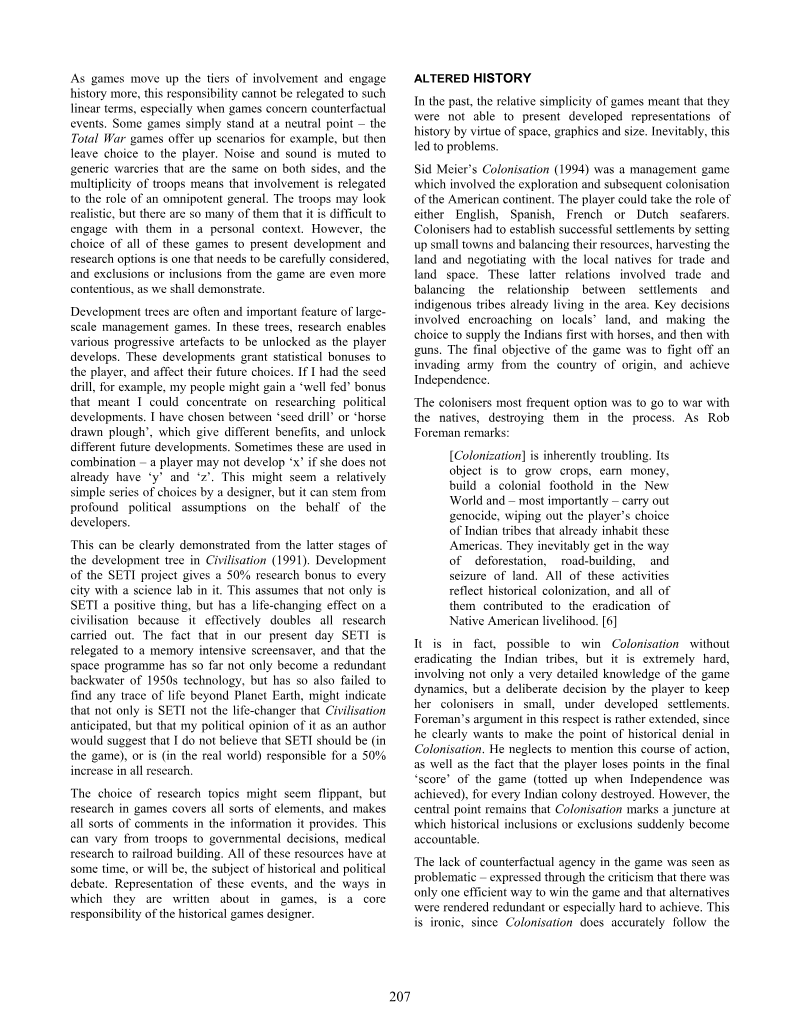
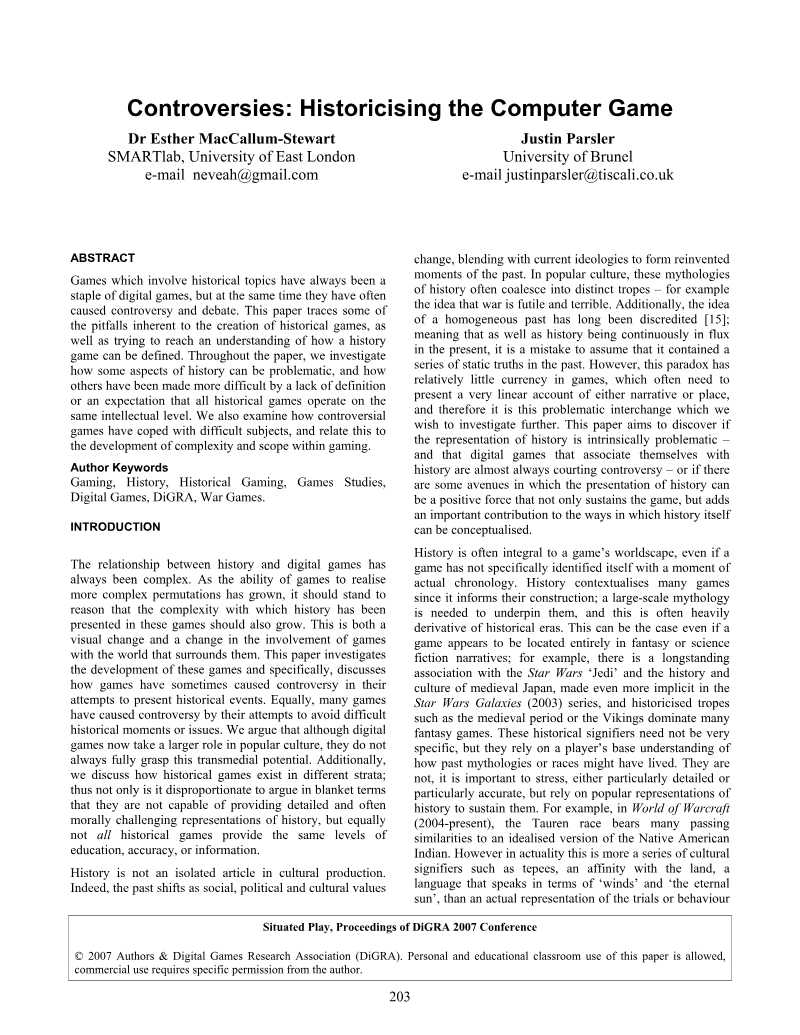
"Controversies: Historicising the Computer Game" examines the tensions that arise when video games represent real history, arguing that such representation is inherently problematic and frequently contested.
- The report argues that representing real history in games is inherently contested, and that games cannot faithfully reproduce the past but can convey the atmosphere and flavor of historical periods, with developers bearing an ethical responsibility when they use real events.
- Historical games warrant heavier scrutiny than other genres precisely because they engage with real events, and simplistic treatments risk reinforcing jingoistic mythologies.
- Exclusions carry political weight: Sid Meier's Colonization omits slavery and genocide mechanics, Call of Duty frequently dehumanizes its enemies, and Age of Empires III shifted its depiction of Native Americans from cautious neutrality to deliberate inversion in its expansion.
Monsters and the Mall: Videogames and the Scopic Regimes of Shopping
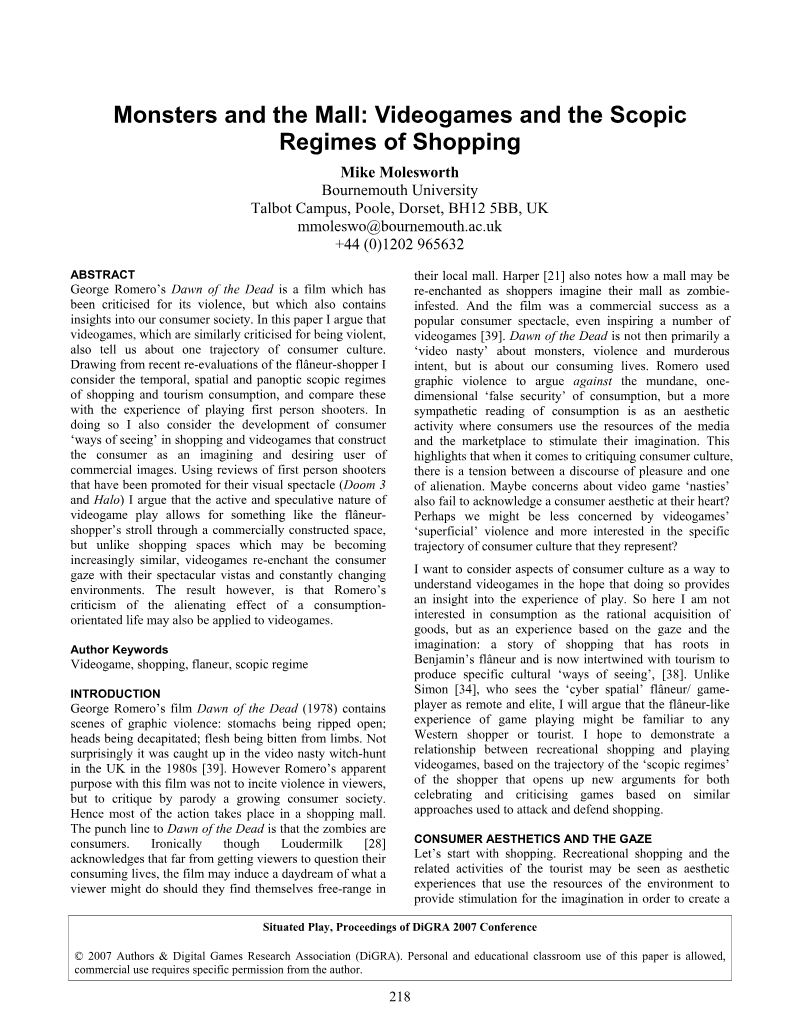
Mike Molesworth's paper "Monsters and the Mall" argues that videogames, particularly first-person shooters, can be understood through the same scopic regimes that structure the experience of shopping and tourism.
- Mike Molesworth's paper argues that videogames, especially first-person shooters, can be understood through the same scopic regimes that structure shopping and tourism, identifying three modes of looking: temporal glancing, spatial gazing, and panoptic self-surveillance.
- The central thesis is that games offer controlled, pleasurable novelty mirroring the commodified gaze of the shopper, so critiques of consumer culture's alienating effects may also apply to play.
- The analysis uses close readings of Doom 3 and Halo, showing how they balance novelty, spectacle, and a surveillance-like sense of threat to sustain engagement.
Gambling Is in My Genes: Correlations Between Personality Traits with Biological Basis and Digital Entertainment Choice
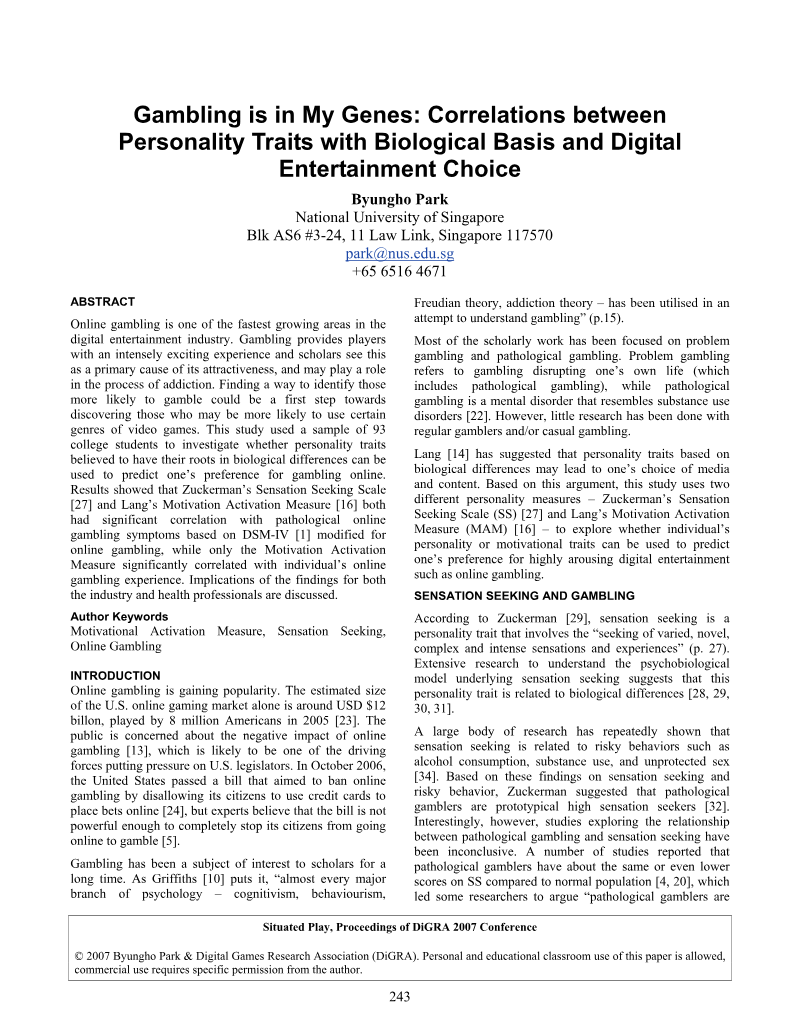
This study examines whether personality traits with roots in biological differences can predict individuals' preference for online gambling, a rapidly growing segment of digital entertainment.
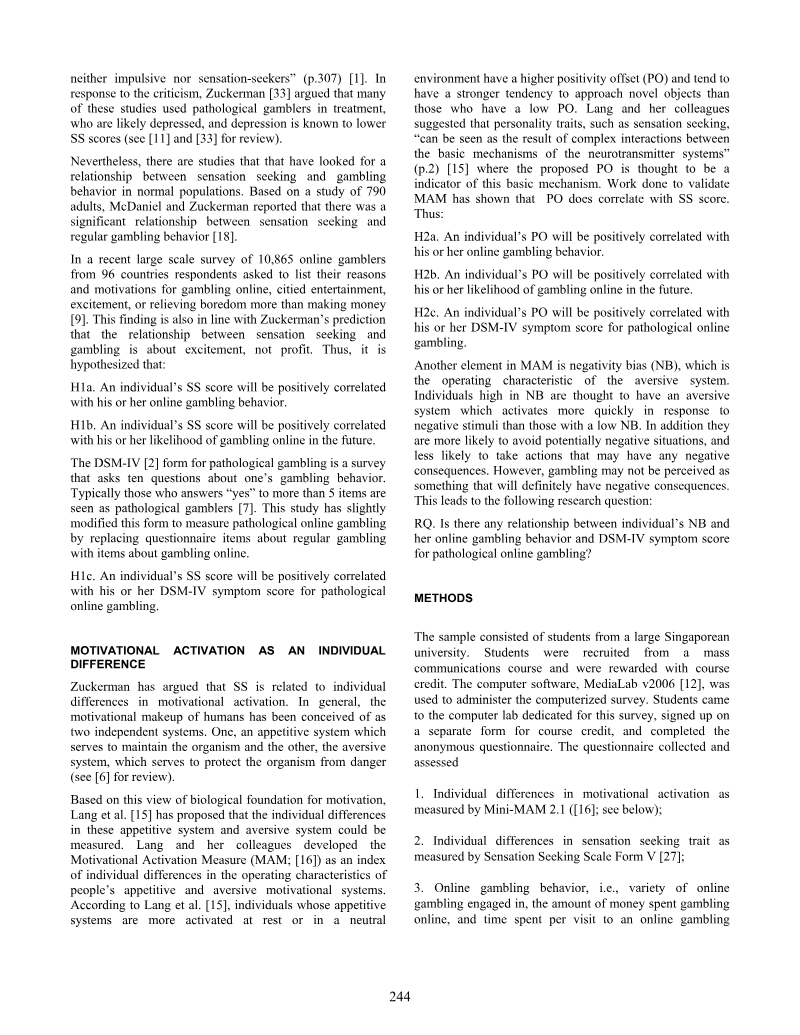
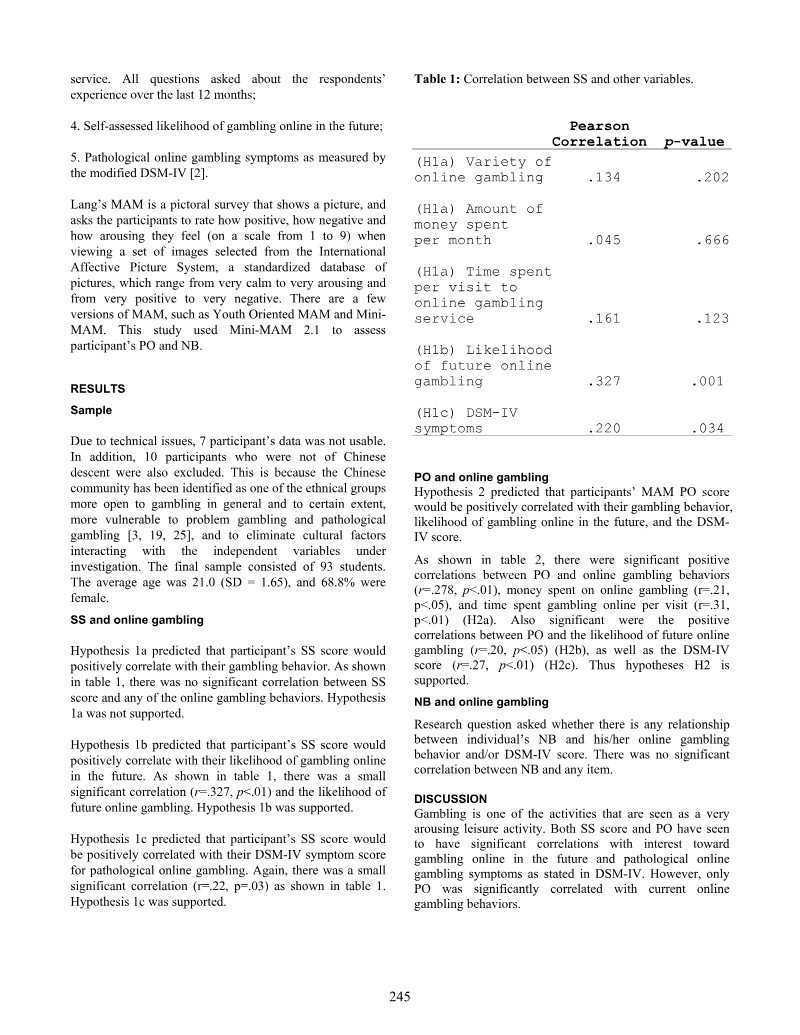
- Positivity offset (the appetitive motivational system) was the most consistent predictor of online gambling: it correlated significantly and positively with variety of gambling, money spent, time per visit, future intention, and pathological gambling symptoms.
- Negativity bias (the aversive motivational system) showed no significant relationship with any online gambling measure, so the author concludes the appetitive system is the more reliable predictor of engagement.
- Sensation seeking was not significantly associated with current online gambling behavior, but it did correlate with likelihood of future online gambling and with pathological gambling symptoms.
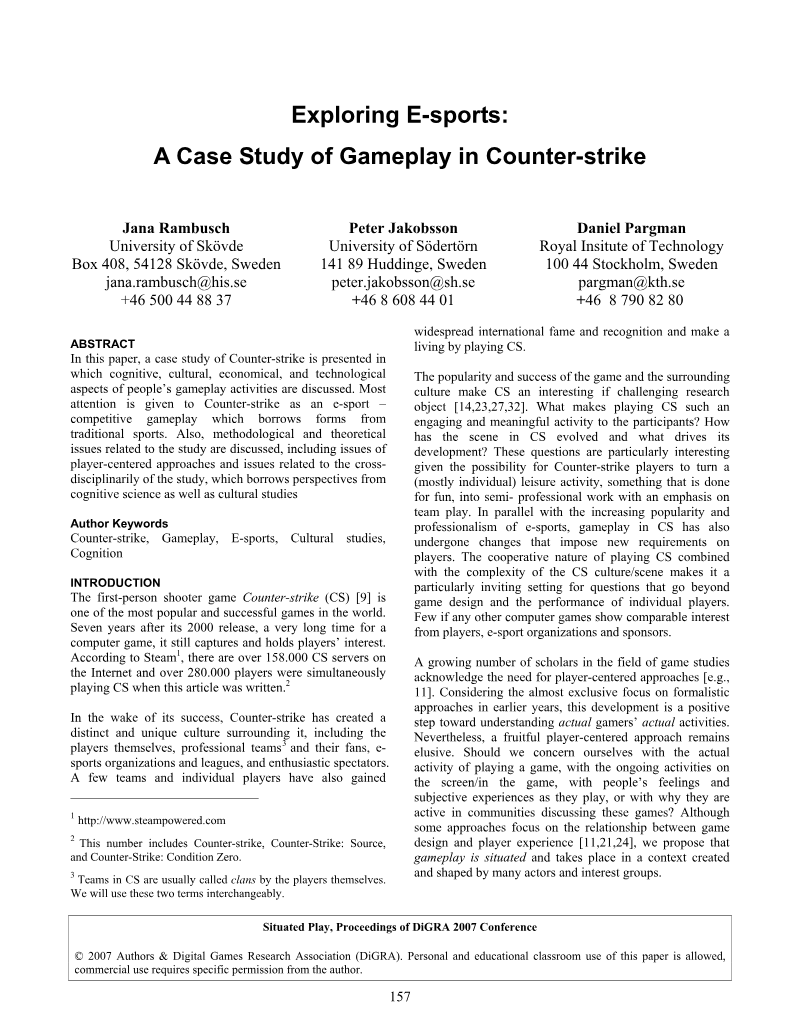
Exploring E-Sports: A Case Study of Gameplay in Counter-Strike
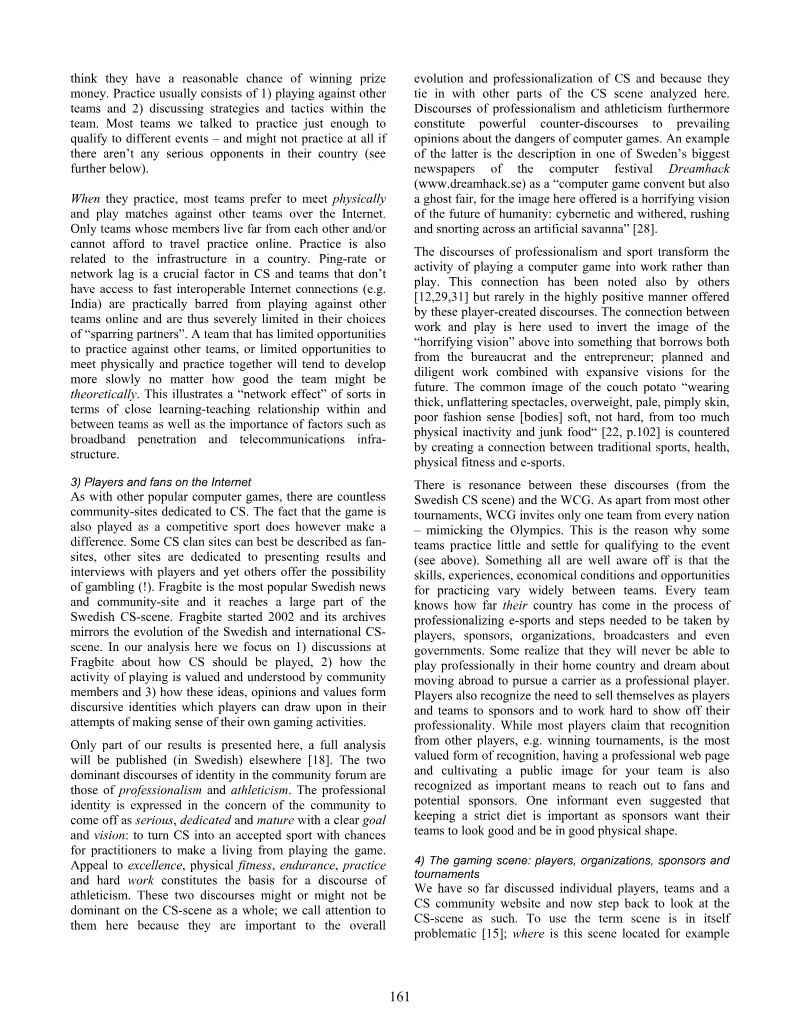
Counter-Strike, examined as a competitive e-sport, is the subject of this study, which argues that gameplay should be understood as a situated, distributed social and cultural practice rather than analyzed solely through formal game design.
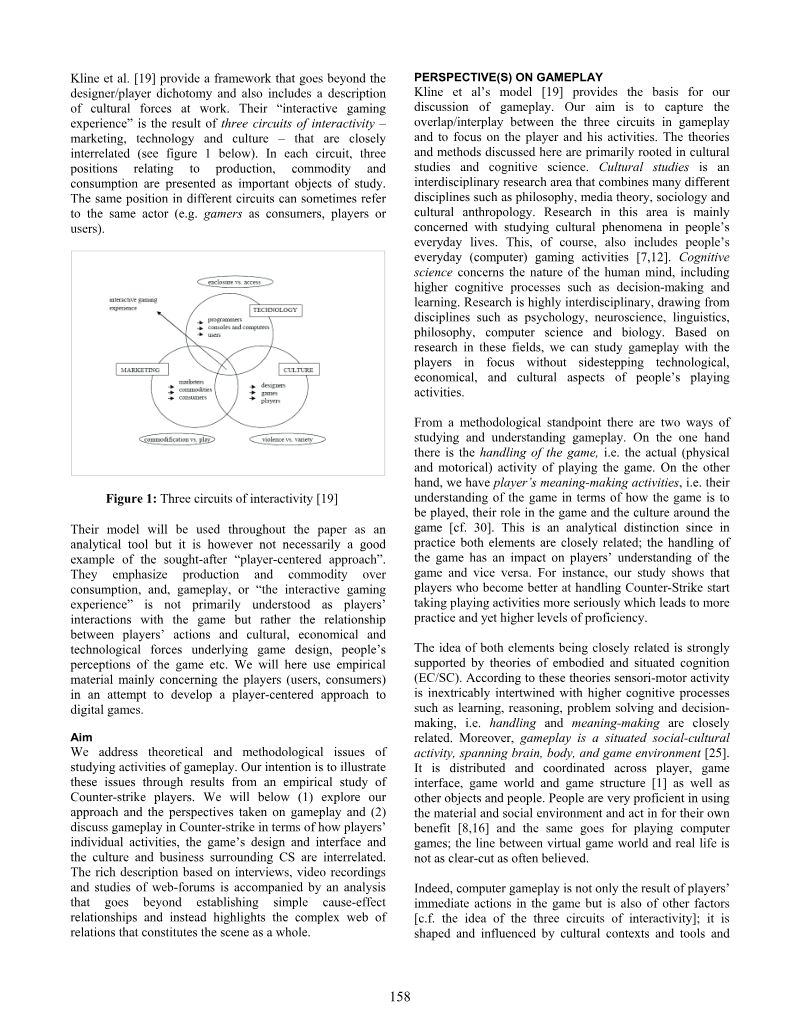
- Counter-Strike competitive play is framed as a situated, distributed social and cultural practice, not just a product of formal game design, drawing on Kline et al.'s three circuits of interactivity model and embodied and situated cognition theory.
- The study's findings rest on 34 interviews with clan members at the 2007 World Cyber Games finals, supplemented by video recordings and forum analysis.
- Strong teams depend on a combination of individual proficiency and collective coordination, while equipment proves less decisive than commonly assumed.
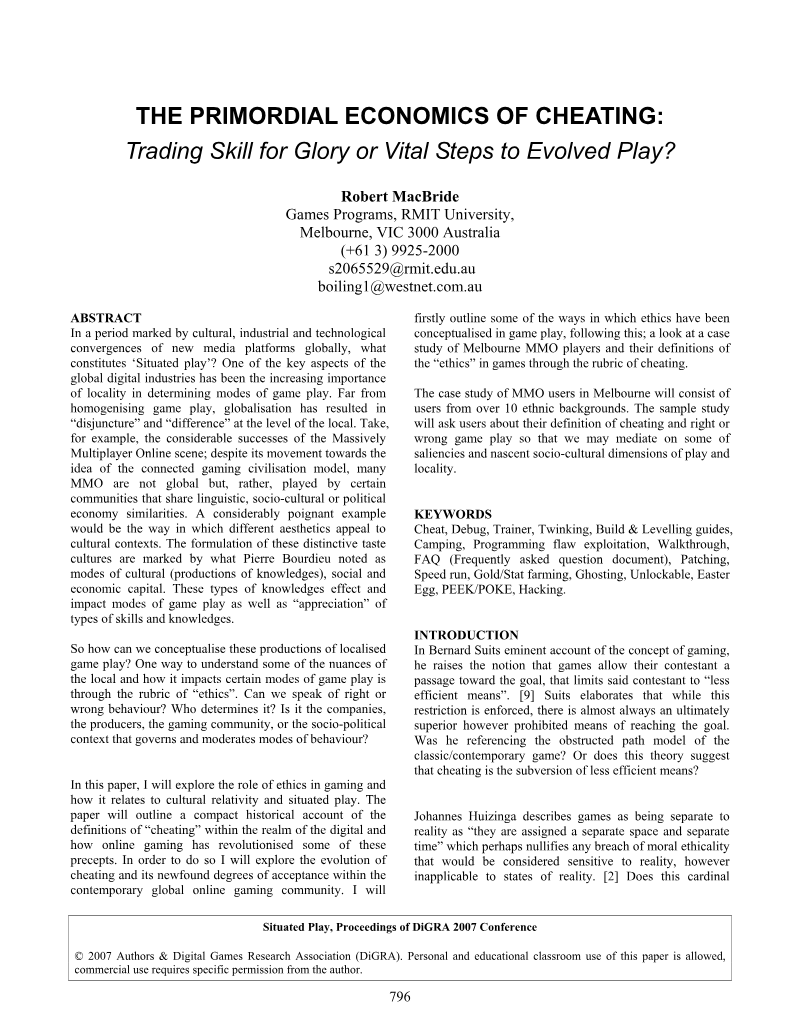
The Primordial Economics of Cheating: Trading Skill for Glory or Vital Steps to Evolved Play?
MacBride's DiGRA 2007 paper examines how the meaning of cheating in games has shifted over time, using Huizinga's "magic circle" and Suits' "less efficient means" as theoretical anchors.
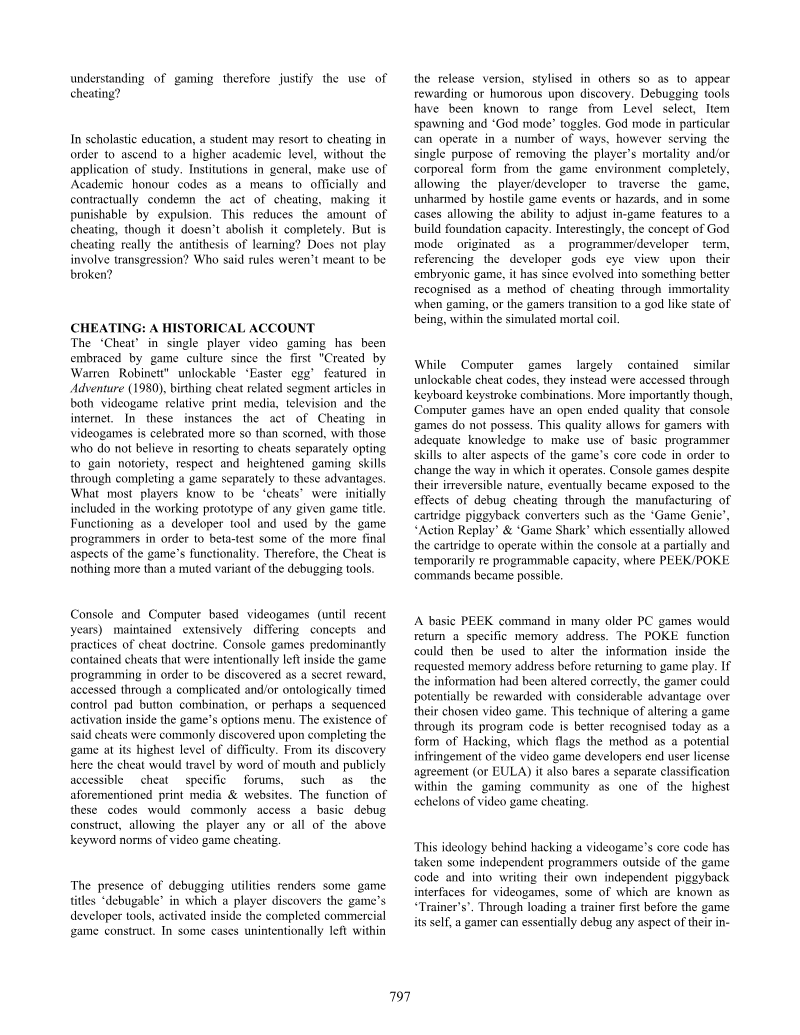
- The meaning and acceptability of cheating in games shift with platform and culture: single-player cheats are often celebrated, while multiplayer cheating is policed through community detection tools and blacklists, leading the author to treat cheating ethics as locally situated rather than universal.
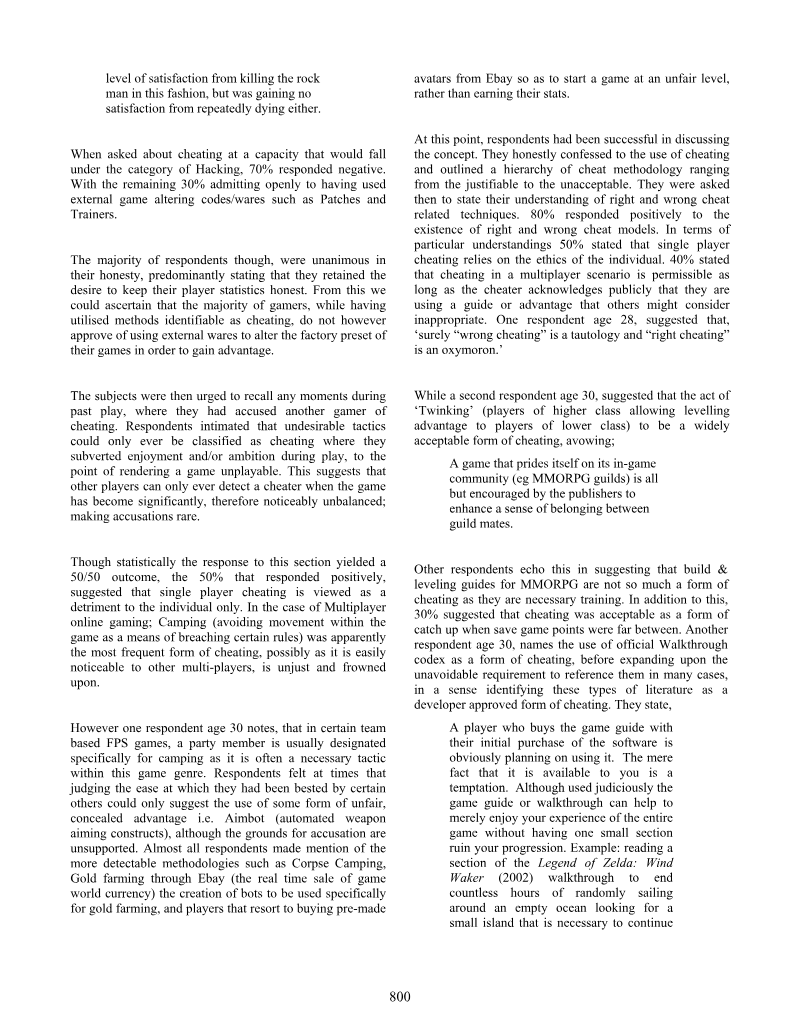
- In a survey of ten Melbourne gamers aged 18 to 35, roughly 90 percent admitted to having cheated at some point, and 80 percent believed there is a distinction between "right" and "wrong" cheating.
- Respondents generally accepted walkthroughs, bug exploitation, and guides, but condemned game-altering hacks that disrupt multiplayer balance, with most judging cheating most objectionable when it degrades other players' experience.
Reciprocal Innovation in Modding Communities as a Means of Increasing Cultural Diversity and Historical Accuracy in Video Games
This paper proposes "reciprocal innovation" as a theoretical framework for understanding how modding communities generate educational and cultural value from commercial video games.
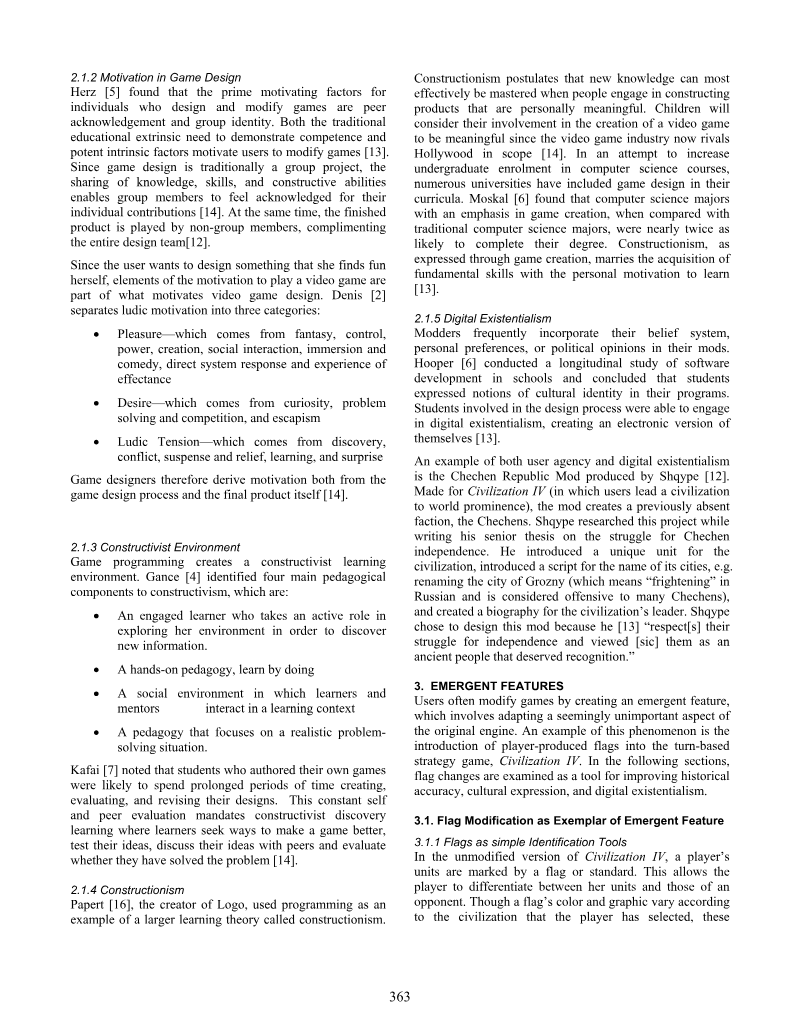
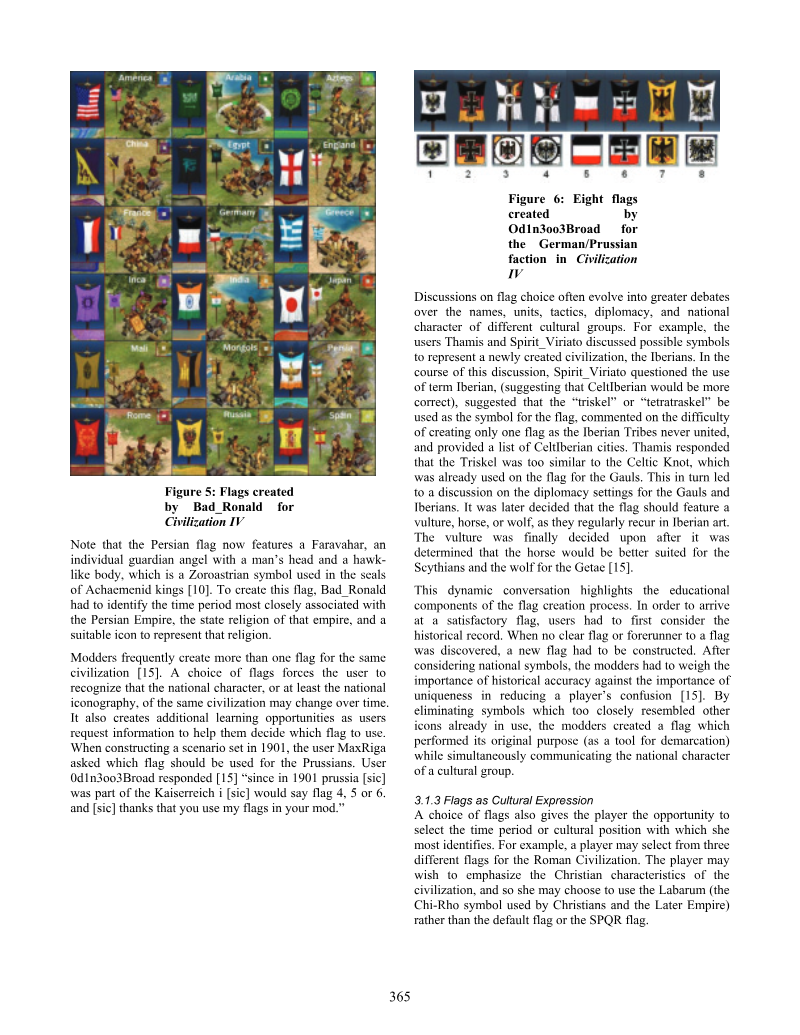
- Modders often repurpose seemingly minor 'emergent features' of a game engine, such as player-generated flags in Civilization IV, into vehicles for historical accuracy, cultural expression, and self-representation.
- The authors propose 'reciprocal innovation' as a framework in which one modification branches into multiple, sometimes contradictory uses determined by individual modders rather than a fixed hierarchy.
- Flag-redesign examples for the Persian, Roman, Chinese, American, and Iberian civilizations required modders to research imperial colors, religious iconography, and national symbols, illustrating how modding drives historical research.
Playing Another Game: Twinking in World of Warcraft
René Glas's study examines "twinking" in World of Warcraft, the practice of giving a character unearned advantages through borrowed gear, money, or assistance from high-level players, which produces unbalanced competition in the early stages of the game.
- Twinking is treated not as cheating to be judged but as a form of play, analyzed through four lenses: luxury, dominance, transformative, and standardized play.
- The study relies on participatory ethnography, in which the author created and played a twink for several months, combined with analysis of guides and forums.
- Twinking contributes to hyperinflation of in-game currency, a phenomenon intertwined with real-money trading and goldfarming.
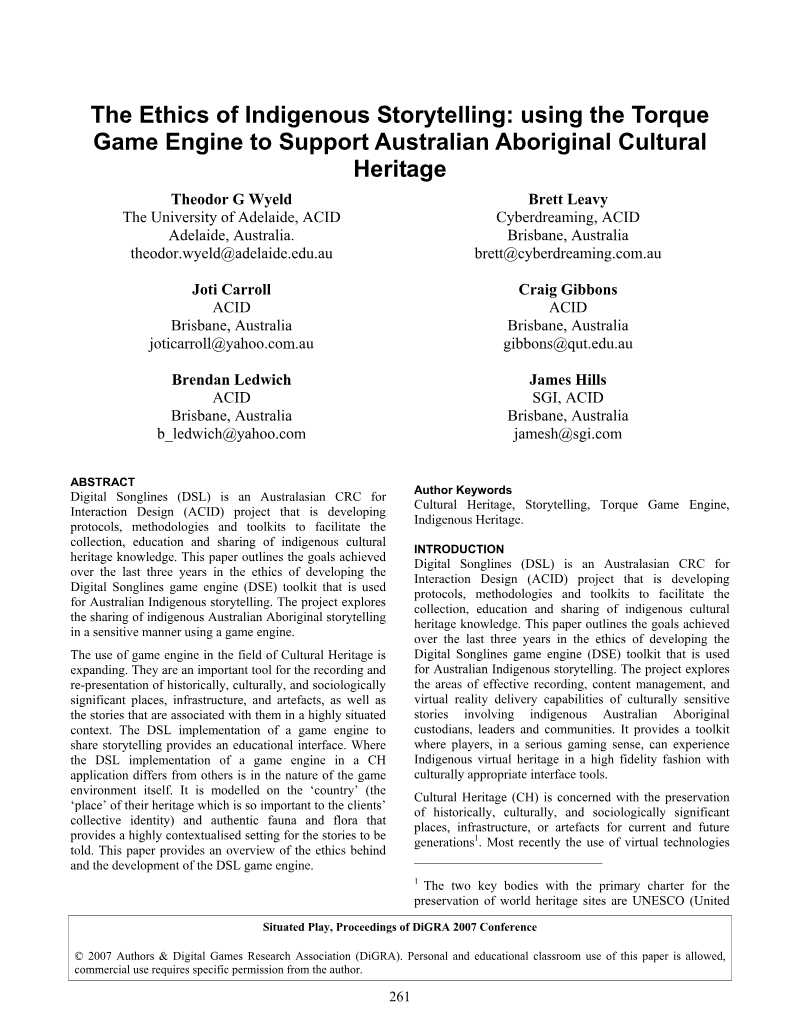
The Ethics of Indigenous Storytelling: Using the Torque Game Engine to Support Australian Aboriginal Cultural Heritage
The Ethics of Indigenous Storytelling examines how the Digital Songlines (DSL) project, an ACID initiative, applies the Torque Game Engine to help Australian Aboriginal communities record, share, and teach their cultural heritage through culturally sensitive three-dimensional virtual landscapes.
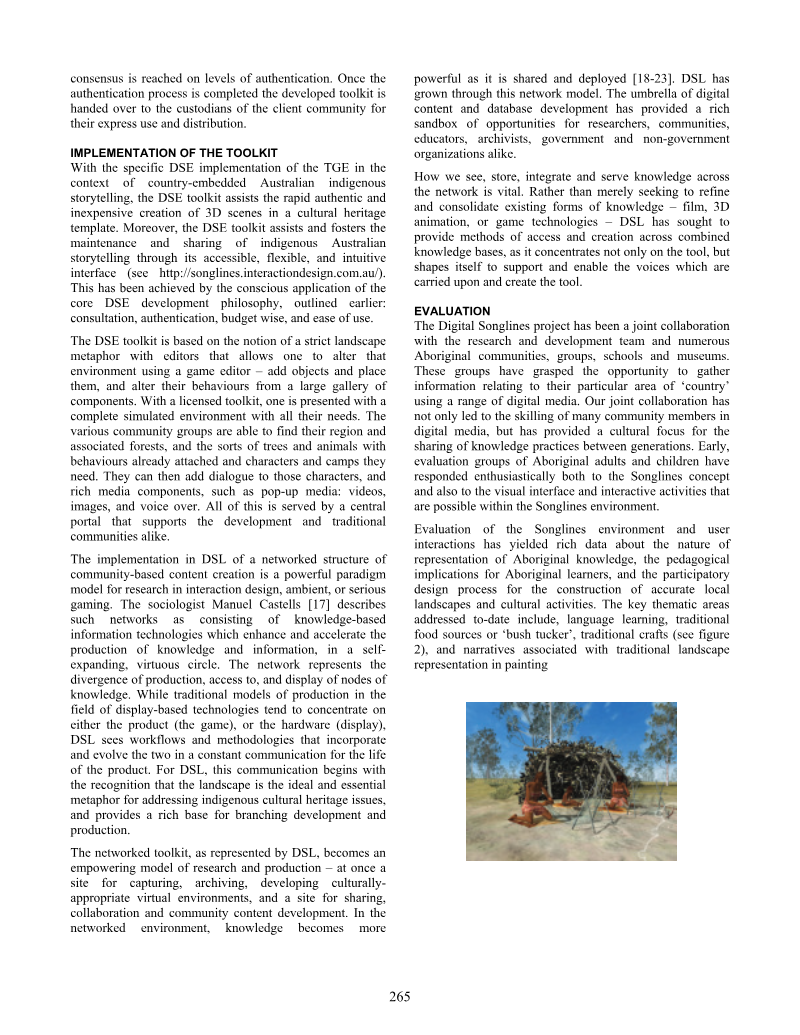
- The Digital Songlines (DSL) project, an ACID initiative, uses the Torque Game Engine to help Australian Aboriginal communities record, share, and teach cultural heritage through culturally sensitive 3D virtual landscapes, with community ownership rather than external authority as its guiding principle.
- Unlike typical heritage applications that model built structures, the DSL work models organic, non-orthogonal "country" environments, and its framework rests on regional authenticity in flora, fauna, artwork, and story content, a tiered content-layering model, and cyclical consultation with custodians.
- The development process is iterative and community-led, moving through consultation, on-site fieldwork, and repeated community authentication before any project is finalised, with limited budgets and the sensitivity of sacred knowledge acknowledged as ongoing constraints.
Survey of the Adjourned Sale Rate of the Japanese Home Video Game Industry
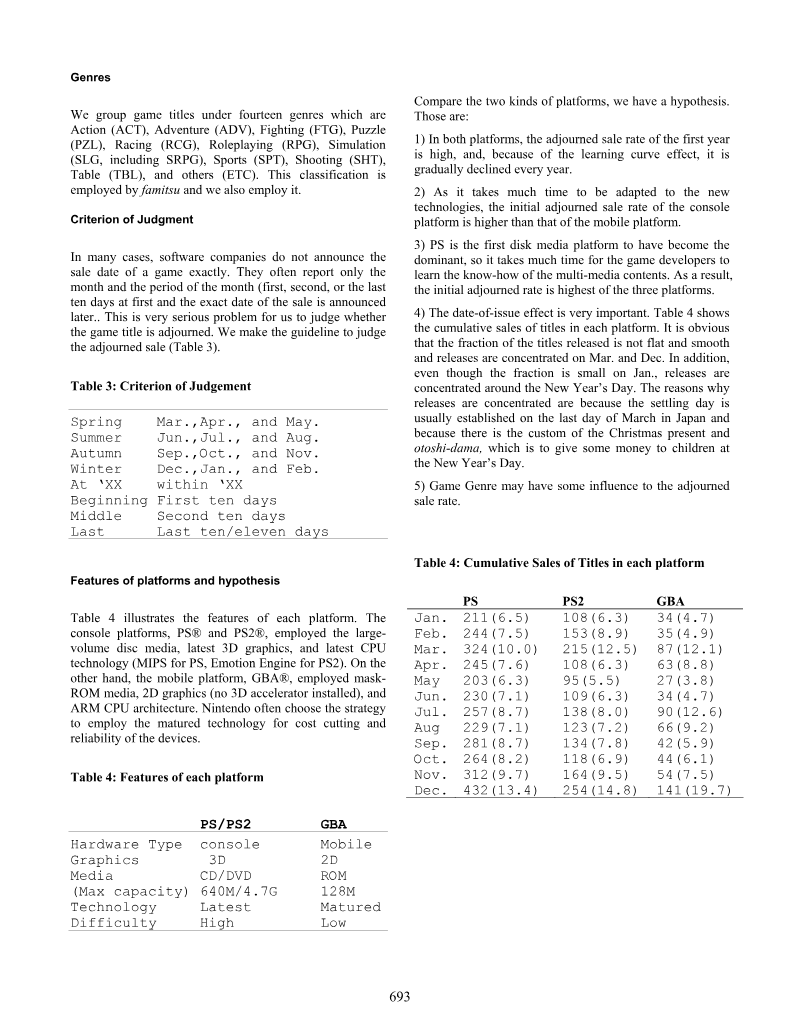
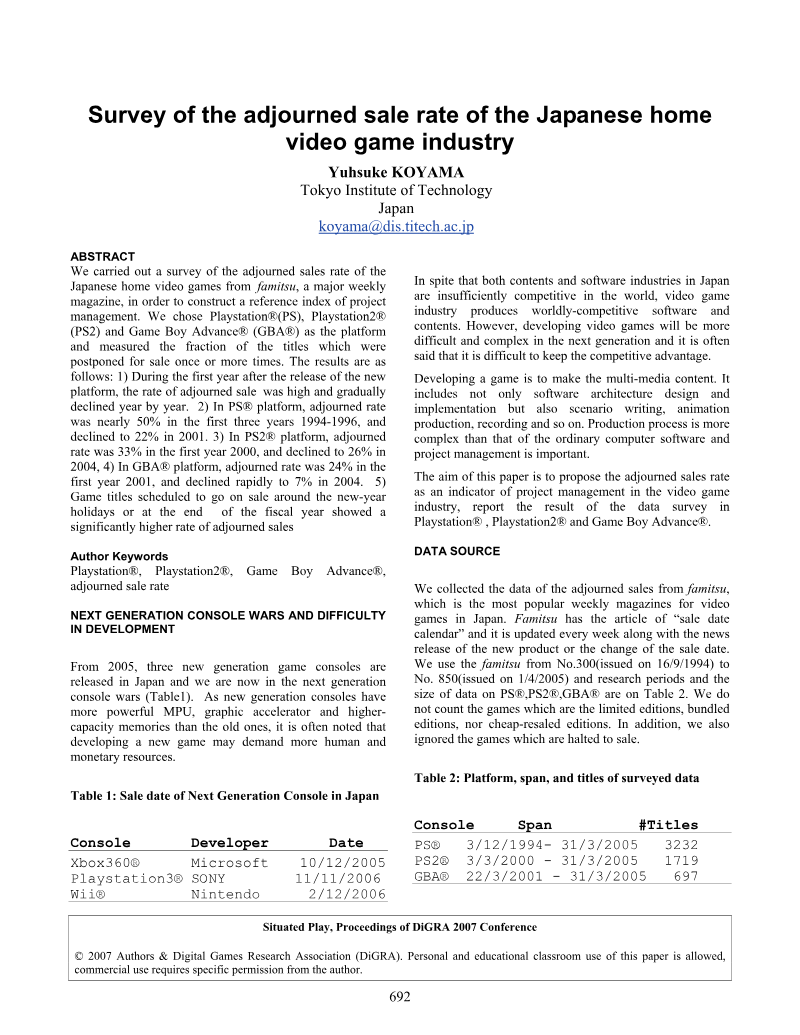
This study by Yuhsuke Koyama of the Tokyo Institute of Technology examines the adjourned sale rate of Japanese home video games, defined as the share of titles whose release was postponed at least once, with the aim of establishing it as an indicator of project management in the industry.
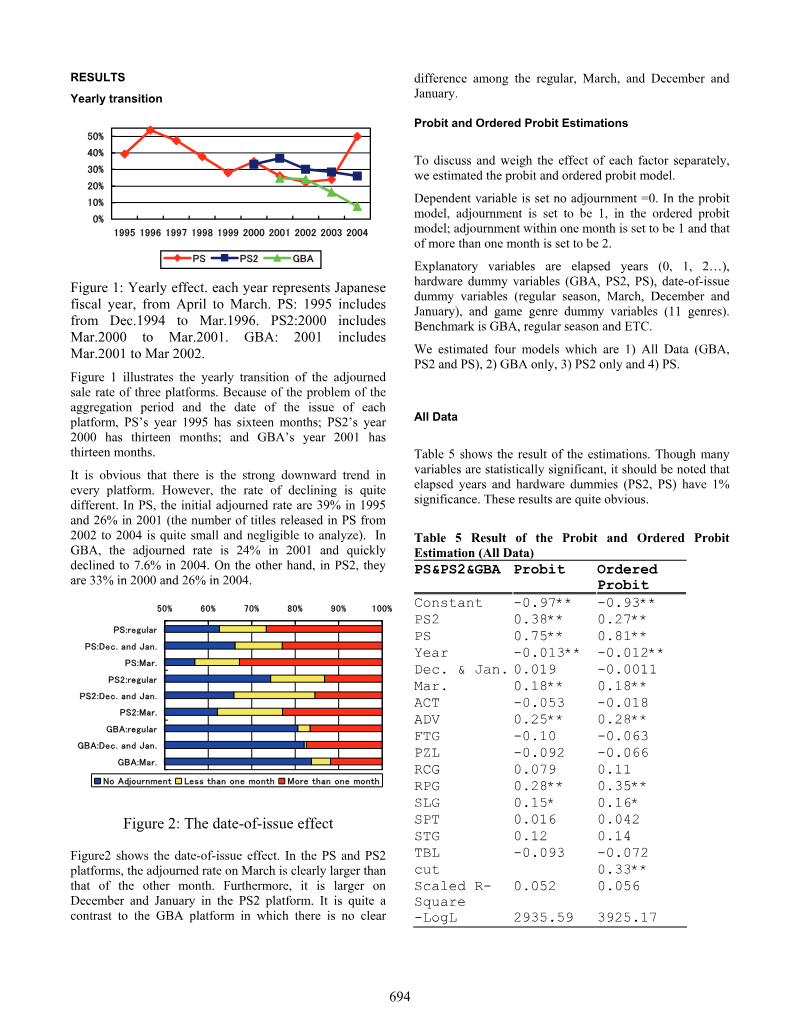
- Adjournment rates (titles whose release was postponed at least once) were highest in each platform's first year and declined steadily afterward, consistent with a learning-curve effect in project management.
- Sony's PlayStation started near 50% adjournment in its early years and fell to about 22% by 2001, while PlayStation 2 began at roughly 33% in 2000 and reached 26% by 2004.
- Nintendo's Game Boy Advance started at about 24% in 2001 and dropped sharply to around 7% by 2004, the steepest decline among the three platforms studied.