1 free read left. Create a free account for unlimited reading + AI research.
Create free accountWhitepaper DiGRA
1 free read left. Create a free account for unlimited reading + AI research.
Create free accountWhitepaperDiGRA
The essay argues that production context, game text, and player appropriation each shape how games are made and experienced. It proposes examining all three together.
This essay argues that Anglo-American Cultural Studies, particularly the multi-perspective tradition of the Birmingham Centre for Contemporary Cultural Studies, can deepen understanding of digital games by examining three dimensions: the production context, the game text, and the practices through which players acquire and adapt games. Its central claim is that a single-level analysis is insufficient, since commercial pressures, military sponsorship, ideological commitments, and player appropriation each shape how games are made and experienced. The essay draws on examples such as the US Army's America's Army recruitment game, The Sims, Grand Theft Auto: San Andreas, and the Tomb Raider series.
On the production side, the author contends that factors beyond development itself, including industry concentration, advertising placement, publisher dependence, and state involvement, influence what games get made and what they contain. America's Army, released in 2002 by a US Navy-affiliated institute, is presented as a case where a recruitment campaign relied on player activity data to tailor military career paths. The analysis of game texts applies ideology critique, distinguishing representation from ludic structure: racist depictions in certain titles may not be mirrored in their rules, while propaganda games like Ethnic Cleansing align representation and objectives directly.
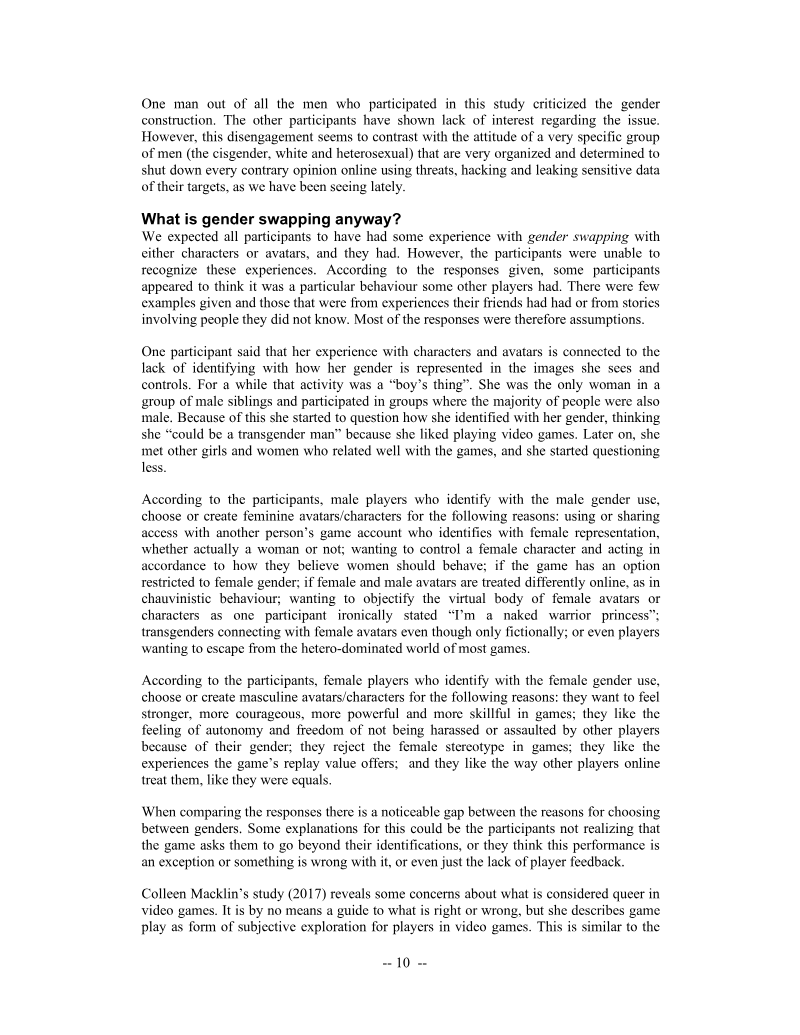
The essay's largest contribution concerns reception. Drawing on Fiske, Jenkins, and Callois, it documents "refractory" practices such as speedrunning, bug hunting, and modding, along with fan fiction, machinima, and cosplay, which often generate more joy than the developer intended. It also treats gender representation as an identity-forming force that can reinforce or challenge stereotypes, and it proposes a set of analytical questions for assessing gender in games. The author concludes that games can foster media literacy, though this depends on examining how players actually use them.
DiGRA · 2018