1 free read left. Create a free account for unlimited reading + AI research.
Create free accountWhitepaper DiGRA
1 free read left. Create a free account for unlimited reading + AI research.
Create free accountWhitepaperDiGRA
The study argues that gameplay should be understood as a situated, distributed social and cultural practice rather than analyzed solely through formal game design.
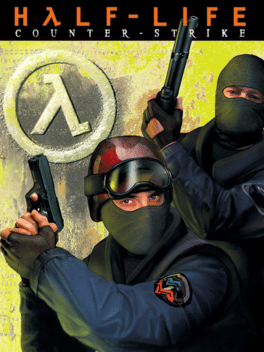
Counter-Strike, examined as a competitive e-sport, is the subject of this study, which argues that gameplay should be understood as a situated, distributed social and cultural practice rather than analyzed solely through formal game design. Grounded in Kline et al.'s three circuits of interactivity model and embodied and situated cognition theory, the authors draw on 34 interviews with clan members at the 2007 World Cyber Games finals, supplemented by video recordings and forum analysis. Their central observation is that participation shifts from individual leisure toward team-based, semi-professional activity as players invest more seriously, and that the meaning players make of the game is inseparable from how they play it.
Among the study's key findings, strong teams depend on individual proficiency combined with collective coordination, while equipment proves less decisive than commonly assumed. Practice habits are notably minimal, with most teams training only enough to qualify for events. Infrastructure also shapes competitive outcomes: ping rates and broadband access produce a network effect that disadvantages teams in regions such as India. In the Swedish community, professionalism and athleticism emerge as dominant discourses, framing gaming as work and sport in response to negative public stereotypes of gamers.
The study concludes that competitive gaming remains understudied within game studies, and it identifies gender imbalance in e-sports as a priority for future research. Applying a cultural circuit model, the authors find that participants occupy the consumption, production, and marketing roles only imperfectly, with Intel and the World Cyber Games positioned between technology and marketing circuits. They also surface a latent tension between professional players, who favor the older Counter-Strike 1.6, and commercial producers, who favor Counter-Strike: Source, a divergence that reveals how industry interests and player communities can pull in different directions.
Each row is a game or company this document names, each column a document, oldest first. A mark means that document names it. Select a row to see those documents.
DiGRA · 2016
DiGRA · 2016

DiGRA · 2016
DiGRA · 2016
DiGRA · 2016
DiGRA · 2016
DiGRA · 2016
DiGRA · 2016
DiGRA · 2016
DiGRA · 2016
DiGRA · 2016

DiGRA · 2016
DiGRA · 2012