1 free read left. Create a free account for unlimited reading + AI research.
Create free accountWhitepaper DiGRA
1 free read left. Create a free account for unlimited reading + AI research.
Create free accountWhitepaperDiGRA
The report argues that representing real history in games is inherently contested. It holds that games can still capture the flavor of historical periods.
"Controversies: Historicising the Computer Game" examines the tensions that arise when video games represent real history, arguing that such representation is inherently problematic and frequently contested. The work contends that games must balance historical accuracy against technical constraints and gameplay demands, and that critics who dismiss historical games as either educationally worthless or culturally offensive overlook the distinct aims these works pursue. The central position holds that while games cannot faithfully reproduce the past, they can still convey the atmosphere and flavor of historical periods, and that developers who include real events in their designs assume a corresponding ethical responsibility.
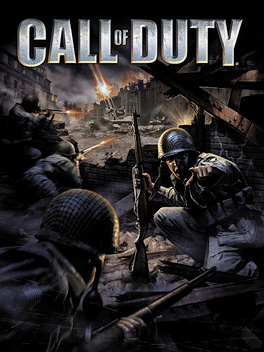
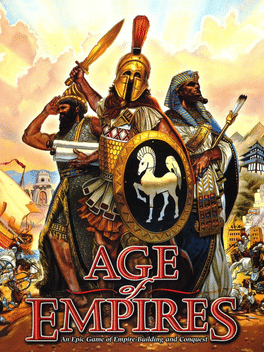
The analysis draws on case studies spanning a range of titles and periods. It traces the evolution from early wargames such as Eastern Front 1941, which sacrificed detail to hardware limits, to later productions that either narrowed their scope to single battles or adopted counterfactual premises to ease design challenges. Call of Duty, Sid Meier's Colonization, Age of Empires III, and S.T.A.L.K.E.R.: Shadow of Chernobyl serve as focal points. The authors observe that exclusions carry political weight: Colonization omits slavery and genocide mechanics, Call of Duty's enemies are frequently dehumanized, and Age of Empires III's depiction of Native Americans shifted from cautious neutrality to deliberate inversion in its expansion.
The most extended treatment concerns S.T.A.L.K.E.R.: Shadow of Chernobyl, set around the 1986 disaster that directly killed 31 people and displaced roughly 336,000. Critics argue the game exploits a real human tragedy, while developers and reviewers defend it as no more controversial than other shooters and as sensitive to its subject. The discussion notes that developers deliberately court controversy as a marketing strategy while simultaneously promoting their historical accuracy, and that endorsement by Chernobyl plant officials was cited in the game's favor. The work concludes that historical games warrant heavier scrutiny than other genres precisely because they engage with real events, and that simplistic treatments risk reinforcing jingoistic mythologies.
Each row is a game or company this document names, each column a document, oldest first. A mark means that document names it. Select a row to see those documents.
DiGRA · 2018
DiGRA · 2018
DiGRA · 2018
DiGRA · 2018
DiGRA · 2018
DiGRA · 2018
DiGRA · 2018
DiGRA · 2018
DiGRA · 2018
DiGRA · 2018
DiGRA · 2018
DiGRA · 2018