
DiGRA
The Digital Games Research Association: the international association of academics and professionals who study digital games. Its Digital Library holds the proceedings of the DiGRA conferences since 2002.
Documents
The Winner Takes All: Standardization and Console Games
Console blockbuster publishing operates as a winner-take-all market, shaped by network effects, consumer risk-avoidance, and a "fewer, bigger, better" publisher strategy.
- Blockbuster console game development budgets have risen sharply, from roughly $2.5–4 million for sixth-generation titles to reported figures of $30–100 million for next-generation releases.
- Publishers have responded with a "fewer, bigger, better" strategy built on standardized, rationalized production, including reuse of proprietary engines such as the IW engine behind Call of Duty.
- Activision Blizzard's dependence on proven franchises is stark: Call of Duty, Guitar Hero, and World of Warcraft together accounted for about 68 percent of its 2009 net revenues, while original intellectual property rarely succeeds.
Adolescent Thinking and Online Writing After the Use of Commercial Games in the Classroom
Commercial video games such as Spore can bridge adolescents' everyday gaming and social-network experiences with formal school curriculum, provided teachers actively guide the process.
- A single-case ethnographic study of 18 students across 10 sessions in a bilingual Madrid secondary school class (2009/2010) used the commercial game Spore to teach evolutionary theory, so its findings rest on small-scale qualitative evidence.
- Students initially held superficial understandings of theories associated with Darwin, Lamarck, Kimura, and Gould, and classroom discussion alone did little to deepen them.
- An online forum generating 33 contributions prompted more substantive reasoning than oral discussion, with written, forum-based exchange producing more questions, reasoning, and well-developed arguments.
Serious Beats: Transdisciplinary Research Methodologies for Designing and Evaluating a Socially Integrative Serious Music-Based Online Game
The "Serious Beats" project is a transdisciplinary research initiative focused on designing and evaluating a serious music-based online social game to promote social integration among second-generation migrant youth in Vienna, aged 14-17.
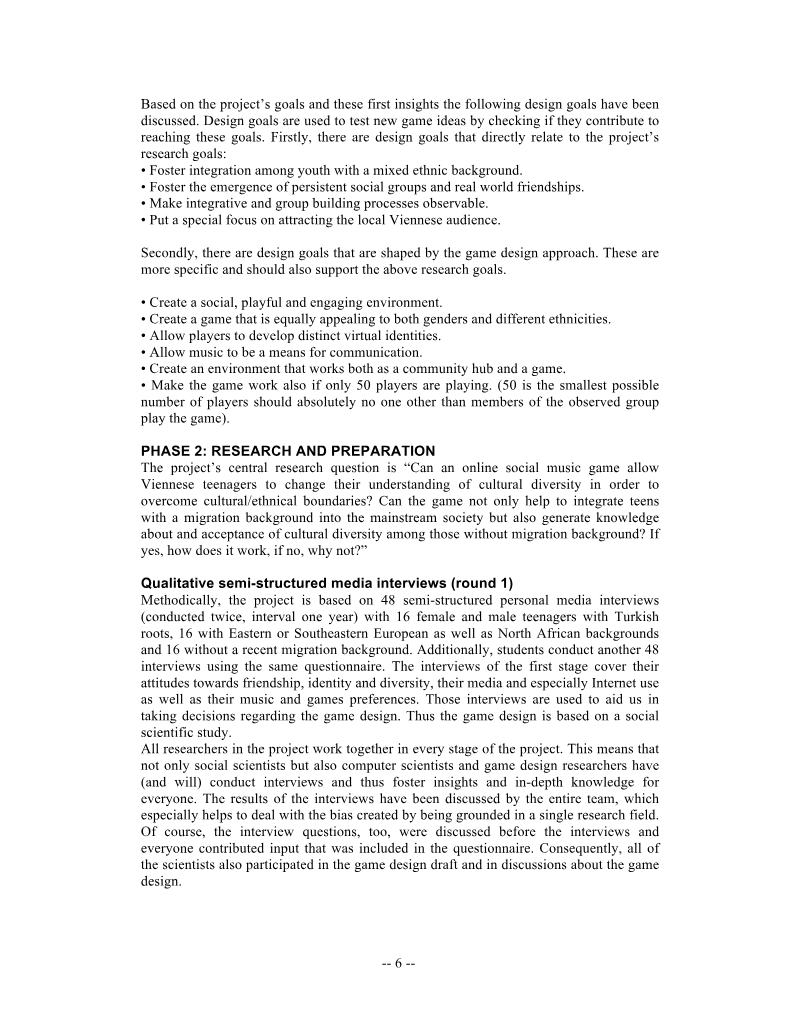
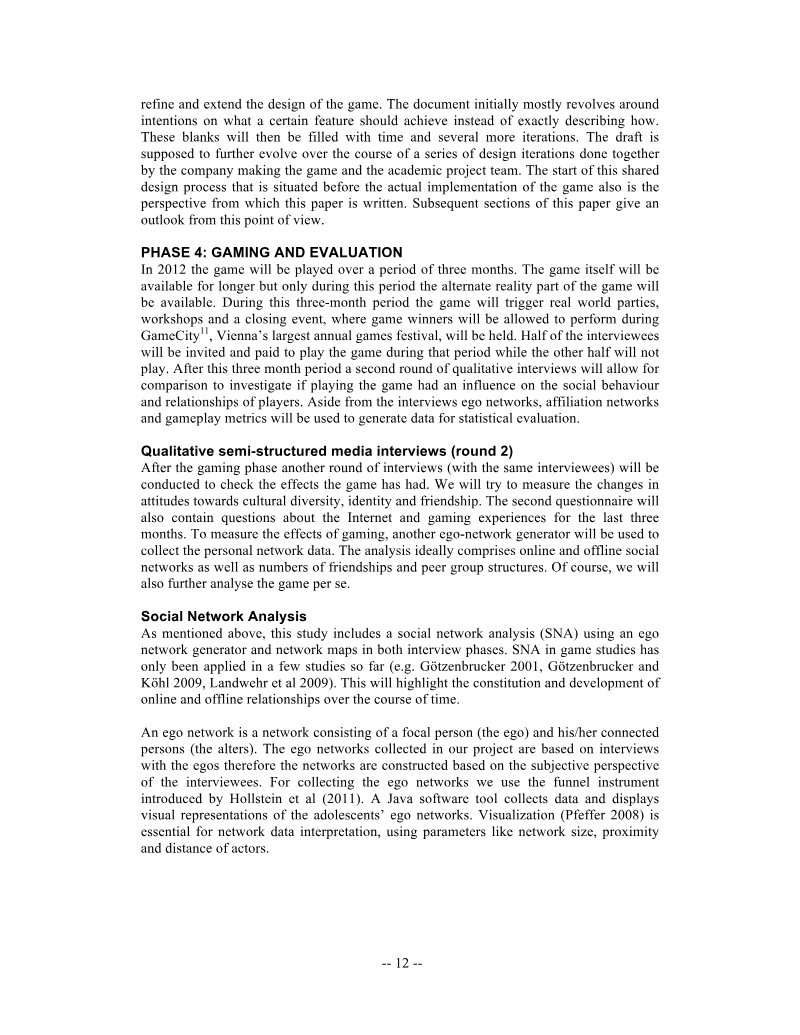
- Serious Beats is a transdisciplinary project from Vienna University of Technology and the University of Vienna to design a music-based online social game that fosters intercultural friendships among Viennese teenagers aged 14 to 17, many with Turkish or Balkan migration backgrounds.
- The design foundation rests on 48 semi-structured interviews, which found a strong preference for rap and hip hop, heavy reliance on YouTube as the primary music source, and hybrid migrant and Austrian identities, with many reporting intergroup tensions over jobs and housing.
- Early music-game prototypes were judged to carry a high risk of losing both male and female audiences, prompting a shift toward a social music service built on Facebook and YouTube and integrated with real-world events in youth centers and vocational schools.
The Professional Identity of Gameworkers Revisited: A Qualitative Inquiry on the Case Study of German Professionals
This qualitative study explores the professional identity of German gameworkers, a previously under-researched segment within Europe's second-largest game market.
- Germany was chosen as the case study because it is the second-largest European game market, and the study is set against industry surveys describing a male-dominated, high-stress environment marked by crunch and high turnover.
- Respondents identify strongly with both their profession and their teams, a bond driven chiefly by their interest in making and playing games.
- Most respondents entered the industry through amateur or hobbyist involvement and often moved across roles as they gained experience, with several studio heads having begun as programmers.
MUsE: A Framework for Reception-Based Gaming Research
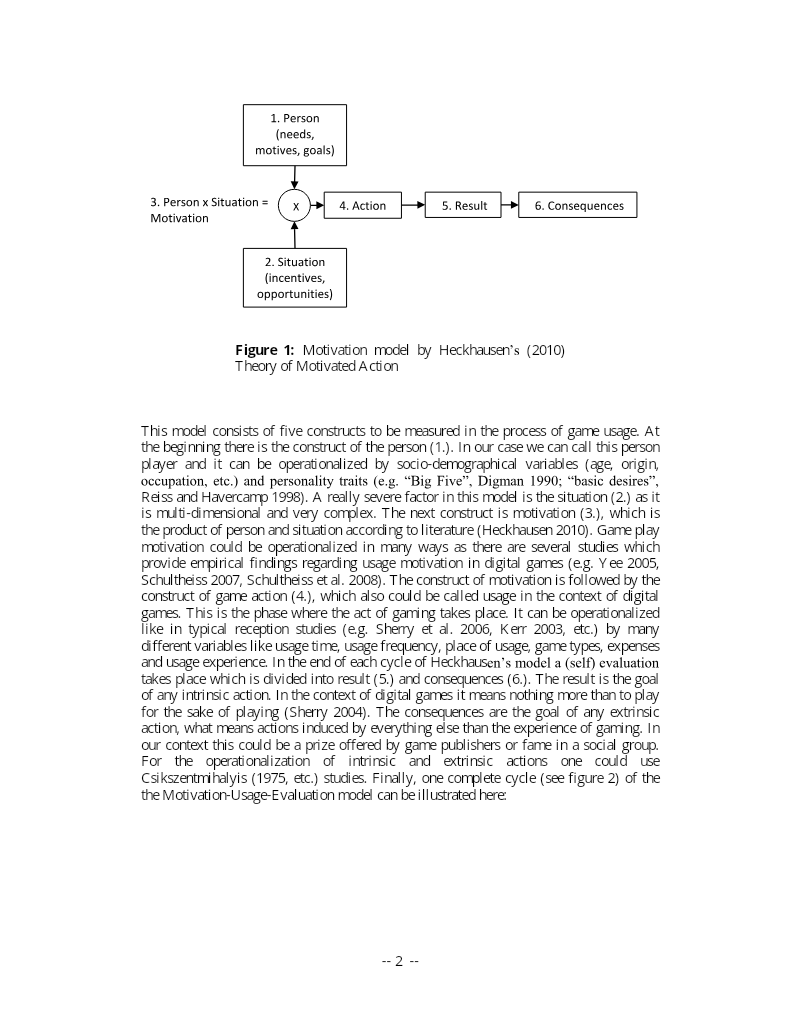
The document introduces MUsE, a holistic framework for reception-based gaming research, which stands for Motivation-Usage-(self)Evaluation.
- The MUsE framework models a full cycle of game use (player, situation, motivation, usage, self-evaluation) and is built on Heckhausen's Theory of Motivated Action, with its strongest fit in quantitative survey research.
- Evaluations, especially extrinsic consequences, feed back into motivation in later play cycles, a finding the author flags as relevant to developers seeking sustained engagement and spending.
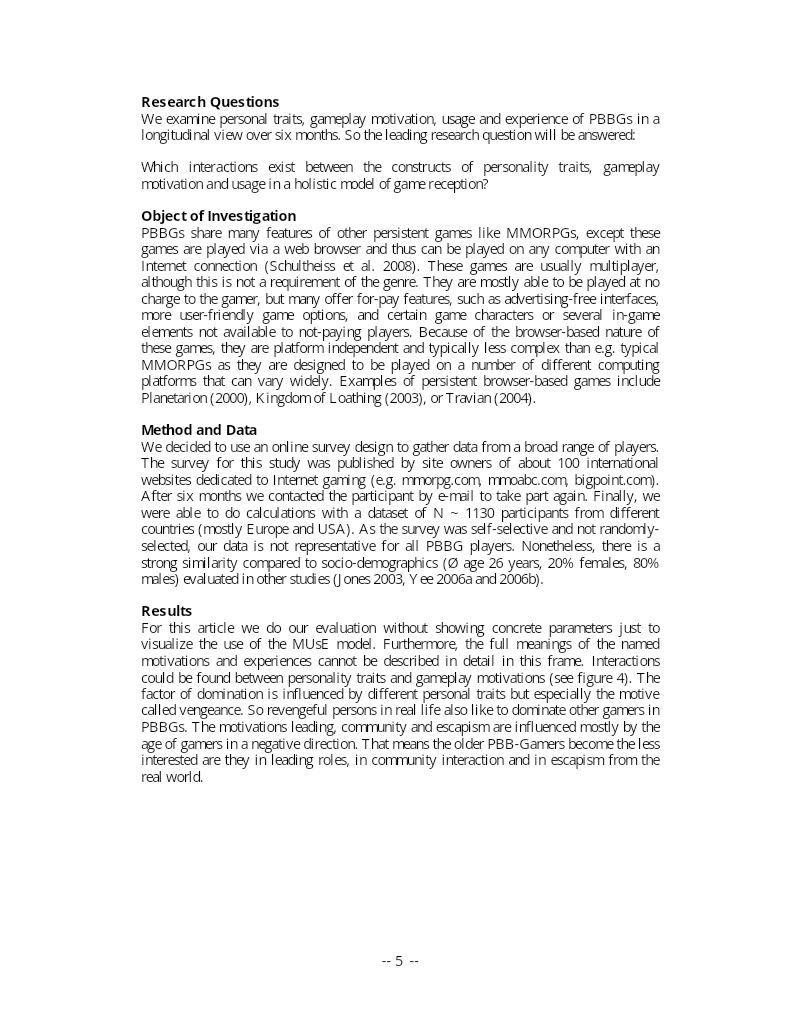
- The prototype study of persistent browser-based games drew about 1,130 participants via an online survey on roughly 100 gaming websites, with follow-up six months later, mostly from Europe and the USA.
To Get Help, Please Press X: The Rise of the Assistance Paradigm in Video Game Design
Carl Therrien argues that every step toward greater complexity in video game design has been paired with a complementary form of player assistance, and that the cumulative effect of these systems has changed how the medium addresses its audience.
- Each rise in game complexity has been paired with a form of player assistance (tutorials, hints, adjustable difficulty, save or pause functions), and the arrival of these systems marks a shift from the competitive, high-attrition logic of early arcade play toward a cooperative orientation aimed at gratification and sustained engagement.
- Many assistance features such as implicit tutorial pacing, hint systems, and checkpoints appeared much earlier than commonly assumed, often driven by arcade economics and the commercial pressures of the home market.
- Early arcade design relied on punishing difficulty and 'kill screens', which fostered a culture of public mastery, whereas contemporary design emphasizes balanced challenge and flow.
Can't Stop the Signal?: The Design of the Dutch Firefly LARP
Lamerichs examines a Dutch fan-made LARP based on the television series Firefly as a case study in participatory culture, arguing that game studies has overlooked player-initiated games and that the roles of designer, player, and fan overlap rather than form a clean dichotomy.
- The paper argues that a Dutch fan-initiated LARP set in the Firefly universe, run by the Knights of the Kitchen Table, embodies a co-creative design model in which designer, player, and fan roles overlap rather than stay separate.
- Four staff members who were both fans and experienced game masters chose Firefly for its casual, non-heroic characters, small ships, and morally ambiguous settings, all of which favor collaborative roleplay.
- The designers aimed to facilitate rather than dictate play, using physical props and a lightly structured skill system adapted from existing Firefly and Star Wars LARP rules, which required frequent improvisation when participants departed from scripted events.
The Aiming Game: Using a Game with Biofeedback for Training in Emotion Regulation
"The Aiming Game" is a serious game developed to train financial investors in emotion regulation, specifically targeting the awareness and control of emotional and physiological arousal to mitigate cognitive biases in trading.
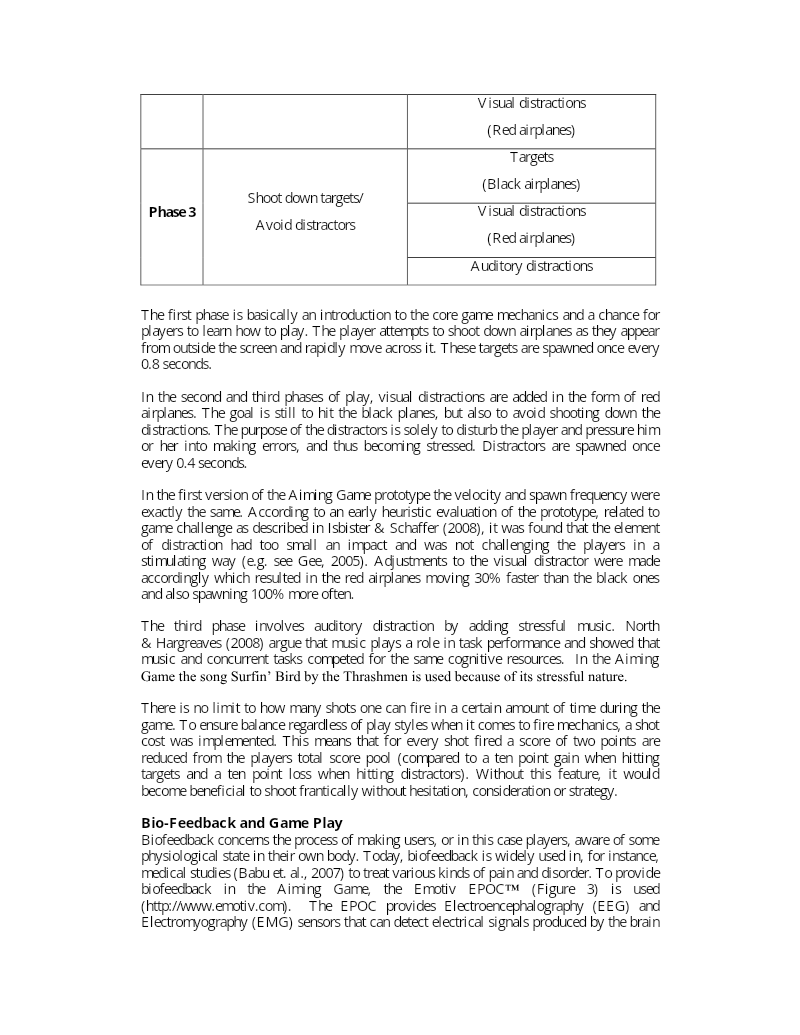
- The Aiming Game is a Unity 2D shooter that uses EEG and EMG biofeedback from an Emotiv EPOC headset to train players to recognize and regulate emotional arousal, targeting financial investors; it adapts difficulty and visual distortions (aiming offset, target blur) to the player's arousal level and adds distractors to induce stress.
- The authors explicitly acknowledge that transfer of the regulation skills to real trading behavior has not yet been empirically demonstrated, so the core premise remains unvalidated.
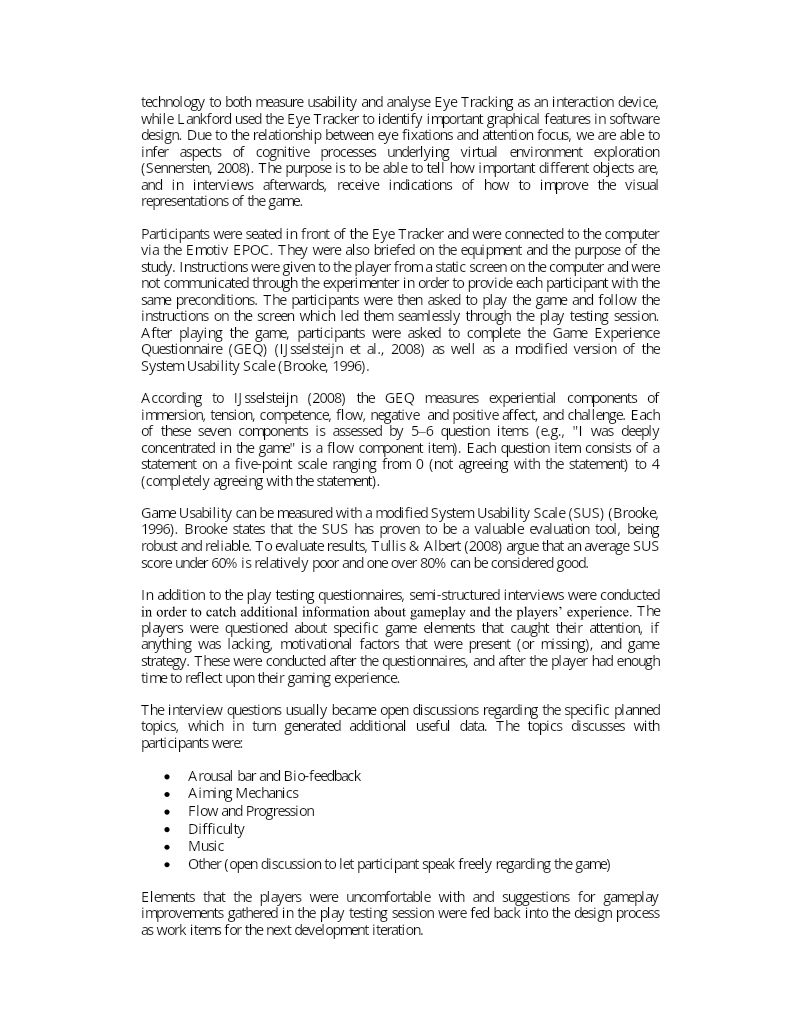
- Evaluation via heuristic review and play testing with only six participants produced preliminary results; the reported affective measures (tension M = 4, low happiness M = 2) are not statistically meaningful at this sample size.
Grow-A-Game: A Tool for Values Conscious Design and Analysis of Digital Games
The "Grow-A-Game" card system is presented as a significant tool for integrating values-conscious design and analysis into the digital games industry.
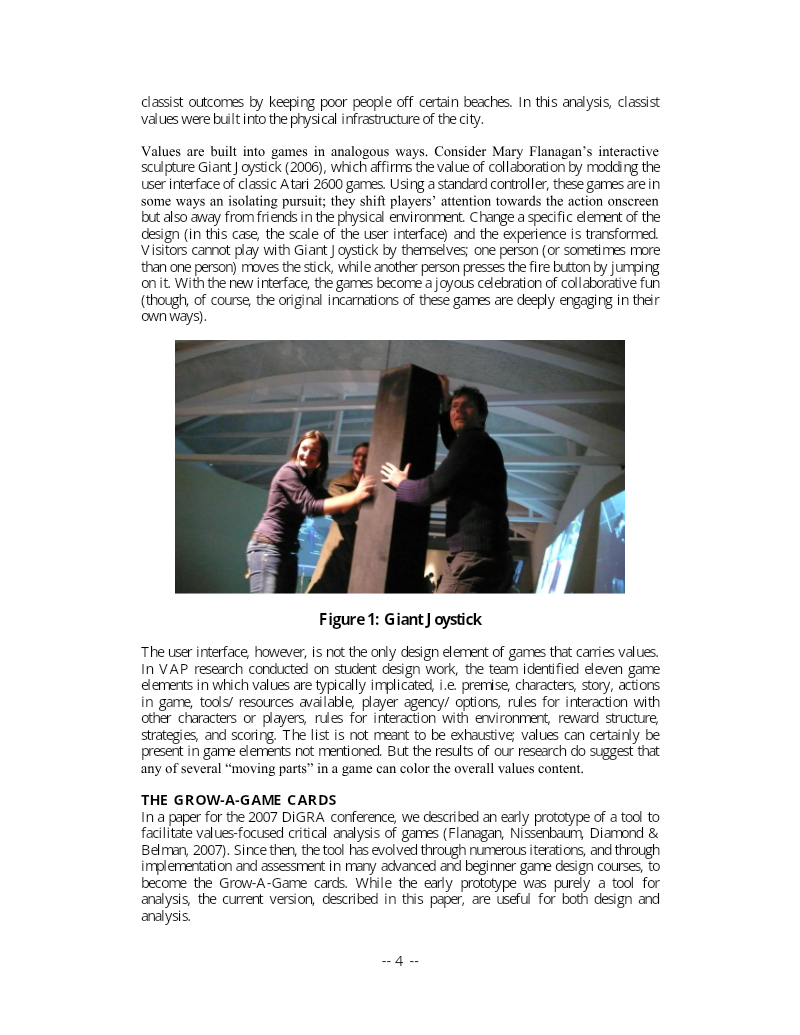
- The Grow-A-Game paper presents a card-based tool from the Values at Play project that helps designers and analysts examine the moral, social, and political values embedded in digital games, using four card categories: values, verbs, games, and issues.
- Its central thesis is that games communicate values through both narrative and mechanics, and that deliberately attending to those values during design and analysis yields more coherent and impactful work.
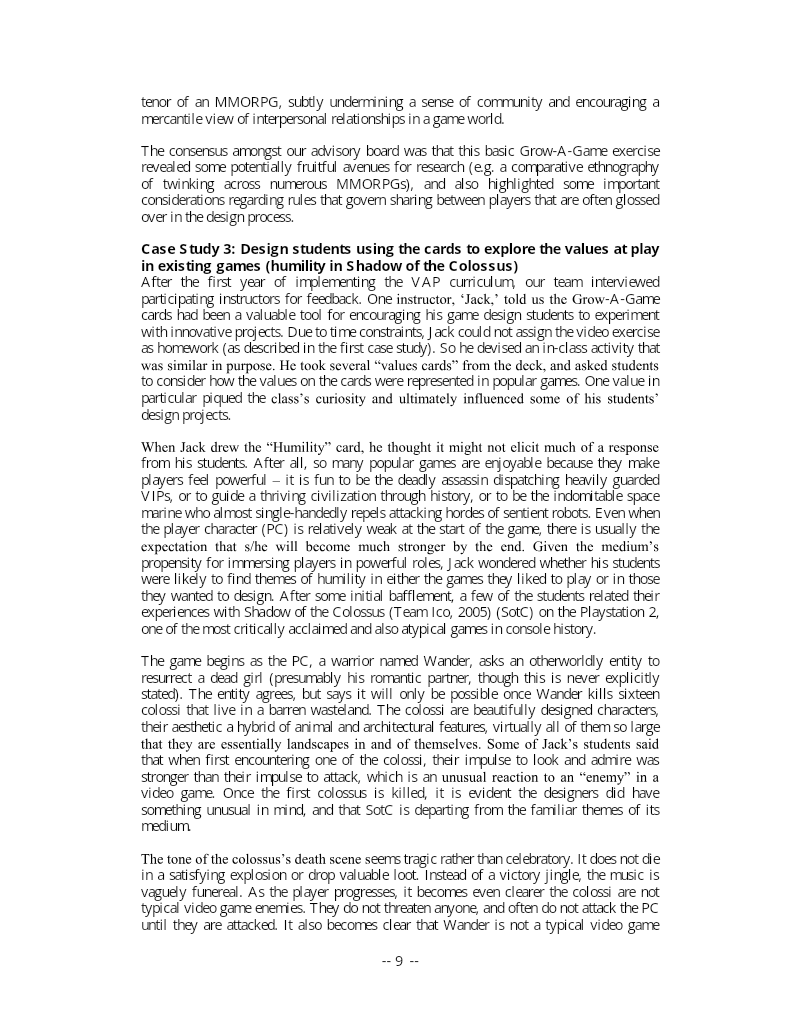
- Case studies showed that participants using the value cards (such as compassion, generosity, humility, and empathy) produced games in which narrative and mechanics expressed values more consistently, though the evidence is qualitative and anecdotal rather than statistically measured.
Unexpected Game Calculations in Educational Wargaming: Design Flaw or Beneficial to Learning?
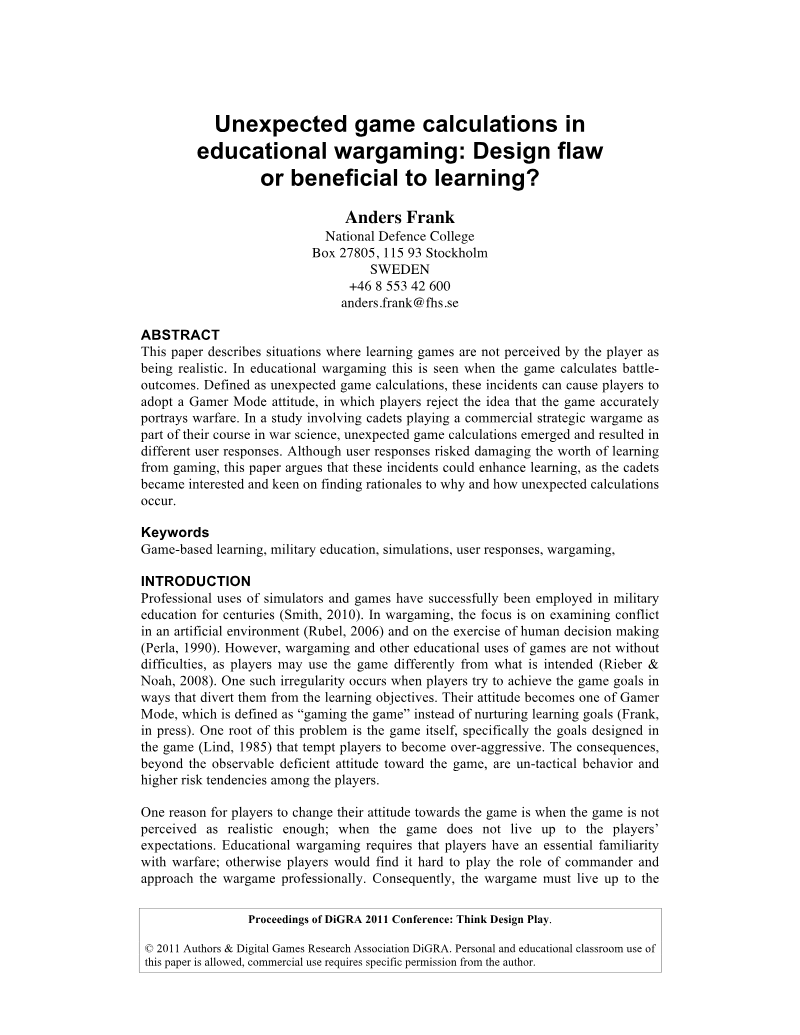
The document examines the phenomenon of "unexpected game calculations" in educational wargaming, where battle outcomes appear unrealistic to players, and explores whether these discrepancies represent design flaws or beneficial learning opportunities.
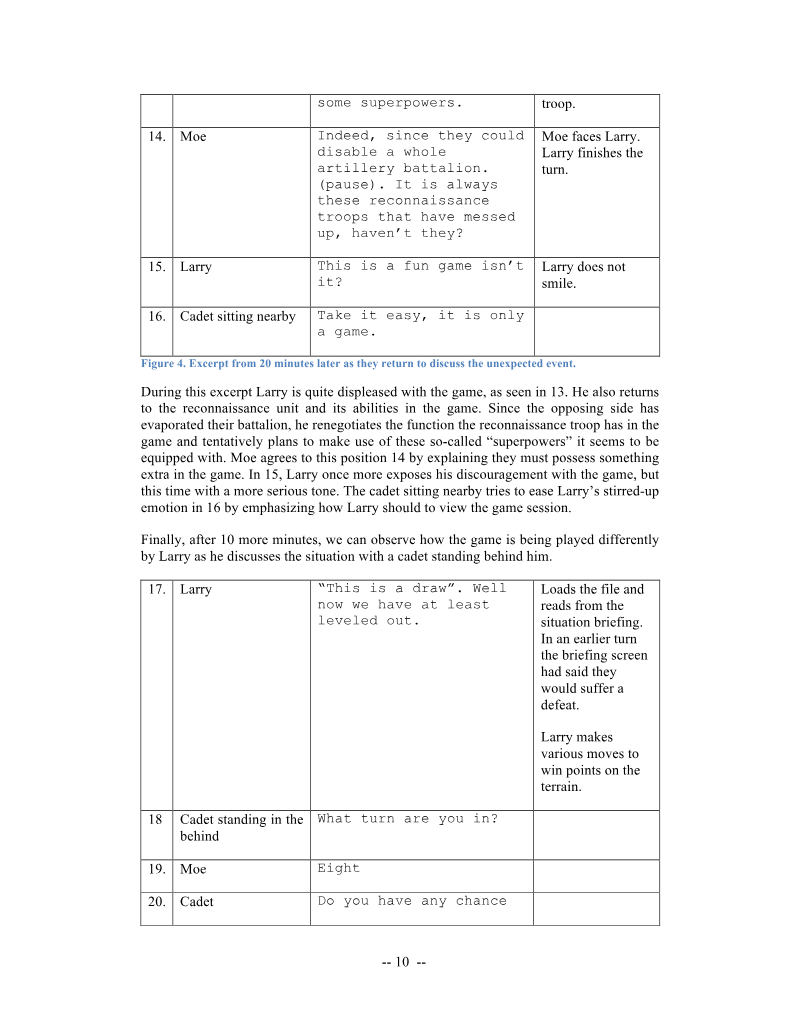
- Unexpected battle-outcome calculations in educational wargaming can either undermine or deepen learning, and their effect depends largely on how players respond to them.
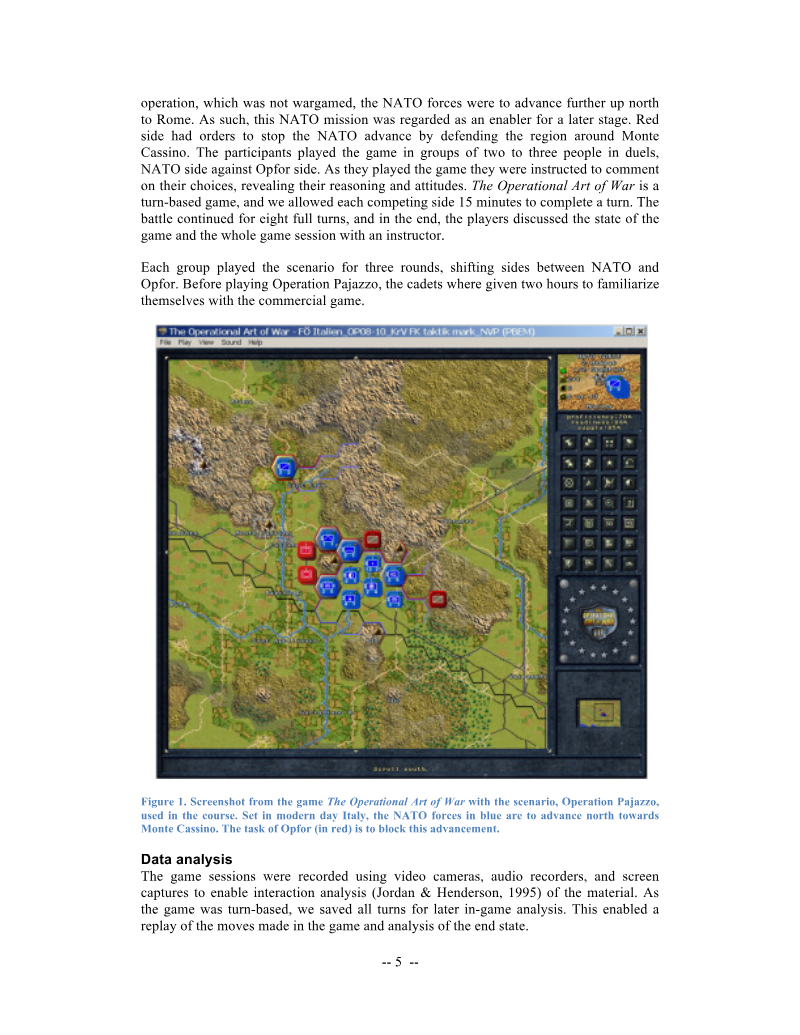
- Based on roughly twenty hours of recorded sessions with eleven military cadets playing The Operational Art of War, small, frequent surprises are common, while fewer significant events generate intense discussion and noticeable behavioral shifts.
- A key risk is a "Gamer Mode" stance, in which players reject the game's realism and chase points rather than understanding, as seen when a group dismissed the game's legitimacy after an artillery battalion was implausibly destroyed.
Understanding the Contribution of Biometrics to Games User Research
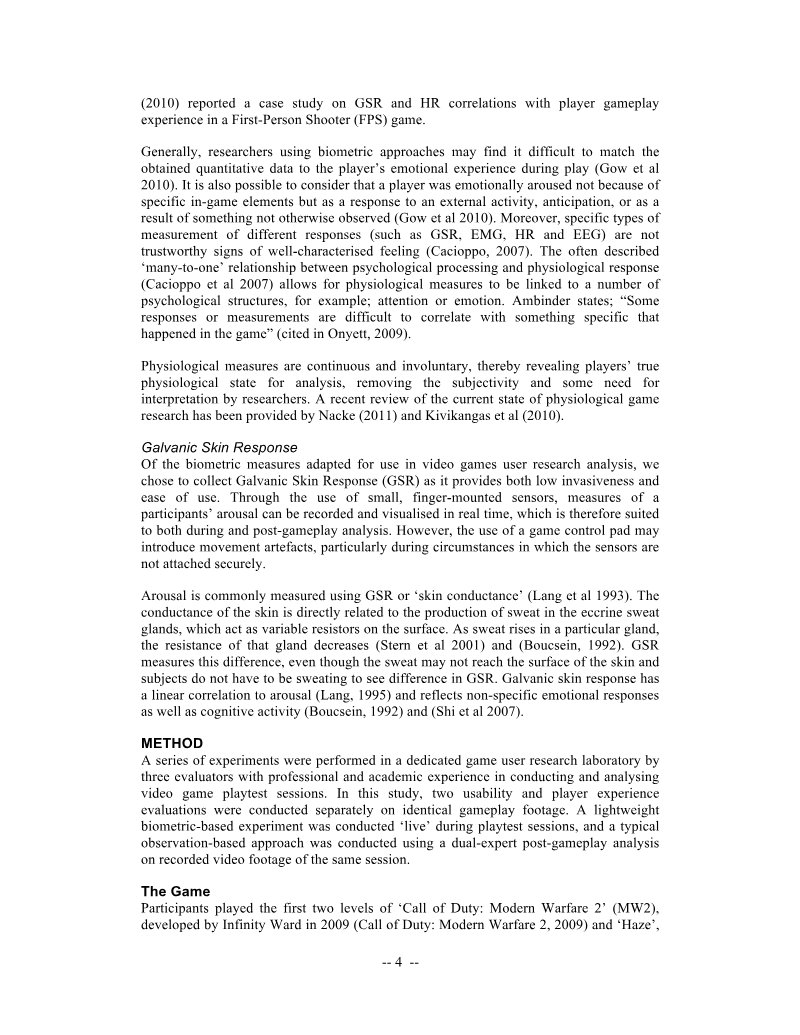
This document investigates the incremental value of incorporating biometric data, specifically Galvanic Skin Response (GSR), into video game user research compared to traditional observation methods.
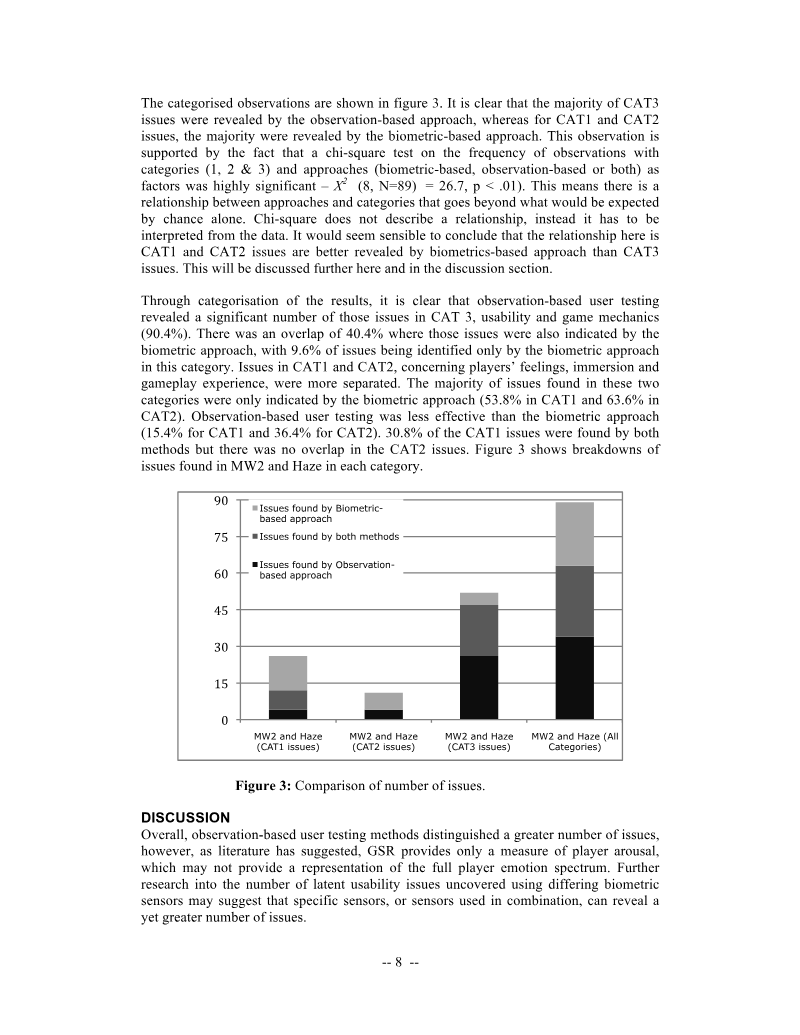
- Biometric methods (GSR combined with live event logging) surfaced issues that conventional observation missed, particularly around emotion, immersion, and gameplay experience, in a study of six casual gamers playing Call of Duty: Modern Warfare 2 and Haze.
- Of 89 identified issues, 29 were detected by both approaches, 34 only by observation, and 26 only by biometrics.
- Observation was substantially more effective for usability problems, a difference supported by a significant chi-square result (X²(8, N=89) = 26.7, p < .01).
The End of the Rainbow: In Search of Crossing Points Between Organizations and Games
Applying games to organizations has generally followed three routes: using game technology such as massively multiplayer online games as "leadership labs," applying gamification through points, badges, and leaderboards, and borrowing from the game design process itself.
- The paper argues that gamification built from isolated game elements such as points and badges reflects a rational-system view of management and offers limited replay value, while the game design process itself is better suited to the complexity of real organizations.
- Based on two action-research case studies (a Dutch hospital's Elective Care Center examined in 2008, and the start-up We Beat The Mountain studied from 2010 to 2011), researchers ran four "game design game" workshops in each to co-produce an organizational meta-design.
- Limited pre-workshop information sparked curiosity and drew receptive participants, while playfulness, transparency, and especially time pressure tied to shared goals fostered an open atmosphere, though these had to be balanced against workshop content to avoid distraction.