
DiGRA
The Digital Games Research Association: the international association of academics and professionals who study digital games. Its Digital Library holds the proceedings of the DiGRA conferences since 2002.
Documents
Making Sense of Game-Play: How Can We Examine Learning and Involvement?
This research paper investigates the multifaceted nature of learning and involvement within game-play, aiming to provide a more rigorous understanding of player behavior and cognition.
- The study argues that existing theories of play (Malone, Ryan and colleagues, Calleja, Gee) lack empirical grounding for explaining how players actually learn through games, and proposes methods that capture both moment-to-moment breakdowns and breakthroughs during play and learning that extends beyond it.
- The research is a mixed-methods multiple case study of eight cases involving nine participants, combining laboratory observation, physiological measures (galvanic skin response, electrocardiography, electromyography), cued post-play interviews, and three-week gaming diaries.
- Video-plus-interview procedures were the most productive method, surfacing rich evidence of when players stalled and when they experienced breakthroughs, whereas physiological data was hard to interpret in real time and was treated only as a supplementary source.
Beyond the Digital Divide: An Ecological Approach to Gameplay
"Beyond the Digital Divide: An Ecological Approach to Gameplay" proposes an ecological psychology framework to understand gameplay, defining it as the perception, action upon, and transformation of affordances within a game system or with other players.
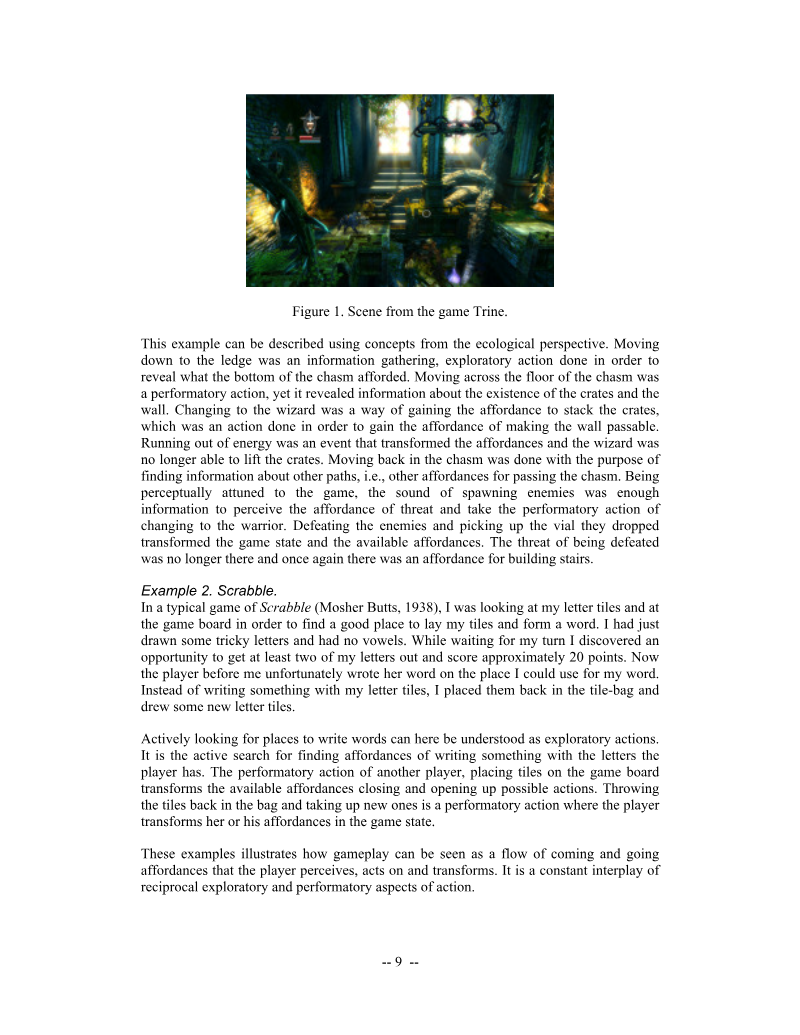
- The paper argues games are best analysed through ecological psychology (drawing on Gibsonian affordance theory), focusing on how players perceive, choose, act on, and transform a game's affordances rather than on essentialist definitions of what a game is.
- The central contribution is a distinction between exploratory challenges (e.g., chess, puzzles, simulations), where difficulty lies in working out what to do, and performatory challenges (e.g., sports, shooters, racing, dexterity games), where the required action is clear but execution demands skill and physical effort.
- The author introduces 'backseat gaming': in exploratory-challenge games non-controlling bystanders can meaningfully share the challenge, whereas performatory games typically restrict such participation.
Problem Based Game Design: Engaging Students by Innovation
Aalborg University's Medialogy department employs a Problem-Based Learning (PBL) methodology to cultivate innovative game design, preparing students to address real-world challenges through interactive entertainment.
- Aalborg University's Problem Based Learning approach to game design has students work in self-managed teams of three to six on real-world problems, and the authors position it as an examination of how the method functions in practice rather than a claim that it is superior to other teaching methods.
- A central requirement is that problem statements be carefully scoped: too grand and they become unmanageable, too trivial and they leave little room for creative exploration.
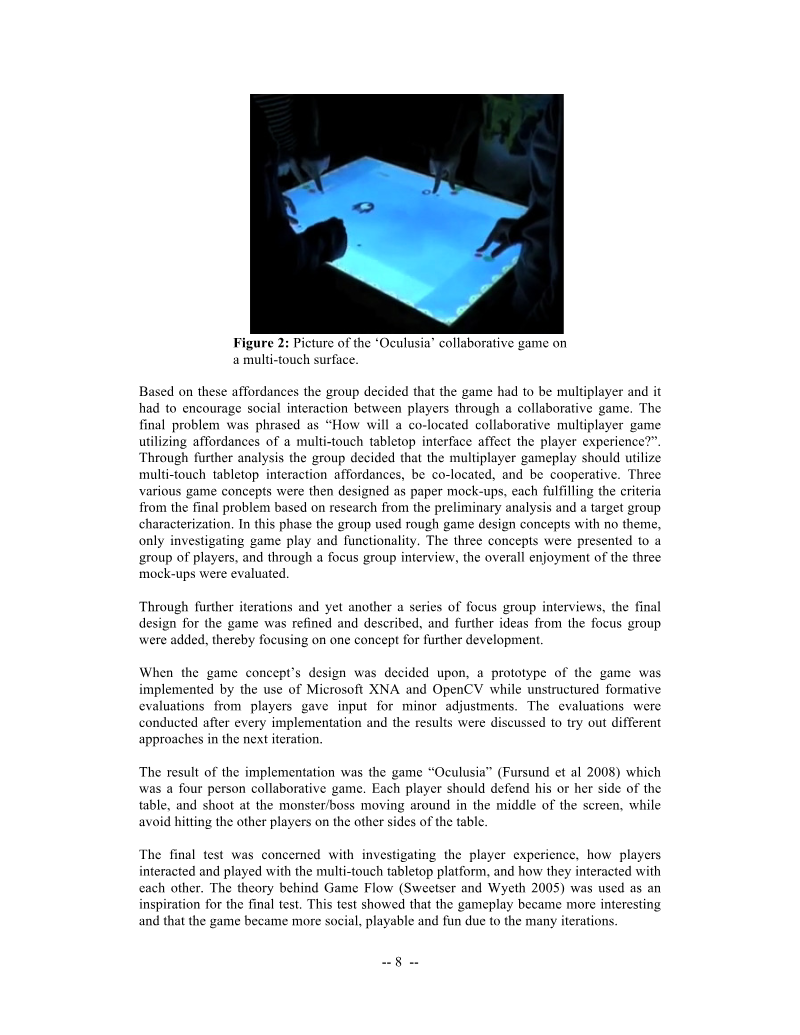
- The Petri3 case study tested whether a competitive multiplayer game could recapture the direct social interaction of board and card games, and reported social engagement comparable to traditional tabletop play.

BurgerTime: A Proceduralist Investigation
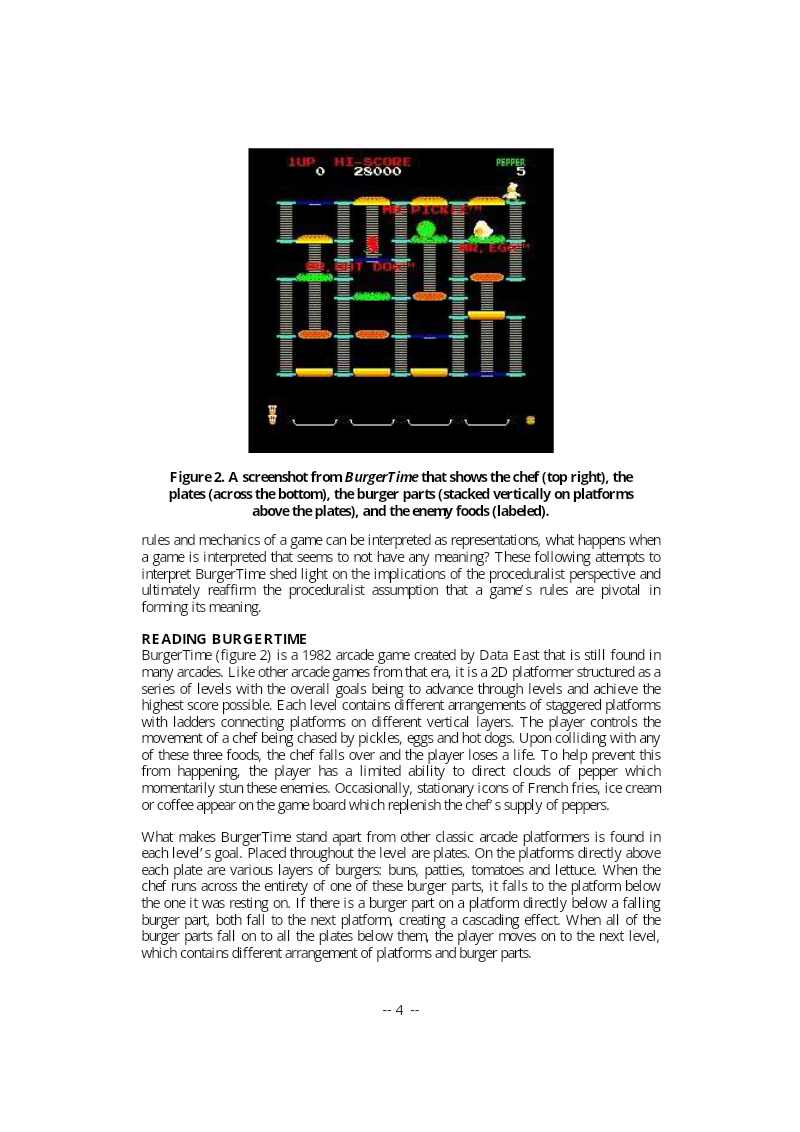
"BurgerTime: A Proceduralist Investigation" offers a critical examination of the classic arcade game BurgerTime through the lens of proceduralist readings, a method that prioritizes the interpretative power of a game's rules and processes over its visual or narrative elements.
- The paper applies a proceduralist framework, arguing that a game's rules and dynamics, rather than its visuals, are the primary carrier of its meaning, and tests this on the 1982 arcade game BurgerTime.
- Simple thematic readings such as a chef preparing burgers fail to explain the game's antagonistic enemy foods, so the authors consider such interpretations unconvincing as comprehensive accounts.
- The authors highlight incoherent features that resist straightforward thematic reading, including floating platforms, enemies stunned by pepper, and chef collisions that sometimes signify cooking and sometimes signify death.
The Player Engagement Process: An Exploration of Continuation Desire in Digital Games
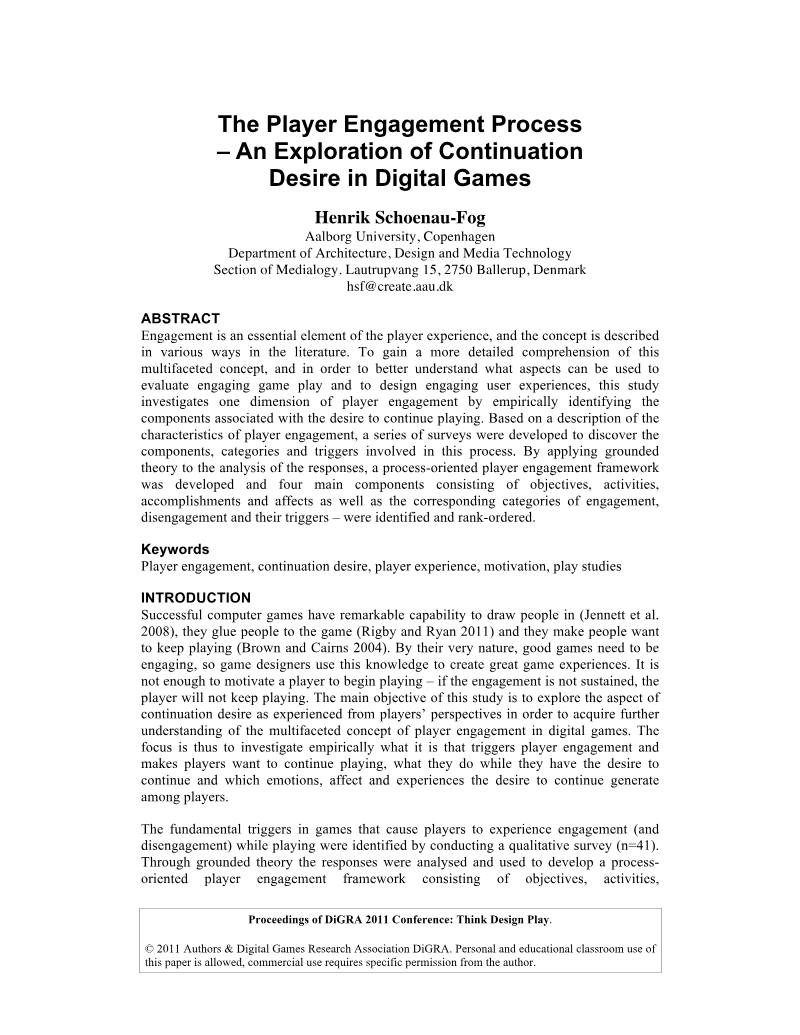
This study empirically investigates player engagement in digital games, focusing on the desire to continue playing.
- The study defines engagement as a distinct construct from motivation and enjoyment, centered on 'continuation desire,' the drive that keeps players returning to a game over time.
- Its OA3 framework (Objectives, Activities, Accomplishments, Affect) models engagement as a cyclical process in which positive affect sustains continued play.
- In a coded sample of 310 statements from 131 participants, accomplishment was the most cited engagement driver at 36%, followed by experiencing the story (18%), socializing (10%), sensing (9%), positive affect (8%), and exploration (7%).
Video Games: Walking the Fine Line Between Art and Entertainment
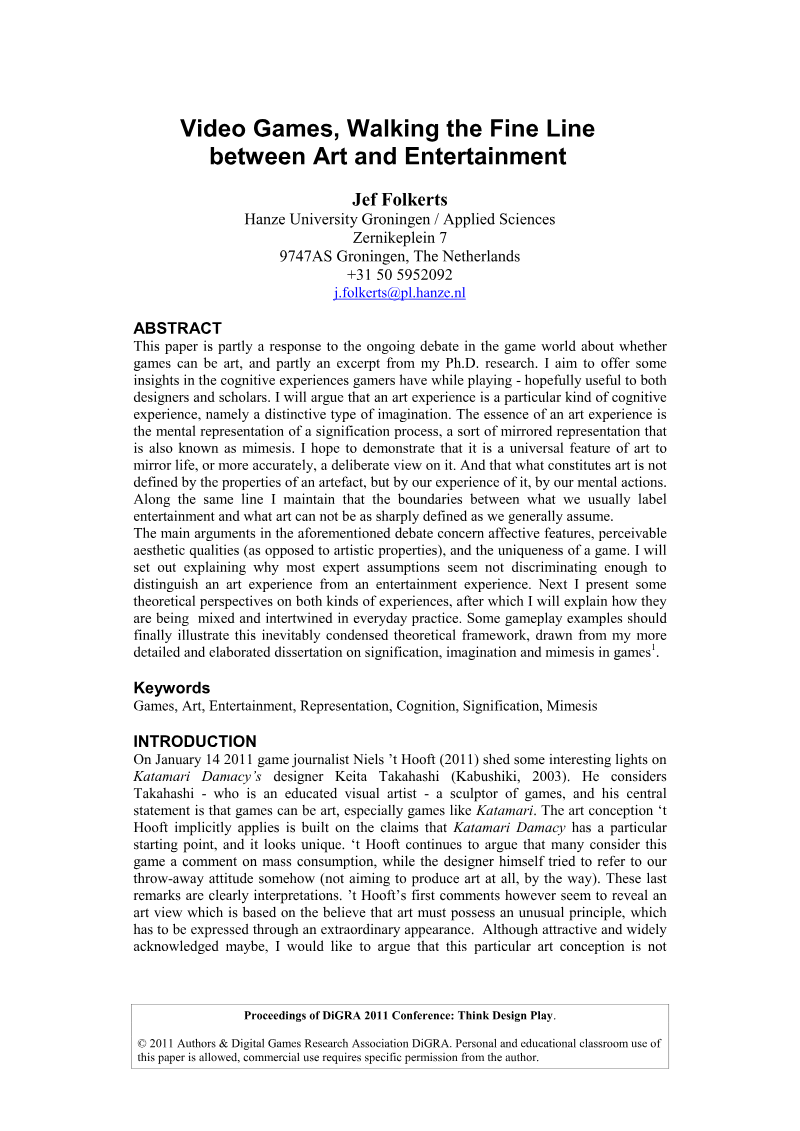
Folkerts contends that the long-running debate over whether video games are art has stalled because the criteria commonly invoked cannot distinguish art from entertainment.
- The author argues the art-versus-entertainment debate should be settled by the cognitive experience a work produces rather than by the properties of the artifact itself, since the distinction lies in how a work is apprehended.
- Common expert criteria such as emotion, fantasy, unusual appearance, and interpretability fail to separate art from entertainment, because popular television and Hollywood films exhibit them just as readily as acclaimed artworks.
- Imagination, emotion, challenge, and novelty are shared by both art and entertainment, so enjoyment alone reveals little about whether an experience is artistic.
The Map as Playground: Location-Based Games as Cartographical Practices
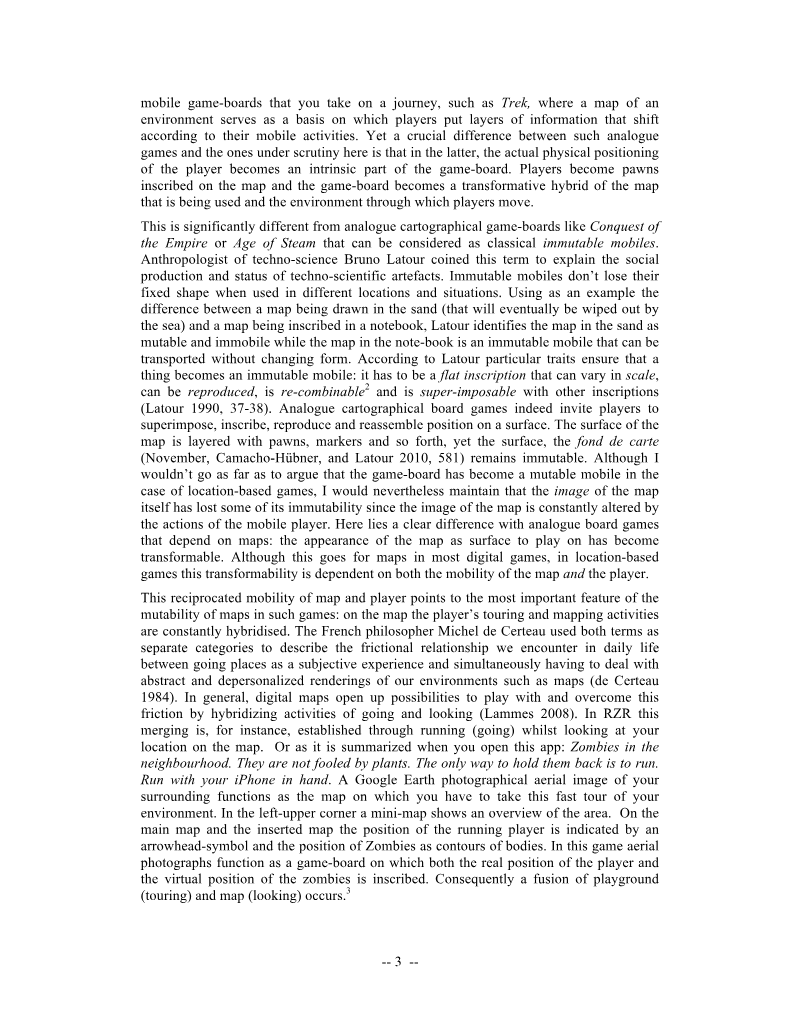
This paper examines how maps in location-based mobile games function as dynamic surfaces for player interaction and information inscription, rather than static representations.
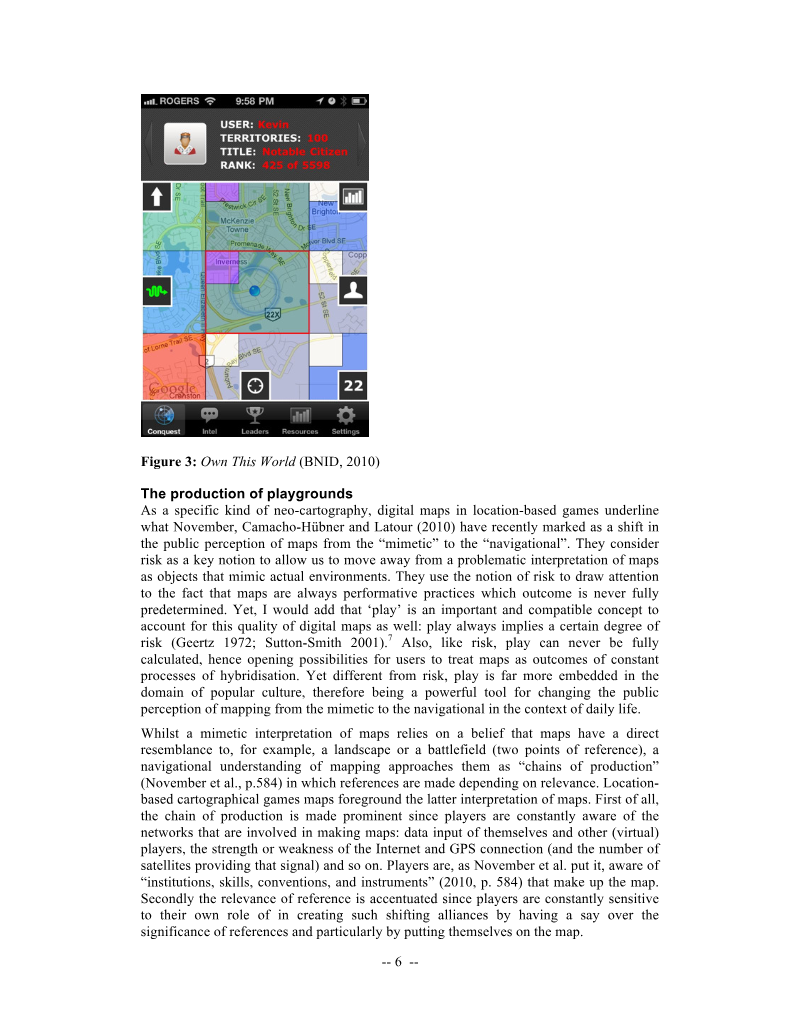
- Location-based mobile games such as RunZombieRun, Paranormal Activity Sanctuary, and Own This World use real-world maps (typically Google maps or aerial imagery) as game boards, with the player's physical position marked on them.
- The paper argues that maps in these games function as navigational interfaces and mediators that produce new social spaces, rather than as passive representations consulted by players, building on Latour's concept of mediators and Lefebvre's account of social space.
- Unlike analogue board games, which rely on Latour's immutable mobiles with fixed map surfaces, location-based games continually alter the map image as the player moves, blurring the line between touring and mapping and between the physical and game worlds.
A Procedural Critique of Deontological Reasoning
Togelius presents a prototype game, Rulearn, that learns its rules from the player's own actions, serving both as a mixed-initiative game rule generation tool and as a procedural critique of Kant's categorical imperative.
- A player's underlying maxim can only be inferred imperfectly from observed behavior, because of the problem of induction, so outside observers will often misidentify it; the game is built to make this difficulty visible.
- The prototype is a mixed-initiative authoring tool in which rules are learned from player commands (reward, punish, kill, teleport, reverse, split, attract, repel) rather than predefined by designers, with a basic routine converting commands into persistent if-then rules.
- Operational rules start absent, so collisions and breaches have no consequences until the player issues rule-changing commands, and unplanned play quickly produces unbalanced, degenerate rulesets such as runaway scores and chain-reaction splitting that freezes the engine.
Schematically Disruptive Game Design
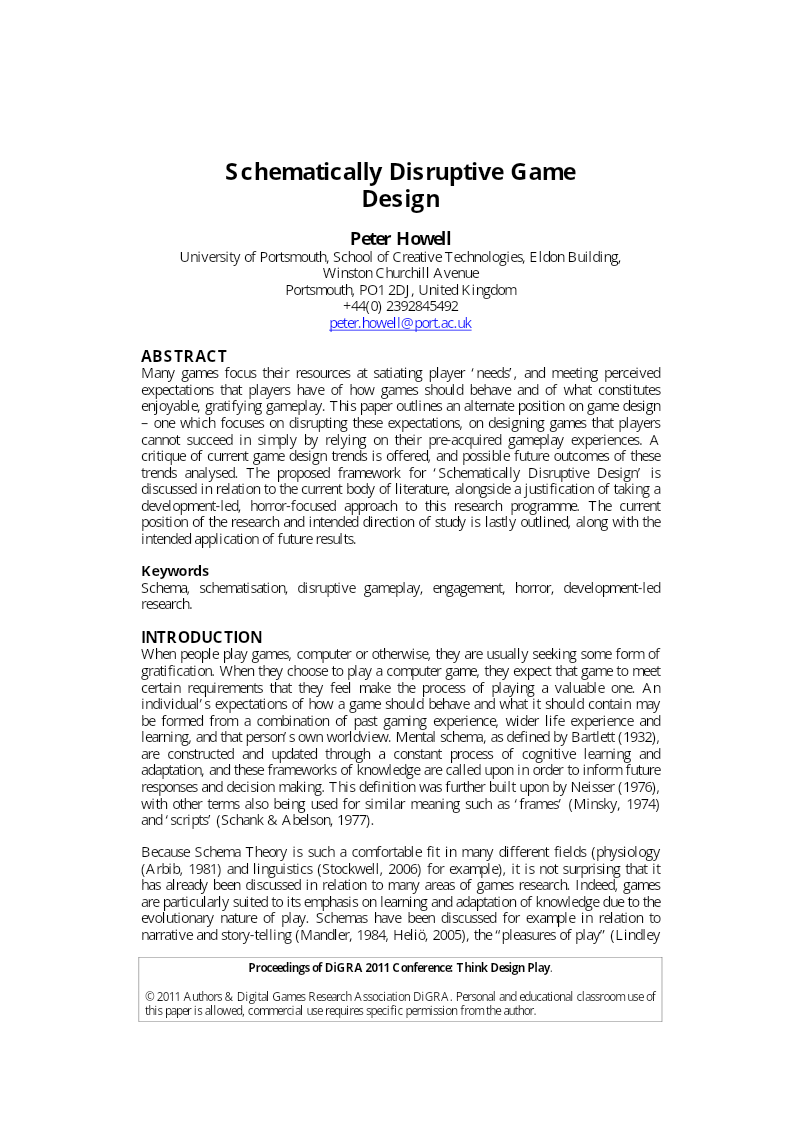
"Schematically Disruptive Game Design" proposes an alternative game development philosophy that intentionally subverts player expectations and pre-existing gameplay schemas, particularly within the horror genre.
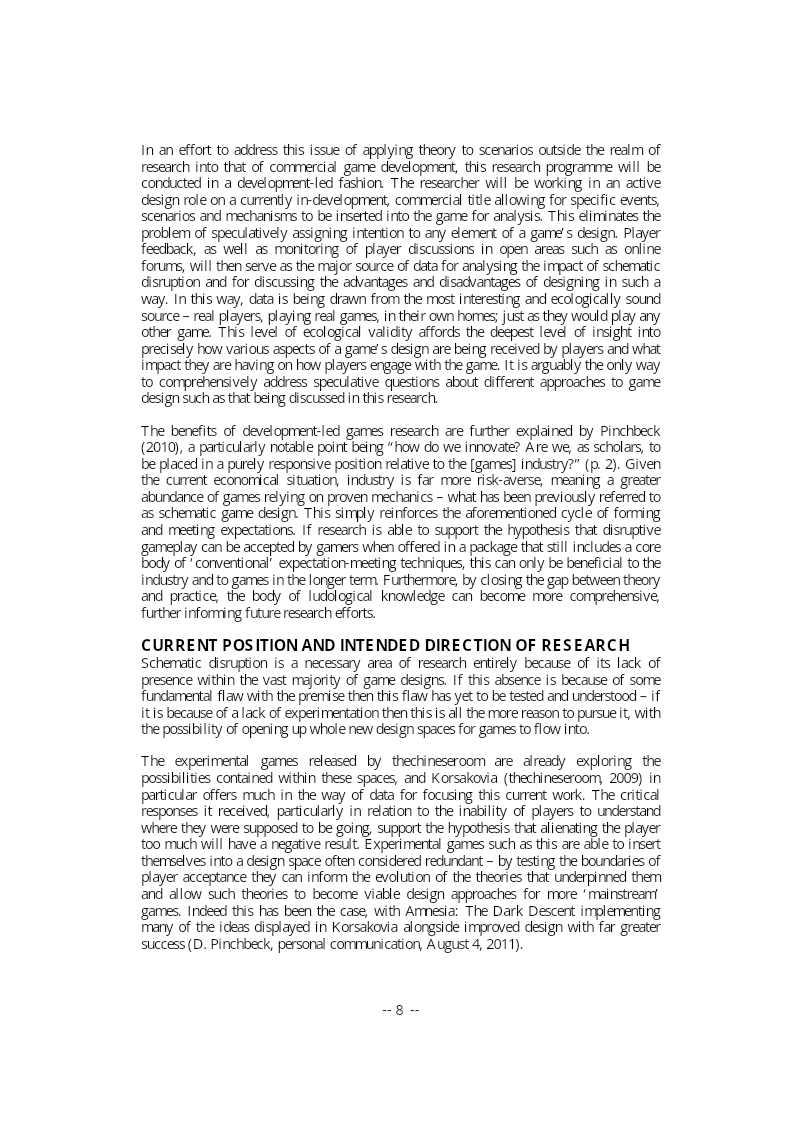
- Howell's DiGRA 2011 paper proposes 'Schematically Disruptive Game Design,' a framework for games that deliberately defy players' learned gameplay expectations rather than conforming to them.
- The central open question is whether deliberately disorienting designs can remain commercially viable and engaging, positioned against industry trends toward hand-holding and accessibility, with Prince of Persia's guidance systems cited as criticized design.
- The paper argues schematically disruptive design should sustain constant cognitive effort rather than aim for pure flow, while warning that disruption must be carefully calibrated since players abandon games that become either frustrating or boring.
Exploring Anonymity in Cooperative Board Games
This study explores the application of anonymity as a game mechanic within cooperative board games, aiming to inform inclusive educational practices.
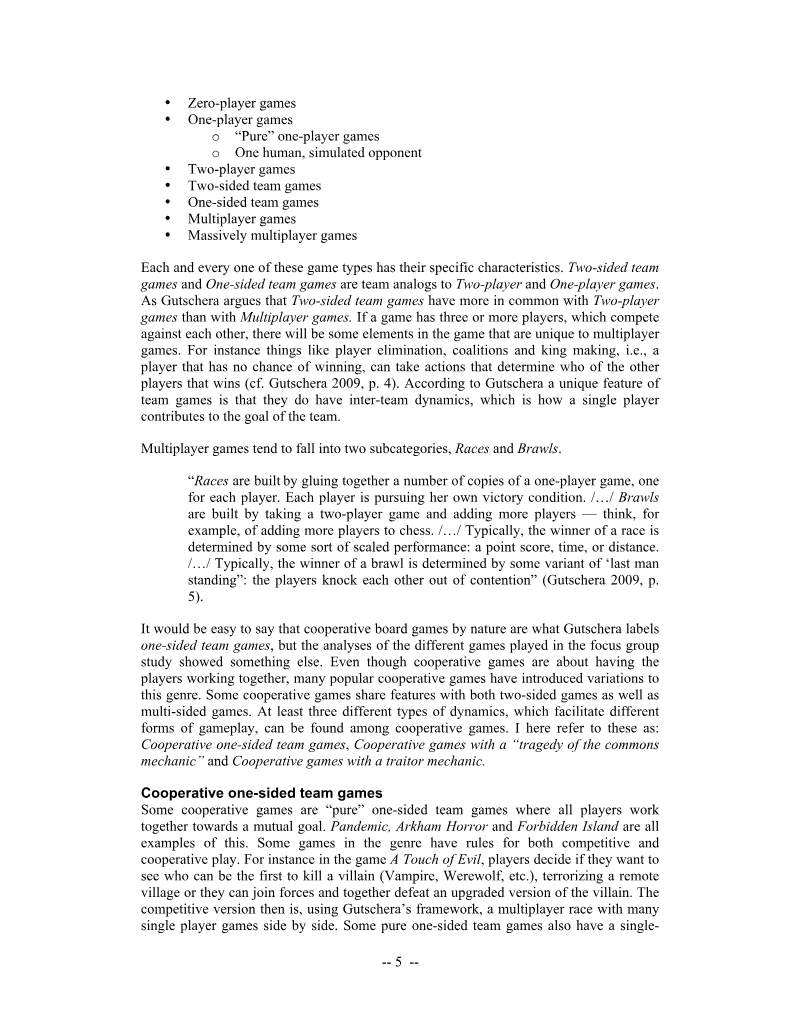
- Many games marketed as cooperative blend in competitive or suspicion-based dynamics, and cooperative one-sided team games such as Pandemic suffer from "gameplay directing," where a single player effectively dictates decisions for the group.
- Tragedy-of-the-commons and traitor mechanics mitigate gameplay directing but do so only by sacrificing genuine cooperation, which motivated the study's goal of a purely cooperative game with anonymous player actions.
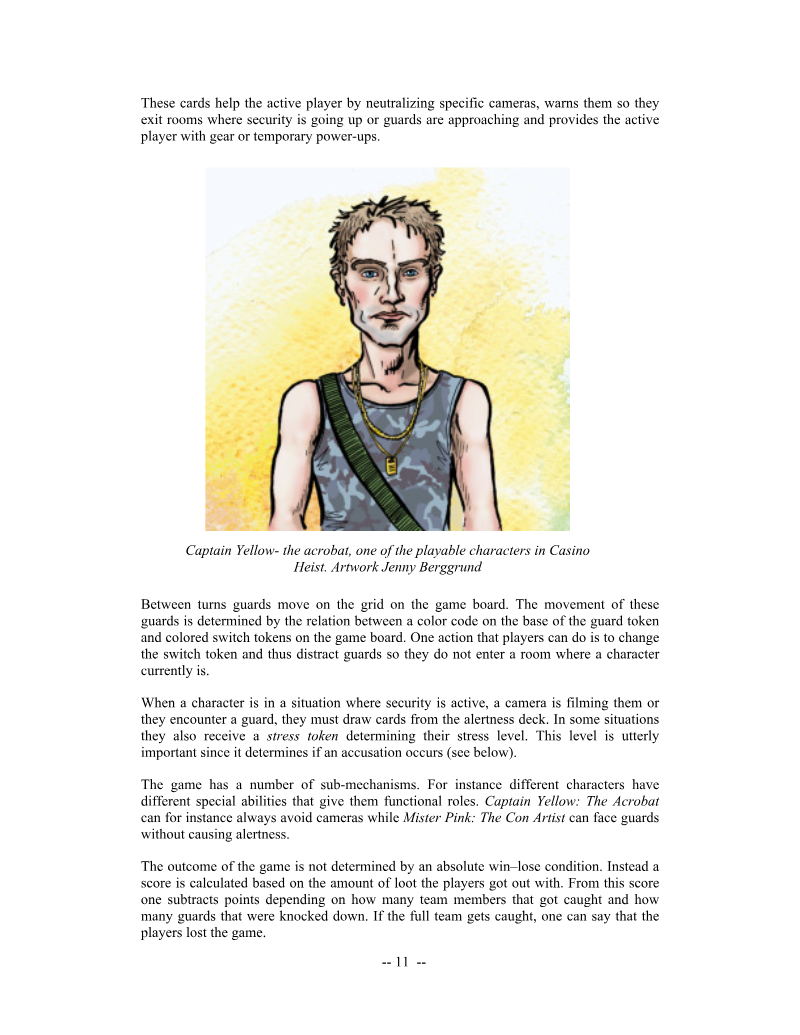
- The researchers prototyped "Casino Heist," a heist-themed cooperative game inspired by Battlestar Galactica's facedown card-play rule, in which players hold secret characters and concealed actions so the group knows what was done but not by whom.
How to Say Things with Actions I: A Theory of Discourse for Video Games
The document, "How to Say Things with Actions I: A Theory of Discourse for Video Games," proposes a novel framework for understanding how video games convey structured meaning and arguments, particularly within the context of "games for change."
- Rao's paper argues video games can be analyzed as discourse in the linguistic sense, conveying argument-based meaning comparable to verbal communication, and aims to build a procedural rhetoric framework that sits outside the ludology–narratology debate.
- The paper draws on argumentation theory, informal logic, and speech act theory, and adopts a rhetoric-derived definition of discourse (following Kinneavy's four aims: to inform, to be beautiful, to persuade, and to express) rather than the broader social-practice definition associated with Gee and Foucault.
- Its central finding is that games can currently produce only non-propositional, single-setting arguments (enthymemes), and they underuse the medium's capacity for temporal articulation of argument.
The Rules in Videogames: Between Ontology and Epistemology
Mosca argues that the boundary between game and not-game, like those between hardware and software or rule and non-rule, is epistemological rather than ontological.
- Mosca argues that 'game' and 'rule' are epistemological rather than ontological categories: whether a device counts as a game depends on the player's interpretation, sustained by a 'gameframe,' a fiat boundary maintained through suspension of belief, drawing on John Searle's social ontology.
- The paper claims videogames contain no prescriptive rules in Bernard Suits' sense, since rules that can be obeyed or broken require a choosing subject; instead videogames have descriptive system functions enforced by hardware and software, comparable to recipes or the laws of physics.
- Mosca agrees with Chris De Leon that videogames lack rules but rejects the inference that they are therefore not games, and critiques Jesper Juul's view that videogames combine rules with fiction.