1 free read left. Create a free account for unlimited reading + AI research.
Create free accountWhitepaper Bina Nusantara University
1 free read left. Create a free account for unlimited reading + AI research.
Create free accountWhitepaperBina Nusantara University
It offers a low-energy alternative to optical tracking.
Core concept. Using a smartphone's built-in magnetometer provides a low-energy, cost-effective alternative for touchless interaction.
This research explores the viability of using a smartphone’s built-in magnetometer as a medium for touchless human-computer interaction in mobile gaming. The study proposes that by tracking the movement of a magnetic object near the device, users can execute gestures—such as swiping or punching—without physical contact. This approach serves as a low-energy alternative to optical tracking, which typically relies on the device's front-facing camera and is often criticized for high CPU consumption and rapid battery depletion.
To validate this concept, the researchers developed an Android-based application and a punching game that interprets magnetic field fluctuations as user inputs. The system was tested on a Samsung Galaxy Note 3, comparing the magnetometer-based method against traditional camera-based gesture recognition. Findings indicate that the magnetometer solution is significantly more efficient, consuming less power and requiring less complex computational logic. Specifically, in a five-minute test, the magnetometer approach resulted in a 3% battery drop compared to a 9% drop for the camera-based method.
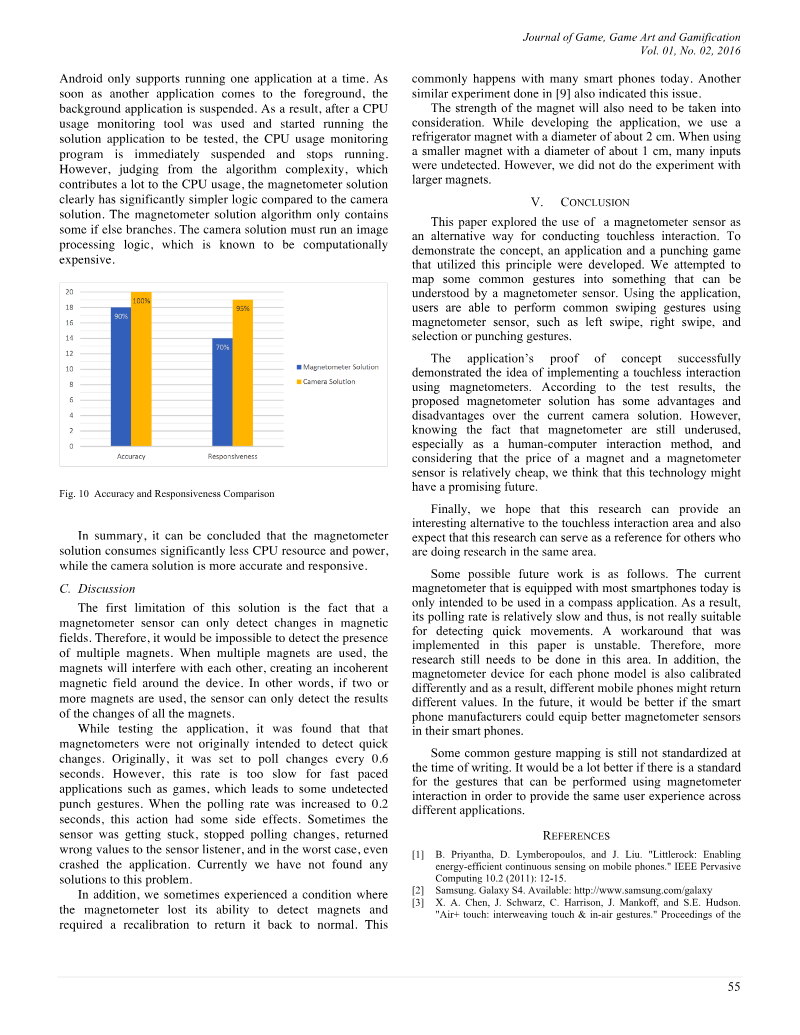
However, the study identifies notable performance trade-offs. While the camera-based system achieved 100% accuracy and 95% responsiveness, the magnetometer solution reached 90% accuracy and 70% responsiveness. These limitations are attributed to the hardware’s original design intent, as smartphone magnetometers are typically calibrated for compass and navigation tasks rather than high-frequency gesture tracking. The research concludes that while the magnetometer is currently hindered by slow polling rates and sensitivity issues, it remains a promising, cost-effective technology for touchless interaction. Future advancements in sensor hardware and standardized gesture mapping could elevate this method to a mainstream feature in mobile gaming.
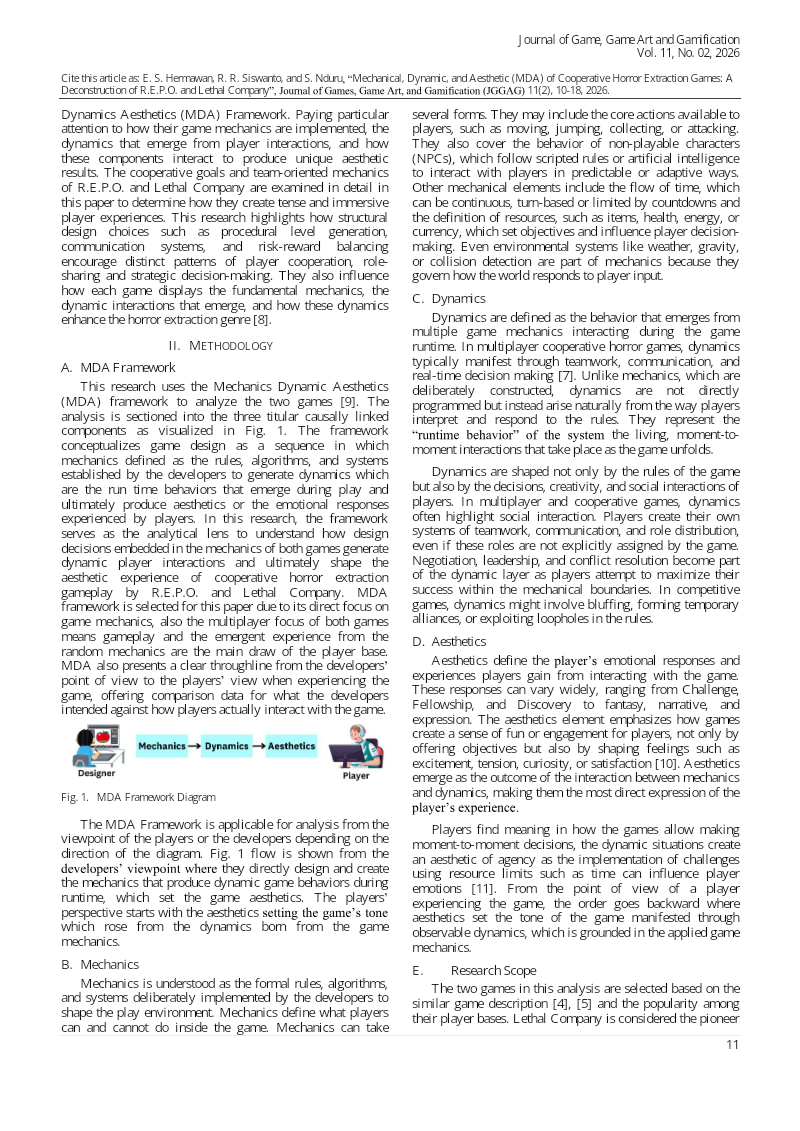
Each row is a game or company this document names, each column a document, oldest first. A mark means that document names it. Select a row to see those documents.
Bina Nusantara University · 2026
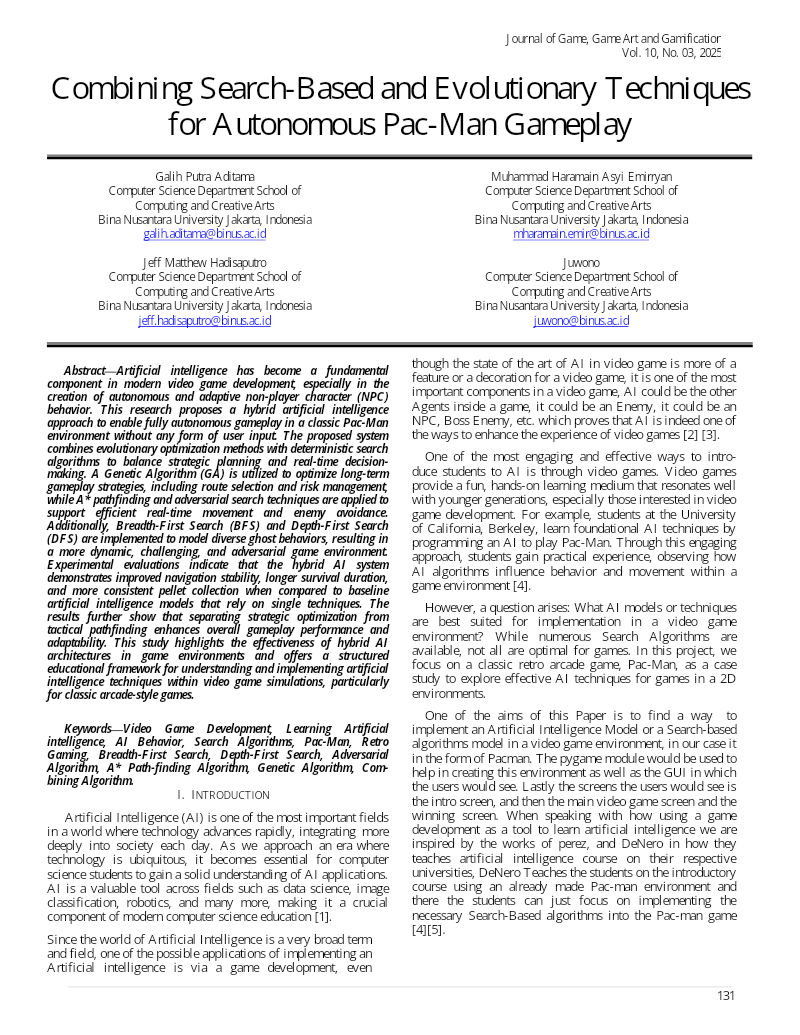
Bina Nusantara University · 2025
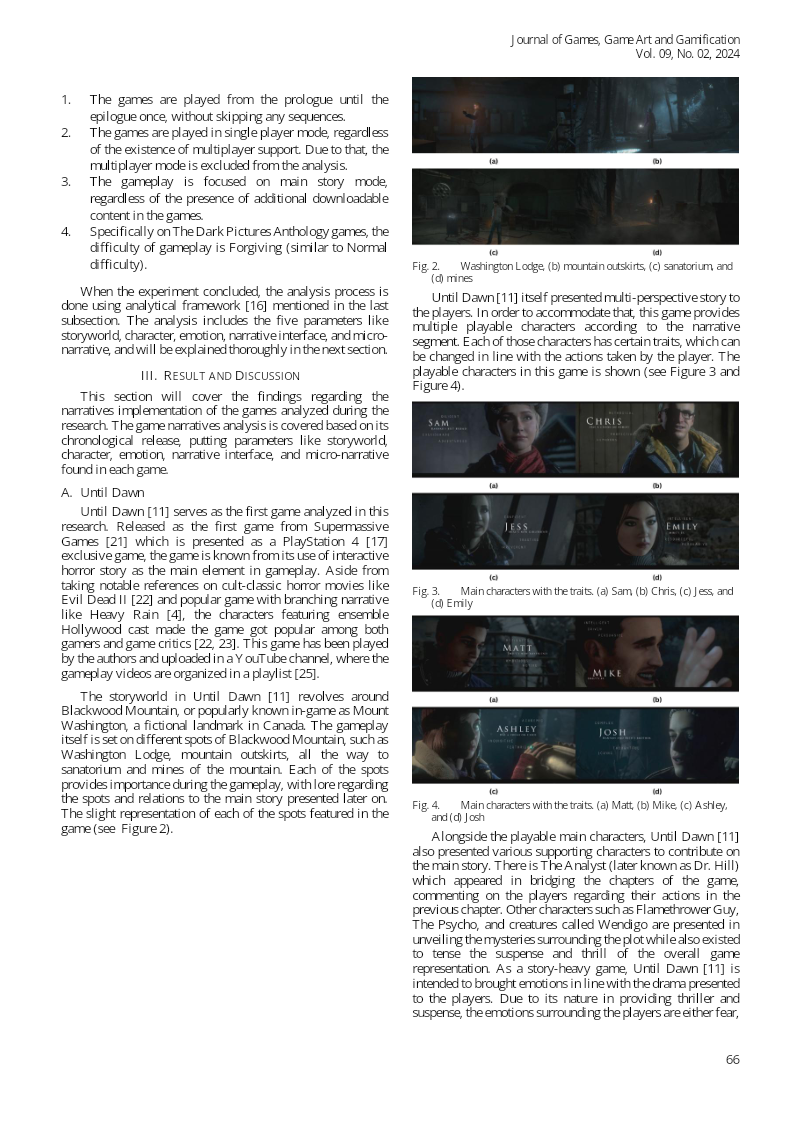
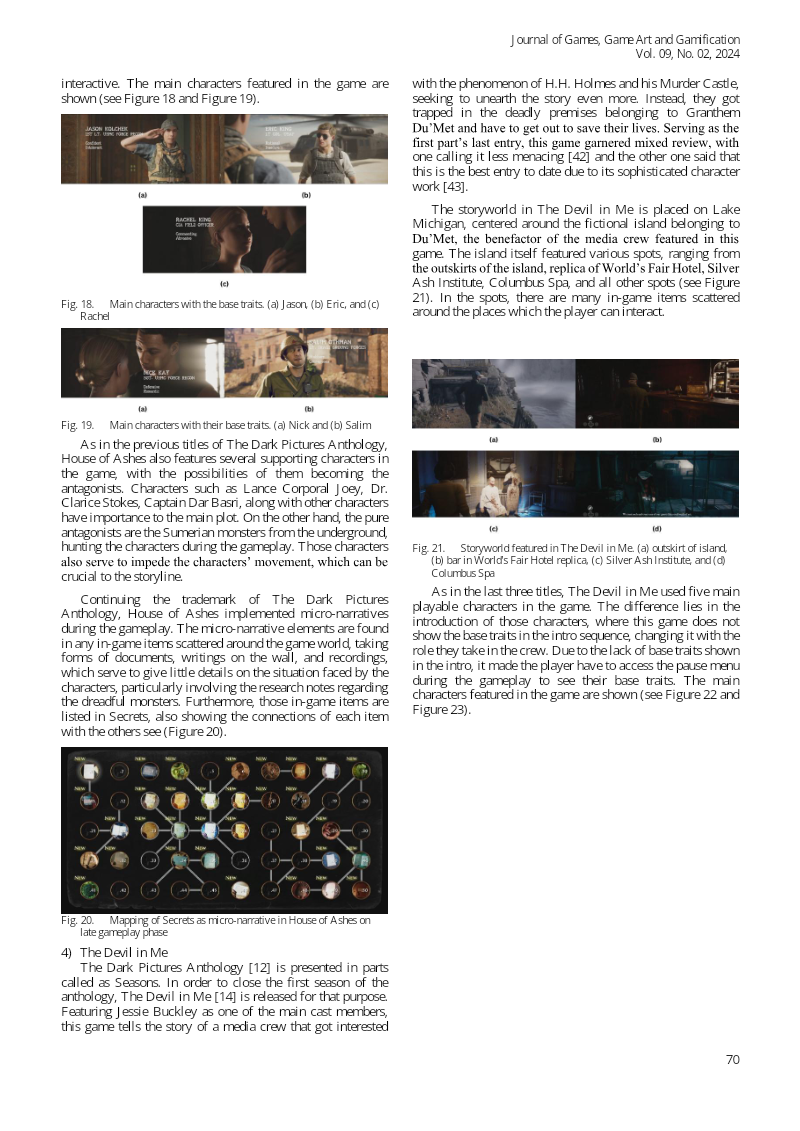
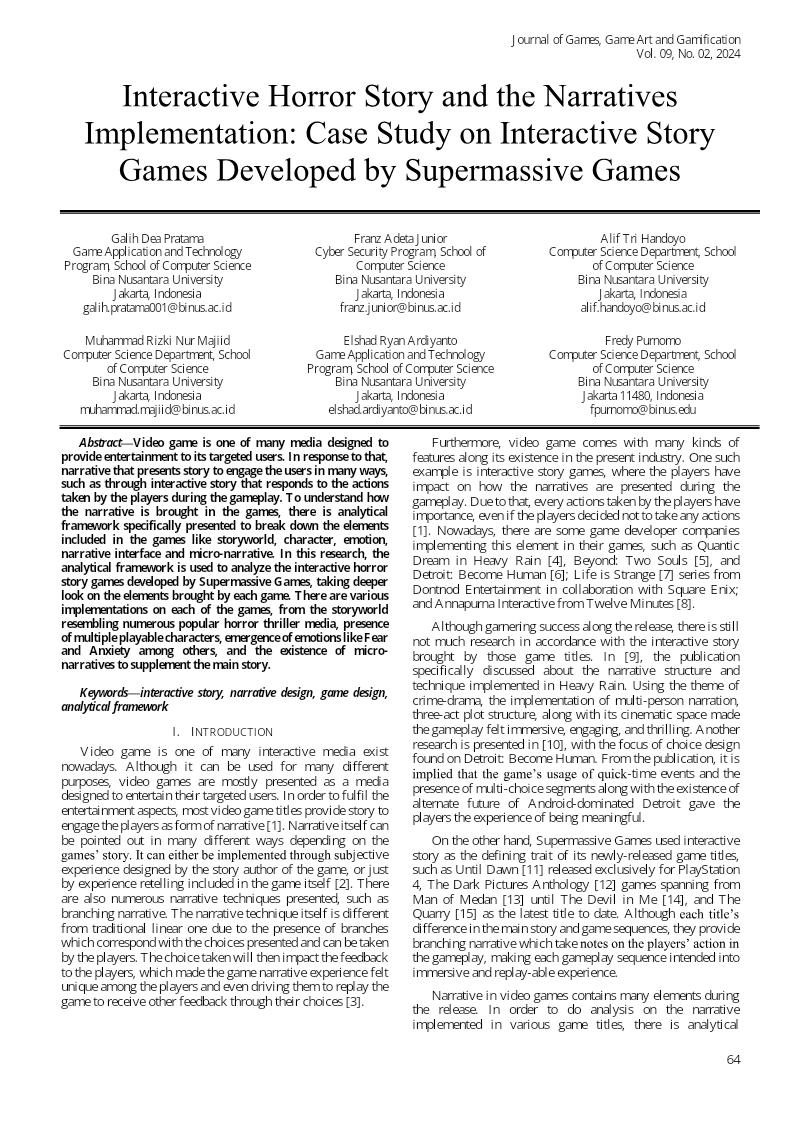
Bina Nusantara University · 2024
Bina Nusantara University · 2023
Bina Nusantara University · 2023
Bina Nusantara University · 2021
Bina Nusantara University · 2021
Bina Nusantara University · 2021
Bina Nusantara University · 2021
Bina Nusantara University · 2021
Bina Nusantara University · 2021
Journal of Games, Game Art, and Gamification · 2021
Two & a Half Gamers · 2026