1 free read left. Create a free account for unlimited reading + AI research.
Create free accountWhitepaper Bina Nusantara University
1 free read left. Create a free account for unlimited reading + AI research.
Create free accountWhitepaperBina Nusantara University
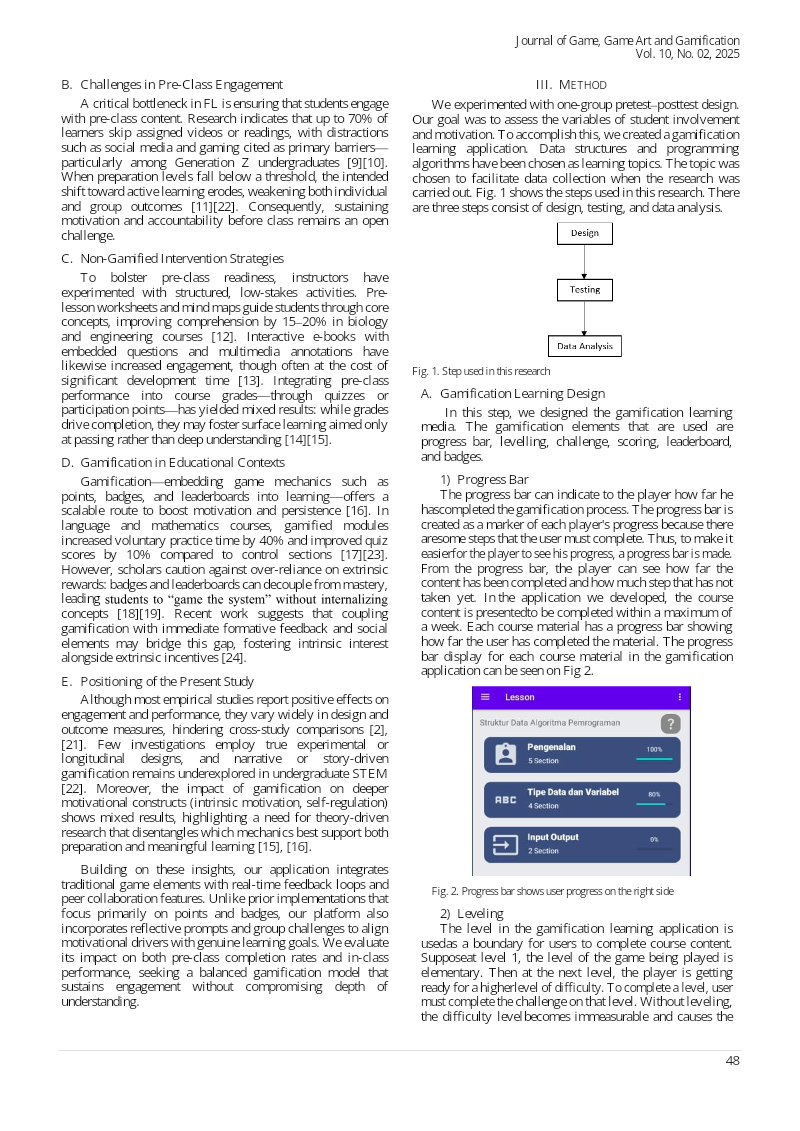
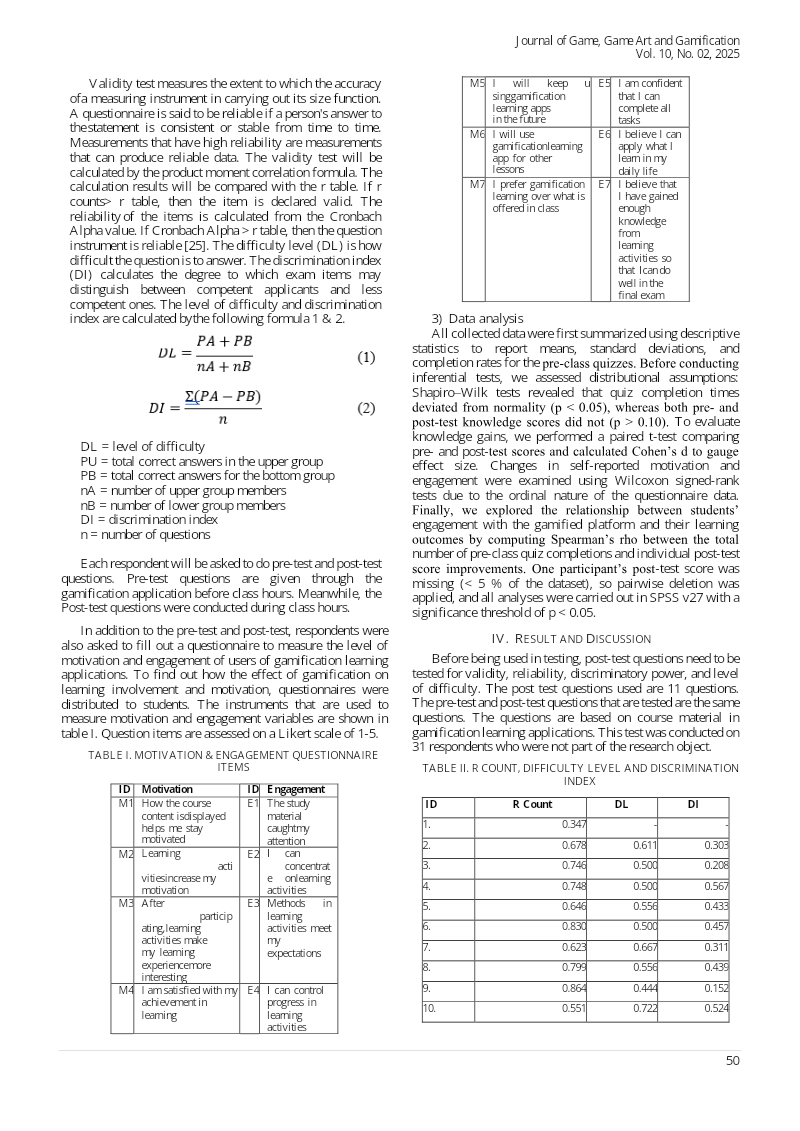
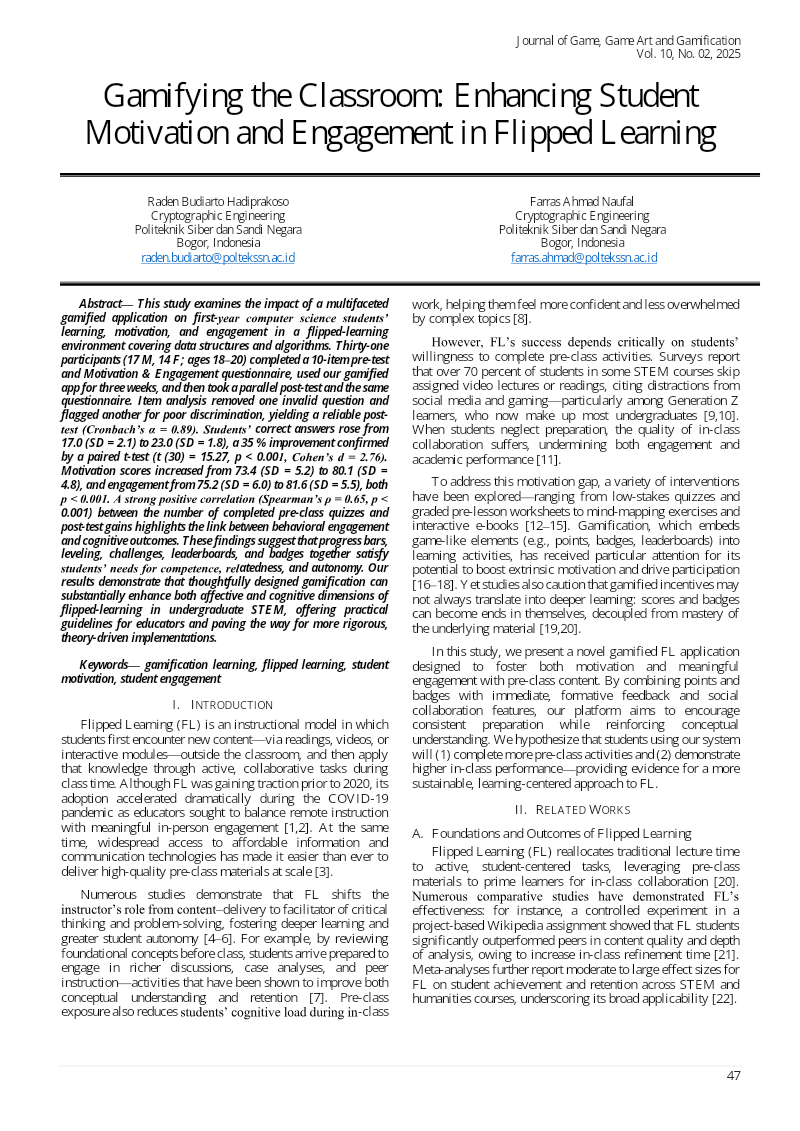
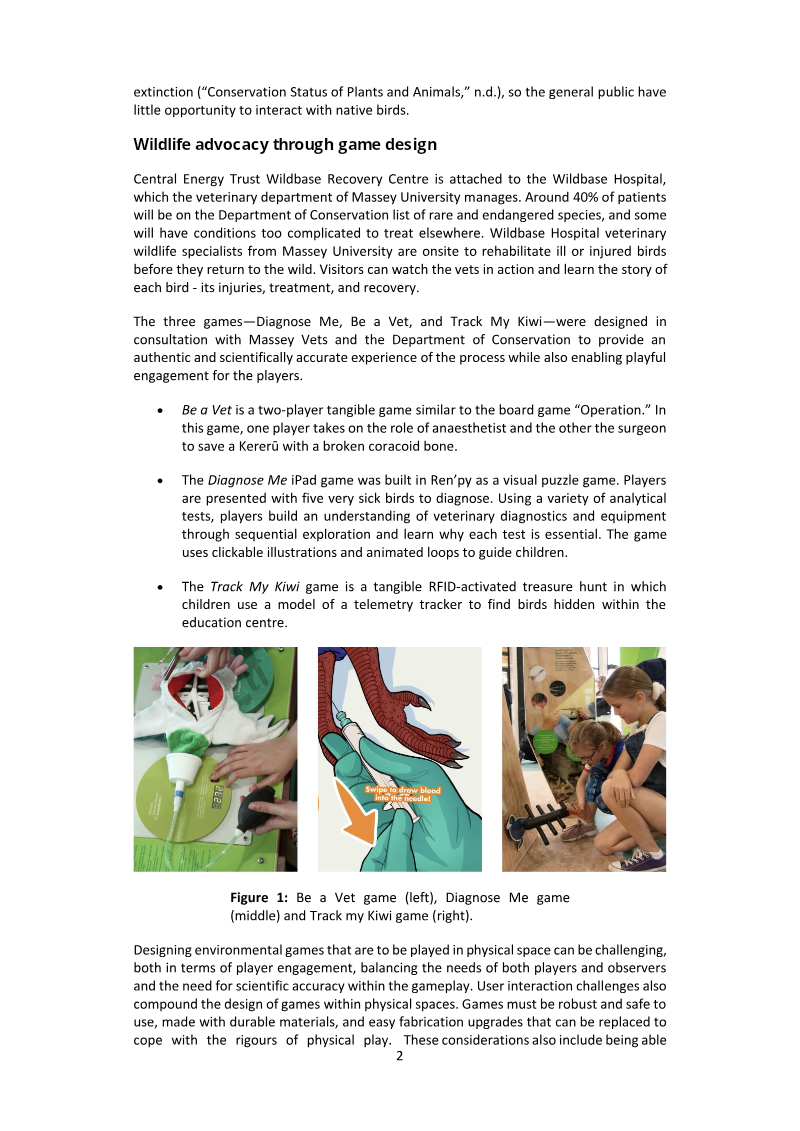
The integration of interactive mobile gaming into language education offers a viable solution for Indonesian students struggling with low self-confidence in English proficiency. By shifting away from traditional, text-heavy pedagogical methods, this approach utilizes an Android-based adventure game that embeds English practice within puzzle-solving and riddle-based scenarios. The primary objective is to create a low-pressure, engaging environment that encourages consistent daily practice among the 18–24 age demographic, leveraging their high level of smartphone familiarity to facilitate learning.
The prototype functions through a core gameplay loop where users navigate adventure scenarios, search for clues, and solve linguistic riddles. To ensure comprehensive skill development, the design incorporates reading, listening, and speaking exercises, the latter of which is supported by integrated voice recognition technology. A SQLite database architecture underpins the system, allowing for scalable content delivery and long-term educational tracking. This technical framework ensures that the game can evolve alongside the user's progress, moving beyond static lessons toward a dynamic, interactive experience.
Testing indicates that the prototype effectively boosts student confidence and engagement, with performance metrics showing a clear correlation between existing smartphone proficiency and successful in-game navigation. While the initial results are promising, the study highlights the necessity of further refinement in user interface design and animation quality to maintain long-term player retention. Future iterations should prioritize the expansion of dynamic content and the implementation of cross-platform support for both PC and mobile devices. By addressing these technical and aesthetic requirements, the platform can serve as a robust, sustainable tool for improving English language acquisition in a modern educational context.
Bina Nusantara University · 2026
Bina Nusantara University · 2025
Bina Nusantara University · 2024
Bina Nusantara University · 2023
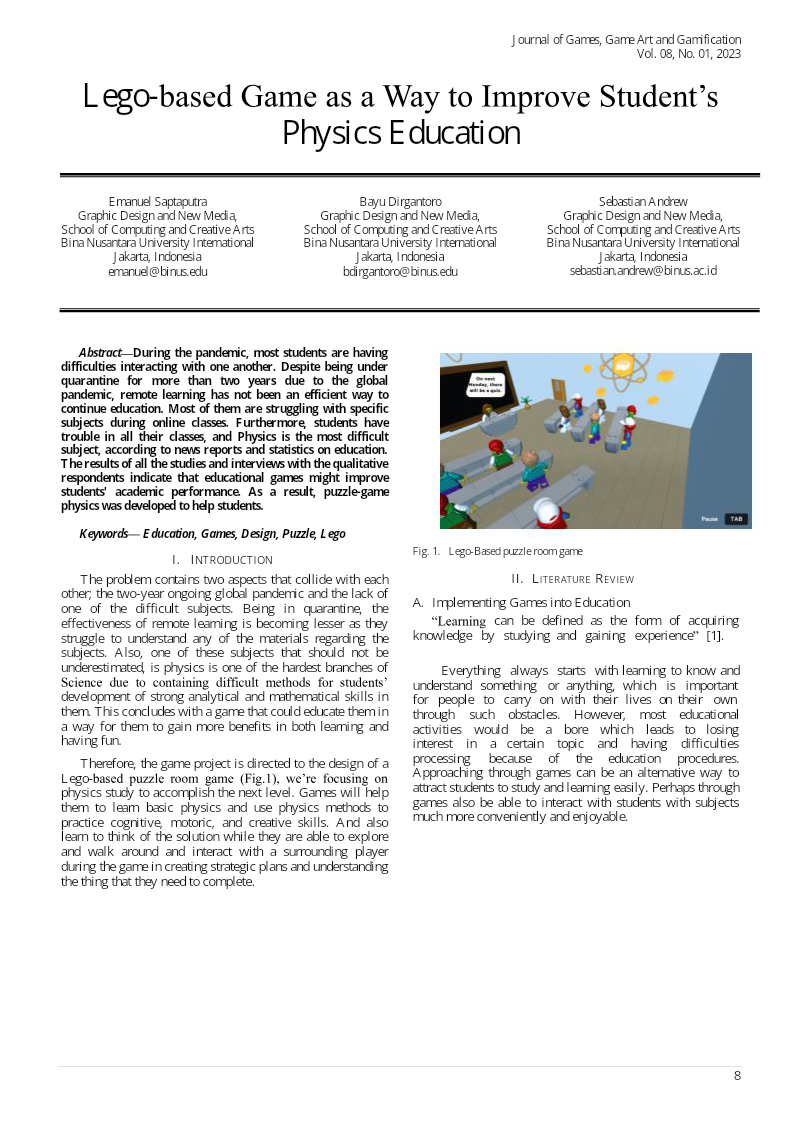
Bina Nusantara University · 2023
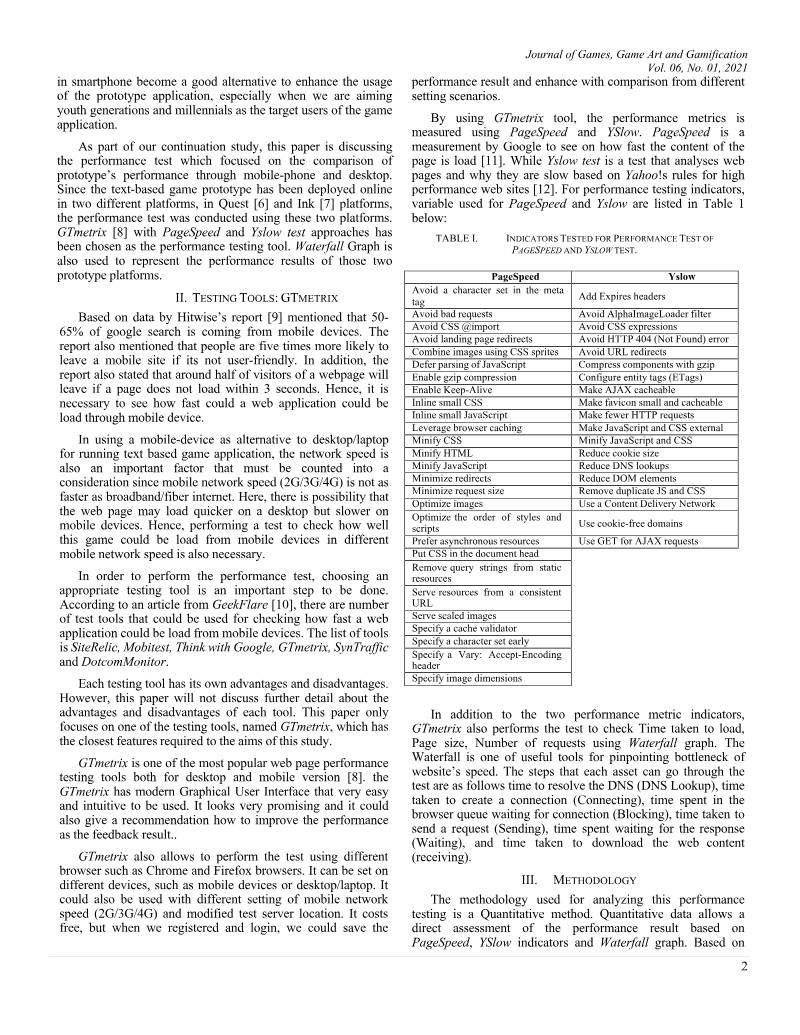
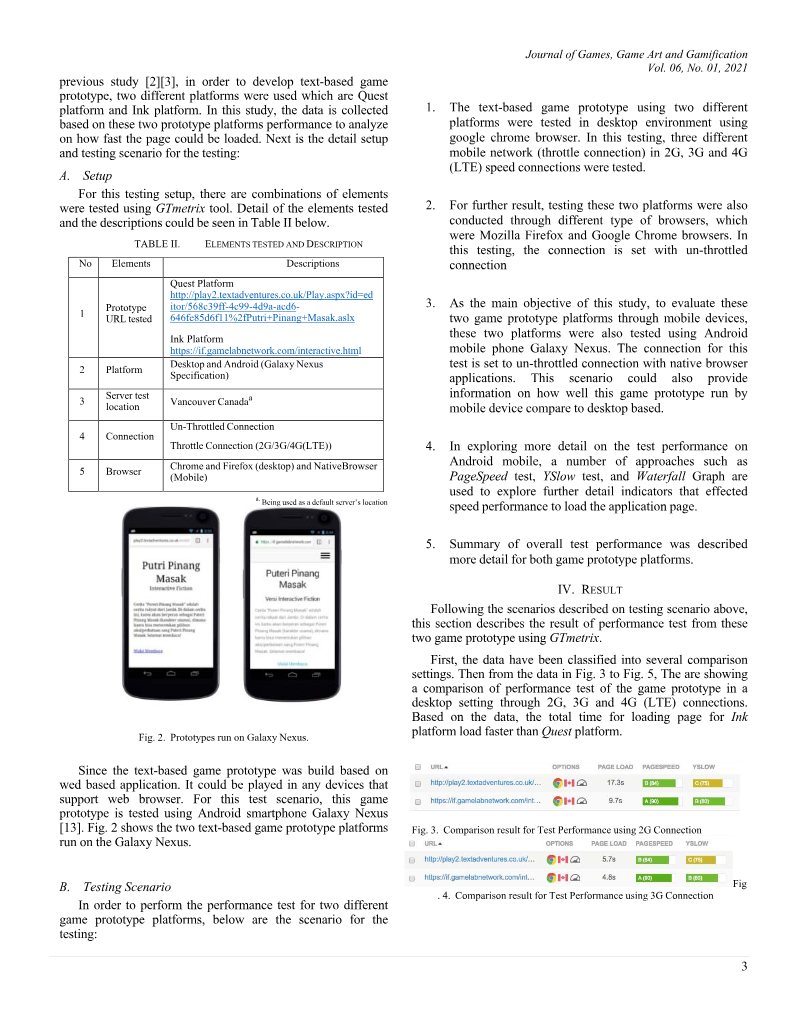
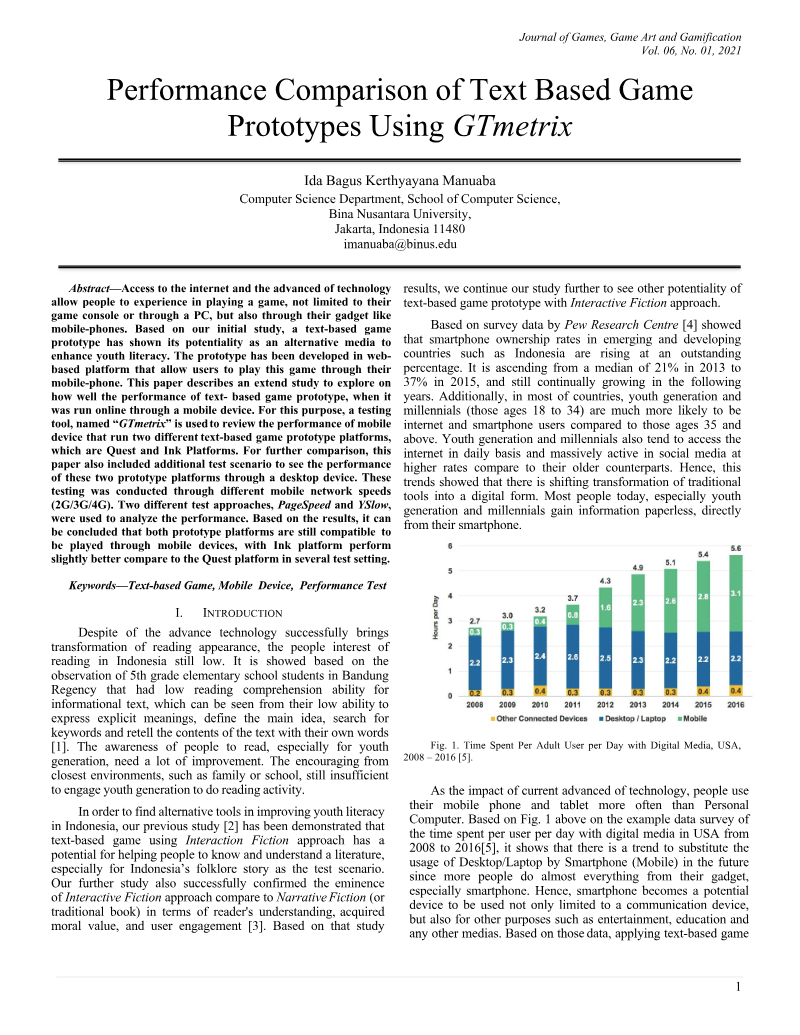
Bina Nusantara University · 2021
Bina Nusantara University · 2021
Bina Nusantara University · 2021
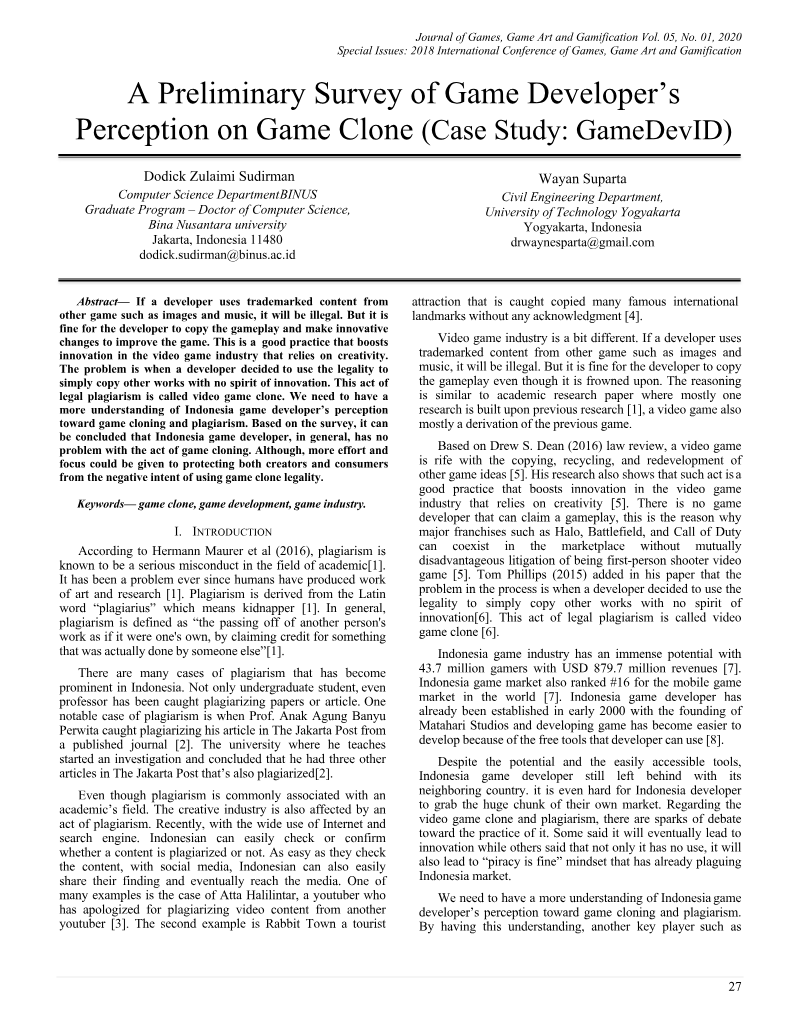
Bina Nusantara University · 2021
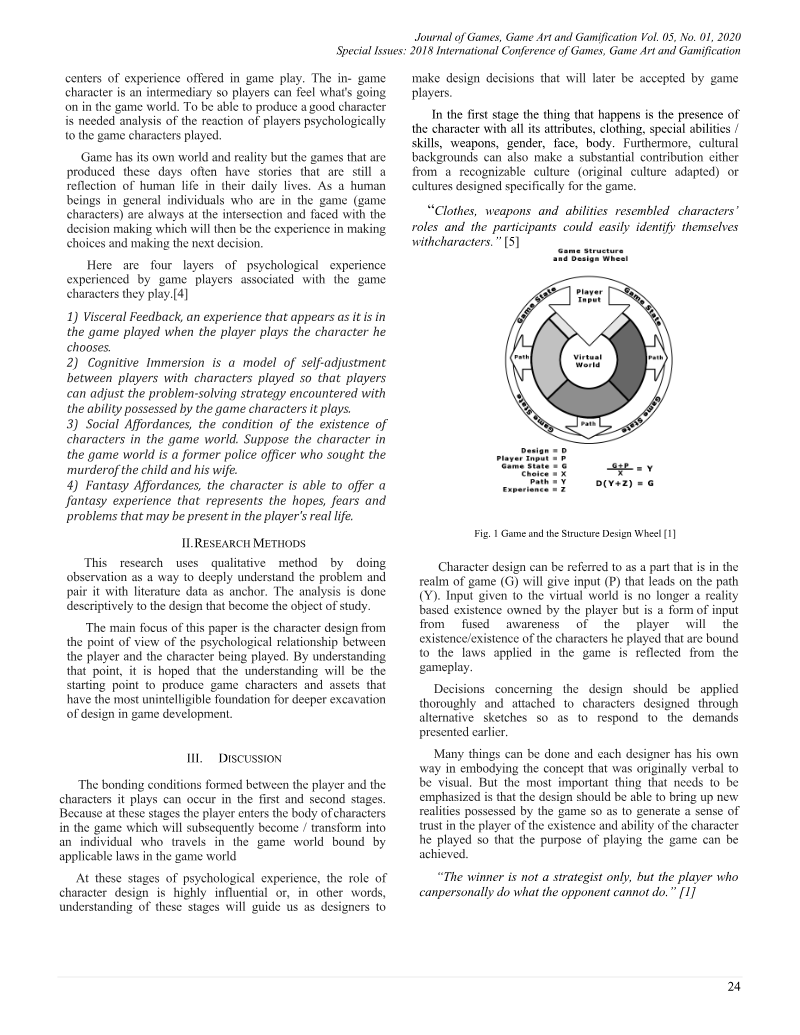
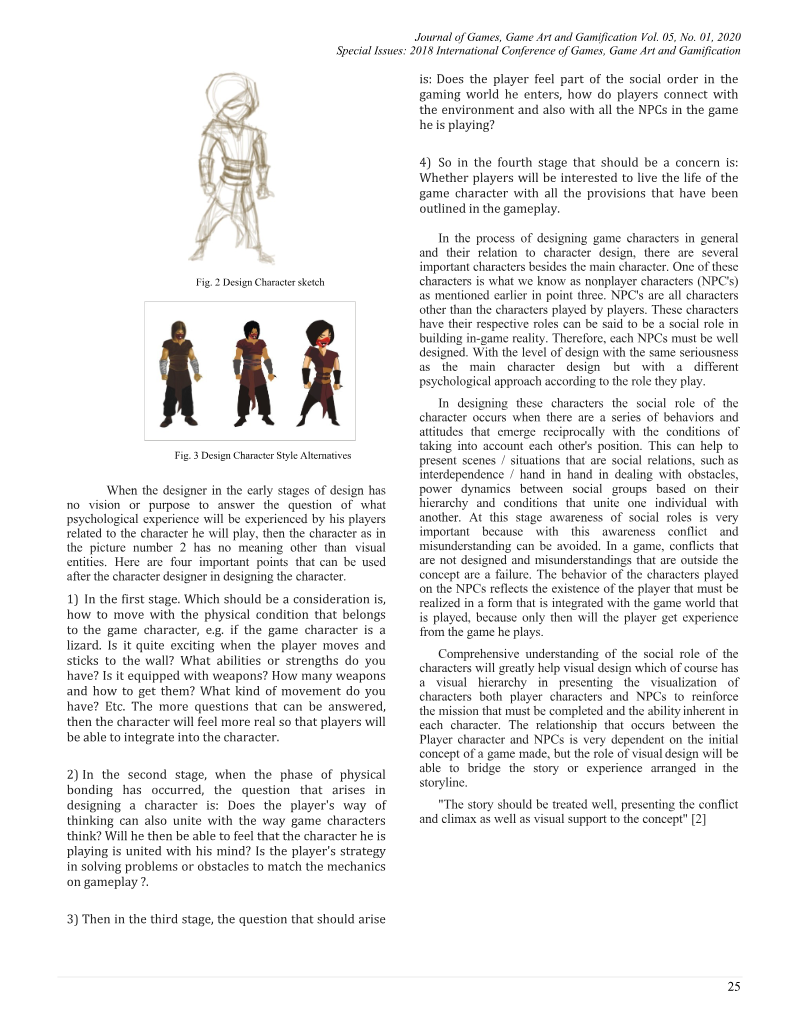
Bina Nusantara University · 2021
Bina Nusantara University · 2021
Journal of Games, Game Art, and Gamification · 2021
Extra Credits · 2026