1 free read left. Create a free account for unlimited reading + AI research.
Create free account
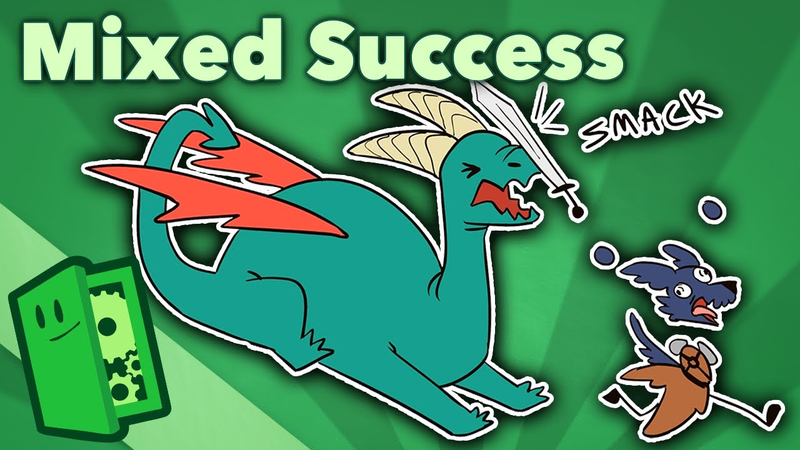
Mixed Success - Winning and Losing in Tabletop Roleplaying Games - Extra Credits
Key insights
6 takeaways- 01TTRPGs function through a continuous series of scene-based successes and failures rather than a singular win or loss condition.
- 02The primary measure of success in a TTRPG is the quality of the collaborative story produced during the session.
- 03Shifting the definition of winning from a competitive goal to a shared, narrative-driven endeavor enhances the overall player experience.
- 04Modern game design utilizes a six-outcome framework—yes, no, yes and, yes but, no and, and no but—to create nuanced narrative progression.
- 05Success and failure in TTRPGs are defined by context and player interpretation rather than binary dice roll results.
- 06The 'failing forward' design philosophy ensures that character failures introduce new obstacles or plot developments rather than halting the narrative.
Ask AI about this video
Transcript
Winning and losing. It seems like games are often defined on how they're won or lost. But what if it was possible to not only win or lose, but to win and lose a little at the same time? What if I told you that this was possible in games that we don't traditionally think of as having a definitive way to win? Well, Eddie Web, creator of the pugtastic game Pugmire, is back to tell us all about this crazy game design sorcery. This episode is brought to you by Curiosity Stream, the world's first streaming service dedicated to the lifelong quest to learn, explore, and understand. Check it out for yourself at curiositystream.com/extracredits for a free month. We all know that tabletop role-playing games can go on and on and on. And usually people say there really isn't a way to, you know, win at them. But Eddie disagrees. He's argued that not only can you win or lose at a tabletop RPG, but most players do it several times a
session. To explain, let's take a look at a classic game like poker. Now, controversial statement, but you can't really win or lose poker. I mean, sure, you can run out of money, but in anything but strict tournaments, you could just go get more and come back to the table. Instead, people win and lose at individual hands of poker, and a winning session of poker is one where you won more than you lost. And we can think about RPGs in that same way. Players can't really win at the entire game, but if you break it down into individual scenes or specific character goals, you can start to see the wins and losses more clearly. For instance, your dog wizard in a game of Pugmire might successfully cast her spell, defeating a horde of zombies. Or she might fail and become uh dog meat? Really? Well, that's grim, Eddie. Tabletop RPGs are made up of strings of successes and failures, wins and losses, and those combined to become the story. And this is something you can see more easily in retrospect. With that in mind,
let me ask you a question. When you're telling someone else about the amazing game you had last night, what moments come up the most? I'm guessing that you don't often tell about how your heroic character did pretty run-of-the-mill stuff and sort of did fine against those goblins, I guess. No, you talk about how you rolled exactly the right number to vanquish your rival once and for all, or how you hilariously fumbled at your attempt to convince the villain to shut down his doomsday weapon. Those moments are what we mean when we talk about winning or losing in a tabletop game. But also, winning and losing happens in context. Unlike other games, it's not just about rolling the number on the dice, because the results are interpreted into the ongoing narrative of the game. Winning and losing is defined by the players and their characters' goals. Sometimes just surviving and getting out alive can feel like a solid win, while at other times, totally crushing a villain can seem sort of humdrum or even like a loss if some of the characters didn't survive. But because it's so interpretive, many role-playing games also offer us
mechanics that allow actions to have more outcomes than just a binary success or failure. And that right there is one of the most interesting elements of tabletop RPG design. For example, Fate Core has an option called succeed with style, which means your character not only accomplishes what you want, but something else happens because your character's just so cool. Whereas Vampire the Masquerade has the concept of a botch, where your character fails so badly that things get even worse for them. While other games might call these critical successes or critical fumbles, the idea is the same. There's more options than just success or failure. But let's do what we do best on this show and go even further. Any likes to break success and failure into even more possibilities, and this is inspired in part by improv comedy. In improv, you're taught to always say yes, and to any prompts you're given. So, that makes you not only accept a premise, but also add something to it. Using this as a basis, you can see six
different possibilities of a success and failure. Not every game utilizes every possibility, but nearly all of them fit within these six. Let's start with the two results we already talked about, yes and no. Either yes, you succeeded, or no, you didn't. Then, there's yes and. This means you succeeded and something good happened, which of course means that there's also a yes, but, meaning you succeeded, but something complicated your success. Then, there's the no, but. That's when you fail, but something good did come out of it. And finally, there's the dreaded no and. No, you didn't succeed, and something else worse happened. From these six options, you can have a wide variety of results. For an example, something that happens a lot in tabletop games is the classic sneaking past a guard to open a door. With yes and no, we have simple results. Yes, you get past the guard unseen, or no, you didn't. But if the result was yes and, maybe the guard dropped his keys as you
snuck past. However, a yes, but might be more like getting past the guard, but the door squeaks as you open it, causing him to come back just as you've closed it behind you, and now you're stuck. And even if you fail, you can fail badly. Where a no and result not only gets you caught by the guard, but an alarm goes off. Whereas a no, but result might have you noticed by the guard, but he's so surprised to see you there, you have a chance to act before he does anything. And these grades of failure are particularly important. If you don't sneak past the guard, then you couldn't get into the door. And if you needed to get into the door to continue the adventure, that might mean the story just ends. That's no fun for anyone. So, recently, some tabletop games have started introducing the concept of failing forward. This is essentially a bigger version of no butt. If you fail, something will always put your character back on track. It might not be the track your character wanted, and it's probably going to make things harder for them, but things don't just stop. Yes, you got
captured by that guard. So, now maybe you have to bribe him to stay silent. Maybe that works, but now you're out of money. But, at least you can finally get through that door. It's failure, but with the story still moving forward. Whether you succeed or fail though, remember that winning and losing is taken in context in a tabletop game. The frustration of losing can be mitigated by it unfolding into more awesome story to tell. And while a personal winning moment can be great, enjoying the experience of other players winning is also a win in its own way. At least that's what Zoey keeps telling me while she rolls nat 20s on what is clearly my lucky die. Fine, you stole the die and you get a treat. Our motto at Extra Credits is because learning matters. So, we got really excited when Curiosity Stream, with their love for learning, sponsored this episode because they have over 2,400 documentaries and non-fiction titles spanning topics from across science, nature, history, and technology
featuring folks like Jane Goodall, Stephen Hawking, and my personal favorite who I happen to run into in an NYC movie theater one time and totally didn't embarrass myself in front of, Michio Kaku. What up, Next World? And you can get access to all of this geeky goodness for only $2.99 a month. But, if you head to curiositystream.com/extracredits right now and use the code extracredits, you can get your first month absolutely free. Oh, and if you happen to see Mr. Kaku, please tell him I'm sorry and I owe him some new popcorn. Woohoo!
Summary
Tabletop roleplaying games (TTRPGs) are often perceived as lacking definitive win or loss conditions, yet they function through a continuous series of individual successes and failures that define the narrative experience. By analyzing these games through the lens of smaller, scene-based goals rather than a singular outcome, players can identify distinct moments of victory and defeat. These moments are not merely binary results of dice rolls but are deeply contextual, shaped by player interpretation and the ongoing story.
To enhance gameplay and prevent narrative stagnation, modern TTRPG design has moved beyond simple success or failure toward a more nuanced framework inspired by improvisational theater. This approach utilizes six distinct outcomes: yes, no, yes and, yes but, no and, and no but. These variations allow for complex storytelling where success can be complicated by new obstacles, or failure can provide unexpected benefits or plot progression. This concept of failing forward is particularly vital, as it ensures that even when a character fails a specific check, the narrative momentum is maintained rather than halted by a dead end.
Ultimately, the value of winning or losing in a TTRPG is measured by the quality of the story produced. Memorable gaming sessions are typically defined by these high-stakes, dramatic, or humorous moments of success and failure. Because these games are collaborative, the experience is further enriched when players find satisfaction in the successes of others, transforming the traditional competitive definition of winning into a shared, narrative-driven endeavor.
















Comments