Player Behavior reports and market data
Documents
State of Mobile 2022
The global mobile economy experienced unprecedented expansion in 2021, characterized by a 19% year-over-year increase in app store spending to $170 billion and a 23% rise in mobile advertising to $295 billion.
- The global mobile economy saw massive growth in 2021, with app store spending rising 19% to $170 billion and mobile advertising increasing 23% to $295 billion.
- Mobile gaming remains the primary revenue driver, reaching a record $116 billion in consumer spend, with 4X March-Battle strategy and creative sandbox titles generating the highest returns.
- Daily mobile usage in leading markets reached 4.8 hours, with social, photo, and video applications capturing 70% of that time.
Games Can Be Good for the Mind: State of Mobile Games – Cognitive and Psychological Benefits
This empirical report by Skillprint examines the cognitive and psychological benefits of mobile gaming, challenging the narrative that gaming is primarily detrimental to mental health.
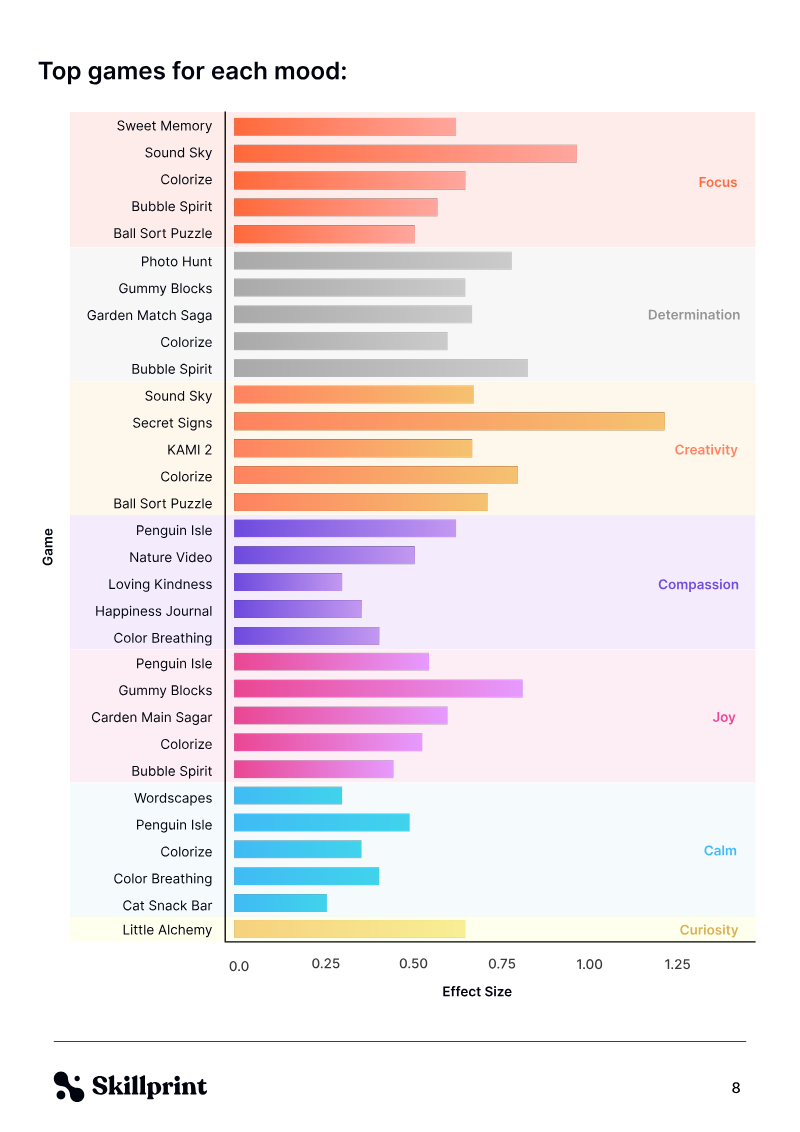
- Mobile games can significantly enhance specific mental states, with some titles demonstrating larger effect sizes for improving focus and creativity than traditional interventions like guided meditation or journaling.
- Rhythm and puzzle games, specifically Sound Sky and Colorize, produced large effect sizes for improving player focus and creativity.
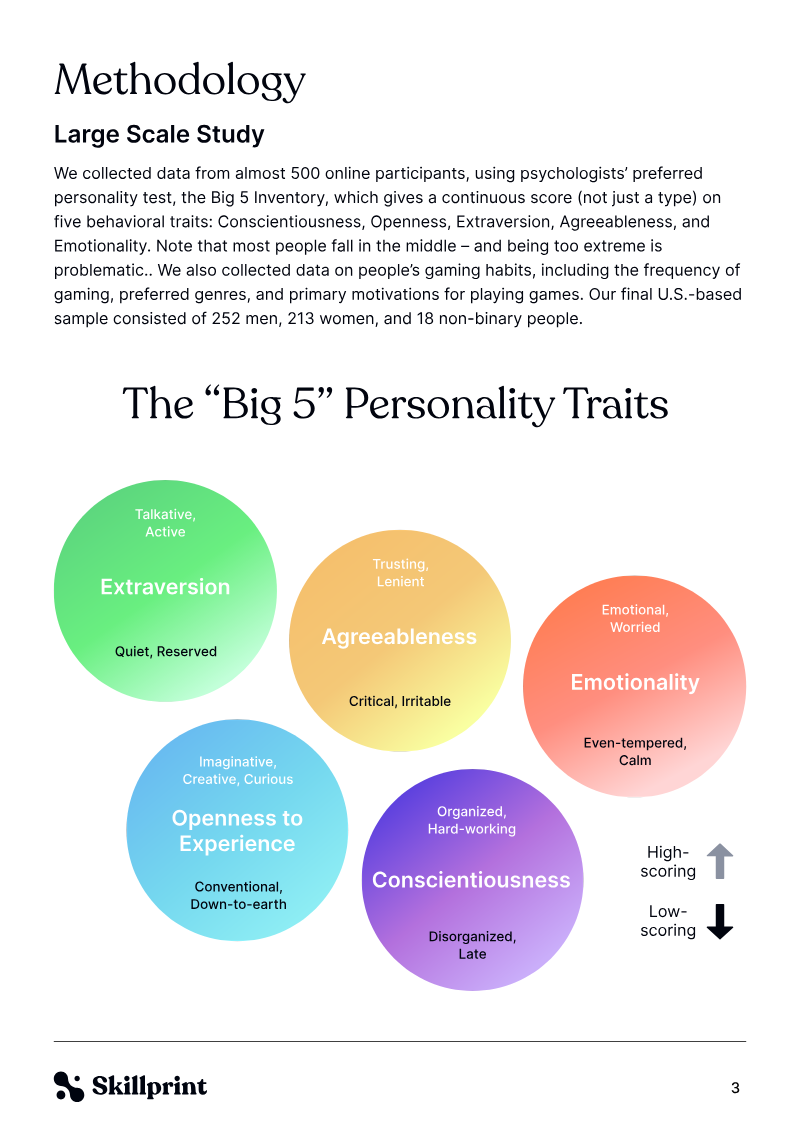
- The study, based on nearly 500 U.S. participants and 28 individual impact studies, confirms that personality traits—measured via the Big 5 Inventory—directly moderate the psychological benefits a player receives from gaming.


Newzoo’s Global Gamer Study 2022
Gaming has evolved into a multi-dimensional entertainment ecosystem that extends far beyond traditional play, encompassing viewing, socializing, and content creation.
- Gaming has become a primary entertainment ecosystem for 79% of the global online population, with Gen Alpha prioritizing gaming over social media and streaming.
- The gaming sector reached a projected consumer spend exceeding $200 billion in 2023, with approximately 50% of Millennials, Gen Z, and Gen Alpha actively spending money on games.
- Gaming is increasingly used as a social platform, as 75% of players engage in game worlds for social interaction rather than playing the primary game mechanics.
State of Mobile 2022 – Indonesia
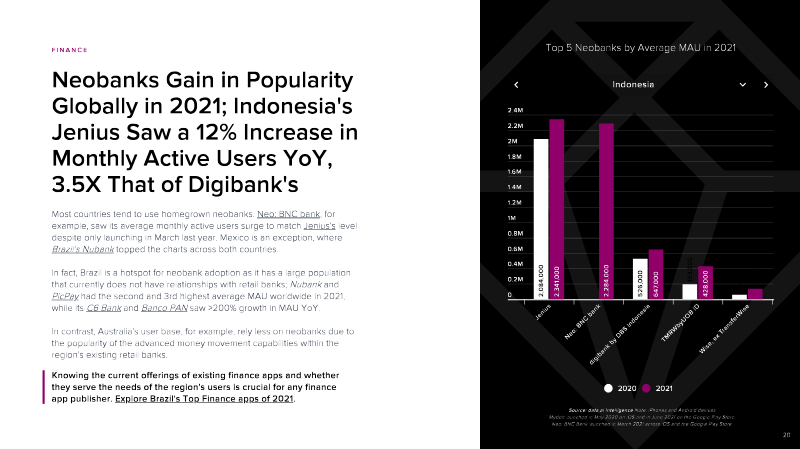
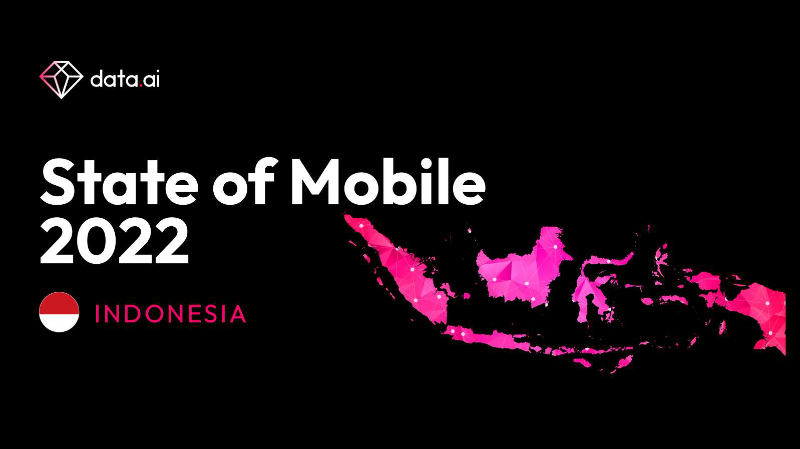
Indonesia emerged as one of the world’s most mobile-centric markets in 2021, with users averaging 5.4 hours daily on mobile devices, representing a 38% increase since 2019.
- Gaming remains the primary economic driver in Indonesia, accounting for 42% of all app downloads and 61% of total consumer expenditure, with titles like Mobile Legends: Bang Bang and Free Fire leading the market.
- Indonesian mobile users averaged 5.4 hours of daily screen time in 2021, a 38% increase since 2019, totaling 7.31 billion downloads and $532 million in consumer spending.
- The Food and Drink category experienced the most explosive growth, with session counts increasing by over 480% due to the rise of delivery services and quick-service restaurant brands.
State of Mobile: Brazil 2022
Brazil solidified its position as a global leader in mobile engagement throughout 2021, with users averaging 5.4 hours daily on their devices.
- Brazilian mobile users averaged 5.4 hours of daily device usage in 2021, driving 10.3 billion app downloads and $1.13 billion in consumer spending.
- Gaming is the primary monetization engine in Brazil, accounting for over 50% of total consumer spend, with hypercasual titles leading in volume and 4X Strategy games dominating revenue.
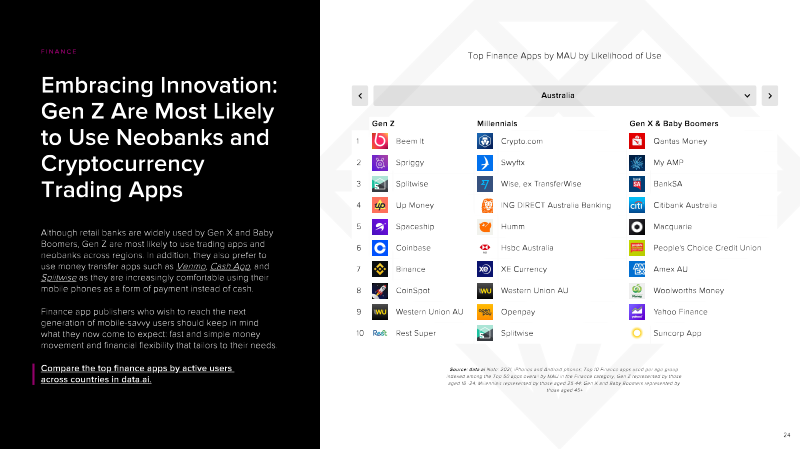
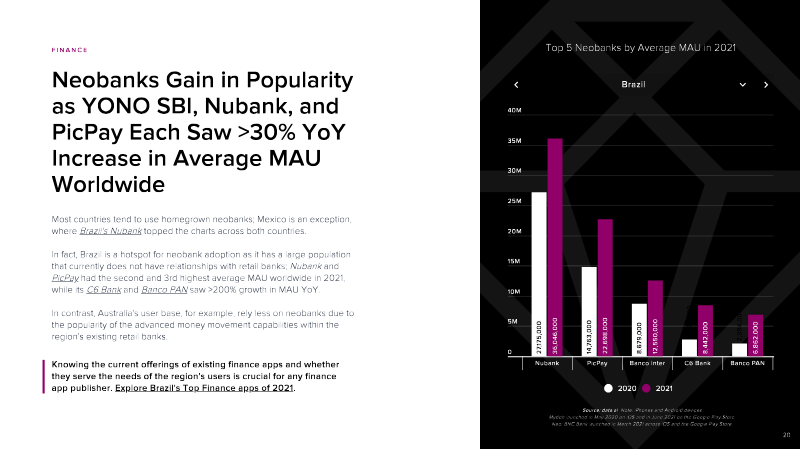
- Finance app downloads surged 91% over two years, driven by a large underbanked population adopting neobanks such as Nubank and PicPay.


State of Mobile 2022 India
The Indian mobile ecosystem is undergoing rapid transformation, driven by a convergence of gaming, financial services, and entertainment applications.
- The Indian mobile market is defined by high-growth sectors in gaming, fintech, and retail, with 4X march-battle strategy games generating approximately $10 billion in global consumer spend during 2021.
- Finance application usage in India grew by 28% year-over-year in 2021, resulting in over 1.2 billion total installations.
- Hyper-casual action-puzzle games have achieved significant scale, surpassing five billion downloads worldwide.


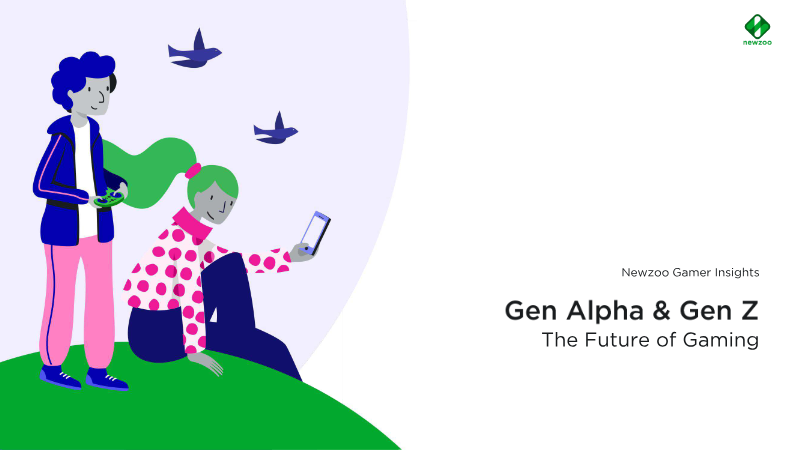
Newzoo Gen Z & Gen Alpha Report 2022
This analysis examines the gaming behaviors and preferences of Gen Alpha (ages 10-12) and Gen Z (ages 13-27), positioning these cohorts as the primary drivers of the industry's future.
- 90% of Gen Alpha and Gen Z are game enthusiasts, significantly outpacing the 79% engagement rate found in the total online population.
- Gaming is the primary entertainment source for Gen Alpha and a top-three source for Gen Z, competing directly with social networks and streaming services.
- 70% of Gen Z are interested in using virtual game worlds for social activities beyond gameplay, such as attending parties or watching movies, positioning them as the primary drivers of metaverse adoption.


Multiplayer Report 2022
The 2022 Multiplayer Report examines the evolving preferences, behaviors, and technical expectations of online gamers across major global markets.
- Multiplayer gaming engagement grew by 3.3% year-over-year, with 77% of the global gaming population now participating in online play.
- Unity internal data shows a 150% surge in PC multiplayer development and a 40% increase in mobile multiplayer projects since early 2021.
- Genre remains the primary driver for game selection at 49%, followed by social connectivity factors including existing friend groups (34%) and in-game chat capabilities (31%).
Key Insights Into American Gamers
The United States represents the second-largest gaming market globally, generating $47.3 billion in revenue from a population of 191 million gamers.
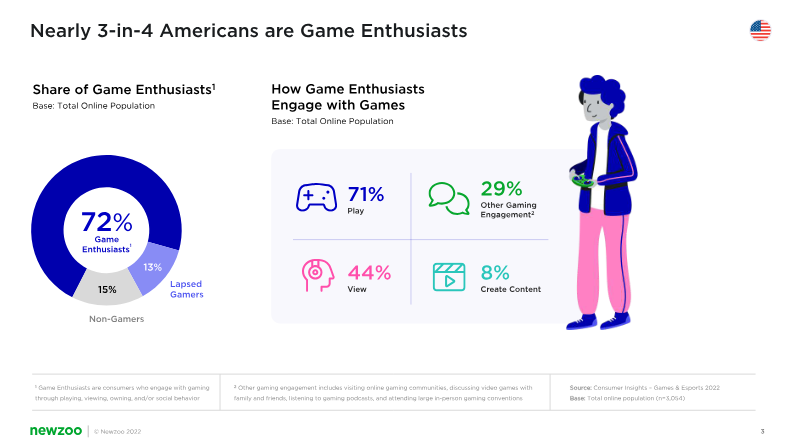
- The U.S. gaming market generated $47.3 billion in revenue from 191 million gamers, representing 72% of the online population.
- Engagement is driven by a mix of play and viewership, with 71% of the population playing games, 44% watching gaming content, and 18% engaging with esports.
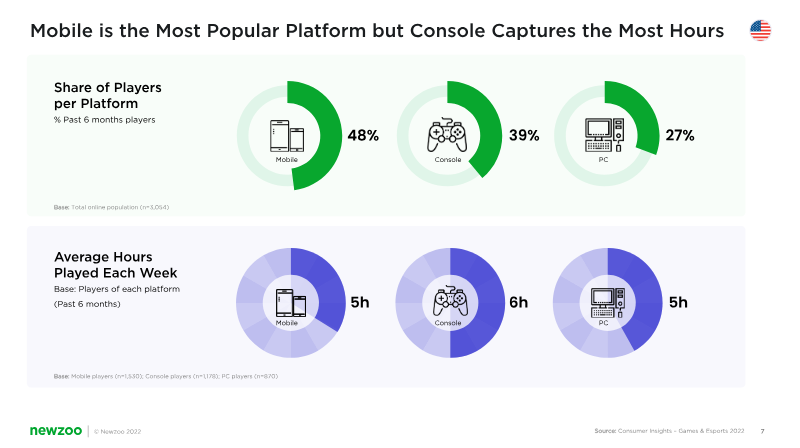
- Mobile is the most popular platform by reach at 48%, while console gaming commands the highest engagement at an average of six hours per week.


Key Insights Into South Korean Gamers
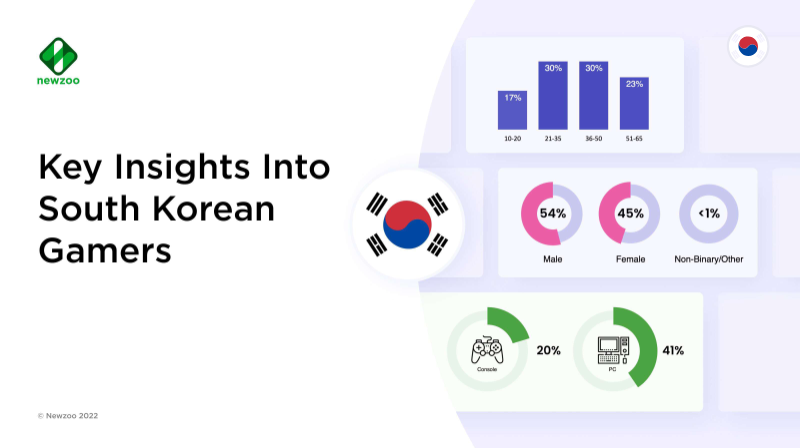
South Korea represents the fourth largest gaming market globally by revenue, valued at $8.3 billion, with a highly engaged population of 33 million gamers.
- South Korea is the world's fourth-largest gaming market, generating $8.3 billion in annual revenue from a highly engaged base of 33 million gamers.
- Gaming is a deeply integrated social activity, with 76% of the online population participating, 48% both playing and watching content, and 22% specifically following esports.
- Mobile is the primary platform for 59% of the online population, though PC gamers demonstrate higher engagement with an average of five hours of play per week.
Charm Your Communities
Charming a gaming community involves shifting from a traditional top-down marketing funnel to a community-first approach that prioritizes authentic, human-centric connections.
- Charming a community requires moving beyond audience-building to create intentional, warm, and playful experiences that foster mutual connection rather than just passive consumption.
- Community members progress through four distinct stages—new, regular, loyal, and advocate—and developers must provide consistent, positive interactions to move them toward becoming advocates who contribute to the community's health.
- Small, daily, and authentic interactions are more effective at building community than grand, expensive gestures or metric-focused marketing campaigns.
Social Depth of Location-Based Play in 'The Walking Dead: Our World'
The Walking Dead: Our World demonstrates how mobile developers can successfully integrate location-based play with social mechanics by prioritizing accessibility and collaborative engagement.
- Collaborative guild-based challenges drive engagement for 90% of daily active users, serving as the primary engine for both player retention and monetization.
- The game utilizes a 'play-everywhere' design model that ensures consistent gameplay regardless of the user's physical environment, prioritizing accessibility over complex spatial competition.
- The core gameplay loop consists of 15-second, bite-sized combat and scavenging encounters, which prototyping proved more effective than analysis-heavy mechanics for mobile contexts.