
Gaming has evolved into a multi-dimensional entertainment ecosystem that extends far beyond traditional play, encompassing viewing, socializing, and content creation. Research conducted between February and April 2022 across 36 global markets reveals that 79% of the online population are game enthusiasts. This engagement is most profound among younger generations; for Gen Alpha, gaming has surpassed social media and streaming as the primary source of entertainment. The study utilized a representative sample of 75,930 respondents aged 10 to 65 to analyze behaviors across five distinct generational cohorts.
Data indicates that gaming is increasingly a platform for social connection, with 75% of players engaging in game worlds for social purposes without playing the primary game. This trend is a significant driver of the emerging metaverse. Financial engagement is also high, with approximately half of Gen Alpha, Gen Z, and Millennials spending money on games. Total consumer spending in the sector was projected to exceed $200 billion in 2023. Furthermore, the rise of blockchain gaming and play-to-earn models shows significant future potential, with 34% of players in the United States expressing interest in these technologies.
The findings emphasize that gamers are a highly attractive demographic for brands, as players generally hold 36% more positive attitudes toward brands compared to non-players. However, the diversity of the audience necessitates a nuanced approach to engagement. Using a proprietary segmentation model, the research identifies various personas ranging from Ultimate Gamers to Time Fillers. For instance, while both Apex Legends and Fortnite are battle royale titles, their player bases differ significantly in age, gender, and brand preferences, illustrating that effective marketing requires deep insights into specific game communities and generational motivations.

Google · 2026
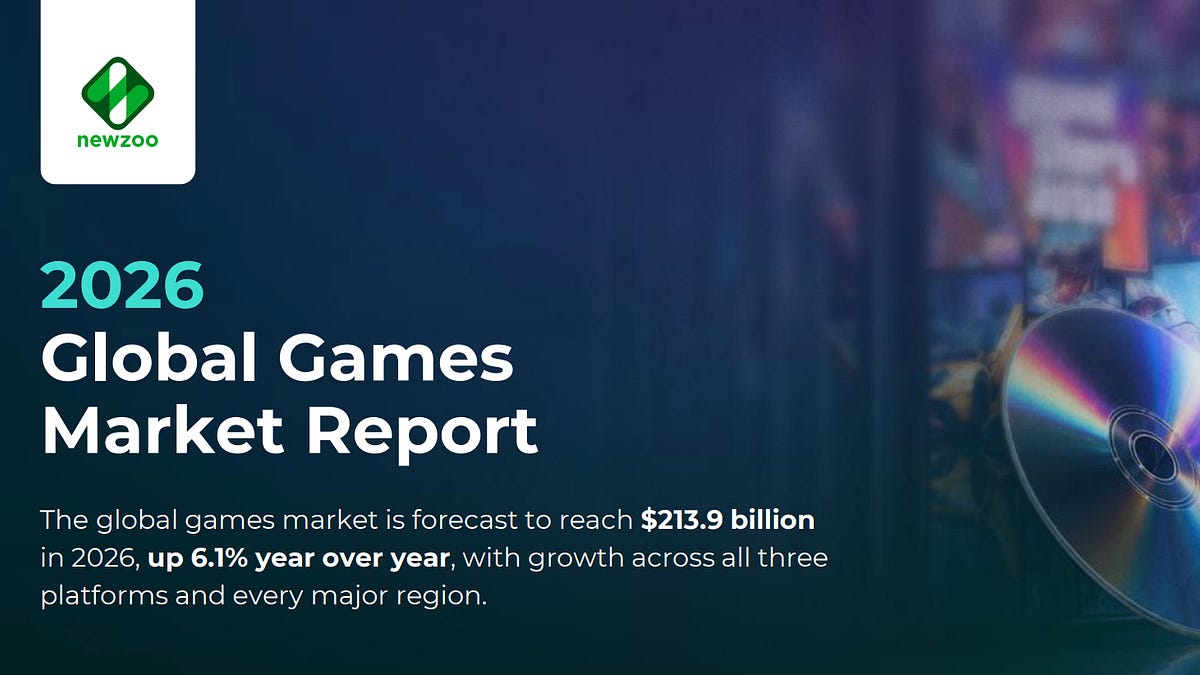
Newzoo · 2026

Newzoo · 2026
Newzoo · 2026

Deconstructor of Fun · 2026
Newzoo · 2026
Newzoo · 2026
Newzoo · 2026
Newzoo · 2026

Newzoo · 2026
Newzoo · 2026
Newzoo · 2025
Niko Partners · 2026
Anzu · 2026

Newzoo · 2025
Video Games Europe · 2025
Newzoo · 2025

Newzoo · 2025
Newzoo · 2024
IIDEA – Italian Interactive Digital Entertainment Association · 2023

Newzoo · 2023

Newzoo · 2023

AEVI · 2023
Newzoo · 2022