PC reports and market data
Documents
How He Sold 500,000+ Copies Of His Games (Oliver Joyce) — Full Time Game Dev Podcast Ep. 036
Achieving commercial success in the independent game industry requires a strategic shift away from chasing fleeting market trends toward cultivating authentic, niche-driven development.
- Diversify income streams—such as YouTube channels, asset sales, or consulting—to mitigate the financial risk of game development and avoid the 'quit your job' trap for early-stage projects.
- Validate market interest early by building a demo or trailer before committing years of development; for example, a poor reception to a trailer with 25,000 views can signal a need to pivot or cancel a project to save time.
- Prioritize core game loops that respect the player's time, as games that offer incremental rewards and avoid tedious mechanics often perform better for time-poor audiences.
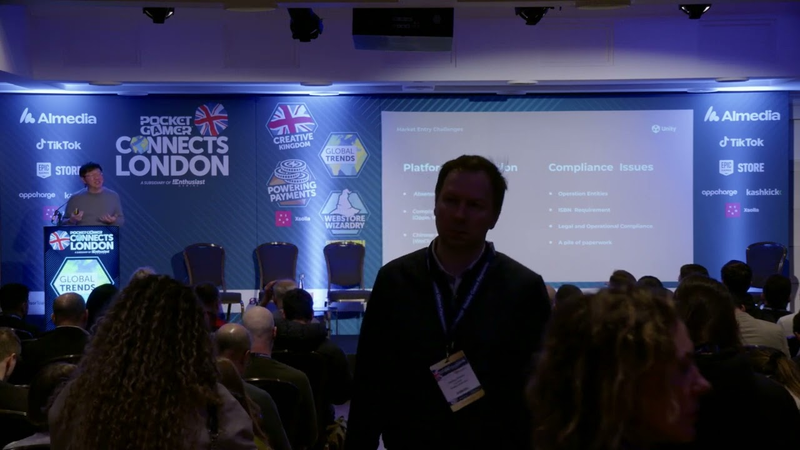
Session: Bring Your Games to China With Unity – A Pathway for Games to Thrive in China - Junbo Zhang
The Chinese gaming market presents a unique, high-growth opportunity for international developers, despite significant regulatory and technical barriers.
- Unity China provides a localized, optimized version of the Unity engine (based on 2022 LTS) specifically designed to reduce runtime and loading times for the Chinese market, where Unity games now account for approximately 50% of WeChat Instant Game revenue.
- Unity China offers a comprehensive publishing service that handles regulatory compliance, ISBN filing, and technical integration across fragmented Android channels (e.g., Xiaomi, Oppo, Huawei) and emerging platforms like WeChat and Douyin.
- The Chinese gaming market is dominated by mobile gaming, which accounts for roughly 75% of the total market, with significant growth opportunities in the Instant Game sector and high-performance hardware like smart electric vehicles.

BRILLIANT Advice If You Want To Start Making Indie Games
Transitioning to a full-time career in independent game development requires a strategic approach to production, tool development, and risk management.
- Prioritize the early development of robust, proprietary internal tools like map editors and dialogue systems to automate repetitive tasks and accelerate long-term production.
- Treat every game project as a high-stakes investment by building modular technology that can be salvaged, reskinned, or repurposed if the initial concept fails to gain market traction.
- Focus on the game's 'hook' and aesthetic presentation, as these elements are often more critical to commercial success than the underlying mechanics.

Helldivers 2, Warframe, First Descendant, and Once Human - How to Operate a PvE Shooter?
The PvE shooter market currently faces significant volatility, characterized by a reliance on massive initial launches rather than sustained, long-term player retention.
- The PvE shooter market is shifting away from the unsustainable 'Destiny-style' decade-long live service model toward strategies that prioritize upfront profitability and defined product lifecycles.
- Newer titles like Helldivers 2 and The First Descendant demonstrate high viral appeal and strong initial sales, but they frequently struggle to maintain player retention once launch content is exhausted.
- Long-term success in the genre, exemplified by Warframe, relies on deep, aspirational endgame loops and complex RPG progression systems that facilitate continuous theory-crafting and character investment.
The First 30 Years of 'Warcraft': The Making of a Game Universe
The Warcraft franchise has maintained its status as a cornerstone of the gaming industry for three decades by evolving from a foundational real-time strategy series into a multifaceted, global fantasy ecosystem.
- Blizzard transitioned from being a game developer to a community steward after realizing that the success of BlizzCon was driven by players gathering for each other rather than just for the developers.
- The Warcraft 3 modding community created the Defense of the Ancients (DOTA) mod, which effectively launched the MOBA and Tower Defense genres, demonstrating the power of robust in-game creation tools.
- World of Warcraft achieved record-high subscriber retention during the end of an expansion cycle by adopting mobile-style live service disciplines, such as data-informed content updates and frequent player feedback loops.

Slay the Princess: The Pristine Cut with Tony & Abby Howard | 360
Independent game development thrives on sustainable business models that prioritize single-purchase titles over microtransactions or paid downloadable content.
- Indie developers can estimate launch sales by using a rule of thumb of 10% to 20% of their total Steam wishlists for the first week, with similar volume expected again in the first month and the first year.
- Episodic game development requires each installment to function as a self-contained, emotionally satisfying experience that ends on a cliffhanger, rather than just a chapter in a larger book.
- Early Access should be treated as a full product launch; developers must ensure the build has the polish of a complete game because it represents the actual experience customers are paying for.
Will AI Destroy Indie Game Dev?
The integration of artificial intelligence into the game development industry presents a complex challenge, primarily centered on the distinction between data processing and the act of human creation.
- Current AI models can analyze and replicate existing creative works, but they lack the ability to comprehend the underlying human creative process or the intent of the original creator.
- While AI is effective at generating static assets like still images, it struggles with maintaining long-term continuity and creative coherence in complex projects.
- The creative spark in writing often manifests as a subconscious process that current AI technology cannot replicate because it lacks the lived experiences and biological variables that define human personality.
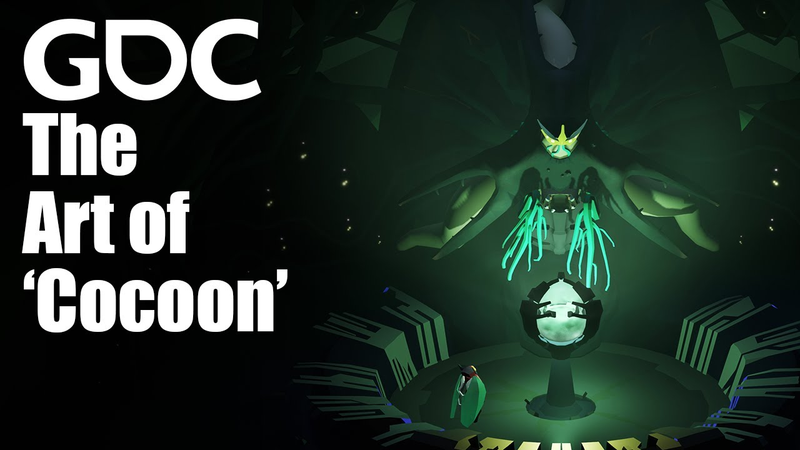
Pondering Orbs: The Rendering and Art Tools of 'COCOON'
The development of COCOON centers on achieving high-fidelity, dynamic visuals through a custom rendering pipeline designed to overcome the constraints of traditional light mapping.
- Geometric Interactive utilized voxel-based lighting for COCOON to avoid complex parameterization and the need for traditional light map UVs.
- The rendering pipeline uses a rasterizer as a ray tracer by treating the perspective camera as a grid of rays sharing a single origin point.
- To optimize performance for the Nintendo Switch, the team used scissor rectangles and depth pre-passes to cull fragments and draw calls for geometry hidden behind orbs.

Why His Game Has Taken 10 Years To Make (Ken Levine) — Full Time Game Dev Podcast Ep. 034
The decade-long development of the title Judas represents a fundamental shift in creative methodology, moving away from traditional production cycles toward a research-heavy, iterative process.
- Ken Levine’s upcoming game, Judas, has been in development for 10 years, reflecting the extreme time and resource investment required for modern high-end game production.
- The 'Narrative Lego' system is a modular design approach that allows developers to create highly personalized, non-linear player experiences by rearranging story elements rather than relying on a strictly linear script.
- Effective game development requires a willingness to kill features that do not serve the core identity of the project, even if the developer initially believes they are essential.
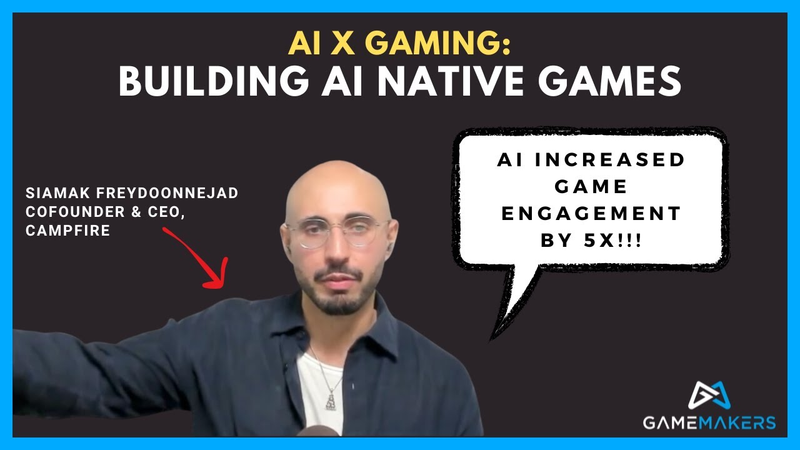
How AI Increased Game Engagement By 500%
The gaming industry is undergoing a fundamental shift toward AI-native development, where generative technology serves as the primary driver of player engagement rather than a peripheral feature.
- Campfire discovered that players spent five times longer interacting with AI companions than engaging with traditional game mechanics, a finding that shifted the company's focus toward AI-native gaming.
- The company developed Sprites.AI as a toolset to simplify AI agent creation, allowing developers to manage personality traits, memory, and conversational flows without needing deep expertise in complex AI building blocks like RAG or Chain of Thought.
- To address the stochastic nature of AI outputs, Campfire implemented a monitoring framework that qualitatively analyzes agent performance to ensure interactions remain engaging and fun for users.

Were there too many games in 2024?
The 2024 Steam market analysis reveals a significant increase in total game releases, with 18,234 titles launched during the year.
- In 2024, 18,234 games were released on Steam, with 75% of all titles failing to reach even 50 reviews, indicating that the vast majority of releases are hobbyist projects with minimal market impact.
- The success rate for games reaching the '1,000 review' milestone—a proxy for commercial viability—has remained relatively stable at approximately 2.44% in 2024, compared to 2.5% in 2023 and 2.7% in 2022.
- Valve has attempted to increase platform visibility by expanding daily deal slots from two to four, though this has resulted in less individual visibility per game compared to previous years.

Let's Review Your Games — Ep. 009
The primary objective of indie game development success lies in the alignment between a project’s core gameplay loop and its public-facing marketing assets.
- Marketability is a critical factor for game success; even a well-designed game will struggle to sell if the Steam page fails to clearly communicate the core hook or gameplay loop to potential players.
- Visual clarity is essential for immediate player understanding; for example, a game about delivering beer should visually represent that theme rather than relying on ambiguous sci-fi aesthetics that confuse the user.
- Effective Steam page copy should be concise and focus on the primary gameplay hooks, such as specific mechanics like hacking, evolving, or procedural generation, rather than using overly long or vague descriptions.