PC reports and market data
Documents
The Sound and Music of Hyper Light Drifter
The audio development of Hyper Light Drifter centers on the creation of a unique, immersive sonic identity through experimental recording techniques and a highly iterative collaborative process.
- The audio team utilized unconventional field recording techniques, such as using a stethoscope modified with a garden hose spigot to record internal body sounds like blood flow, which were then processed and distorted to create ambient textures for boss battles.
- To achieve a unique, 'nightmarish' aesthetic, the developers used a 1950s wire recorder—purchased for $250—to capture and manipulate raw, historical audio, creating distorted textures that predated modern digital recording artifacts.
- The sound design process relied heavily on extreme processing of organic sounds, such as recording the creator's own voice squealing like a pig or using wolf vocalizations, which were then pitch-shifted and layered to create distinct, terrifying creature audio.
Building Beauclair in The Witcher 3: Wild Hunt - Blood and Wine
The development of Beauclair for The Witcher 3: Blood and Wine centered on creating a dense, vacation-inspired urban environment that balanced high visual fidelity with rigorous technical performance constraints.
- To manage performance in the dense city of Beauclair, the team used Umbra to optimize rendering by limiting the number of visible meshes based on the player's line of sight, significantly reducing triangle counts for complex structures.
- The development team implemented a custom blend shader that used monochromatic textures combined with color tints and pattern overlays to create unique visual variations for assets while minimizing memory usage.
- Designers controlled player navigation and visibility by bending streets and using landmarks like the Gorgon Mountain and the palace to break lines of sight, which helped hide asset popping and streaming latency.

Illustrating Fantasy in League of Legends
The visual identity of League of Legends champions has evolved from rigid, action-oriented box art toward a narrative-driven philosophy that prioritizes emotional resonance and thematic storytelling.
- Riot Games shifted its illustration philosophy from creating 'aspirational' hero shots to focusing on the 'true fantasy' of a character, which exists in the player's imagination rather than the game's low-poly models.
- The illustration team discovered that breaking arbitrary rules—such as forcing a character to stand or showing their primary gameplay hook—often leads to higher player resonance, as seen in the successful redesign of Elise.
- Splash art is treated as a narrative tool to convey a champion's core personality and story, prioritizing the 'feeling' of a character over a literal representation of their in-game abilities or appearance.
Deformable Snow Rendering in Batman: Arkham Origins
The development of the snow rendering system for Batman: Arkham Origins focused on creating a high-performance, low-memory solution for organic, deformable surfaces.
- The deformable snow system uses a runtime-generated displacement height map technique that avoids expensive raycasting or physics-heavy calculations, making it performant for previous-gen consoles like the PS3 and Xbox 360.
- To manage memory efficiently, the system uses a pre-allocated memory pool and only tracks 'active' surfaces—those within a specific distance of characters—releasing memory for distant surfaces to maintain a strict 2MB budget.
- The technique renders character interactions into a height map, which is then processed via a four-tap bilinear Poisson disc blur to create smooth, organic gradients for footprints, sliding, and fighting movements.
Classic Game Postmortem: Fallout
The development of Fallout between 1994 and 1997 represents a pivotal shift in role-playing game design, transitioning from rigid, linear structures to a sandbox-style experience defined by player agency.
- The development of Fallout (1994–1997) shifted RPG design from linear structures to a sandbox model by prioritizing player agency and non-linear quest solutions.
- The loss of the GURPS licensing agreement forced the team to overhaul the entire combat and skill system in just two weeks, leading to the creation of the proprietary SPECIAL system.
- Technical innovation was driven by the transition to Super VGA graphics and the development of cross-platform libraries to ensure compatibility across DOS, Windows, and Mac.

Early Access Lessons from Raw Data
Raw Data established a significant milestone in the virtual reality industry by becoming the first title to surpass $1 million in revenue within its initial 30 days.
- Raw Data achieved the first $1 million revenue milestone for a VR title within its initial 30 days of release.
- The game’s success was driven by a design philosophy prioritizing high-fidelity, active physical engagement and intuitive weapon handling over rigid realism.
- Cooperative, social gameplay served as the primary engine for long-term player retention and organic market growth.
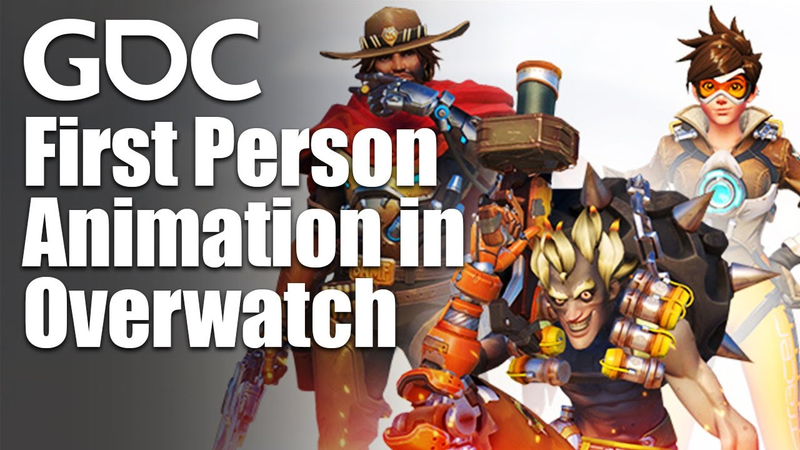
Animation Bootcamp: The First Person Animation of Overwatch
The animation philosophy behind Overwatch centers on the synthesis of distinct character personality and high-performance gameplay responsiveness.
- Overwatch animators utilize separate field-of-view (FOV) settings for the world and the player view model, allowing players to adjust their FOV up to 120 degrees without distorting the carefully crafted first-person weapon and character poses.
- To prevent weapon desync during reloads, the team uses parent spaces within the rig, which allows the right-hand IK to follow weapon bones and switch back to default without manually toggling constraints.
- First-person animations are designed to communicate gameplay status, such as moving the weapon away from the reticle during reloads to signal that the player cannot currently fire.
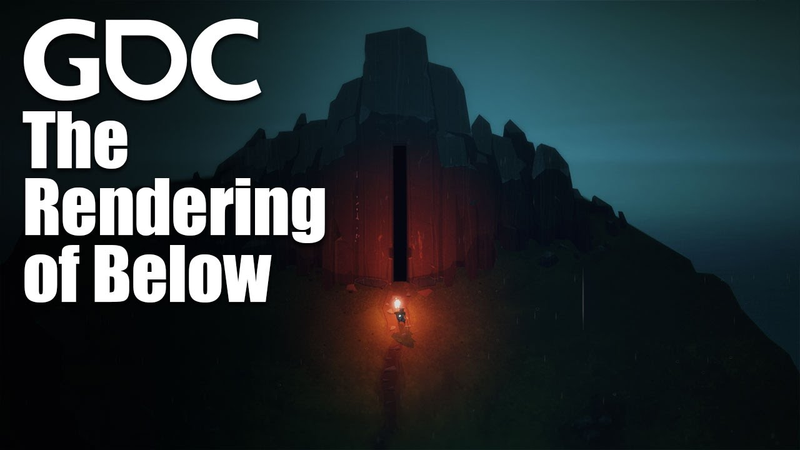
The Rendering of Below
The development of the rogue-like action-adventure game Below required a specialized rendering pipeline to balance high-density visual detail with a moody, intentionally dark aesthetic.
- The development team implemented a tiled forward lighting system using compute shaders to overcome the performance inefficiencies of standard deferred lighting on Xbox hardware.
- A gamma-correct pipeline was utilized to perform all lighting, post-processing, and color grading in linear space, effectively mitigating color banding and visual artifacts.
- The engine leveraged binary arithmetic and bit-masking to manage numerous light sources simultaneously, enabling complex light-based gameplay mechanics while maintaining compatibility with multi-sample anti-aliasing (MSAA).
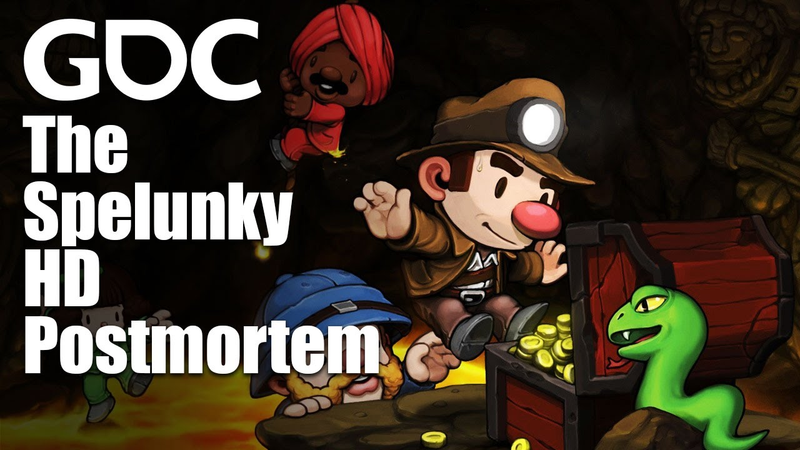
The Spelunky HD Postmortem
The development of the platformer-roguelike hybrid Spelunky illustrates the strategic value of iterative prototyping and the transition from freeware projects to commercial console releases.
- The freeware version of Spelunky served as a refined prototype that provided the foundation and confidence to develop the larger Xbox Live Arcade (XLA) version.
- Spelunky's level generation utilizes a 4x4 grid system where a path is drawn from the top entrance to the bottom exit, with individual rooms populated by templates based on the game area and path requirements.
- The transition to the XLA version involved moving away from the Braid engine after a month and a half of development due to code complexity and unnecessary features like time-rewinding.

The Benefits and Challenges of Supporting Third-Party Developers in Eve Online
CCP Games maintains a highly successful third-party developer ecosystem for Eve Online by providing open access to static data, image servers, and web APIs.
- CCP Games offloads the development of niche, complex utilities—such as financial tracking and asset management—to the player base to preserve internal resources for core game development.
- The studio maintains control over the third-party ecosystem by retaining the authority to modify or revoke APIs that threaten game balance or facilitate market automation.
- Community-built tools like killboards serve as critical intelligence and marketing assets, often acting as prototypes for future official client features.
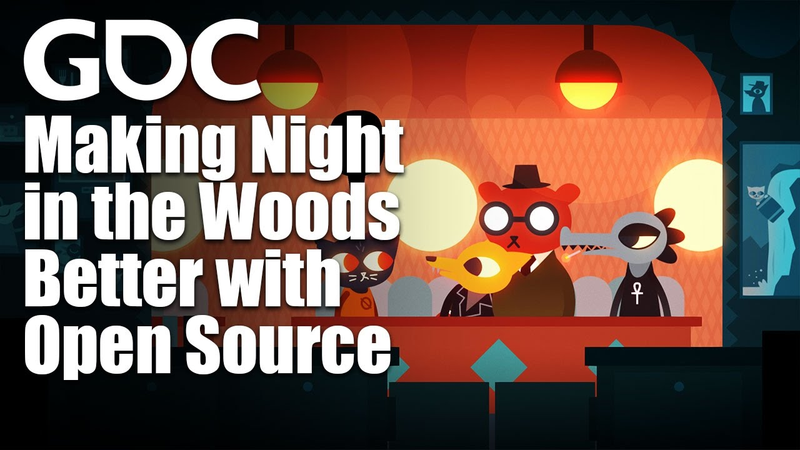
Making Night in the Woods Better with Open Source
The integration of open-source tools into game development serves as a powerful mechanism for managing complex narrative structures while simultaneously offloading technical maintenance to a broader community.
- Open-source narrative tools like Yarn Spinner allow studios to manage massive dialogue requirements, such as the 139,000 words and 130 characters featured in Night in the Woods.
- Releasing proprietary tools under permissive licenses like MIT or Apache 2 offloads technical maintenance and bug fixing to the broader developer community.
- Successful community management requires lowering barriers to entry by breaking development tasks into small, manageable issues and automating routine administrative workflows.

Balancing League of Legends for Every Player, from Bronze to Bengi
Balancing a competitive title like League of Legends necessitates navigating a massive skill gap that often exceeds 1,000% between casual participants and professional competitors.
- Riot Games balances League of Legends by targeting the 'sweet spot' of High Platinum to Low Diamond skill tiers, as this range provides the best intersection between the high volume of players and the sensitivity to balance changes.
- Designers must interpret raw data with nuance, such as accounting for 'experience bias' where a champion's high win rate may reflect the player's mastery of that specific character rather than the champion being objectively overpowered.
- Balance changes should be iterative and systemic; when simple tuning fails to resolve an outlier, developers should pivot to broader structural updates, such as the preseason overhaul of assassin items and stealth mechanics.