PC reports and market data
Documents
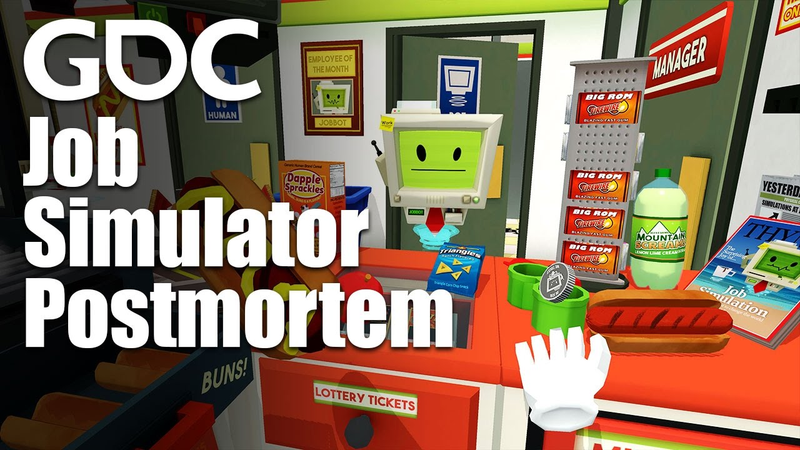
The Job Simulator Postmortem
The development of Job Simulator represents a pivotal case study in early virtual reality design, demonstrating that success in the medium requires prioritizing intuitive hand-based physics and strict adherence to user expectations over traditional PC gaming conventions.
- Success in VR design requires prioritizing intuitive, hand-based physics and near-field interactions over traditional PC gaming conventions.
- Immersion is best achieved through diegetic design, where functional elements like menus and tutorials are seamlessly integrated into the physical environment.
- The 'tomato presence' technique—replacing hand models with held objects—effectively mitigates visual discomfort caused by clipping while reinforcing player agency.

Classic Game Postmortem: Maniac Mansion
Maniac Mansion, released in 1987 by Lucasfilm Games, represents a foundational shift in the adventure game genre.
- The 1987 release of Maniac Mansion by Lucasfilm Games revolutionized the adventure genre by replacing text parsers with a visual, verb-based interface and introducing the cinematic cutscene.
- The development of the SCUMM (Script Creation Utility for Maniac Mansion) engine provided a multitasking scripting language that enabled efficient memory management on the Commodore 64 and served as the technical foundation for future adventure titles.
- The game introduced high replayability through a character-selection system, allowing players to choose three out of seven available characters, each with unique abilities that required different puzzle-solving strategies.
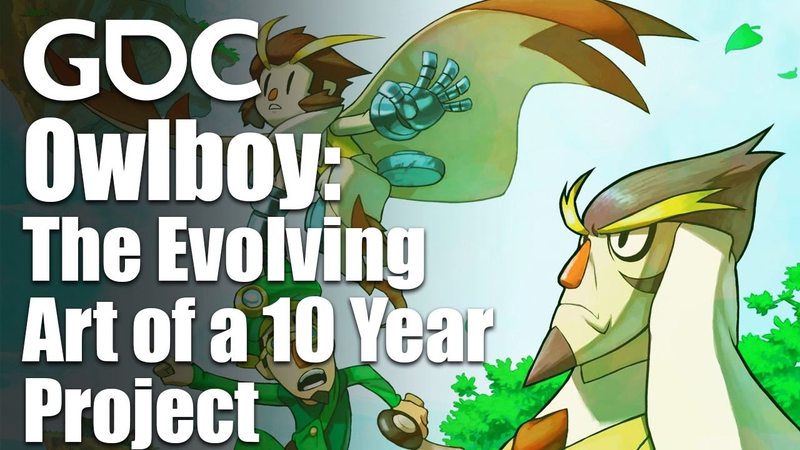
Owlboy: The Evolving Art of a 10 Year Project
The decade-long development of the indie title Owlboy serves as a case study in the tension between creative perfectionism and the practical requirements of project completion.
- Owlboy was in development for 10 years, spanning an entire console generation and outliving the XNA programming language originally used for its creation.
- To maintain visual relevance, the developers implemented custom algorithms to smooth pixel art movement, moving beyond the traditional constraint of locking animations strictly to pixel grids.
- The game's narrative tone shifted significantly toward a story of friendship and personal struggle after the developers experienced major life events, including the death of a close friend.
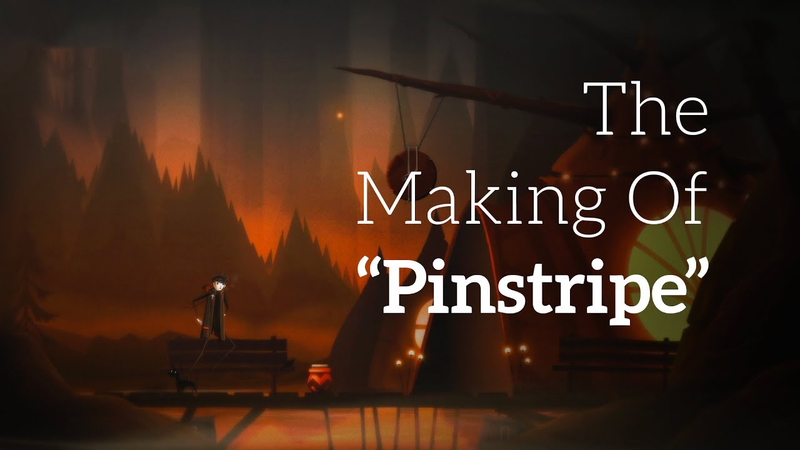
The Making Of Pinstripe
Developing a video game as a solo creator requires immense personal dedication, often necessitating a multi-year commitment that balances full-time employment with creative labor.
- The development of Pinstripe was a four-year solo project, requiring the creator to manage all aspects of production including illustration, programming, music, and narrative design.
- The project demonstrates that high-quality, professional-grade games can be produced independently from a home environment without the need for relocation to major industry hubs.
- The primary development objective was to prioritize a compelling, story-driven experience and emotional resonance over traditional gameplay mechanics.

Classic Game Postmortem: Oregon Trail
The Oregon Trail originated in 1971 as a classroom simulation designed to transform history education through interactive technology.
- The Oregon Trail was created in 1971 by student teachers Don Rawitsch, Bill Heinman, and Paul Dillenberger to shift educational computing away from math-centric applications toward interactive history simulations.
- The game achieved significant commercial success after moving to the Minnesota Educational Computing Corporation (MECC), eventually accounting for one-third of the company's annual revenue.
- Developers enhanced the game's historical authenticity by integrating primary source materials from historical diaries, which helped facilitate its widespread adoption in schools.
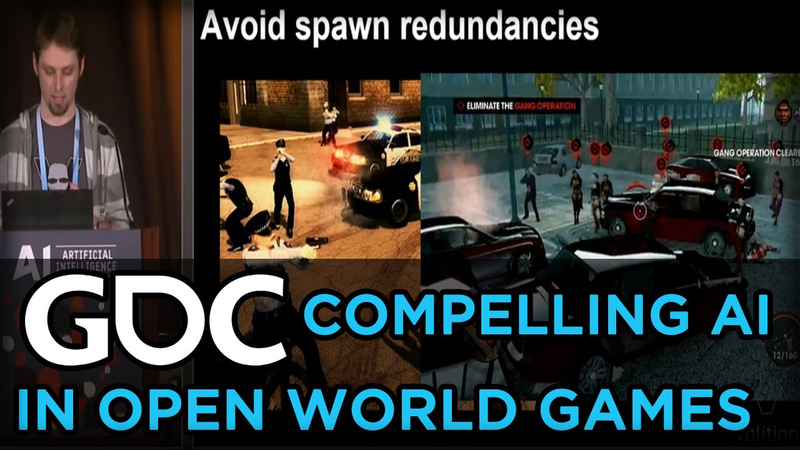
Free Range AI: Creating Compelling Characters for Open World Games
Creating compelling characters in open-world environments requires a fundamental shift from rigid, scripted sequences toward systemic, player-centric artificial intelligence.
- To maintain open-world longevity, developers should move beyond simple scripted events by using behavioral annotation, where level designers place objects in the environment that dictate AI positioning and actions.
- Avalanche Studios utilizes modular behavior trees that support 'external trees,' allowing game objects to dynamically load and execute specific logic or animations without hard-coding.
- External state machines enable developers to extend NPC capabilities on the fly by loading in new states, transitions, and animations, which can be disconnected once the specific interaction is complete.
4.5 Million Players in 100 Days: Lessons from Dying Light
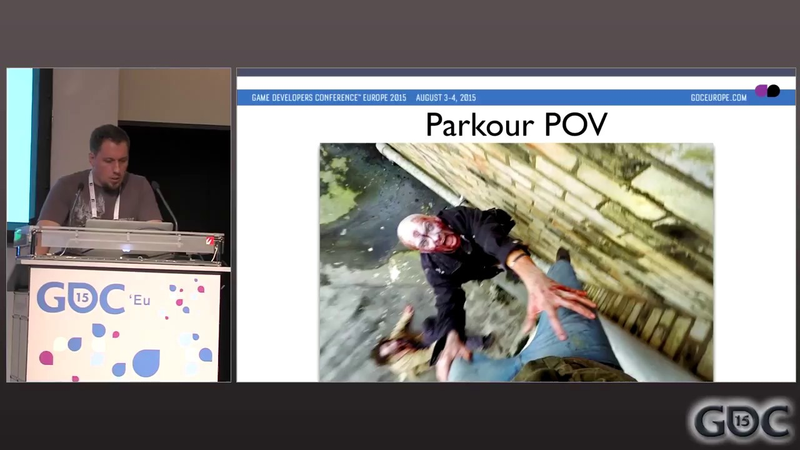
The success of the open-world survival game Dying Light, which reached 4.5 million players within its first 100 days of release in 2015, is attributed to a strategic combination of pre-launch feature communication and aggressive post-launch community engagement.
- Techland achieved 4.5 million players within the first 100 days of Dying Light's release by focusing on clear communication of core game pillars, such as melee combat, the day-night cycle, and co-op play.
- The development team maintained pre-release momentum by releasing weekly 'Dying Highlights' gameplay videos rather than traditional marketing trailers, showcasing specific features and humorous scenarios.
- Post-launch engagement was driven by a robust telemetry system that tracked player behavior, resulting in a high 35-40% completion rate for the PC version.
Magical Realism: The Art of Creating Everest in Your Living Room with VR (presented by NVIDIA)
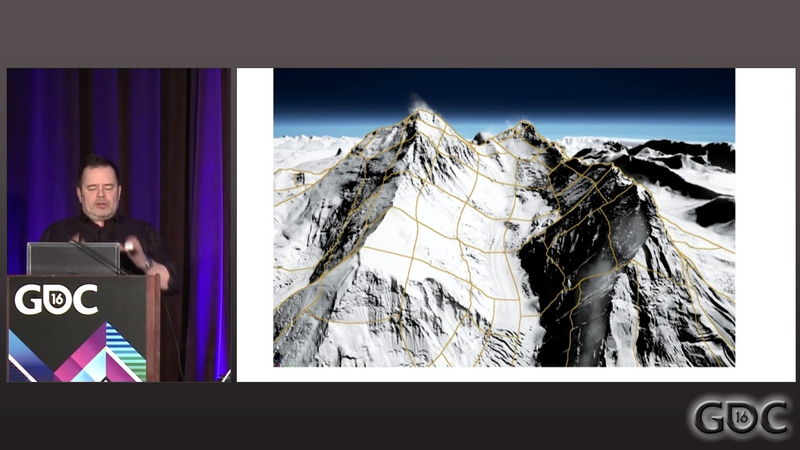
The development of Everest VR serves as a blueprint for achieving deep emotional immersion in virtual reality through the synthesis of photorealistic graphical fidelity and psychological sensory manipulation.
- Achieving photorealistic VR immersion requires processing over 1.5 trillion polygons using stereo photogrammetry and Unreal Engine.
- Performance optimization for high-fidelity VR is maintained through custom mesh patching, advanced texture streaming, and NVIDIA’s Multi-Res shading.
- Motion sickness is mitigated by utilizing black box framing techniques and prioritizing vertical movement over horizontal traversal to ground the user.
A Torch in the Dark: Using Creative Direction to Light The Darkest Dungeon
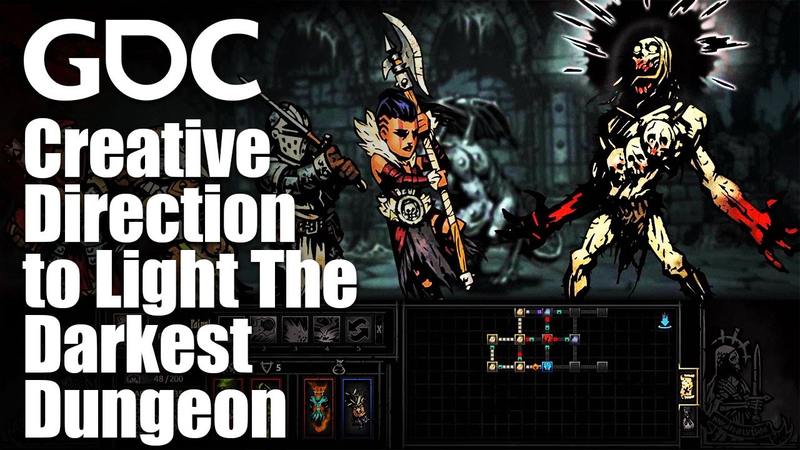
Maintaining a rigid, externalized creative vision serves as the primary defense against scope creep and development drift for independent studios.
- A clearly articulated, externalized creative vision acts as a decision-making razor, allowing developers to filter features and resolve conflicts during the uncertainty of production.
- Red Hook Studios defined the core of Darkest Dungeon as an uncompromising, Gothic, low-fantasy, Lovecraftian experience centered on making permanent decisions with imperfect information.
- The team rejected standard RPG tropes like isometric camera angles and exhaustive lore exposition to maintain a claustrophobic, uncertain atmosphere that forces players to experience the game's horror.
Animation Style and Process for Broken Age
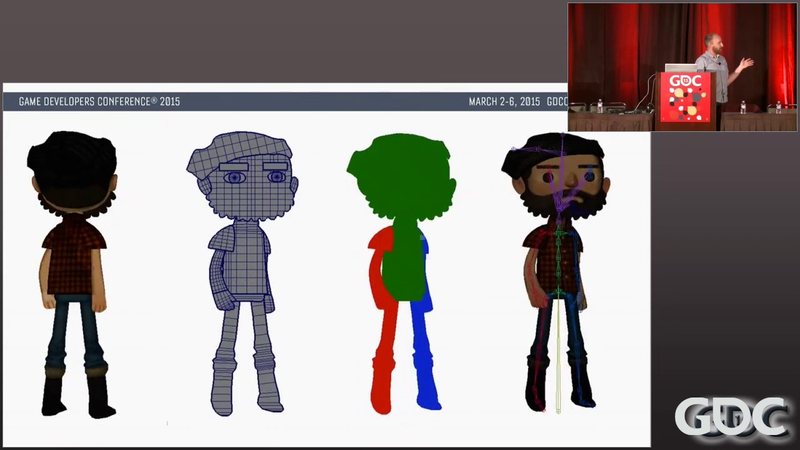
The animation pipeline for Broken Age centers on a 2.5D hybrid system designed to translate intricate, painterly 2D art into a functional, dialogue-heavy interactive environment.
- The development team reduced animation data size from 7.4 gigabytes to 36 megabytes by using a joint-driven texture plane system instead of traditional 3D modeling or sprite sheets.
- A custom cutscene editor and automated lip-sync tools allowed a single animator to produce five hours of scripted dialogue by mapping phonemes directly to character joints.
- The animation pipeline utilized a 2.5D hybrid system to preserve Nathan Stapley’s painterly 2D art style while ensuring technical efficiency in a dialogue-heavy environment.
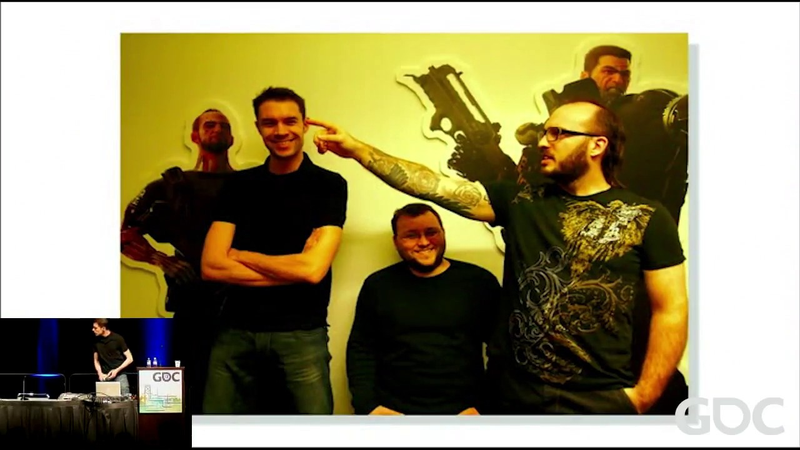
Reimagining a Classic: The Design Challenges of Deus Ex: Human Revolution
The development of Deus Ex: Human Revolution centered on the challenge of modernizing a beloved franchise while preserving its core identity.
- To ensure design consistency, the Eidos Montreal team established core pillars—choice, consequence, and spectacular/rewarding gameplay—which were physically posted on walls to guide all development decisions.
- The 'Blueprint' process was used to map the entire game in advance, documenting every location, conversation, and player choice to ensure a cohesive, story-driven experience.
- Balancing the game was achieved by separating the critical path from exploration, ensuring players could complete the game without needing to find every optional item.

League of Legends: Scaling to Millions of Summoners
League of Legends maintains its position as a global gaming phenomenon by prioritizing a player-centric development philosophy that ensures feature accessibility across a massive, rapidly expanding user base.
- The platform scaled from 15 million to 32 million registered users by utilizing a Java-based stack integrated with NoSQL technologies including Oracle Coherence, Redis, and MongoDB.
- NoSQL layers are treated as primary data sources rather than secondary caches to achieve predictable, linear horizontal scaling and high-performance data management.
- Operational stability is maintained through a split-model architecture that ensures game server provisioning speed remains constant regardless of total concurrent player load.