PC reports and market data
Documents
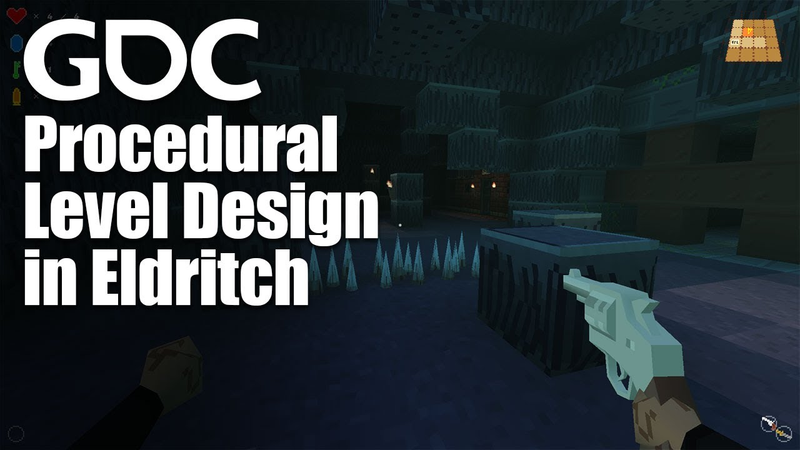
Procedural Level Design in Eldritch
Procedural level generation serves as the foundational architecture for Eldritch, enabling a solo developer to overcome the constraints of an eight-month production cycle while delivering the high replayability essential to the roguelike genre.
- Procedural generation is best utilized when game design requires perennial discovery, preventing players from memorizing space and forcing them to learn systems instead.
- To generate Eldritch's levels, the developer used Prim's algorithm to create a 3D maze, then populated it with 12m x 12m x 8m modular chunks built in a voxel engine.
- By utilizing rotation and mirroring of modular assets, the developer reduced the required number of unique module configurations from 64 down to 24.

Modeling Individual Personalities in The Sims 3
The Sims 3 centers on the objective of fostering emergent narrative through a dynamic, autonomous simulation of life.
- To optimize performance, The Sims 3 replaced the inefficient iteration of all object interactions with a memory-efficient map that links specific 'Commodity' desires directly to the interactions capable of satisfying them.
- Instead of choosing the single highest-scoring action, which results in robotic behavior, the game utilizes a Boltzmann distribution to select actions, ensuring a natural variety of choices while still prioritizing high-utility tasks.
- The engine employs a data-driven architecture that allows developers to define complex interconnections between personality traits and social interactions without modifying the core codebase, ensuring long-term maintainability.
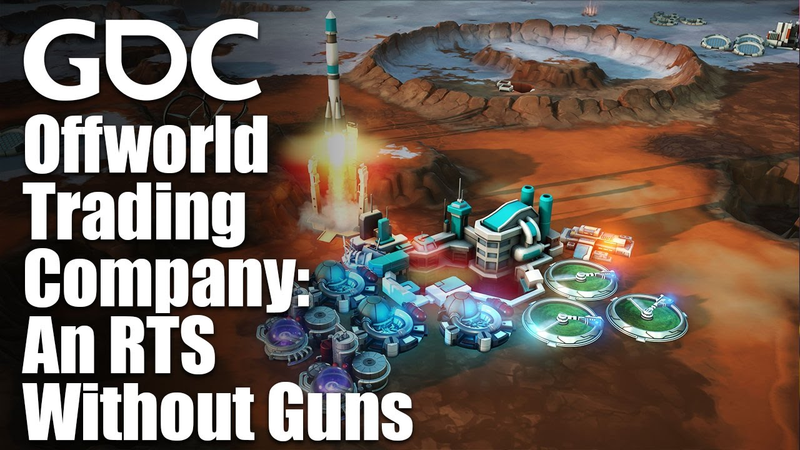
Offworld Trading Company: An RTS Without Guns
Offworld Trading Company reimagines the real-time strategy genre by replacing traditional military combat with a dynamic, player-driven free market.
- Offworld Trading Company differentiates itself from traditional RTS games by focusing exclusively on the 'macro' economic layer, removing unit micro-management to create a distinct sub-genre.
- The game's market mechanics utilize a dynamic pricing system where buying black market items, such as pirates or sabotage tools, increases their cost for all players, naturally limiting their frequency and impact.
- Early access development allowed the team to replace a standard setup screen with a reverse-auction mechanic for starting locations, a core feature that was iterated upon for 12 months prior to the official launch.
Building Game Mechanics to Elevate Narrative in Oxenfree
The development of Oxenfree centers on the philosophy that narrative should function as the primary driver of gameplay rather than a secondary element siloed from mechanical systems.
- Night School Studio treated dialogue as a core gameplay mechanic by requiring players to initiate every conversation, ensuring that Alex only speaks when the player chooses to trigger an interaction.
- To maintain narrative flow without traditional cutscenes, the developers implemented a system where NPCs can dynamically resume interrupted conversations or acknowledge when a player cuts them off, utilizing hundreds of specific lines to bridge dialogue gaps.
- The design team prioritized a 'Leanback' experience by positioning dialogue bubbles directly over characters, allowing players to focus on the action without moving their eyes to read subtitles at the screen edges.
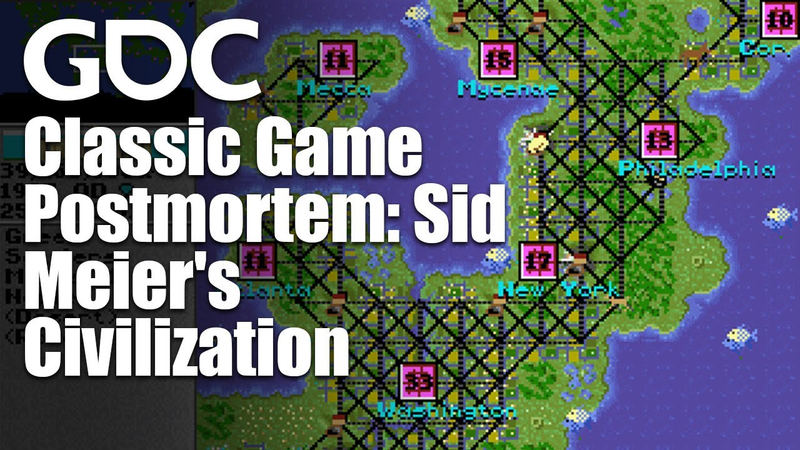
Classic Game Postmortem: Sid Meier's Civilization
The development of Civilization represents a pivotal shift in strategy gaming, moving away from rigid historical simulation toward a sandbox experience that prioritizes player agency and long-term strategic planning.
- Sid Meier and Bruce Shelley developed the original Civilization in under one year, beginning in early 1990 and shipping the title in 1991.
- The game's design was heavily influenced by existing titles like Empire, SimCity, and Railroad Tycoon, as well as Francis Tresham’s board game, Civilization.
- The 'tech tree' mechanic was a core innovation that provided players with a sense of progression and long-term strategic goals, such as unlocking railroads to improve unit mobility.
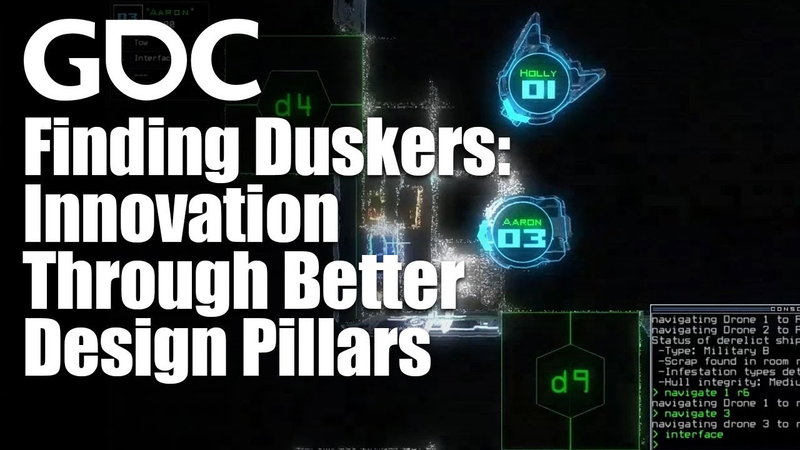
Finding Duskers: Innovation Through Better Design Pillars
Successful game development relies on prioritizing emotional resonance over rigid, feature-based planning.
- Prioritize emotional resonance over feature-based planning by anchoring all development decisions in a singular core player fantasy.
- Use iterative experimentation to allow UI, sound design, and atmosphere to evolve organically, ensuring every technical choice reinforces the intended emotional state.
- Maintain design integrity by resisting popular but discordant mechanics, such as traditional combat or tower defense, that conflict with the game's core premise.

Forging Honor: Providing a Coherent Vision for a New IP
Establishing a coherent vision for a new intellectual property requires shifting the focus of leadership from a singular, initial sales presentation to a continuous, iterative process of communication.
- Pitching is not a request for funding, but a method to signal core values and earn the confidence of collaborators regarding the project's success and meaningfulness.
- To maintain a coherent vision for a new IP, teams should prioritize rapid iteration by building hundreds of prototypes early in development, as seen in the 18-month prototyping phase for For Honor.
- Teams should validate progress through regular, high-stakes internal tournaments every three months using stable builds, which forces developers to prove the game's viability and stability consistently.

Owlboy: The Motivational Power of Inspiration
The nine-year development cycle of the indie title Owlboy serves as a case study for the critical role of sustained creative inspiration in long-term game production.
- Maintaining long-term motivation over a 9-year development cycle requires a team-wide commitment to a core vision, even when faced with significant financial hurdles and the need for secondary employment.
- Design inspiration can be sourced by internalizing experiences from other media, such as architectural elements observed during travel, and by allowing the mind to wander during periods of boredom.
- Iterative design is more effective when moving from small, rough sketches to pixel art sprites, which helps developers focus on essential shapes and silhouettes rather than getting stuck on minute details.
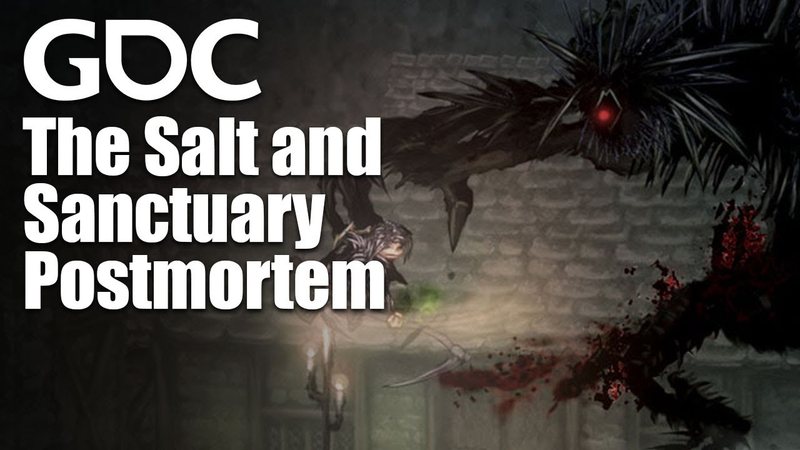
The Salt and Sanctuary Postmortem
Salt and Sanctuary, developed by the two-person team at Ska Studios, represents a 2D action RPG heavily inspired by the Dark Souls series.
- Prioritize building robust, custom development tools early in the production cycle, as the quality of these tools directly dictates the quality and efficiency of the content creation process.
- Implement a 'task-switching' workflow where developers focus on a single discipline—such as music, coding, or animation—for at least 2–3 days at a time to minimize the mental overhead of context switching.
- Avoid launching with incomplete localization; the developers found that players notice and react negatively to 'faked' or missing language support, whereas professional localization significantly boosts engagement and sales.
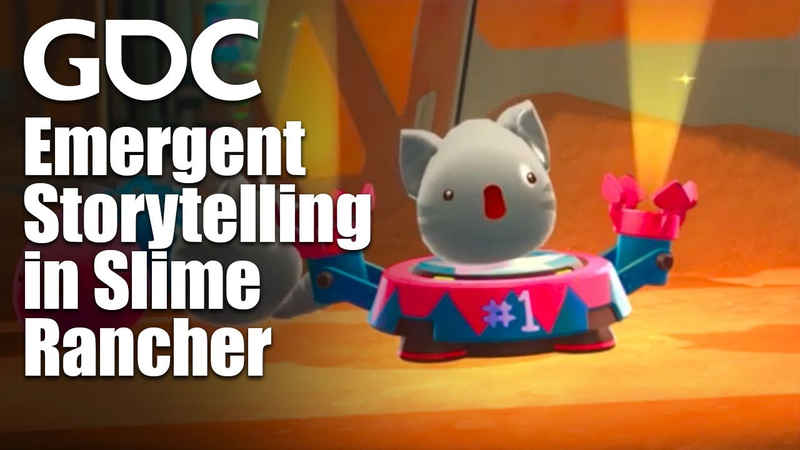
A Thousand Tiny Tales: Emergent Storytelling in Slime Rancher
Emergent storytelling functions as a core design philosophy in Slime Rancher, prioritizing the creation of unpredictable, player-driven narratives over rigid, scripted sequences.
- Emergent storytelling is generated by creating simple, robust AI behaviors that interact with game systems, rather than scripting long-form narratives.
- Designers should limit the number of 'needs' (e.g., hunger, health) to keep systems manageable, while providing a wide variety of 'wants' to drive unpredictable player interactions.
- Emergent behavior often arises from happy accidents in physics simulations, such as Slime Rancher's stacking mechanic, which players interpreted as intelligent escape attempts.

ARK: Survival Evolved: Lessons from the Trenches of Early Access
The development of ARK: Survival Evolved demonstrates the efficacy of an emergent development strategy, which prioritizes iterative growth and high-level guiding principles over rigid, pre-defined design documentation.
- Success in Early Access relies on an emergent development strategy that prioritizes iterative growth and high-level guiding principles over rigid, pre-defined design documentation.
- The development team utilizes a structured feature scorecard system to objectively evaluate updates based on development feasibility, team passion, and long-term meta-game health.
- Concurrent user counts serve as the primary metric for project success, functioning as a more reliable indicator of engagement than Steam reviews.

The Sound and Music of Hyper Light Drifter
The audio development of Hyper Light Drifter centers on the creation of a unique, immersive sonic identity through experimental recording techniques and a highly iterative collaborative process.
- The audio team utilized unconventional field recording techniques, such as using a stethoscope modified with a garden hose spigot to record internal body sounds like blood flow, which were then processed and distorted to create ambient textures for boss battles.
- To achieve a unique, 'nightmarish' aesthetic, the developers used a 1950s wire recorder—purchased for $250—to capture and manipulate raw, historical audio, creating distorted textures that predated modern digital recording artifacts.
- The sound design process relied heavily on extreme processing of organic sounds, such as recording the creator's own voice squealing like a pig or using wolf vocalizations, which were then pitch-shifted and layered to create distinct, terrifying creature audio.