PC reports and market data
Documents
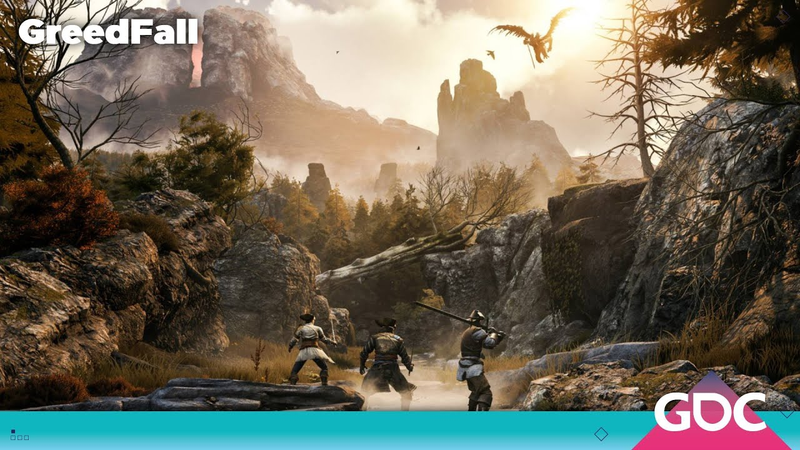
GDC plays GreedFall with Spiders
GreedFall represents a strategic evolution for the studio Spiders, which leveraged a three-year development cycle to refine its role-playing game formula.
- Spiders extended the development cycle of GreedFall by one year, moving from a planned two-year schedule to three years to focus on iterative improvements and level design refinement.
- The studio utilized a proprietary engine, the Silk Engine, which allowed for the development of a custom quest-branching system and provided greater control over project-specific updates compared to using third-party middleware.
- To improve player engagement during loading screens, the developers implemented an interactive menu system that allows players to manage inventory, companions, and side quests while the game assets load.
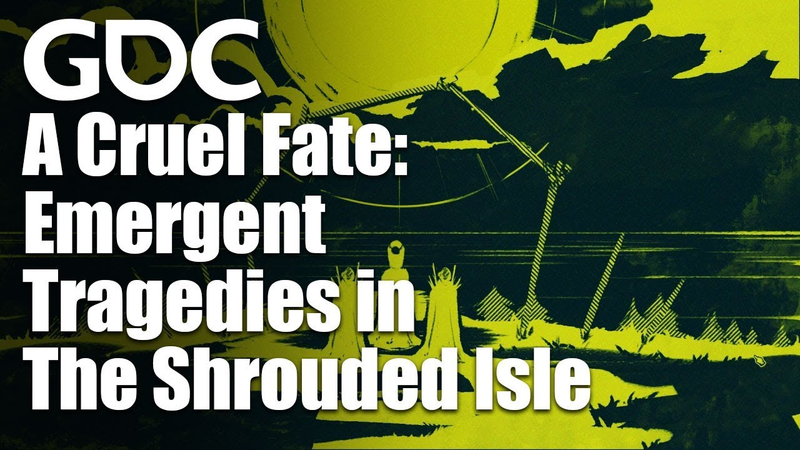
A Cruel Fate: Emergent Tragedies in The Shrouded Isle
The Shrouded Isle redefines dystopian game design by replacing conventional resource management with a focus on psychological variables and character-driven interactions.
- The Shrouded Isle shifts resource management from traditional technological progression to psychological variables, focusing on maintaining faith and political loyalty.
- The game forces players into a Machiavellian framework where regime survival requires the sacrifice of individual villagers, creating emergent tragedies through unpredictable human variables.
- Information progression is a core mechanic that limits player knowledge, forcing a transition from optimization-based gameplay to a survivalist strategy centered on calculated power maintenance.
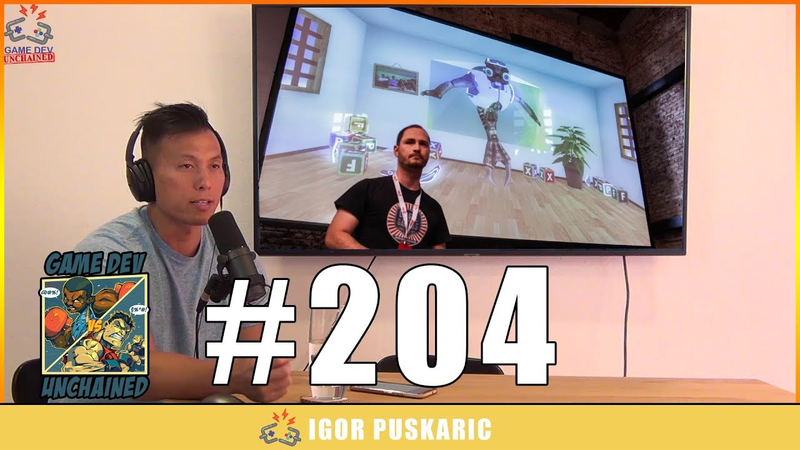
Winning with Few Resources featuring Igor Puskaric | Game Dev Unchained Episode 204
Success in the modern game industry is increasingly defined by individual resourcefulness and practical application rather than formal academic credentials.
- Individual resourcefulness and a portfolio-first approach are more effective for career success than formal academic credentials or geographic location.
- Developers should prioritize project-based learning, acquiring technical skills only as they are required to execute a specific creative vision.
- Cultivating a robust personal brand and proactive self-marketing allows independent developers to bypass traditional industry gatekeepers.
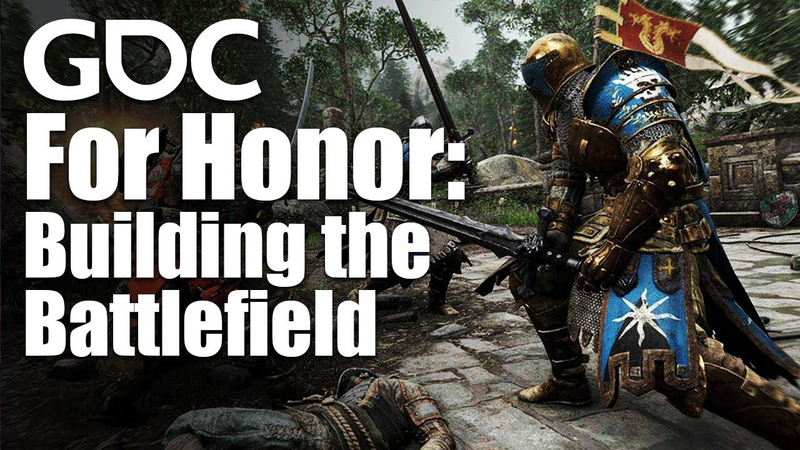
Deterministic vs. Replicated AI: Building the Battlefield of For Honor
The architecture of For Honor relies on a deterministic, input-driven simulation model designed to facilitate high-fidelity, skill-based melee combat.
- For Honor utilizes a distributed peer-to-peer deterministic simulation where only player and AI inputs are transmitted across the network, ensuring all clients reach the same game state without synchronizing complex object properties.
- The game architecture treats AI and human players identically, using a shared 'Katana' state machine tool that allows designers to define character states, movement, defenses, and branching conditions without hard-coding logic.
- To manage large-scale battles with up to 200 actors, the team replaced complex, costly platoon-merging logic with simple flocking rules to handle movement and target acquisition efficiently.

ONLINE MULTIPLAYER | A Game Dev Answers.
Developing competitive online multiplayer games presents significant technical and community-building challenges for independent developers.
- Implement robust networking solutions like Photon Unity Networking (PUN) early, prioritizing data efficiency by converting floats to integers and using serialization streams to minimize packet sizes.
- Transition from client-side networking to authoritative server models as a project scales to effectively mitigate cheating and ensure long-term game stability.
- Integrate Discord directly into the game UI with automated prompts that trigger during long matchmaking wait times to facilitate organized play and prevent refund requests.

My new INDIE GAME STUDIO (office tour!)
The primary purpose of this overview is to provide a practical look at the hardware and environmental setup required for professional indie game development.
- Prioritize functional utility over luxury equipment, as high-quality game development relies on the creator's focus rather than expensive hardware.
- A professional-grade setup for an independent developer includes a core workstation consisting of an HP Omen Obelisk PC, an AOC 31.5-inch monitor, and a Blue Yeti microphone.
- Ergonomic seating, such as the EWin Flash Series racing chair, is essential for maintaining physical well-being during the extended hours required for game development.

2D Game Art Tutorial (Stylized Landscape in 20 Minutes!)
This instructional guide outlines a professional workflow for creating stylized 2D landscape art for video games within Photoshop.
- Professional stylized landscape art relies on a strict hierarchy where background elements are desaturated and blurred to simulate distance, while foreground elements use high saturation and sharp detail.
- Visual cohesion is achieved by maintaining consistency in color, sizing, and detail across all assets to differentiate professional output from amateur work.
- Depth and atmospheric perspective are simulated using technical tools like gradients, Gaussian blurs, and motion blurs to mimic natural fog effects.

Top 10 Tips on How To Balance Your Game
Effective game balancing is a critical determinant of a title's success, functioning similarly to the precise ingredient ratios required for a high-quality cake.
- Effective game balancing requires an integrated approach that spans game design, level architecture, code, and art rather than treating it as an isolated numerical task.
- Developers should prioritize situational utility over pure mathematical optimization to avoid creating bland, repetitive gameplay experiences.
- Implementing a rock-paper-scissors framework forces players to make meaningful, context-dependent choices by assigning distinct upsides and downsides to mechanics.

GDC plays Remnant: From the Ashes with design director John Pearl
Remnant: From the Ashes establishes a unique niche in the action-RPG landscape by synthesizing the high-stakes, deliberate combat of the Souls-borne genre with the tactical depth of a third-person shooter.
- Gunfire Games utilized procedural generation to create replayability, allowing developers to drop new content into existing worlds that players encounter upon re-rolling campaigns or adventure modes.
- The game's level design relies on large, hand-crafted 'tiles' rather than purely random generation, ensuring that combat encounters maintain tactical depth and environmental storytelling similar to Souls-like titles.
- To maintain player agency, the team prioritized frame-perfect responsiveness in character movement and weapon handling, ensuring that player deaths feel like a result of personal error rather than system latency.

Playing The Dreadful Whispers by Blackthornprod
The Dreadful Whispers, a solo-developed puzzle-platformer created by Noa Calice under the Blackthornprod banner, serves as a compelling case study in independent game design.
- The Dreadful Whispers, a solo-developed puzzle-platformer by Noa Calice (Blackthornprod), was completed within an eight-month development cycle.
- The game utilizes a design structure of short, consumable levels to eliminate common indie pitfalls like excessive backtracking and player frustration.
- Core gameplay mechanics revolve around character-switching and color-based environmental manipulation, which evolve in complexity to mirror the game's narrative themes of existential struggle.

GDC plays Knights And Bikes with Rex Crowle
Knights and Bikes, developed by the independent studio Foam Sword, captures the essence of childhood independence and the coming-of-age spirit through a cooperative action-adventure experience.
- Rex Crowle and Moo Yu founded Foam Sword Games to develop Knights and Bikes, with Crowle handling art, animation, and lighting while Yu manages the technical and business operations.
- The game's art style is designed to reflect the perspective of children, utilizing painterly textures and materials like chalk and pastels to mimic the tools a child might use to document their own adventures.
- The developers moved away from turn-based combat early in production, opting for a more active, exploration-focused gameplay loop that better suits the mischievous and curious nature of the child protagonists.

5 TIPS I've learned after a DECADE of making indie games!
Drawing from a decade of experience in the independent game industry, this analysis outlines five fundamental lessons for developers aiming to build sustainable careers.
- Prioritize long-term revenue streams like ongoing sales, bundles, and platform promotions over the singular impact of launch day momentum.
- Limit technical and design scope early in development to ensure cross-platform compatibility and maintain budget sustainability.
- Avoid over-investing in influencer marketing, as high-profile endorsements do not guarantee a direct, one-to-one correlation with sales spikes.