Open World Survival Craft reports and market data
Documents
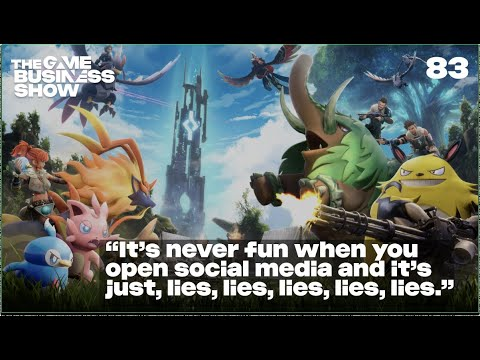
Pocketpair interview: We’ll keep funding games even if our current titles crash and burn
Pocketpair, the developer behind the 2024 breakout hit Palworld, has established a new publishing division aimed at supporting independent game developers through direct funding and resource sharing.
- Pocketpair has launched a new publishing division to fund independent developers, reinvesting profits from the 2024 hit Palworld, which currently maintains over one million monthly players.
- The publishing arm utilizes a non-predatory revenue-share model that prioritizes developer creative control and financial viability over equity acquisition.
- Pocketpair operates as a hands-off partner, providing milestone-based guidance and leveraging internal expertise in Asian marketing and distribution.
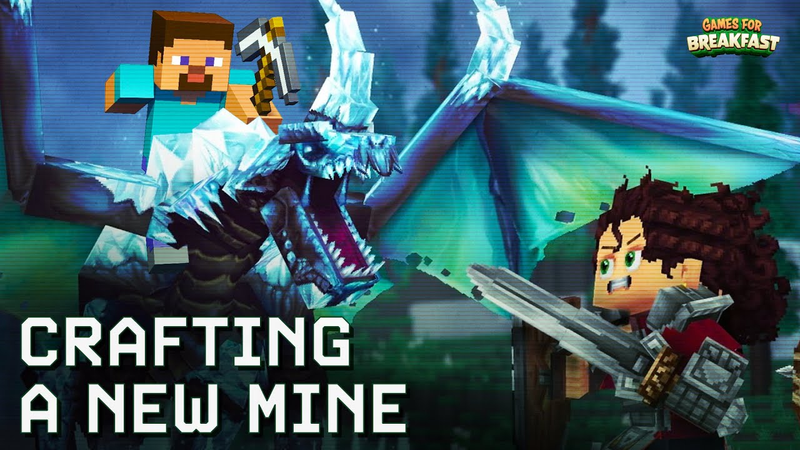
Minecraft’s Spin-off Hytale Makes Waves, Meta Layoffs, and Metacritic’s Best Game Ever
The sandbox title Hytale has emerged as a significant industry development, successfully transitioning into early access after the developers reclaimed the project from Riot Games.
- Hytale has transitioned to early access as an independent project after reclaiming development from Riot Games, securing two years of operational funding through independent sales.
- Meta is shifting its strategic focus away from metaverse and gaming initiatives to prioritize investments in artificial intelligence and wearable hardware.
- Amazon Games is sunsetting the MMO New World, underscoring the difficulty of community-led preservation due to proprietary server code and legal restrictions.
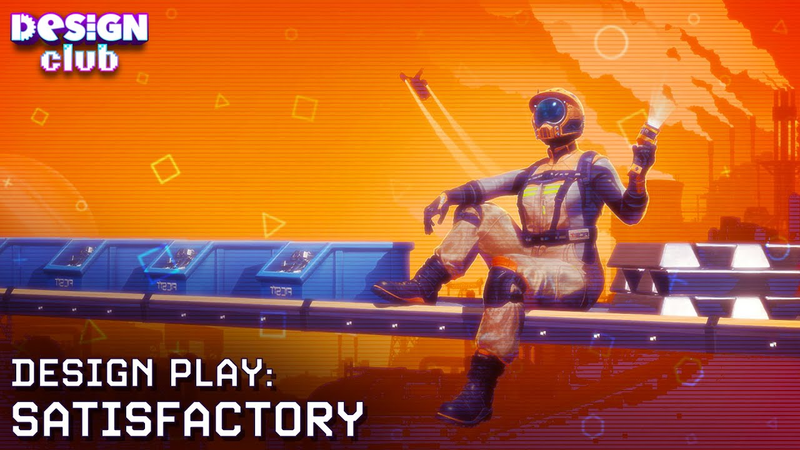
Design Play: Satisfactory | Design Club
Satisfactory functions as a sophisticated factory-building simulation that prioritizes long-term optimization and creative logistics over traditional failure states.
- Satisfactory eliminates traditional failure states by utilizing infinite resource nodes, shifting the core gameplay loop from survival to the optimization of throughput and infrastructure.
- The game employs a 100% resource recovery system for construction, ensuring that the penalty for inefficient design is limited to time investment rather than permanent material loss.
- Progression is structured through a milestone-based quest system and a satirical AI narrative that guides players from manual crafting to complex, automated industrial chains.
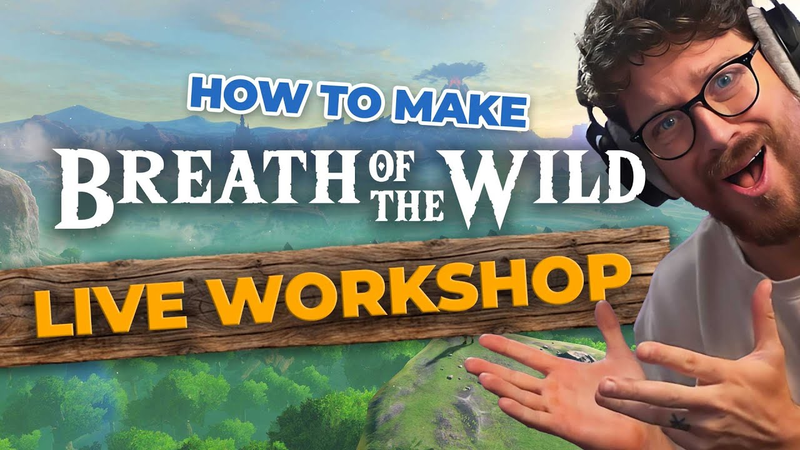
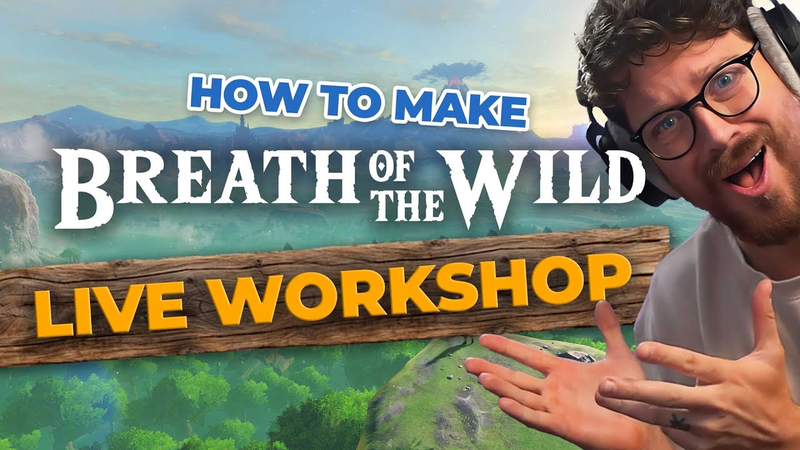
How To Make "Zelda: Breath Of The Wild" Workshop: Day 2 (Part 2)
Creating a high-fidelity, open-world environment reminiscent of The Legend of Zelda: Breath of the Wild requires a disciplined approach to asset integration, terrain sculpting, and atmospheric post-processing.
- Effective terrain sculpting relies on using specialized brushes for large-scale mountain creation rather than manual, single-brush detailing.
- Fog is a critical tool for managing visual depth and environmental cohesion, helping to blend distant terrain and improve the overall aesthetic of the game world.
- Manual painting of environmental details like snow and grass requires balancing artistic intuition with logical placement based on mountain topography to avoid a 'mappy' or unnatural appearance.
How To Make "Zelda: Breath Of The Wild" Workshop: Day 1
Replicating the distinct visual aesthetic of The Legend of Zelda: Breath of the Wild within the Unity engine requires a disciplined approach to asset management and color theory.
- Establish a consistent color scheme for environments and biomes early in the development process to create a cohesive visual foundation, even if deviations occur later.
- Implement Level of Detail (LOD) groups for all exterior assets to manage poly counts and texture sizes, preventing performance issues when rendering large-scale environments.
- Maintain strict folder organization for all imported assets to ensure project scalability and prevent workflow bottlenecks during development.
Fallout Season 2 Interview: How Todd Howard and Bethesda are capitalising on the TV show
The success of the Fallout television series on Amazon Prime has catalyzed a strategic shift in how Bethesda Game Studios manages its intellectual property, moving toward a model where linear media and interactive gaming experiences are tightly integrated.
- The Fallout television series reached over 100 million viewers, triggering a five-to-sixfold increase in player engagement across Fallout 4, Fallout 76, and Fallout Shelter.
- Bethesda is shifting to a strategy of tightly integrating linear media with interactive gaming, treating the television show as a new, canonical entry in the franchise timeline rather than a simple adaptation.
- To lower barriers for non-traditional gamers, Bethesda is leveraging cloud streaming platforms like Samsung Gaming Hub, Xbox Game Pass, and Amazon Luna to allow immediate gameplay without dedicated hardware or downloads.
Subnautica 2 Drama Explained in Simple Terms!
The conflict surrounding the development of Subnautica 2 centers on a dispute between publisher Krafton and the leadership of developer Unknown Worlds.
- Unknown Worlds co-founders Charlie Cleveland and Max McGuire, along with CEO Ted Gil, were ousted following a breakdown in their relationship with Krafton, which acquired the studio for $500 million in 2021.
- The ousted leadership claims their dismissal was a strategic move by Krafton to avoid paying a $250 million performance-based earnout, while Krafton maintains the delay of Subnautica 2 to 2026 is a necessary quality-control measure.
- Krafton internal documents indicate the game lacked the content and polish required for a successful launch, citing ineffective management by the previous leadership.
Subnautica 2 Publisher Implosion | Design Club
The game industry frequently operates without standardized business frameworks, leaving creative studios vulnerable to the structural instability inherent in publisher-developer relationships.
- Krafton, which acquired Unknown Worlds in October 2021, removed three key project leads—Ted Gill, Charlie Cleveland, and Max McGuire—from Subnautica 2 on July 2, 2025.
- Charlie Cleveland has filed a lawsuit against Krafton, disputing the company's claim that the game was not ready for Early Access and alleging the leadership change was a strategy to avoid paying out contractual earnouts.
- The dispute centers on conflicting assessments of development progress, with Krafton alleging the team failed to meet milestones, including the removal of a custom game mode and a reduction in narrative content from two chapters to one.
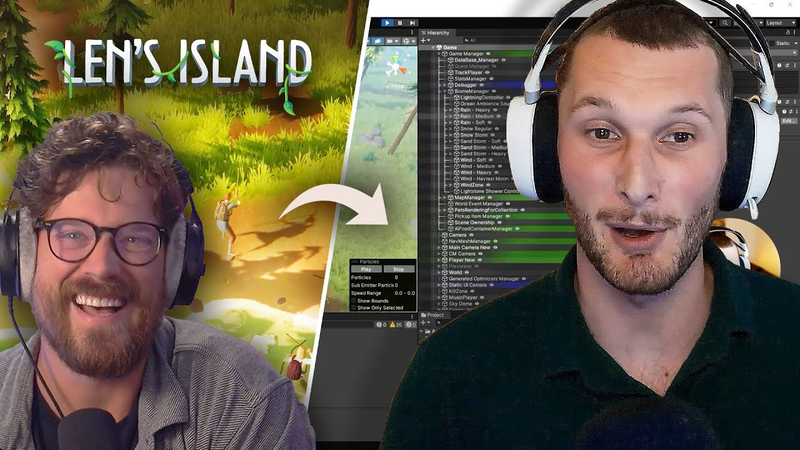
What A $1,000,000 Game Looks Like In Unity (w/ Julian Ball)
The development of the open-world sandbox game Len’s Island serves as a case study in balancing technical constraints with high-fidelity visual design within the Unity engine.
- The developer of Len's Island prioritizes cinematic visual quality by designing assets to look intentionally flat or 'bad' in their raw state, relying on a heavy post-processing and color-grading pipeline to achieve the final aesthetic.
- To maintain high performance on hardware like the Steam Deck, the team built a custom occlusion optimization system rather than relying on standard Unity tools, while also using a mix of hand-built assets and procedural grid-based systems.
- The game utilizes Unity's Universal Render Pipeline (URP) and manages complex runtime tasks, such as rebuilding the nav mesh every time a player places a building foundation, to allow for an open-world sandbox experience.
How To Start Making Games With NO EXPERIENCE
The development of successful indie games is often characterized by a transition from early personal isolation to professional collaboration, rather than innate technical mastery.
- Fredrik Prantare, creator of Core Keeper, grew the game to over 4 million copies sold, with figures currently approaching 4.5 million units.
- Prantare’s development journey began in high school by utilizing level editors in games like Heroes of Might and Magic III, which helped him build foundational design skills.
- The transition from a high-schooler with low academic attendance to a leader of a 50-person team was driven by years of iterative failure in various project 'constellations'—small, collaborative groups formed to build games.
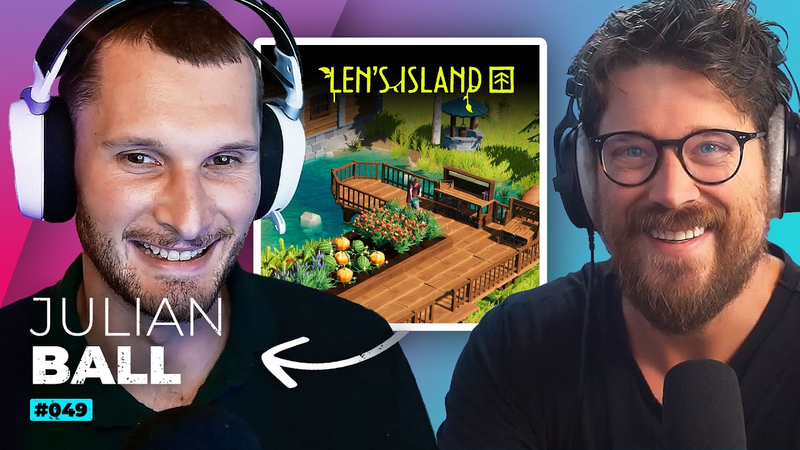
Julian Ball: Why His Game Took 8 Years To Make, How Launch Went, Staying Motivated | Ep. #049
The development of Lens Island serves as a case study in the endurance required for long-term independent game production, spanning an eight-year cycle that culminated in a successful commercial launch.
- Julian Ball spent eight years developing his open-world sandbox game, Lens Island, which combines elements of Diablo, Stardew Valley, and Minecraft into a single cohesive experience.
- The development of Lens Island required building a massive amount of content, effectively creating four games' worth of mechanics to support diverse playstyles like farming, building, and combat.
- To maintain project momentum over an eight-year cycle, Ball utilized a team-based workflow where he acted as a director, offloading specialized tasks like 3D art to experts while focusing on high-level design and artistic vision.
Want To Make Your First Game? Watch THIS
The primary thesis of this discussion is that sustained productivity in game development is not a product of inherent discipline, but rather the result of identifying and leveraging powerful underlying motivations.
- Long-term game development requires a core 'why' to sustain momentum through the inevitable 'desert' phases of production where motivation wanes.
- Negative motivation—such as fear, survival pressure, or the need to escape a constrained situation—is often a more powerful initial driver for productivity than positive goals.
- Discipline is not an innate trait but a byproduct of visualization; developers who have previously experienced the success of a launch or positive player feedback are better equipped to power through boring development cycles.