Open World Survival Craft reports and market data
Documents
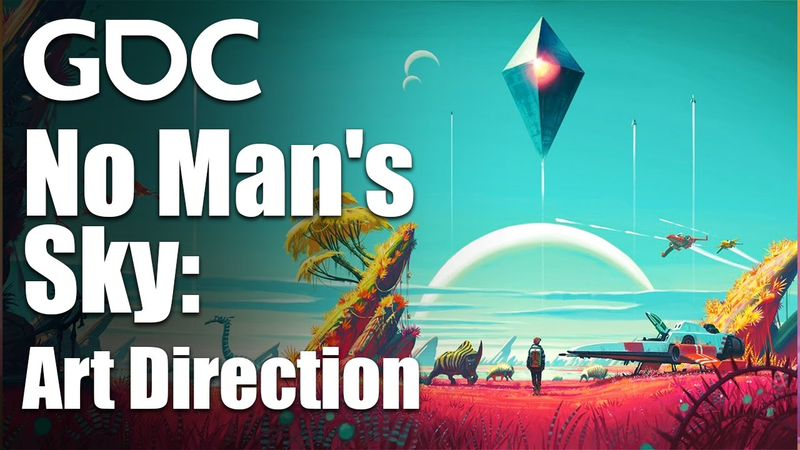
The Art Direction of No Man's Sky
The visual identity of No Man’s Sky draws primary inspiration from the optimistic, vibrant aesthetic of 1970s science fiction book covers, specifically the works of artists like Chris Foss and Moebius.
- The visual identity of No Man's Sky is based on the 1970s science fiction aesthetic of artists like Chris Foss and Moebius, intentionally prioritizing vibrant wonder over industry-standard post-apocalyptic grit.
- The game utilizes a flexible super-biome system that dictates landscape formation based on environmental variables, such as a planet's proximity to its sun, rather than relying on rigid, predictable biome presets.
- Artistic control is maintained through a blueprint system that applies structural constraints to procedural assets, ensuring visual consistency and readability across ships, flora, and fauna.
The Witcher 3: Optimizing Content Pipelines for Open-World Games
Managing content optimization in large-scale open-world games requires robust, scalable systems to address the accumulation of inefficient assets, such as high-polygon models, missing level-of-detail (LOD) meshes, and misplaced entities.
- Managing 500,000 placed entities in an open-world environment requires a custom, database-driven pipeline to identify and resolve technical errors like excessive vertex counts and improper asset placement.
- Developers can effectively track and resolve performance bottlenecks by querying engine properties—such as mesh size, material usage, and light radius—directly from the game build into an SQL database.
- Visualizing technical debt by mapping errors onto 4K images of the game world allows artists and designers to teleport directly to specific coordinates, significantly increasing workflow efficiency compared to traditional spreadsheet-based tracking.
Fallout 4's Modular Level Design
Bethesda Game Studios achieves massive, high-quality open-world environments through a systematic, modular approach to level design.
- Bethesda Game Studios utilizes a modular level design workflow where 'footprint' grid systems and standardized snap points allow level designers to assemble complex environments from granular art kits rather than custom-built assets.
- Modular kits require significant upfront investment in overhead, including establishing piece logic, documentation, and ongoing maintenance, but they enable rapid iteration; for example, new architectural variations can be brought online in as little as two weeks.
- The shift toward granular, modular pieces increases object counts significantly—moving from 20 objects in a traditional 'clamshell' kit to 123 objects for the same space—necessitating the use of prefabs (or 'pack-ins') to maintain efficient editor workflows.
How DayZ Deals With Cheaters
The modern cheating industry has matured into a sophisticated, multi-million dollar enterprise that leverages subscription models and social engineering to sustain its operations.
- DayZ maintains its active cheater population at approximately 1.5% of the total player base through a multi-layered security strategy.
- The effectiveness of anti-cheat measures is challenged by a 76% bounce rate among banned users, who prioritize illicit software access over game account retention.
- Developers utilize a 'never trust the client' architecture, relying on authoritative server-side logic and kernel-level agents to validate gameplay and prevent memory manipulation.

Open World Design - How to Build Open World Games - Extra Credits
Open world game design is fundamentally shaped by the initial conceptual framework adopted by the development team.
- Open world design is defined by two primary structural philosophies: the asset-collection model, which prioritizes seamless placement of disparate elements, and the modular-adventure model, which focuses on self-contained, thematic storytelling.
- The asset-collection approach, utilized in The Elder Scrolls series, simplifies production and team management but often results in a less unified narrative experience.
- The modular approach, derived from Dungeons & Dragons traditions like Baldur’s Gate, fosters stronger micro-narratives but requires high levels of cross-team coordination and carries a greater risk of wasted labor.
Game & Network Services Segment Presentation
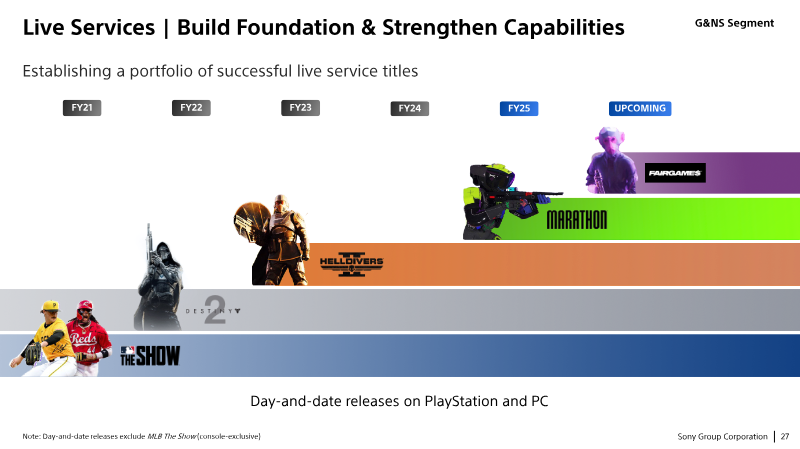
Sony Interactive Entertainment’s Game & Network Services segment demonstrates a clear trajectory of growth and increasing operating leverage.
- Sony’s Game & Network Services segment has achieved a significant financial turnaround, growing from a $4 billion operating loss in 2000 to $13 billion in operating income by 2024.
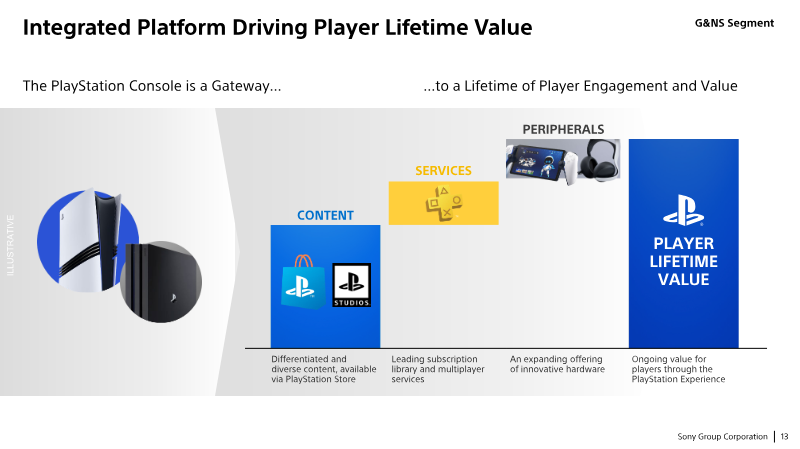
- Revenue is increasingly driven by services, the PlayStation Store, and peripherals, which now account for 52–54% of the segment's total revenue.
- The PlayStation ecosystem has reached 124 million monthly active users, representing a 14% year-over-year increase, with a life-to-date spend of $846 per console.