VideoThe Game Business
Fallout Season 2 Interview: How Todd Howard and Bethesda are capitalising on the TV show
16 Dec 202520 min video
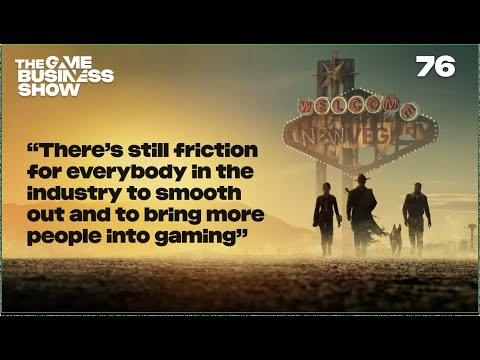
Everybody will say to us, "Oh, it's really disappointing you don't have a new game to take advantage of this." And it's like, "Well, the show is great. Like, [music] it's it is what it is, and it's it's doing great for us. We're taking advantage of it. And when the next main Fallout game comes along,
I think it'll do great as well."
For me, I wanted it to feel like it was another game entry.
That this isn't we're not retelling a story, we're telling the next story after Fallout 4. Hello and welcome to the Game Business Show with me, Christopher Dream. I am here at a special screening of Fallout Season 2, episode 1. The first season of Fallout, of course, was a smash hit when it debuted on Amazon Prime last year. Over 100 million people tuned in to watch it, and it caused a surge in sales of pretty much every Fallout game, including Fallout 4, Fallout 76, and Fallout Shelter. Now, I'm here to talk to two people. the brains behind the modern Fallout series, Todd Howard, as well as head of product for gaming at
Samsung to talk about how they're capitalizing on the Fallout TV series this time, including what they're doing with the video games, but also what they're doing with cloud streaming through things such as TVs, Amazon Luna, and Xbox Game Pass. It's a genuinely fascinating development and might be more significant than it first appears. So, do check out this interview. Hello, welcome, welcome to the show. um when the last Fallout TV series launched um it [clears throat] had such a profound impact upon the video games like to topped the charts all over the world and I know there was some activity you did some stuff in the games and you and there was some discounting and stuff going on this time you're doing similar things Fallout 76 and and with the Gaul being in that are you being as ambitious this time as you were last time in terms of trying to bring those two worlds to capitalize on the uh on the show? Well, the first go around, you know, we expected a lot of people to come to the games. You know, hey, you're going to have a TV show. You expect an audience to come back to the games. And so, we made sure the games are really ready for kind of new audiences and returning
people to come to the games, whether it's Fallout 76 or Fallout 4 for single player, Fallout Shelter, for mobile. Um, and the response was way bigger than we even thought. You know, we're looking at we're doing five to 6x um our usual kind of play patterns and numbers from season 1. And so going into season two, we knew, hey, we could take advantage of it even more. And also because we had sort of, you know, understanding how the show was made and being able to sync up kind of timelines,
we were able to bring more things into particularly Fallout 76, uh, with working with Walton again on the Ghoul and bringing that into the game. So yes, we were able to be more ambitious because of what we learned from season 1, you know, and the timeline.
Did you bring in new people? Was it laps people or what were you seeing?
A lot of laps people and a lot of new people. Yeah, we saw people coming in who have frankly never played a video game before,
right? They see that world, they get attached to it. The world of Fallout is
just awesome.
And so the one thing we did learn that we're sort of doing more of now is understanding some of these people have never played a game. Mhm.
And so we're doing a little bit more of like getting them into the game, particularly with Fallout 76. Fallout Shelter on the mobile side has is obviously a friendlier kind of touch point cuz it's a mobile game to people who don't play traditional kind of console PC um sort of that more hardcore experience.
Well, this is this concept of the game capitalizing on the TV show. I guess this is where Kevin, you've come in a little bit, right? Because you're currently streaming. I think the first CU is through Samsung TVs at the moment till the till Christmas, I think. You've also got the Xbox app on your devices as well. So that means with a Game Pass subscription, people can literally jump from um uh from the TV show to the game. Um are you actively encouraging people to do that? Is that part of the strategy?
That is exactly the strategy. Uh you know, we are so fortunate that between uh Game Pass and Amazon Luna, every
single Fallout game is available on Samsung Gaming Hub without any consoles, [snorts] no downloads needed. hook up a Bluetooth controller and you're off and playing. And so one of the intentional things that we did with season 1, and we'll absolutely do it again with season 2, is soon as you turn on your Samsung TV, we are curating all different types of content. The best movies from Netflix or Amazon Prime and and and even our own content. And so we have curation where we have all of season 1 available to watch on Samsung TV Plus right next to the games. So, we are deliberately and intentionally trying to drive new consumers that just finished binge watching season 1 to be able to get in and play these games. Um, we've been doing a lot over the last few months where we have an entire curated rows around Apocalypse games and and showcasing all of Fallout's games and uh we've seen an incredible uptick in just interest from users and new users as well that that traditionally are not your your typical gamers. this um many
years ago I went to E3 and I had a chat with Pete Hines, your former PR marketing lead and uh um I remember sitting down with him and talking about game streaming and he said to me uh that he looking forward to the day that he can market Fallout to everybody, not just Xbox players, not just to PlayStation players, not to PC players, but to everybody. And I guess that's what we're talking about here. That's what's happening right now. But there's still barriers, right? You still need a controller. you still need a game subscription to to Luna or or Xbox Game Pass. There's still work to be done in making that seamless. Is that something that you're you're mindful of? It it is and there are many different approaches that we're seeing in the industry. So Amazon Prime, you mentioned them as an example. Um with Amazon Luna's game service, every single game that they have available, you can pull out your phone, hit a QR code, and you can play that game using your your mobile phone as a controller. So, if you do not have a a you know a Bluetooth controller, you can play any other games, all of Fallout's games. So, there are different unique approaches that we're seeing in the marketplace. Um because, yeah, these
these barriers still do exist, but the technology barriers to be able to stream a game and you actually feel that it is, you know, just as good if not better than a console game where there isn't latency. You're not seeing jitter. We're at that moment. It's an incredible thing to watch and experience when you see people playing these games just using their internet connection and and uh so we're at that moment.
I'm really interested to see how how this works is how successful this might prove to be. But Todd, I'm actually fascinated a little bit with your experience now you're now a big H how do you feel being a big executive producer in TV? Do you swan around Hollywood?
I mean it seems easy. I made one show and you know it's biggest show in the world. So I mean everyone should do it.
Yeah.
Yeah. I feel great. you have you discovered anything that that industry is doing that we should really be doing?
H well there there actually are so many similarities about how you go about sort of at least that we took for you know building that world of the show as we approached it just like we would a game.
Um I think when it came to TV the one thing that I've learned that's particular for for TV and I've learned from Jonah Nolan and people who have really done this is you can take your time. you know, we sort of had a story we wanted to tell. Um, what can we get in the season? Let's do this, this, and this. And, [snorts] you know, the camera finds characters
and it loves them, and [clears throat] then you realize, oo, I want to spend more time with these characters. I want to spend more time in the vault. So, like in season one, you know, that we were out of the vault really, really quickly.
Um, but then once we were in their shooting, it's like, let's take our time. This is a really beautiful space. These characters are great. Um, and and that's what we're finding now on the journey with these characters. So, you know, fingers crossed uh the show goes on for a long time and uh we have a story we want to tell, but we're really really fortunate to have incredible actors and incredible sets and writers um telling great stories.
Yeah, I guess in games you want to hurry up and get people to the action a little bit faster.
Well, no, our games are pretty our games
are really long. Um but it was okay, let's let's pick up the pace. This is where we want to be by the, you know, by the end of episode one. And so I think in the first season the script for the first episode ended up being the first three episodes
for instance once you started shooting it and realize
yeah we need to give this some more space. Uh whenever I speak to people who are making adaptations about games and uh adaptations of games whether it's um they tell me very adamantly particularly on the TV and film side we need games people involved. We need we need Miamoto we need Dropman we need Todd Howard um to be actively involved in the production of this. Now they're saying that because they want to take us very seriously. They're trying to charm us. Do you agree?
I do. I do. And it's just to the extent that you
what that involvement means. Um and but I think it starts with finding the right creative partner. You know, if you're doing anything, it's a creative endeavor. Um it took me 10 years of
talking to people to to find Jonah Nolan. And it was like we were old friends. I sort of say when we first talked, I felt like we were old friends who just did a horrible job of keeping in touch. and um he's someone whose work I respected, but then you I have that trust level and so we work together on it.
And you know, I think having the creators of the games there to make sure that it's authentic to the world. Um and it's it's a partnership. Yeah,
we saw that with comic book movies, didn't we? As soon as the comic book industry itself got involved in making them, they sort of skyrocketed off because there's a element of authenticity, I guess, in that. Is that what you're bringing to this partnership?
Um, for for sure. The other thing that's different about ours is, and it's like, look, everybody's different, right? It might be where they want to find a creative partner and they want to hand it over because they're doing something in a a little pocket part of the world, or you're going to interpret a specific thing. Uh, for me, I wanted it to feel
like it was another game entry
that this isn't we're not retelling a story, we're telling the next story after Fallout 4. Um, so I thought that was important. Like that's what I wanted to see on the screen. That's what I thought a lot of fans would want to see on the screen. Um, so our approach might be a little bit unique there.
Oh, I see. What I find really interesting is that obviously from a fan perspective, you probably do have diff two different audiences as well as the same audience, right? So,
you've got that thing where you're bringing in new can be bringing in stuff that people fans will recognize and get excited about, but also you don't want to spend too much time on that because you don't want to put off um newcomers equally. You're sitting there trying to convert people over to um from one audience to the other. Um is there a science to that or is it just do you just go with your feeling?
Well, I think first this goes back to the other question is you have to forget that it was a game.
Okay. [clears throat] You know, so I think sometimes you're like, "Well, it's a game. We got to add this." And a lot of the there's a lot of wacky things a game does with UI or reacting to the
player. And players are just anarchists, right? They're going to go in games and just create chaos.
And so I think for us it was treat the world of Fallout seriously and you know, the show is one lens into it. Forget that it's a video game. A video game is its own lens into the world of Fallout. So, I think that kind of benefited us where it works whether you've played a game or know the world or or you don't.
Yeah. I watched it with my wife who's never played a Fallout game before and she loved it and I loved it having done every Fallout game. Um, so it was it was quite interesting, but we also loved it. She was it for her it was discovering everything the same way. I was so impressed with how it captured the humor really cuz it's such a unique tone. And just to ask the question, would it help if I said please shoot?
Yeah. And that was really hard. There were a lot of conversations around violence and gore
Mhm.
and [clears throat] humor. I think the
violence is a little bit easier to get right. Um but you can still get it wrong.
Yeah.
Um where one touchstone I would use for the violence is the scene in Pulp Fiction where they blow the guy's head off in the back of the car when they hit the bump. Um it's really gory, but it's also it's funny.
Yeah. Um, so it's like that's kind of the humor, but you don't linger on it. Um, so that's the excuse me, the violence of that is funny. The humor part kind of that that fallout is that mix of satire.
Yeah.
Um, that uh you know, you're you're winking a little bit at the camera.
Mhm.
Yeah. [clears throat]
Yeah. When it opened, I think the first scene, I thought this might go a bit bleak. Um and then it quickly quickly but I'm gonna I want to ask a little bit more about how the technology side of things the get the the the the your side of things. We're talking about um um these two entertainment mediums working closer together, right? That's what we're seeing. We're seeing that across the board, but is there can we go deeper than what we're already what we're doing
or are we are we at peak relationship?
I I love this question. We talk a lot about it uh with our partners. We have you know we have media partners, we have gaming partners. These things are still two very distinct elements, mediums. You know, you're watching a movie, you're playing a game.
These worlds are going to blur more and more. Uh I do think that there's ways that we can push the boundaries a little bit more. I think that there's ways that you can be being captivated by an incredible story, like I'm watching a show, but there's a moment in that series that is just so exciting that I may want to explore a little bit more around that environment or I may want to play that scene out uh myself. And so I do think that there's these worlds that we might see where we start to blur those lines even more than we do today because they are still very distinct.
Yeah. Are you looking forward to having to develop um stuff that's in a game that's going to going to relate to a episode of the TV show? And
I mean I don't know. I've I've seen those those types of things or pitches for that. And I I I found it to be a little bit complicated at at this stage. Uh to be honest, I think what we found
is you talked about before like the sort of there's still some friction in wanting to go to play a game. Um, you know, what's happened with streaming and all of those things is has lowered a lot of that. But the fact is there's still a lot there's still a lot of people like even if they even if they could press a button and just play, there's an intimidation factor, right? Like, ah, it looks complicated. I have to learn it. And so, one of the nice things about having the Fallout TV show is there are people who just they do just want to watch
that they're like, okay, I don't feel like this burden to go learn it. Um, and so for us, I think that's great where we have a Fallout experience. You talked about your wife. I don't know if she plays video games um at all. And maybe she's, you know, maybe she will because she likes that world, but I bet there's some element of intimidation still in jumping into it.
Yeah. I told her about Fallout Shelter. She seemed quite interested in that, but she didn't make that jump. But I think she could have done,
right? Yeah. Point being, there's still like there's still friction I think for for everybody in the industry to sort of
smooth out to bring more people into gaming. Um, you know, make it easier to get going,
have the games teach themselves um better than they do today.
Yeah. I'll ask one more question. It's actually more of a I I think you've got one of them. You've got a really good problem in that you've got this Fallout is bigger than ever because of this TV show and the games are still vibrant. People are still playing them. Fallout 76 still going. Elder Scrolls obviously hugely popular franchise. Skyrim's just come out and switched to Oblivion was did big numbers earlier the year. You had Starfield your latest. It's doing really really well. You've got three massive franchises that that fans want more things from. Um and obviously it's good news is TV show can you can clearly make them a little bit fast faster. Um how are you approaching this these demands this? How are you going to
This is a great question. And it's probably the the number one thing that we deal with is um how to serve all those audiences. You're right. We have, you know, three big franchises now and everybody wants they all want more more
of it. And so it's kind of like picking our battles and and making sure each one is special.
Mhm.
And so even though we've had things come out, you mentioned Skyrim, I think, is releasing for the 117th time today on Switch 2. um you know, still a huge audience around that game, mods and creations as well, and they want it on their new platform, so we're we're happy to do it.
Um Fallout 76 keeps going. Um but ultimately, it's about those kind of new entries. You know, Elder Scrolls 6 is kind of like the thing that most of the studio is working on right now and just making sure that um something like that gets the time and attention it needs, particularly after all this time.
Guess it's easy to
But it's hard. It's easy to get distracted and just, you know, have multiple teams working on tons of different projects.
We we have we have multiple teams. Um but we we'll bring um more people onto a project. I see
when it when it needs it. So we kind of have good velocity on a project when we really know what it's what it's going to be. Um
but that that's still the trick is to is to is to find a way to keep each franchise kind of as vibrant as it can be. And I think the good news with Fallout is it's it's in a great spot, right? Like everybody will say to us, "Oh, it's really disappointing you don't have a new game to take advantage of this." And it's like, well, the show is great. Like it's it is what it is and it's it's doing great for us. We're taking advantage of it. And when the next main Fallout game comes along, I think it'll do great as well.
Well, it's it's it's what's really fascinating. I've just been while you've been talking, I've been really thinking about it in that we talk about the big games of Christmas for Microsoft. It's Call of Duty and it's the Outerorlds 2 and things like that. But here I am talking about the Fallout TV show which you know it's it's got content from Fallout 76 related to it. It's available on cloud gaming which you can access from your TV. Um when you can jump from one to the other the G and I'm just thinking this sounds more like I mean those other games I mentioned might be the present but it feels like oddly we're looking at a future here. We're
looking at you know a potential future maybe. Who knows? But it certainly seems a lot more um interesting to see how these mediums can then sort of benefit each other. Anyway, sorry that wasn't a question. [laughter]
No, I I agree with the statement and I think Fallout right now is unique there. Again, we have a linear medium. You want to watch a show, we got a great show. You want to play an online game, we have a great online game. You want to play a single player, we have Fallout 4 there. You want to play a mobile game, there's Fallout Shelter. And and um you know, they're all kind of operating with with very very large audiences. all all four of those things right now.
Thank you, Todd. Thank you, Kevin. It's been a pleasure talking to you. Thank you.
Thank you.
That's it for today's episode of the Game Business Show. I hope you enjoyed our chat with Todd and Kevin there. I'm now going to go and watch some Fallout TV show. Until next time. Thank you for tuning in.
Lost a bit of my voice. So,
it's good that I have this microphone. [laughter]
This is going to be like an ASMR like interview.
Yeah. Well, I think
the thing I like about games
that's going to sell really well
is how they they tickle the back of your neck. [laughter]
We like live. Is this rolling?
This is rolling. This is live. A hand.
Auto-generated captions from YouTube — names and numbers may be misheard.
The success of the Fallout television series on Amazon Prime has catalyzed a strategic shift in how Bethesda Game Studios manages its intellectual property, moving toward a model where linear media and interactive gaming experiences are tightly integrated. Following the debut of the first season, which reached over 100 million viewers, the company observed a five-to-sixfold increase in player engagement across the Fallout franchise, including Fallout 4, Fallout 76, and Fallout Shelter. This surge in interest has prompted a more ambitious approach for the second season, characterized by synchronized content releases and deliberate cross-platform promotion.
A core component of this strategy involves leveraging cloud streaming technology to lower the barrier to entry for non-traditional gamers. By utilizing platforms like the Samsung Gaming Hub, Xbox Game Pass, and Amazon Luna, users can transition directly from watching the show to playing the games without the need for dedicated console hardware or lengthy downloads. This ecosystem is designed to capture audiences who may be intimidated by traditional gaming interfaces, with mobile-friendly titles like Fallout Shelter serving as an accessible entry point.
Methodologically, Bethesda emphasizes maintaining creative authenticity by ensuring that game developers are deeply involved in the production of adaptations. Rather than simply retelling existing narratives, the studio treats the television show as a new, canonical entry in the franchise’s timeline. This approach balances the needs of long-term fans with the accessibility required for new viewers. While the industry continues to navigate the friction between passive viewing and active play, the current strategy focuses on curating content to ensure that the Fallout universe remains a vibrant, multi-platform experience that sustains high engagement levels across both established and emerging audiences.

The Game Business · 2026

The Game Business · 2026

The Game Business · 2026

The Game Business · 2026

The Game Business · 2026

The Game Business · 2026

The Game Business · 2026

The Game Business · 2026

The Game Business · 2026

The Game Business · 2026

The Game Business · 2026

The Game Business · 2026
InvestGame
The Game Business · 2026

CD Projekt · 2026

CD Projekt · 2026

Deconstructor of Fun · 2026
The Game Business · 2026
Deconstructor of Fun · 2026

Deconstructor of Fun · 2026
The Game Business · 2026
The Game Business · 2026
The Game Business · 2026
The Game Business · 2026
Comments