Monetization reports and market data
Documents

Rise of Vietnam: Mobile Gaming Boom—Key Players, Winning Strategies & What’s Next
Vietnam has rapidly ascended to become a global mobile gaming powerhouse, with the domestic industry projected to surpass $1 billion in annual revenue by 2025.
- Vietnam’s mobile gaming industry is projected to exceed $1 billion in annual revenue by 2025, supported by a consistent 30 percent year-over-year growth rate.
- Local studios including iKame, Brave Stars, and ABI Games have become top global publishers by prioritizing high-scale, ad-monetized ultra-casual and super-casual titles.
- The industry’s success is driven by a collaborative ecosystem where developers share data and gameplay templates to maintain lean production models and high user retention.

How to train consumers to use webstores | David Stelzer from Xsolla #PGConnects
The gaming industry is experiencing a significant shift toward direct-to-consumer monetization through web stores, a trend driven by the need for greater revenue retention and enhanced user data collection.
- Direct-to-consumer web stores allow developers to bypass mobile app store commissions, resulting in an average income increase of approximately 30%.
- The industry is shifting toward web stores to improve revenue retention and gain direct access to user data for better A/B testing and personalized marketing.
- Developers incentivize users to move transactions off-platform by offering exclusive campaigns, superior value, and better pricing on web storefronts.

Building a #1 Earning VR Game
Spatial has successfully transitioned from an augmented reality collaboration platform into a leading developer of user-generated content within the virtual reality sector.
- Spatial achieved enterprise-wide profitability as of December by transitioning from an AR collaboration platform to a leading developer of user-generated VR content.
- The success of the top-earning title 'Animal Company' is driven by a social-adventure gameplay loop supported by consistent live operations and community engagement via Discord.
- The company scaled its user base by leveraging accessible hardware like the Meta Quest 3S and repurposing foundational code from previous experimental projects.

You're Losing Money Without THIS Monetisation Method
The primary thesis of this analysis is that implementing a direct-to-consumer (D2C) web shop strategy is an essential requirement for mobile game publishers in 2025 to maximize revenue and gain deeper insights into player behavior.
- Publishers integrating direct-to-consumer (D2C) web shops into their marketing funnels are reporting revenue increases of 30% or more.
- Implementing a D2C web shop strategy is considered an essential requirement for mobile game publishers in 2025 to maximize earnings and bypass app store fee structures.
- Server-to-server integrations between platforms like Xsolla and AppsFlyer are being used to bridge data gaps caused by the deprecation of IDFA, allowing for accurate user acquisition and spending attribution.

2.5 gamers x Live AM(F)A #8 - Ask Me Anything @ February 19 5:00pm CET
Modern mobile game development requires a sophisticated approach to user acquisition and data management in an increasingly privacy-centric landscape.
- Developers should prioritize internal testing and beta tracks over global releases to maintain store visibility and maximize feature potential in a privacy-centric environment.
- To bypass the limitations of Apple’s SKAdNetwork and the decline of IDFA, studios are shifting toward creative-level attribution and on-device calculations.
- Early-stage game ideation should be validated using conversion-based campaigns on platforms like Facebook, as these provide more accurate audience behavior data than click-based metrics.

The Smart Way to Extend Your Game's Lifecycle
The game industry is currently undergoing a strategic shift toward cross-platform development and direct-to-consumer monetization models to combat rising production costs and shrinking budgets.
- Developers can significantly increase profit margins by utilizing alternative web shops like Xsolla, which charge 5-6% in fees compared to the 30% commission standard on major mobile, Steam, and console platforms.
- Successful free-to-play monetization requires integrating revenue models—such as in-app purchases, subscriptions, or ads—into the core game design early to avoid player friction and ensure the economy feels natural.
- Extending a game's lifecycle can be achieved by porting titles to new platforms, transitioning premium games to free-to-play models, or adding multiplayer functionality to legacy titles to drive new sales.

Week in Mobile Games E42: Brawl Stars' highs, Squad Busters' struggle, & AppLovin's $900m games sale
Supercell has achieved a significant financial turnaround in 2024, reporting €2.78 billion in non-GAAP revenue as every title in its portfolio experienced year-over-year growth for the first time in a decade.
- Supercell reported €2.78 billion in 2024 non-GAAP revenue, marking the first time in a decade that every title in its portfolio achieved year-over-year growth.
- AppLovin is divesting its apps business for $900 million to focus exclusively on its high-growth advertising division, signaling a strategic retreat from direct game development.
- DeNA experienced an 8,000% quarterly profit surge driven by the strong market reception and high player retention of Pokémon Trading Card Game Pocket.

TWIG #318 Supercell’s Records, Unity’s Chaos & AppLovin’s Fire Sale
The global gaming industry is currently navigating a period of profound structural adjustment, characterized by market saturation, declining revenue per user, and a strategic pivot away from high-risk, mega-budget projects.
- AppLovin has exited game development by divesting its studio portfolio for $900 million, a sharp decline from its previous $2.4 billion valuation, to focus exclusively on high-margin, AI-driven ad-tech.
- Supercell generated a record €2.8 billion in revenue, driven by aggressive live-ops and marketing for titles like Brawl Stars, though the strategy faces concerns regarding rising user acquisition costs and long-term sustainability.
- The gaming industry is shifting away from high-risk, mega-budget projects toward sustainable, cash-flow-focused models as founders increasingly prioritize long-term ownership over acquisition-led growth.

How To Make Indie Games Full Time (Greg Lobanov) — Full Time Game Dev Podcast Ep. 037
Achieving a sustainable, full-time career in independent game development relies on building a consistent portfolio of commercial projects rather than chasing singular viral successes.
- Indie developers do not need viral hits to sustain a full-time career; consistent income can be generated through a portfolio of smaller, non-explosive titles like Coin Crypt, Wandersong, Chicory, and Beastieball.
- When working with limited resources, developers should refine their core game loop and gimmick as a solo developer before hiring a team to scale production.
- Working with publishers can be a strategic choice for experienced developers to offload non-creative tasks, but creators should avoid large, high-stakes deals and prioritize clear, concise milestones to mitigate risk.

Key aspects for Mobile Game Growth in 2025: UA, speed, monetization & globalization with Airbridge
The mobile gaming industry is undergoing a significant transformation as it moves toward 2025, characterized by the rise of hybrid-casual mechanics and a shift in innovation hubs toward emerging markets like Vietnam, Turkey, and South Korea.
- Mobile game growth in 2025 is driven by three core pillars: speed, monetization, and globalization, with industry development shifting away from Europe toward regions like Vietnam, Turkey, and South Korea.
- The number of apps on the Apple App Store doubled between 2022 and 2023, indicating that despite increased competition and user acquisition headwinds, developer interest remains high.
- Hybrid-casual games are defined by a revenue profile where 40–60% of income is generated via ads and 0–40% via in-app purchases, necessitating a focus on deep game economies to support long-term monetization.
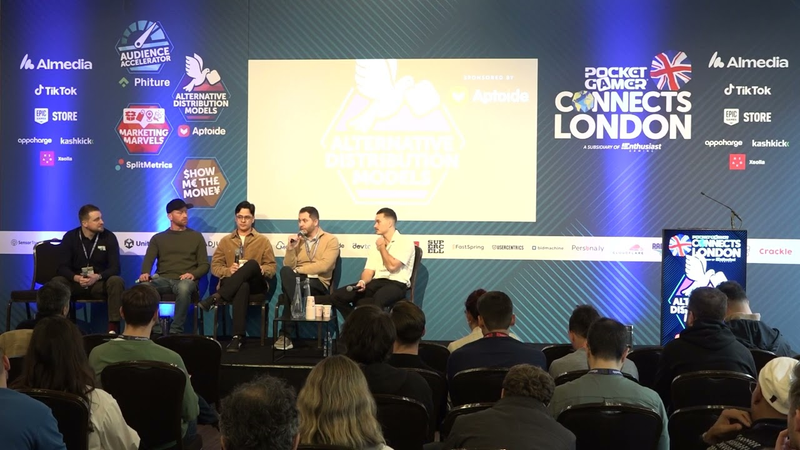
Panel: A New Era – How Alternative App Stores Are Opening Up New Opportunities For Game Makers.
The mobile gaming landscape is undergoing a structural transformation as alternative app stores evolve from niche, Asia-centric platforms into a viable global strategy for developers.
- Alternative app stores have transitioned from niche, Asia-centric platforms into a viable global strategy for mobile game developers seeking to bypass the Apple and Google duopoly.
- These platforms improve developer profitability by offering higher in-app purchase margins and greater economic flexibility compared to traditional storefronts.
- Alternative stores currently represent the third-largest segment by user volume in the mobile gaming market, indicating a significant shift toward a fragmented, multi-platform ecosystem.
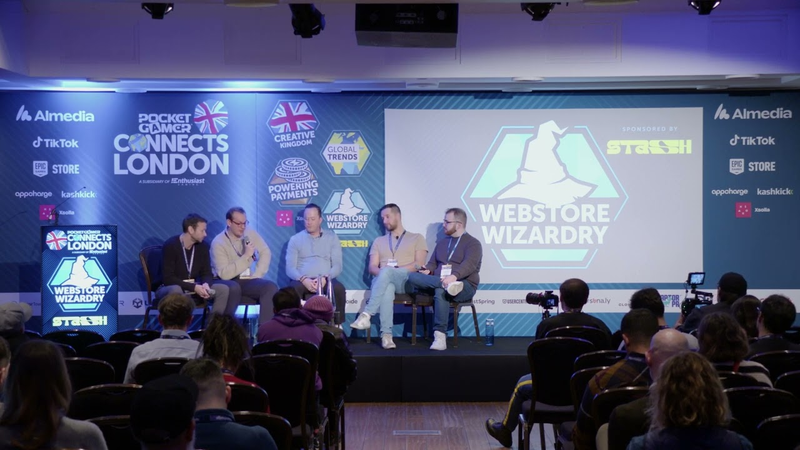
Panel: Championing Community – Building Player Connections Outside the App Stores
Mobile game developers are increasingly prioritizing direct-to-consumer strategies to mitigate the impact of rising user acquisition costs and the limitations imposed by platform-specific fee structures.
- Transitioning players to web shops can increase net revenue by approximately 31%, as developers retain 90% of revenue compared to the 70% typically realized through app store ecosystems.
- Leading developers are currently achieving 14% of their revenue off-platform on launch day, with expectations to reach 50% to 60% off-platform within three to six months.
- Web shops are viable across all game genres, including casual titles; one provider has processed over $1.5 billion in transactions across various genres over the past two years.