Mobile reports and market data
Documents
Spotting the Mobile Spenders: An Analysis of Paying Smartphone and Tablet Gamers
This Newzoo report, "Spotting the Mobile Spenders," analyzes paying smartphone and tablet gamers globally, with a specific focus on the US and Western Europe.
- Mobile gaming is projected to reach $25 billion in global revenue by 2014, with mobile expected to account for 50% of total game revenues by 2017.
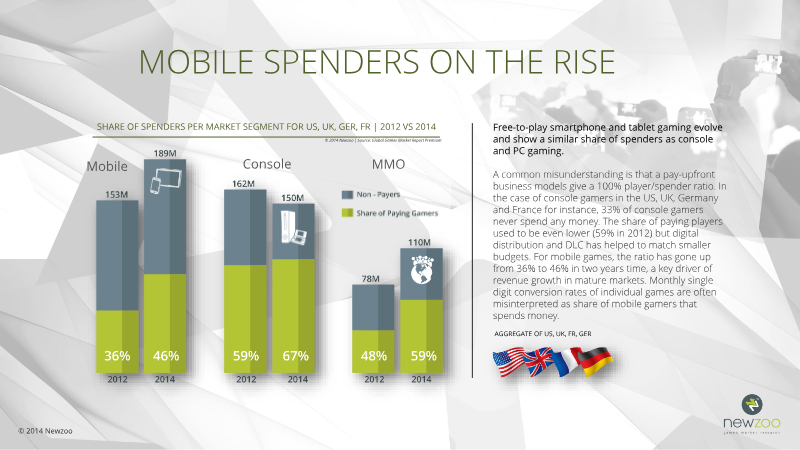
- The share of paying mobile users in Western Europe and the United States grew from 36% to 46% over the last two years, debunking claims of market saturation.
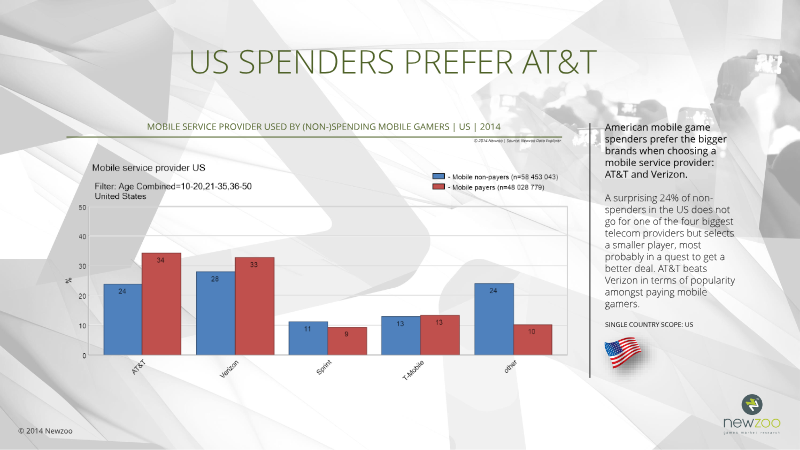
- The Amazon Appstore is an undervalued channel, as its users demonstrate a higher propensity to spend money compared to those on Google Play or Apple platforms.

A Deep Dive into Deep Links: The All-in-One Handbook for Mobile App Marketers, Developers, and Product Managers
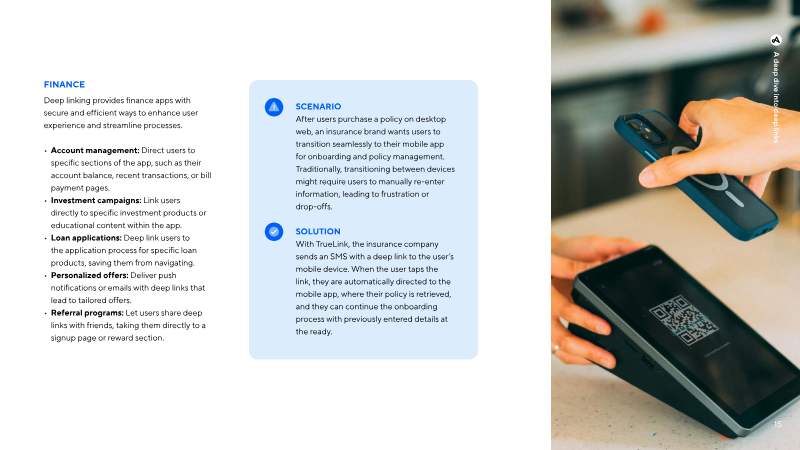
Adjust's handbook explains deep linking as the mobile equivalent of website URLs, routing users from ads or external sources to specific in-app content, and makes the case for its TrueLink product as the solution for marketers, developers, and product managers.
- Deep linking significantly improves app performance, with CleverTap data showing that users attributed to deep links achieve 81% higher activation rates, 2.5x higher retention rates, and 2x higher conversion rates compared to those using standard links.
- Deep linking technology functions by routing users directly to specific in-app content or screens upon clicking an ad or link, utilizing standards such as Apple Universal Links, Android App Links, and URI schemes.
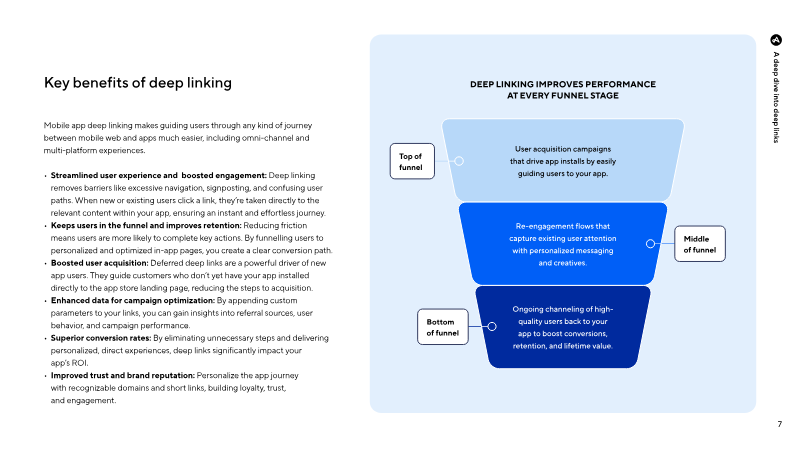
- Deferred deep linking drives user acquisition by directing individuals who have not yet installed the app to the appropriate app store landing page, thereby reducing friction in the installation process.

Ramadan App Trends Decoded: Benchmarks and Insights for 2026
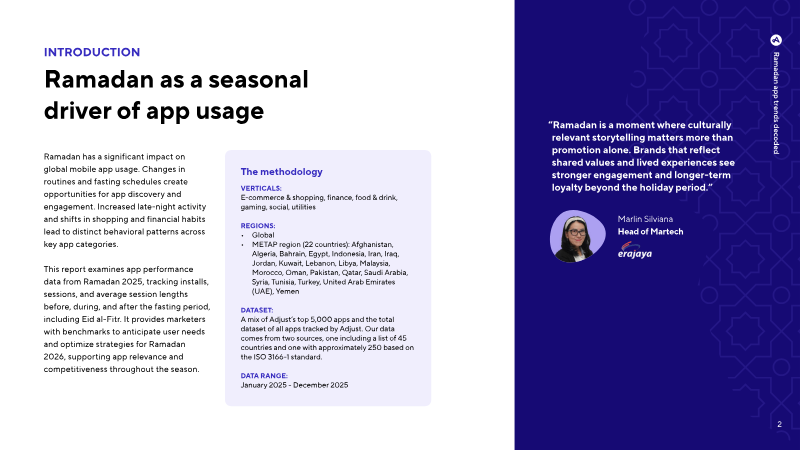
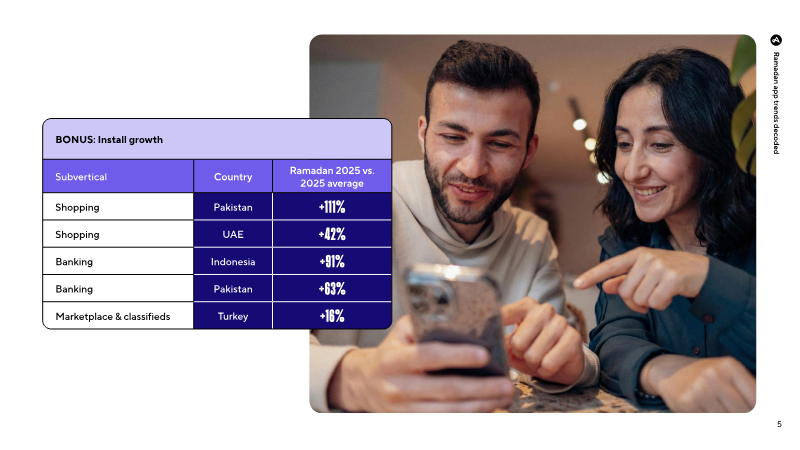
Ramadan 2025 app performance data from the Middle East, Turkey, Africa and Pakistan (METAP) region is used to help marketers plan for Ramadan 2026.
- Ramadan drives a 11% increase in average daily installs and a 6% rise in session counts across the METAP region compared to the two weeks prior.
- Gaming apps maintain the highest engagement levels during the season, with average session lengths reaching 35.6 minutes.
- The Ramadan growth cycle extends beyond the fasting period, with overall install growth climbing from 10% during Ramadan to 13% in the post-Eid period.


The Shopping App Insights Report: 2025 Edition
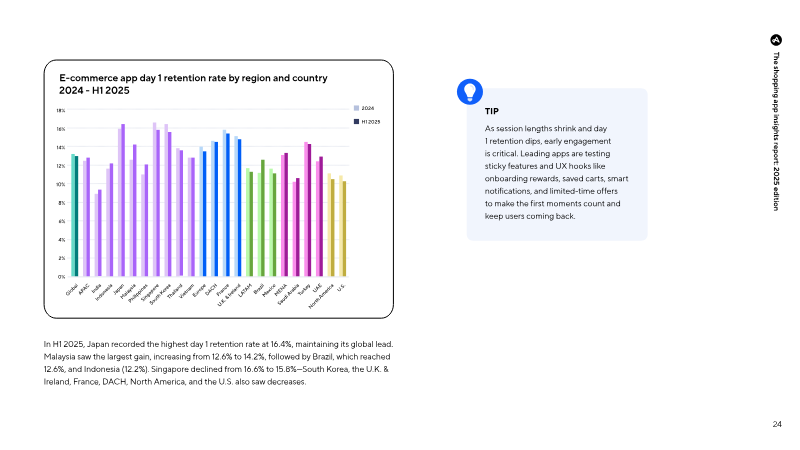
Adjust's 2025 shopping app report argues that mobile commerce remains a large growth opportunity despite a more complicated operating environment, and that marketers need AI-driven optimization, localization, and strong retention strategies to capture it.
- Global e-commerce app installs declined 14% year-over-year in H1 2025, though sessions grew by 2%, indicating a shift toward re-engaging existing users over new acquisition.
- Global reattribution share for e-commerce apps rose to 0.18 in H1 2025, up from 0.14 in 2023, with the UAE (0.40) and U.K. & Ireland (0.36) leading in win-back activity.
- Global e-commerce app install per mille (IPM) reached nearly 3.0 in Q1 2025, with North America maintaining the highest regional performance at 5.21.

The Gaming App Insights Report: 2026 Edition
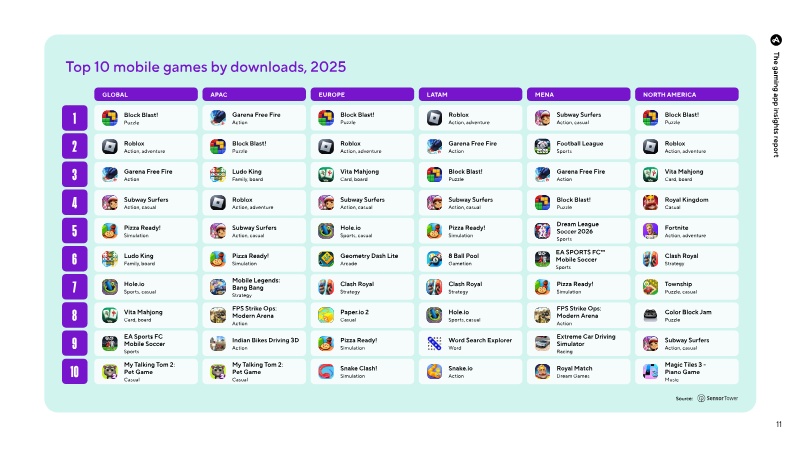
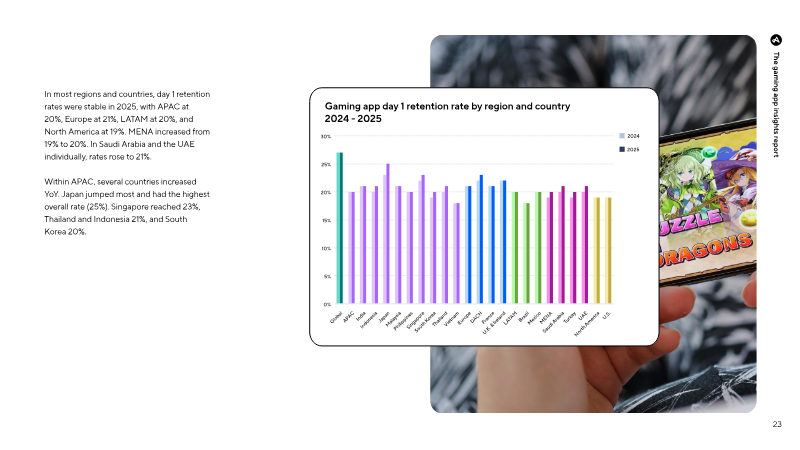
Adjust's 2026 gaming app report argues that the mobile gaming market has moved from a volume-driven model to one centered on retention and lifetime value, as acquisition costs climb and growth in installs slows.
- Global gaming app CPC rose 33% from $0.03 to $0.04 between 2024 and 2025, while global CPM increased 20% from $3.63 to $4.34.
- Hyper-casual games maintained the largest market share of installs at 29.1% in 2025, while action games dominated session share at 17.1%.
- Strategy games saw the most significant increase in session length, growing 18% to 37.51 minutes, and experienced a 133% surge in CPC from $0.03 to $0.07.



Mobile App Trends 2026: Japan Edition
Japan's mobile app market remains one of the world's most lucrative, and 2026 data show growth shifting from pure acquisition toward engagement, retention, and non-gaming categories.
- The Japanese mobile market saw a 4% year-over-year increase in total installs during the first half of 2026, maintaining a robust, iOS-dominant trajectory.
- Stock trading applications surged by 90% in installs, driven by younger investors and the influence of tax-advantaged programs like NISA.
- Gaming engagement has intensified significantly, evidenced by a 113% increase in card game sessions and improved user retention rates.

Rovio Sustainability Report 2025
Rovio's Sustainability Report for the period of April 1, 2025, to March 31, 2026, details the company's sustainability performance, activities, and future plans, voluntarily aligning with the European Sustainability Reporting Standards.
- Rovio reported a total carbon footprint of 20,980 tons of CO2e for the fiscal period ending March 31, 2026, with Scope 3 emissions representing 98.6% of that total.
- The company expanded its carbon accounting to include downstream emissions from initial game downloads, a change that improved data coverage but prevented direct year-over-year comparisons.
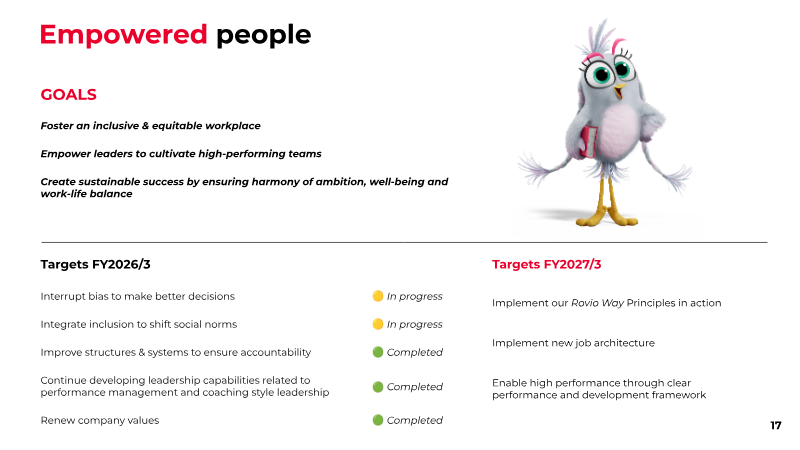
- Rovio maintains a workforce of 508 employees across six global locations and reports an adjusted gender pay gap of 1.4%.

Mobile App Trends: Vietnam 2026
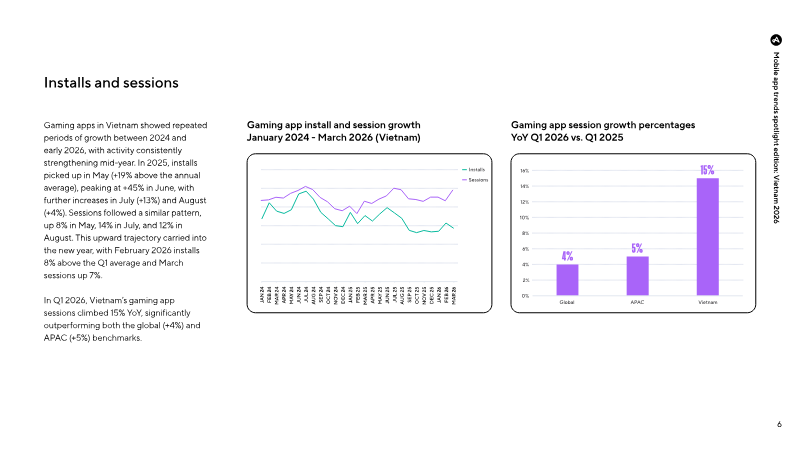
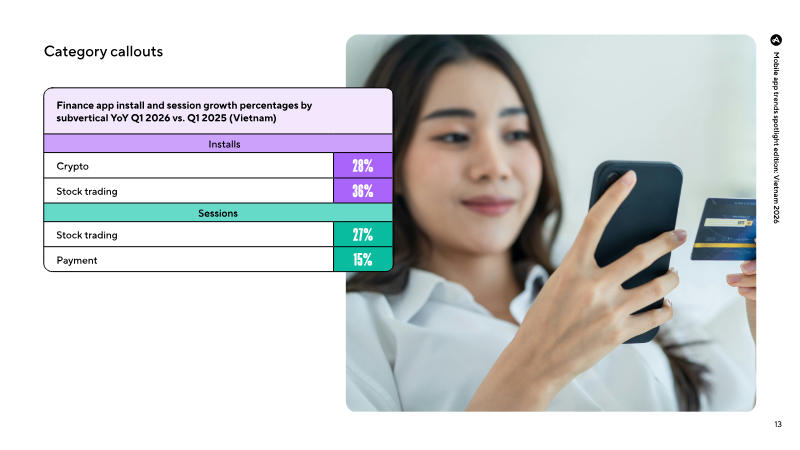
The "Mobile App Trends: Vietnam 2026" report analyzes app performance benchmarks and insights in Vietnam across gaming, finance, and entertainment verticals from January 2024 to March 2026.
- Vietnam's mobile market is a top-tier global player, ranking 11th worldwide with 2.88 billion app downloads in 2025 and an 84% smartphone penetration rate.
- Gaming is the leading vertical with 1.29 billion downloads in 2025, while a shift toward hybrid-casual and midcore titles drove a 15% year-over-year increase in session growth during Q1 2026.
- The entertainment sector is experiencing rapid expansion, highlighted by a 271% year-over-year surge in short-form drama content downloads by late 2025.
Direct-to-Consumer: A $17 Billion Market for Mobile Gaming
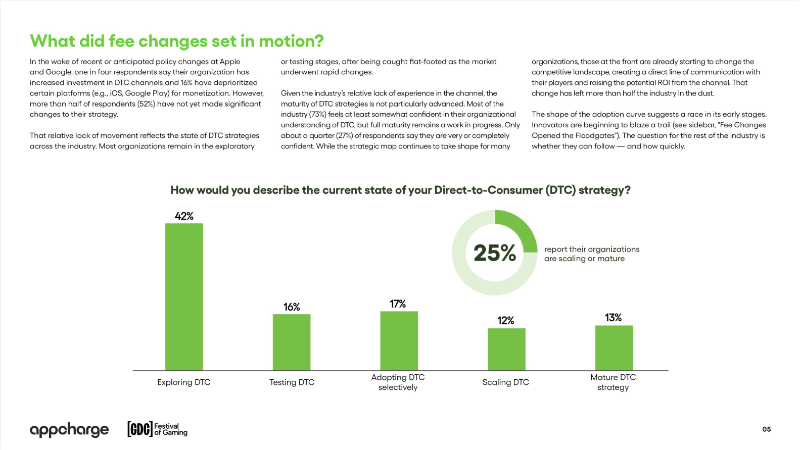
The mobile gaming industry is undergoing a significant transformation, driven by a 2025 US court ruling that enabled direct in-app transactions, establishing direct-to-consumer (DTC) as a $17 billion market.
- The mobile gaming direct-to-consumer (DTC) market has reached a valuation of $17 billion as publishers shift away from traditional app store ecosystems to reclaim platform fees.
- The global in-app purchase market is projected to grow to $721.4 billion by 2034, signaling a long-term shift toward DTC distribution across the digital economy.
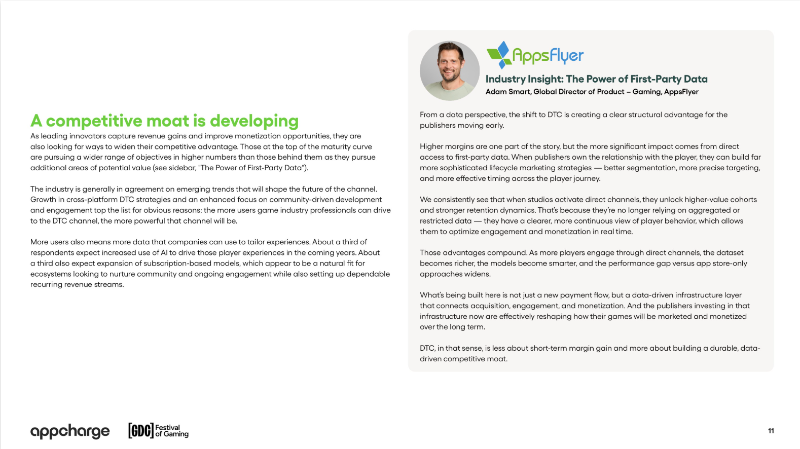
- DTC models allow publishers to secure ownership of first-party player data, which is being used to drive long-term retention and competitive differentiation.
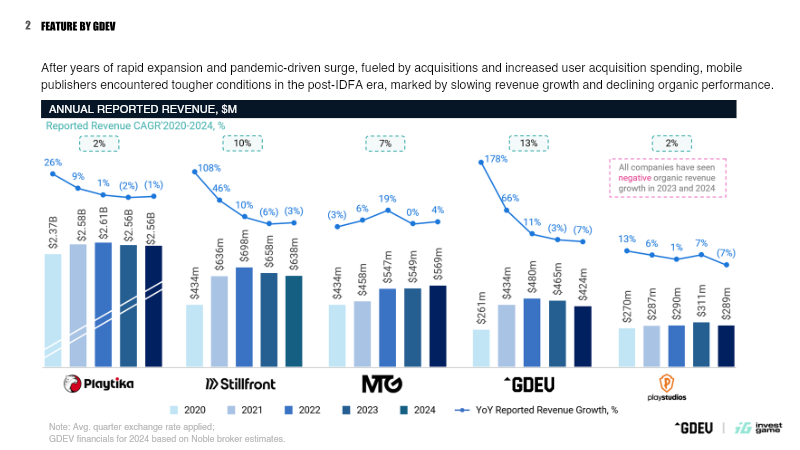
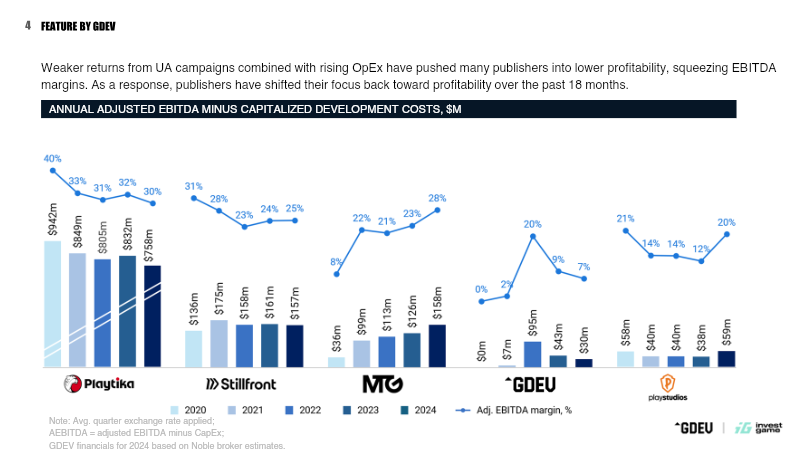

Public Mobile Gaming Publishers: Resilience & Adaptation in a Shifting Landscape
The mobile gaming industry has experienced significant shifts following years of rapid expansion and a pandemic-driven surge, encountering tougher conditions in the post-IDFA era.
- Aggregate market capitalization for major mobile gaming publishers has plummeted by more than 50% since January 2022, with most stocks remaining below pre-IDFA valuation peaks.
- User acquisition costs have surged to as high as $40 million per firm, while diminishing returns on these campaigns have compressed EBITDA margins and forced a shift toward cost control.
- MTG outperformed the broader market with a 50%+ share price increase and 9% organic growth in Q4 2024, driven by disciplined M&A and operational efficiency.
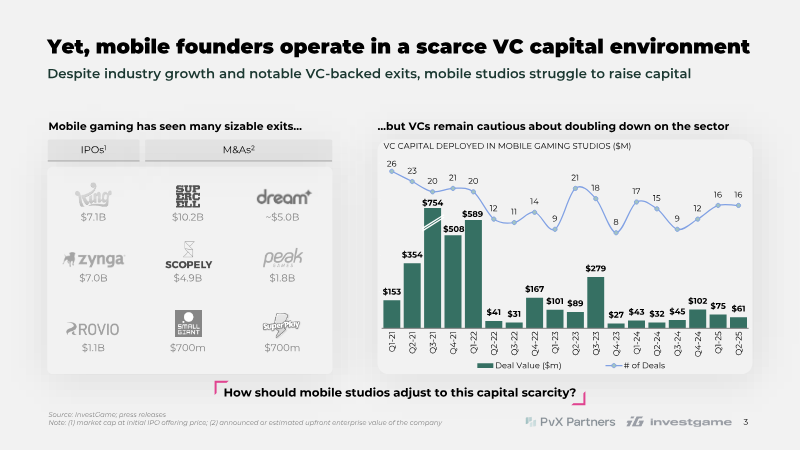
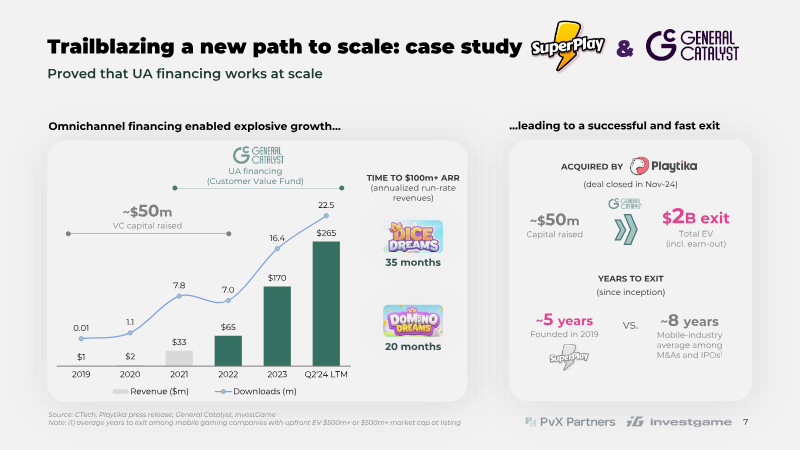

Enabling Growth: Cohort User Acquisition Financing
The mobile gaming market is experiencing a rebound, with a projected 4% growth in 2025, driven by innovations in in-app advertising (IAA), AI-powered AdTech, rewarded ad platforms, multiplatform adaptability, and IP licensing.
- Mobile gaming is projected to grow at a 5.0% CAGR from 2020 to 2025, supported by a 16.2% increase in in-app advertising and AI-driven ad tech.
- Cohort-based UA financing allows studios to fund up to 80% of monthly acquisition costs by leveraging future revenues, providing an alternative to scarce venture capital.
- Studios utilizing cohort-based financing have demonstrated the ability to increase monthly marketing spend by 16–38% while maintaining founder control over equity and IP.



The Take-Two Diaspora: Why Alumni Win Big in Mobile, Not AAA
The document analyzes investment trends in gaming studios founded by alumni of Take-Two Interactive and its subsidiaries between 2020 and 2025 year-to-date.
- Former Take-Two senior executives founded 23 startups between 2020 and 2025, securing $1.2 billion in capital across 43 deals.
- Dream Games, a prominent alumni-led studio, achieved a $2.5 billion exit in July 2025, highlighting the high valuation potential of these ventures.
- Alumni-led firms significantly outperform industry benchmarks, with a 60% rate of raising a second funding round within one year compared to the 20% industry average.