Mobile reports and market data
Documents
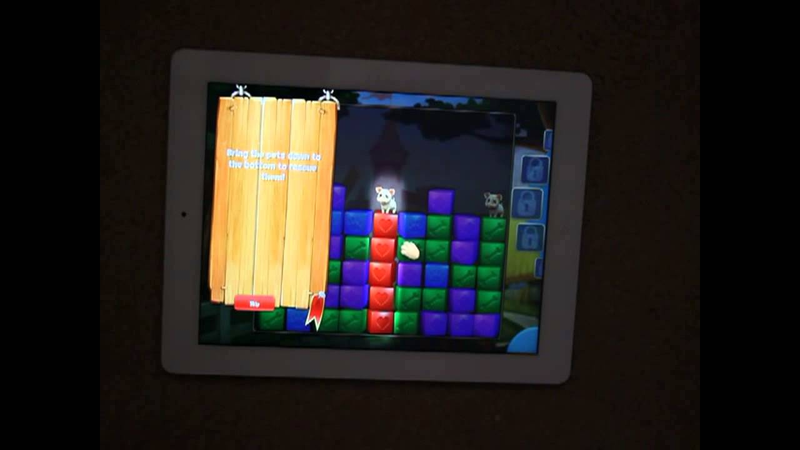
Monetizer: Pet Rescue Saga
Pet Rescue Saga exemplifies a strategic approach to mobile game design that prioritizes long-term user retention over immediate monetization.
- King prioritizes long-term user retention over immediate monetization by deferring revenue generation until players are deeply invested in the game's progression.
- The onboarding process is intentionally gradual, introducing core mechanics like pet-rescue only after several minutes of play to ensure accessibility for a casual audience.
- Monetization is restrained during the early game, avoiding aggressive in-app purchase prompts or hard currency barriers to mitigate early user churn.
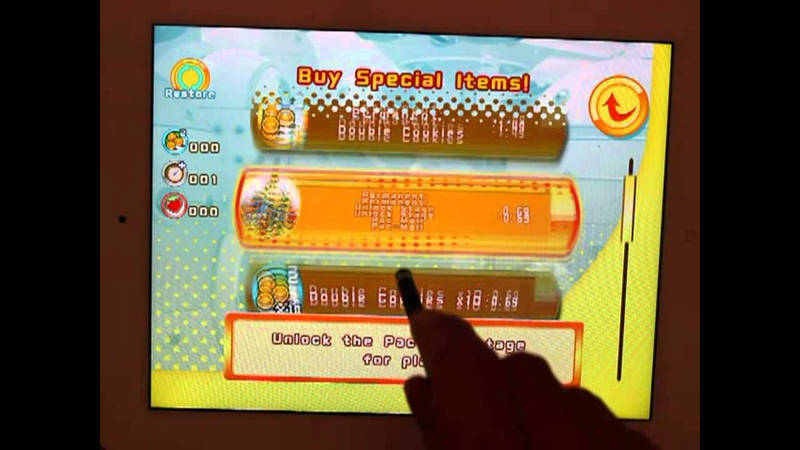
Monetizer: Namco Bandai's Pac-Man Dash
Pac-Man Dash utilizes a high-speed, runner-style gameplay loop on the iPad to engage players through a combination of mission-based objectives and resource management.
- Pac-Man Dash employs a stamina-based fuel mechanism that gates gameplay, forcing players to remain online for recovery and encouraging frequent, short daily sessions.
- The game utilizes a dual-currency approach where cookies serve as soft currency for purchasing consumable power-ups, performance-enhancing items, and permanent progression upgrades like cookie multipliers.
- Monetization is driven by microtransactions for stamina refills, temporary speed boosts, and mission-specific advantages designed to extend run times and maximize resource collection.

Monetizer: Gameloft's Despicable Me: Minions Rush
Despicable Me: Minion Rush, a free-to-play 3D endless runner developed by Gameloft for the iPad, utilizes a standard monetization framework common to the genre.
- Gameloft’s Despicable Me: Minion Rush utilizes a dual-currency economy of bananas and gold tokens, with purchase bundles ranging from $2 to $50.
- The game drives monetization through a multiplier-based progression system and by offering paid revives and mission-skipping mechanics.
- Onboarding is hindered by a lengthy initial download and an immediate, intrusive push notification prompt that risks early player churn.

Dealing with 10 app stores is harder than dealing with 400 app stores, says iDreamcast's Jeff Lyndon
The Chinese mobile gaming market presents unique challenges for Western developers, primarily regarding localization and distribution.
- iDreamSky, a major Chinese publisher with 260 million registered users and 60 million monthly active users, specializes in localizing Western mobile hits like Temple Run 2 and Fruit Ninja for the Chinese market.
- Successful localization in China requires significant adjustments to monetization strategy and UI/UX, such as placing store buttons in prominent locations rather than tucked away, to accommodate a user base that may be new to gaming.
- The Chinese mobile market is shifting away from Western titles toward Korean and Japanese games, which offer comparable quality but higher cultural resonance with local players.

Yodo1's Henry Fong talks massive Chinese mobile gaming growth
The Chinese mobile gaming market represents a high-growth landscape characterized by rapid smartphone adoption and increasing monetization efficiency.
- The Chinese mobile gaming market is experiencing rapid expansion, with active handset projections reaching 500 million by the end of 2013 and quarterly revenue growth rates consistently between 50 and 100 percent.
- Successful market entry requires comprehensive culturalization—adapting gameplay, narrative, and visuals—rather than simple translation to ensure titles resonate as locally produced content.
- The distribution landscape is highly fragmented, featuring over 400 distinct app stores that necessitate specialized navigation to achieve commercial success.

Mobile games industry news (w/e 27 July 2013)
The mobile games industry experienced significant divergence in late July 2013, characterized by robust growth in China and mixed financial results among major Western publishers.
- The Chinese mobile gaming market is experiencing rapid expansion, with first-half 2013 revenues estimated between $400 million and $2 billion.
- Baidu’s $2 billion acquisition of 91 Wireless signals a major consolidation trend, as the Chinese market shifts from hundreds of disparate app stores to approximately 40 key platforms.
- Zynga reported a 31 percent year-over-year revenue decline as it struggled to transition its social gaming model from Facebook to mobile platforms.

India is the next big mobile games market, says Reliance Games' Manish Agarwal
India is poised to become a premier emerging market for mobile gaming, driven by rapid growth in Android device adoption.
- India’s Android installed base is projected to reach 100 million devices within 12 to 15 months, positioning the country as a major emerging market for mobile gaming.
- Monetization in India is currently hindered by a reliance on Western pricing models and a lack of localized payment infrastructure rather than a lack of consumer willingness to pay.
- To drive revenue, developers must shift to mobile carrier billing and adopt pricing strategies tailored to the Indian market instead of standard dollar-denominated price points.
Designing for a Touch Screen - What Games Play Best on Mobile - Extra Credits
The primary thesis of this analysis is that mobile game developers must stop attempting to replicate traditional console or PC control schemes and instead embrace the unique, innate strengths of touch-based hardware.
- Mobile game developers should abandon virtual joysticks and complex, simultaneous inputs, which are inherently imprecise and lead to negative player sentiment.
- Designers should prioritize turn-based genres like strategy, card, and puzzle games, as these formats do not require the high-precision, real-time inputs that struggle on touch interfaces.
- For non-turn-based titles, mechanics should rely on intuitive, single-input gestures such as flicking, pulling, or sliding rather than emulating traditional controller schemes.

Mobile games industry news (w/e 19 July 2013)
The mobile gaming industry in mid-2013 is characterized by rapid growth in user acquisition and significant consolidation, particularly within Asian markets.
- Baidu’s $1.9 billion bid for 91 Wireless highlights intense competition among Chinese tech giants like Tencent and 360 to control Android distribution channels.
- The Korean messaging platform Kakao generated over $300 million in revenue during the first half of 2013 through its integrated games platform.
- Kabam reached a $700 million valuation following a private share placement, signaling strong investor confidence in the scalability of free-to-play business models.
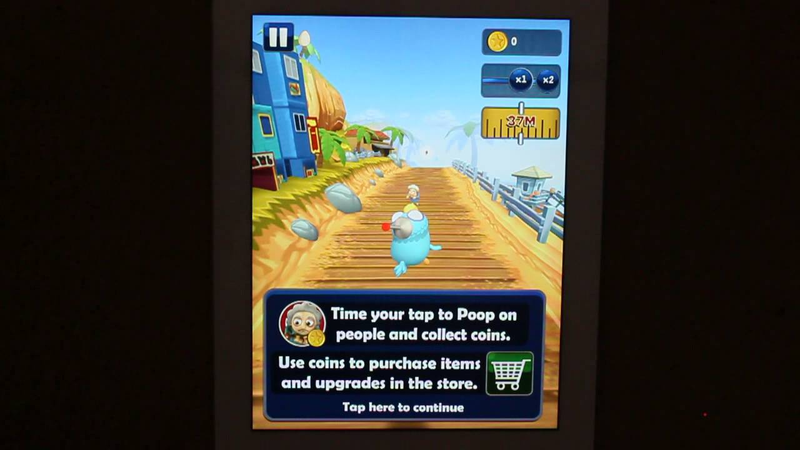
Monetizer: 2K's Turd Birds
Turd Birds, an endless runner developed by Cat Daddy Games and published by 2K, utilizes an aggressive monetization strategy that prioritizes immediate conversion over player retention.
- Cat Daddy Games and 2K utilize an aggressive monetization model in 'Turd Birds' that prioritizes immediate revenue conversion over long-term player retention.
- The game employs a coercive design that prompts players to spend hard currency gems to continue gameplay sessions immediately following a failure.
- Unlike standard industry practices, the game omits complimentary currency gifts during the initial session, failing to habituate players to the spending process through positive reinforcement.
Monetizer: Konami's Slot Revolution
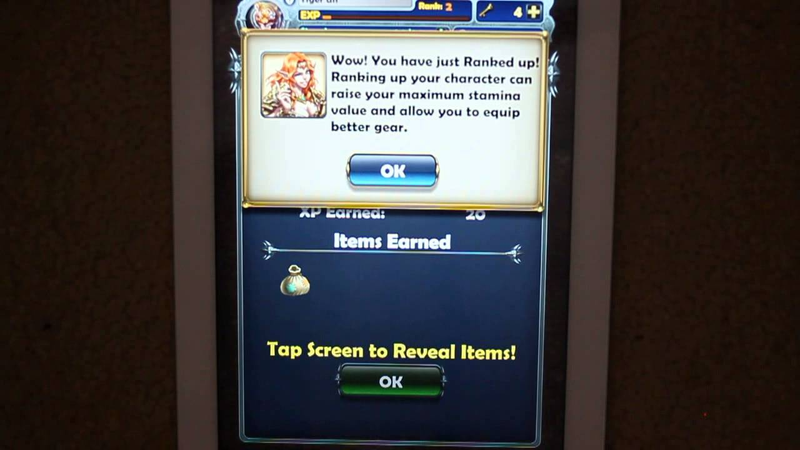
The analysis of Slot Revolution, a mobile title developed by Kung Fu Factory and published by Konami, examines the user experience and monetization strategies employed during the initial ten minutes of gameplay.
- Konami’s 'Slot Revolution,' developed by Kung Fu Factory, prioritizes immediate monetization conversion over long-term user retention through aggressive early-game friction.
- The game utilizes a high-friction onboarding process that mandates asset downloads, persistent push notification requests, and forced social media integration.
- RPG elements like character classes and boss battles are used to gamify slot mechanics, though the reel-stopping feature provides an illusory sense of player skill.
Monetizer: Kabam's Blastron
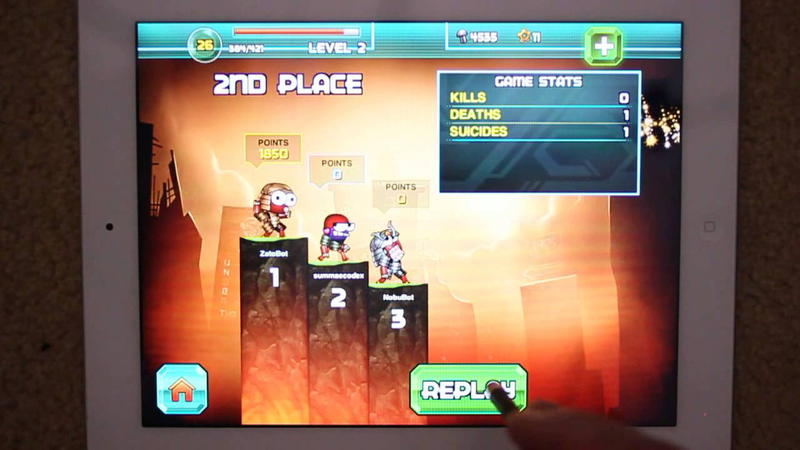
Blastron, a free-to-play robot-themed artillery game developed by Kabam, utilizes a gameplay loop inspired by the Worms franchise to engage players through tactical, turn-based combat.
- Blastron utilizes a dual-currency model where players earn soft currency through gameplay and purchase hard currency, known as rivets, via in-app purchases.
- The store employs a tiered pricing structure ranging from 2.99 to 69.99 units of local currency, using psychological labels to highlight 'best value' and 'most popular' options.
- Kabam prioritizes early-stage player retention over aggressive monetization by offering a generous distribution of free items and boosts during the initial store visit.