1 free read left. Create a free account for unlimited reading + AI research.
Create free account
Yodo1's Henry Fong talks massive Chinese mobile gaming growth

Key insights
6 takeaways- 01The distribution landscape is highly fragmented, featuring over 400 distinct app stores that necessitate specialized navigation to achieve commercial success.
- 02Specialized publishers act as essential intermediaries by federating disparate distribution channels and payment methods, lowering the barrier to entry for international developers.
- 03Successful market entry requires comprehensive culturalization—adapting gameplay, narrative, and visuals—rather than simple translation to ensure titles resonate as locally produced content.
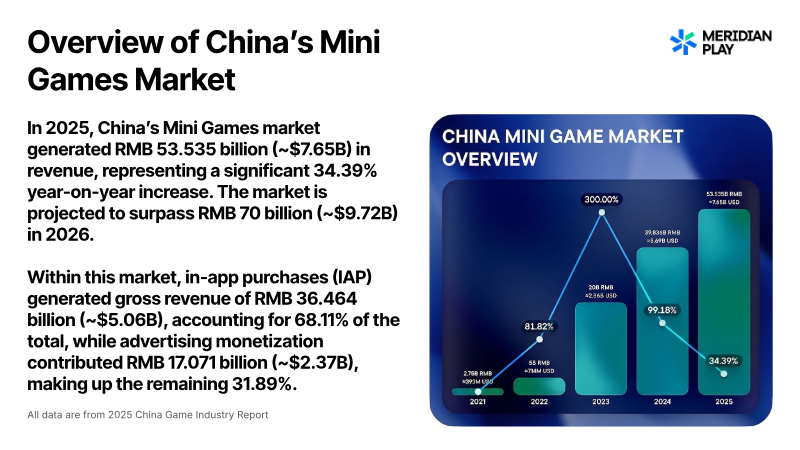
- 04The Chinese mobile gaming market is experiencing rapid expansion, with active handset projections reaching 500 million by the end of 2013 and quarterly revenue growth rates consistently between 50 and 100 percent.
- 05Operational strategy for developers has shifted from high-volume releases to a quality-over-quantity approach, prioritizing long-term sustainability and data-driven optimization of in-game economies.
- 06Improved payment infrastructure and more sophisticated ad networks are reducing friction in discovery and purchasing, allowing publishers to capture greater value from the user base.
Ask AI about this video
Transcript
[Music] okay so it's pocketgamer.beers we're continuing our world tour of game events i'm in shanghai at the moment for uh for china joy and we're with uh yoda1 who knows all about the chinese uh chinese market so nice to meet you henry nice to meet you john and um and what's going on there now well first let's before we get carried away what does yoda one do there's a kind of interesting name which has some meaning behind it and uh attached to what you do yeah the other one we're as specialists we help western games developers uh monetize and distribute their mobile games in china uh we focus on the ios and android platforms and uh you know our tagline is mobilizing games in china okay that pretty much sums it up and you've been pretty busy going for about 18 months now tell us some of the games you've been you've been releasing in china we've published about 40 titles so far um and the bulk of them i'd say over 90 percent are from and working with western developers uh co-production titles um for example i write a lot about a title called ski safari uh from an awesome
team out of brisbane australia uh to find development folks that title over the last six seven months has garnered over 25 million users uh in china so you know an australian game is now one of the hit games in in china we just got notified by what about app store partners here that they put it on their must-have section for new users female millionaires i guess so i guess that's interesting because you're talking about one of our partners and obviously for someone like westerner um who hasn't been to china before it's kind of a bit baffling and and there are like hundreds of stores and partners and how do you make sense of all that kind of kind of potential opportunity right we actually work with about 400 app stores in china um you know not all app stores are born equal of course so uh so we do tier of them we have about 20 what we call t1 partners so their partners that we have dedicated account managers working with them on choosing what games
to feature on a weekly basis and working with them on feedback on the metrics that they're seeing on the game and then what we then do with all that data is that we work with our game studio partners uh together to optimize the games to perform better both from a distribution as well as from a monetization perspective so you know um on the surface it's a really really complicated ecosystem and um you know one of the advantages that we provide to our western games developers is that we black box the entire ecosystem right so everything from the dozens of payment methods to the hundreds of app stores to the hundreds of ad networks in the market uh were pretty much uh federated uh those different ecosystem players without platform but say i'm a western developer and i've got a game i think do well in china it's not just a case of you getting it and doing a bit of translation and giving it to you
yeah well i got a first rule of thumb for western developers is that don't translate your game the way that we do culturalization per se is that it's not just about the text right you if you find an outsourced translator translate it from english to chinese it's it's going to be like a well it's going to play like a bruce lee movie with chinese subtitles right so um it won't feel right it won't play right it'll just seems you know some part quality instead we work with them to to understand the entire storyline the theme what elements graphically or audio the sound needs to be changed and tweaked we have game designers that will optimize and potentially change some of the gameplay mechanics and monetization points and we'll rescript the entire game narrative so that actually most of the chinese gamers don't even know how games are originated from the west they think it's locally chinese produced right and also sustaining the game aftermarket
right is there some chinese specific content that we can layer into the game in a natural way um that extends the gameplay and increase the attractiveness of the title for the chinese audience as well so that's really a collaboration between unit 1 and the game studios that we work with and some figures came out yesterday about the growth of the chinese mobile market i think they were saying 171 million active players now and i think i don't know there's lots of different types of different there's different figures given about how big the market is it seems to be suggesting it was about 400 million dollars just over that or one of the reports i mean are you seeing still kind of explosive growth or is it starting to taper off or what kind of trends you see on that everyone cares about the money i suppose yeah at some point yeah lots of big numbers obviously huge population in china um i think you know there are a few indicators that we look at and both in the broader market as well as in the metrics that we track you know the first one really is how many handsets are out there right in
terms of android and ios handsets and we're definitely being seeing monstrous growth there so from 80 million smartphones by the end of 2011 uh to 200 million by the end of last year and the forecast this year is going to be over 500 million by the end of 2013 so you know already the largest market in terms of shipments um going at you know triple digit percentage uh very brag um what's more interesting for us though as games uh publishers and developers is how well can we monetize these users right so do people pay for game content uh in china and you know fortunately that we're seeing some very good metrics so our revenue on a monthly basis from between january to now has grown about 10 times on a month-by-month basis and uh we're seeing quarterly growth uh revenue-wise of q by q about 50 to 100 every quarter so
and it's not because you're pushing out more games you're saying you've kind of yeah we're actually getting a q80 kind of approach yeah we're actually tying them tightening that up so we're publishing less games per month um but um obviously we're spending a lot more time sustaining and operating the games in market uh and optimizing the uh the iep uh optimizing the uh the free pay conversion rates in those games um really i think it's a number of factors right the sheer number of users in the market are increasing very very quickly our ability to monetize each user is improving as we learn as the market matures as well and all the ecosystem pieces are also maturing so you know the entire experience of finding a game downloading it playing it and then paying for it it's becoming easier and easier for gamers in the china market as well so all of these uh additive factors added up you know add up to bigger numbers per se
i hope so i hope so thank you tony thank you
Summary
The Chinese mobile gaming market represents a high-growth landscape characterized by rapid smartphone adoption and increasing monetization efficiency. With the number of active handsets projected to reach 500 million by the end of 2013, the market is experiencing triple-digit growth in device shipments. This expansion is supported by a complex, fragmented ecosystem comprising over 400 app stores, which necessitates specialized navigation to achieve commercial success.
Successful market entry for Western developers requires a shift from simple translation to comprehensive culturalization. This process involves adapting gameplay mechanics, narrative structures, and visual assets to ensure titles resonate as locally produced content rather than foreign imports. By integrating region-specific elements and optimizing monetization points, developers can significantly improve user engagement and conversion rates. The operational focus has shifted from high-volume releases to a quality-over-quantity approach, emphasizing long-term sustainability and data-driven optimization of in-game economies.
Financial performance in this sector is robust, with quarterly revenue growth rates consistently ranging between 50 and 100 percent. This upward trajectory is driven by the maturation of the broader ecosystem, including improved payment infrastructure and more sophisticated ad networks. As the market matures, the friction associated with discovering, downloading, and purchasing in-game content continues to decrease, allowing publishers to capture greater value from the massive, rapidly expanding user base. By federating disparate distribution channels and payment methods, specialized publishers effectively lower the barrier to entry for international developers seeking to capitalize on this significant economic opportunity.




















Comments