Mobile reports and market data
Documents

The Hitman GO Design Postmortem
The transition of Square Enix Montreal from cancelled AAA console development to mobile production necessitated a strategic pivot that prioritized creative incubation and brand adaptation.
- Square Enix Montreal developed Hitman GO within a six-month production window by utilizing a small, agile team and an incubation process that allowed staff to propose mobile-first concepts for established brands.
- The core gameplay mechanics were prototyped in just two weeks, focusing on turn-based strategy and diorama-style visuals to differentiate the title from traditional AAA stealth games.
- The team adopted a 'bottom-up' design philosophy, embracing unconventional ideas and constraints—such as the board game aesthetic—to solve the challenge of adapting a complex franchise for mobile platforms.

Crush the Norm: Diversity Rules (At King)
Game development requires a fundamental shift in character creation, moving away from reliance on traditional stereotypes toward a process that prioritizes personality and narrative depth before defining physical attributes.
- King has spent the last 18 months embedding a diversity mapping framework into its development pipeline to systematically move character design away from traditional Western stereotypes.
- The diversity mapping framework functions as an analytical tool that benchmarks character rosters against industry norms to identify and mitigate biases like the centering of whiteness and uniform body types.
- Effective character creation requires prioritizing personality and narrative depth before defining physical attributes to ensure more inclusive and original global representation.

Rebound's tips for launching your mobile game in Eastern markets
Successfully launching mobile games in Eastern markets, particularly South Korea and Japan, requires a fundamental shift in strategy for Western developers.
- Success in Eastern markets like Korea and Japan requires a heavy focus on brand advertising, including TV commercials and offline subway ads, rather than relying solely on Western-style digital performance marketing.
- Western developers often mistakenly believe that simply translating a game into the native language is sufficient for an Eastern launch, failing to account for the need for localized marketing strategies.
- Communication with players in Eastern markets occurs at a much faster pace than in the West, requiring more frequent in-game events to maintain engagement.

Why the post-app ecosystem offers a bigger market than the App Store
The post-app ecosystem represents a significant shift in mobile gaming, moving away from the traditional, high-friction App Store model toward instant, platform-integrated experiences.
- The post-app ecosystem bypasses traditional App Store friction by embedding games directly into platforms like Facebook Messenger or Rakuten, eliminating the need for lengthy downloads.
- Instant games require a design philosophy focused on hooking players within 15 seconds, followed by 30-second gameplay loops that provide immediate gratification.
- Large-scale collaborative multiplayer mechanics, such as boss raids supporting up to 200 participants, are highly effective for driving long-term retention.
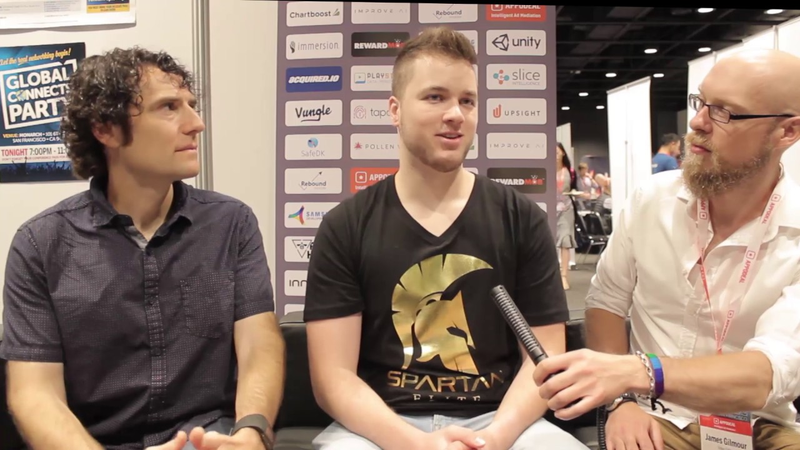
Papa Jake and Free Hive Games on influencer marketing for mobile
Influencer marketing has emerged as a critical strategy for mobile game developers navigating an increasingly saturated app market.
- Influencer marketing is replacing traditional performance-based advertising on platforms like Facebook, which has become prohibitively expensive due to a saturated market with over 500 new app launches daily.
- Successful influencer partnerships require vetting creators based on content style, audience demographics, and personal gaming preferences rather than relying solely on subscriber counts.
- Providing influencers with early access to games serves as both a pre-launch marketing tool and a feedback loop to identify gameplay issues before public release.
Don't Change a Thing! The Challenges of Evolving Solitaire
Managing a massive digital product suite like Solitaire requires a delicate balance between driving revenue growth and maintaining the loyalty of a deeply entrenched user base.
- Managing a product with over 200 million downloads requires prioritizing iterative refinement over radical overhauls to avoid alienating a habitual user base.
- A dual-layered feedback approach combining quantitative performance metrics with qualitative, free-form user commentary provides the most actionable insights for feature adjustments.
- Targeted updates to progression systems and visual design have demonstrated the ability to boost positive player sentiment by ten percentage points within a two-week timeframe.

Peggle Blast: Big Concepts, Small Project
The development of Peggle Blast for mobile platforms necessitated a radical departure from traditional audio production methods due to a stringent 5MB memory constraint, a stark reduction from the 783MB utilized in previous console iterations.
- The development of Peggle Blast reduced audio memory usage from 783MB in console versions to a 5MB limit for mobile, necessitating a shift from pre-recorded wave files to a MIDI-based architecture.
- By utilizing procedural audio synthesis and real-time digital signal processing, the team generated dynamic soundscapes while avoiding the high CPU overhead associated with compressed formats like MP3 or Ogg.
- The team implemented a multi-tiered quality manager that dynamically adjusted voice limits and sample complexity to ensure consistent performance across diverse mobile hardware.
The Casual (but Regal) Swipe: Creating Game Mechanics in Reigns
The design philosophy behind Reigns centers on the concept of efficient laziness, utilizing a minimalist swipe-based interface to bridge the gap between casual player input and the profound, often fatal consequences of ruling a kingdom.
- Reigns utilizes a minimalist, swipe-based interface to translate simple casual input into high-stakes narrative consequences, prioritizing player-driven storytelling over complex numerical optimization.
- The game employs a probabilistic-driven narrative engine that dynamically selects cards based on the kingdom's current state, ensuring a fluid and infinite gameplay loop.
- Development relies on a flexible, spreadsheet-based architecture that balances linear narrative elements with randomized outcomes to allow for emergent mechanics and unique death conditions.

Controlling Carnage: Effective Side-Scroller Controls on Mobile
The development of control schemes for mobile action games requires moving beyond traditional console-based paradigms to address the unique constraints of touchscreens, specifically the lack of tactile feedback and the physical limitations of thumb reach.
- To mitigate 'thumb drift' and the lack of tactile feedback on touchscreens, developers should implement large, invisible hit pads that leverage muscle memory rather than relying solely on visible buttons.
- Mapping actions to distinct thumb positions—vertically extended, horizontally extended, and tucked—allows players to execute complex inputs like jumping, melee, and ranged attacks without needing to visually monitor the control area.
- Control schemes must be dynamically scaled based on device screen size, with smaller devices requiring more compact layouts to ensure both visibility and ergonomic usability.

The Jetpack Joyride Postmortem
Jetpack Joyride represents a strategic masterclass in mobile game design, originating from a focused four-week development cycle by a three-person team at Halfbrick Studios.
- Halfbrick Studios developed Jetpack Joyride in a four-week cycle with a three-person team, proving that focused development can produce highly successful mobile titles.
- The game’s core retention strategy relied on a layered mission system that replaced static goals with progressive challenges to foster long-term player engagement.
- By intentionally incorporating randomized, occasionally unfair obstacles, the design mitigated player frustration and encouraged immediate re-engagement with the core gameplay loop.
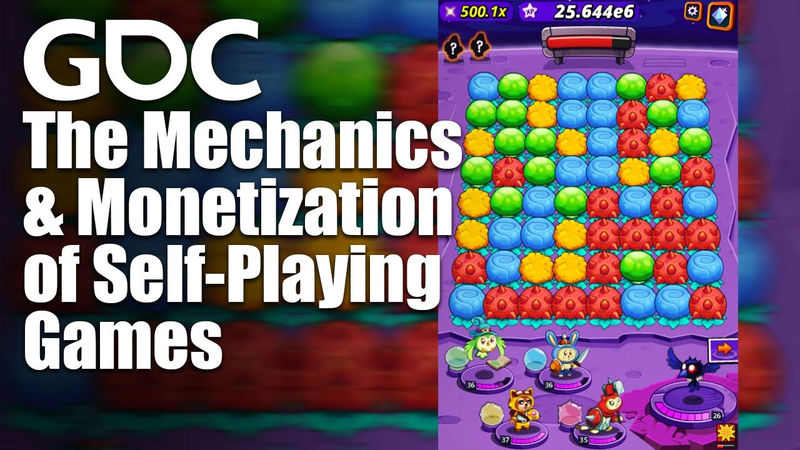
Idle Games: The Mechanics and Monetization of Self-Playing Games
Idle games have established themselves as a distinct and highly lucrative genre defined by the core principle of progress without constant interaction.
- Idle games achieve high buyer conversion rates ranging from 3% to 8% by integrating monetization directly into the core progression loop.
- The genre's success is driven by the elimination of traditional lose conditions and the use of positive feedback loops, which foster exceptional player retention.
- Monetization strategies rely on acceleration mechanics such as time warps, permanent multipliers, and gacha-style draws to drive lifetime average revenue per paying user.

Balancing Cards in Clash Royale
The core objective of balancing in Clash Royale is to cultivate a dynamic and healthy meta-game that prioritizes strategic depth and gameplay variety.
- Balancing prioritizes maintaining the unique identity and soul of each unit over rigid mathematical formulas, using mechanical complexity as the primary differentiator between card rarities.
- The development team employs a standardized 10% increase in damage and hit points per level to ensure consistent unit interactions throughout the player progression experience.
- The balancing process relies on a synthesis of data analysis, community feedback, and developer intuition to identify gameplay gaps and monitor usage versus win rates across all skill levels.