Mergers & Acquisitions reports and market data
Documents
Mergers and acquisitions in games: Lessons from the field
Mergers and acquisitions in the gaming industry function as complex, long-term partnerships that require rigorous preparation, realistic expectations, and carefully aligned incentives.
- Successful M&A in the gaming industry depends on strategic alignment of product portfolios, operational synergies, and human capital rather than raw financial deal value.
- Acquisitions are most effective when they leverage complementary strengths, such as centralizing shared services like marketing and quality assurance, rather than merging studios with direct operational overlap.
- The M&A process typically requires a six-month timeline, during which the acquirer must conduct extensive due diligence and the target firm must provide comprehensive legal and financial documentation.

How to raise funds from Chinese investors
Chinese investment in Western mobile gaming is primarily motivated by the pursuit of strategic synergies, the acquisition of specialized talent, and the exploitation of financial arbitrage opportunities.
- Chinese investors primarily target mid-to-growth stage studios that demonstrate consistent profitability and a proven track record to facilitate regulatory approval for international transactions.
- Acquisition deals typically feature an upfront cash payment of approximately 30 percent, with the remaining balance structured as earnouts and share-based incentives to align management with long-term growth.
- Due to a lack of local Western expertise, Chinese firms generally adopt a hands-off management approach, preferring to retain existing leadership to operate the business independently.

The most significant mobile gaming events in 2015
The mobile gaming landscape in 2015 was defined by significant industry consolidation, the rise of Eastern markets, and the strategic pivot of traditional console giants toward mobile platforms.
- Activision acquired King for $5.9 billion in 2015, signaling a major strategic shift by triple-A publishers to capture broader demographics and secure mobile gaming as a primary revenue stream.
- The global mobile gaming market saw a significant geographic shift as China, Korea, and Japan secured three of the top five global market positions, with Southeast Asia also showing rapid growth.
- Monetization models in 2015 matured by moving away from aggressive hard-currency tactics toward more balanced systems that integrate soft currency and advertisements.
Stillfront Group Company Presentation
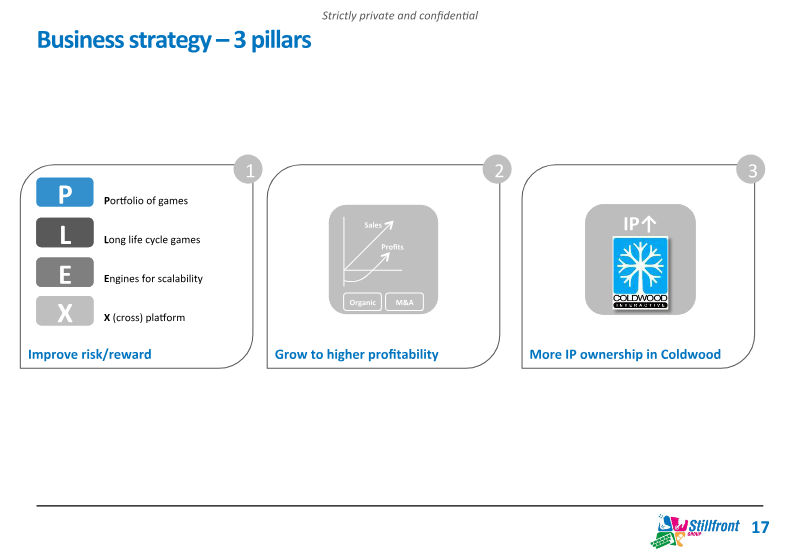
Stillfront Group operates as a diversified developer and publisher of independent games, with a strategic focus on long-lifecycle titles and scalable gaming engines.
- Stillfront Group achieved a 63% increase in organic net revenue for the year-to-date period ending September 2015 compared to the previous year.
- The company's underlying EBITDA margin expanded by 15 percentage points to reach 23% during the same period, driven by low marginal costs and free-to-play monetization.
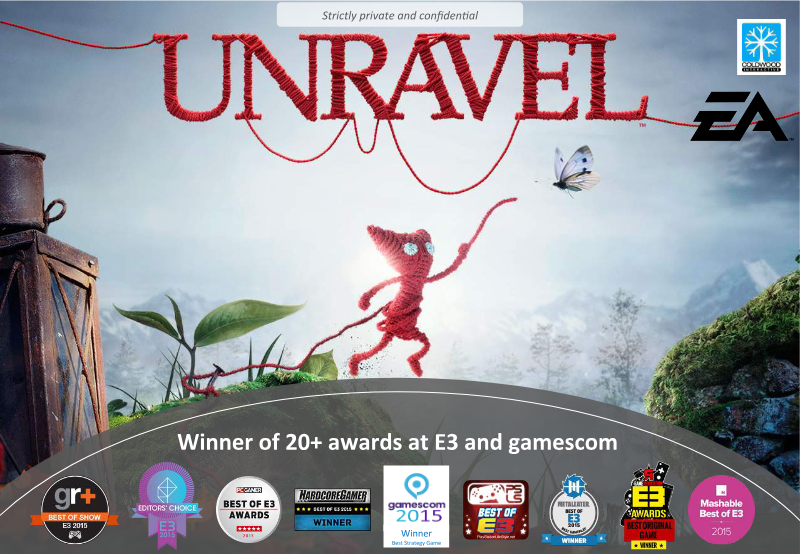
- Growth is primarily fueled by the successful launch of the strategy game Call of War and the strong market performance of the title Unravel.

Biz Daily: Why Activision Blizzard bought King
The acquisition of King by Activision Blizzard for $5.9 billion represents a strategic effort to bridge the gap between traditional console and PC gaming and the high-growth mobile sector.
- Activision Blizzard acquired King for $5.9 billion to bridge the gap between its traditional console/PC business and the high-growth mobile gaming sector.
- The deal establishes Activision Blizzard as the largest pure-play gaming company in the Western market, providing immediate access to a global, gender-balanced mobile audience.
- The transaction is valued at $18 per share, a 20 percent premium over King’s pre-deal valuation, and is financed through $3.2 billion in cash and bank loans.

Biz Daily: Vivendi's move on Gameloft and Ubisoft
Vivendi, a prominent French media conglomerate, has initiated a significant strategic investment by acquiring approximately 6.6 percent stakes in both Ubisoft and Gameloft for a combined total of 160 million euros.
- Vivendi has acquired approximately 6.6 percent stakes in both Ubisoft and Gameloft for a combined investment of 160 million euros.
- The Guillemot family, founders of both companies, holds 15 to 20 percent of the shares, creating a significant barrier to any potential hostile takeover.
- The industrial logic for a merger centers on combining Ubisoft’s dominant PC and console intellectual property with Gameloft’s mobile gaming expertise.

Biz Daily: Why iDreamSky invested $10M into Rumble
The Chinese mobile publisher iDreamSky has expanded its global footprint through a 10 million dollar investment in the United States-based developer Rumble Entertainment.
- iDreamSky has invested $10 million for a majority stake in U.S.-based developer Rumble Entertainment to expand its global footprint beyond the Chinese Android market.
- The investment grants iDreamSky exclusive rights to publish Rumble’s titles within China, securing a pipeline of high-fidelity Western content for a market that demands premium graphical quality.
- Rumble Entertainment, which has previously raised over $30 million in seed and Series A funding, required the $10 million infusion to provide the marketing liquidity necessary to scale its current soft-launch projects.

Biz Daily: Why Chinese publishers are delisting from NASDAQ
A growing trend of Chinese gaming companies, including KongZhong, iDreamSky, Perfect World, and Shanda Games, are moving to delist from the NASDAQ to transition into privately held entities.
- Chinese gaming companies including KongZhong, iDreamSky, Perfect World, and Shanda Games are delisting from the NASDAQ to transition into privately held entities.
- The primary driver for these management buyouts (MBOs) is a perceived undervaluation of gaming stocks by Western investors, who have historically remained skeptical of the sector.
- Management teams are seeking to escape the burden of rigorous US quarterly reporting and transparency requirements to regain operational flexibility and avoid public market volatility.

Biz Daily: Mag Interactive's purchase of Delinquent
The acquisition of the UK-based startup Delinquent by the Swedish developer MAG Interactive serves as a primary indicator of the mobile gaming industry’s transition into a mature phase.
- MAG Interactive’s acquisition of UK-based startup Delinquent signals a shift in the mobile gaming industry toward consolidation, where established developers prioritize buying talent and IP over organic growth.
- The mobile market has reached a mature, saturated phase where high barriers to entry and rising costs make it increasingly difficult for new, independent startups to gain traction.
- MAG Interactive, which has maintained a user base exceeding 50 million downloads since 2012, is using the acquisition to integrate Delinquent’s match-three game, Potion Pop, into its existing ecosystem.

Why messaging company Palringo acquired Tribe Studios
The acquisition of Helsinki-based Tribe Studios by the mobile gaming network Palringo represents a strategic effort to advance in-game chat technology and social gaming integration.
- Palringo acquired Helsinki-based Tribe Studios to pivot from a communication utility into a developer of proprietary, social-centric mobile games.
- The acquisition aims to integrate Tribe Studios’ expertise in asymmetric multiplayer mechanics into Palringo’s existing platform, which supports simultaneous group communication for up to 2,500 users.
- Palringo is developing an open software development kit (SDK) to provide external developers with access to its social infrastructure, including leaderboards, gifting, and group management tools.
Tencent buys Miniclip and Sega invests in Space Ape
The gaming industry in early 2015 is characterized by a surge in mergers and acquisitions, as highly profitable companies leverage their cash reserves to secure strategic assets.
- Tencent acquired a significant majority stake in Miniclip to leverage shared expertise in transitioning web-based portals to mobile free-to-play ecosystems.
- Sega Networks expanded its mobile footprint by acquiring Demiurge Studios and investing in Reignited Artists and London-based Space Ape Games to facilitate entry into the Japanese market.
- Playtech acquired YoYo Games for $16.4 million to integrate the Game Maker software into its gambling-focused business model.

Finland's one bright spark, Kamcord's $15M and CCGs in China.
The mobile gaming industry experienced a period of strategic consolidation and investment toward the end of 2014, characterized by significant funding rounds and shifting market dynamics in key global regions.
- The Chinese mobile gaming market is projected to reach $6 billion in revenue by 2015, positioning it to become the world's largest mobile gaming sector.
- Kamcord secured $15 million in funding, led by GungHo Online Entertainment, to advance mobile gameplay recording and social sharing tools.
- Collectable card games (CCGs) currently dominate the Chinese market, accounting for approximately one-third of total mobile gaming revenue.