Marketing reports and market data
Documents

Serving ads that users want | Hajar Noreddine from Adjoe
Adjoe specializes in innovative ad tech solutions, focusing on user acquisition and monetization through time-based rewarded advertising.
- Integrating rewarded ad units can generate over 50% in incremental revenue for mobile developers, reducing reliance on in-app purchases alone.
- Demand-side partners utilizing machine learning-driven targeting through the Playtime platform have achieved a 30% increase in return on ad spend (ROAS).
- User sentiment toward rewarded advertising is highly positive, with 76% of UK users and 56% of US users expressing satisfaction with relevant ads in mobile games.
Understanding SKAN 4.0 & Its Implications - David Philippson, Co-founder & CEO, Dataseat.
The primary objective of this analysis is to demystify Apple’s SKAdNetwork (SKAN) 4.0, an attribution framework designed for the iOS ecosystem.
- Apple is phasing out probabilistic attribution and fingerprinting, necessitating a shift toward internal mastery of SKAN 4.0 rather than reliance on third-party mobile measurement partners.
- SKAN 4.0 expands data collection by introducing three distinct postback windows covering Day 0–2, Day 3–7, and Day 8–35.
- To combat data loss from privacy thresholds, SKAN 4.0 implements a hierarchical 'coarse-grained' conversion value system categorized as low, medium, or high.
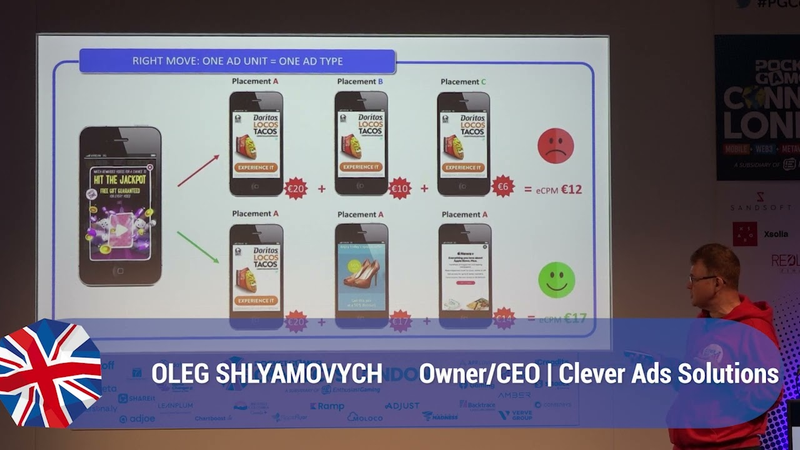
Mobile Ads Monetization: The Tips & Tricks That Make a Difference - Oleg Shlyamovych.
Mobile ad monetization serves as a critical revenue stream for mobile game developers, particularly given that approximately 97 percent of users do not make in-app purchases.
- Utilize professional mediation platforms to foster competition among ad networks, which can increase total ad revenue by up to three times.
- Implement App-ads.txt to ensure inventory transparency, a technical requirement that significantly boosts overall earnings.
- Maintain high user consent rates for personalized ads—reaching up to 92 percent—by carefully designing the opt-out process to be more complex.
Fireside Chat: Navigating the Evolving World of Influencer Marketing in Mobile Gaming.
Influencer marketing in the mobile gaming industry has evolved from a speculative endeavor into a data-driven strategy essential for community building and user acquisition.
- Prioritize audience alignment and genre-specific relevance over influencer follower counts to ensure higher engagement and conversion rates.
- Integrate creators early in the development lifecycle, such as during alpha or beta testing, to foster long-term brand advocacy and gain actionable community insights.
- Shift from speculative spending to a data-driven model by testing campaigns with micro-influencers and scaling based on verified metrics like chat activity and conversion rates.
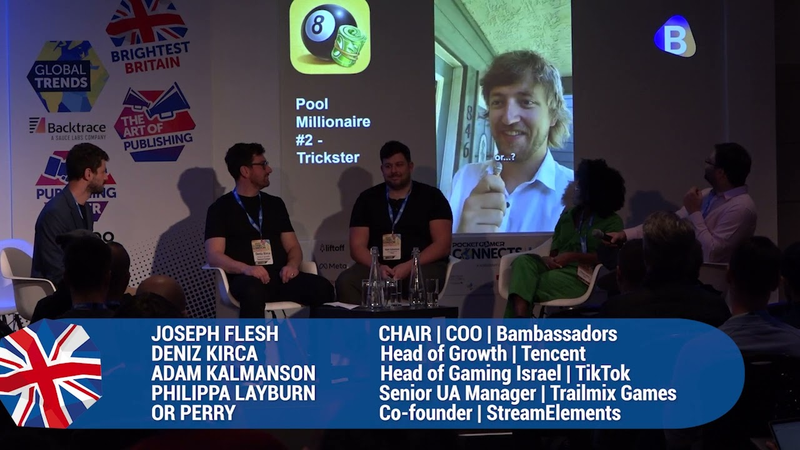
Curated Panel: Working With Creators at Scale: UGC for Paid User Acquisition
User-generated content has emerged as a critical strategy for mobile gaming studios seeking to optimize paid user acquisition.
- Scaling UGC for user acquisition requires a blended strategy that combines high-profile creators for brand equity with a broad network of long-tail creators to drive measurable return on ad spend.
- Studios should implement a hypothesis-driven framework that tests specific creative variables, such as pacing, visual style, and call-to-action placement, to isolate and optimize performance drivers.
- Authentic, native-feeling content outperforms highly polished traditional advertisements by bridging the gap between brand marketing and performance metrics, ultimately lowering customer acquisition costs.
Brands Are Now In-Play: Creating a new Revenue Stream in a Seamless Way by Chloe Cave from Adverty.
The integration of in-game advertising, specifically through non-intrusive "in-play" formats, represents a significant evolution in mobile game monetization.
- In-play advertising allows developers to monetize the entire duration of a gaming session without interrupting gameplay, unlike traditional rewarded videos or interstitials.
- Gaming has surpassed the combined reach of film, television, and music, with a global audience of 3.2 billion players.
- In-play advertising is projected to capture 10% of the total in-game advertising market share by the end of 2023.
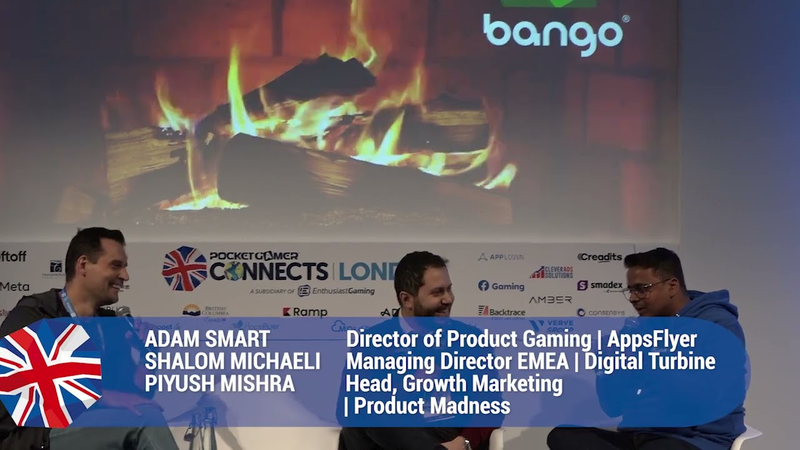
Fireside Chat: In the Sandbox With Adam & Piyush, the Live at PGC One
This discussion, held at Pocket Gamer Connects London 2023, explores the evolving landscape of mobile user acquisition (UA), supply-side mechanics, and the impact of privacy regulations on the gaming industry.
- The supply-side ecosystem—comprising SSPs, ad exchanges, and mediation platforms—functions as a multi-layered auction system where the primary goal is to maximize yield by rendering the highest-paying ad impression for the publisher.
- Publishers should determine their monetization model (IAA vs. IAP) based on game genre and the underlying economy of the title, rather than relying solely on Daily Active User (DAU) volume.
- Privacy-centric changes like iOS 14's ATT framework have forced the industry to shift toward contextual targeting and audience segmentation as alternatives to user-level data for media buying.

AI Rules At PGC London 2023, Big Fish Games’ Daniel Helmhold On Epic Branding For Every Budget
The mobile gaming industry is currently undergoing a significant transformation driven by the dual pressures of technological advancement and shifting market dynamics.
- The mobile gaming industry is shifting toward AI integration to democratize production and streamline workflows, allowing smaller studios to compete more effectively with larger entities.
- Privacy regulations like Apple’s App Tracking Transparency have created a persistent discovery crisis, significantly inflating user acquisition costs and forcing a move away from traditional growth strategies.
- Developers are increasingly adopting games-as-a-service models to prioritize long-term sustainability, focusing on community building and live operations to extend the lifecycle of titles.
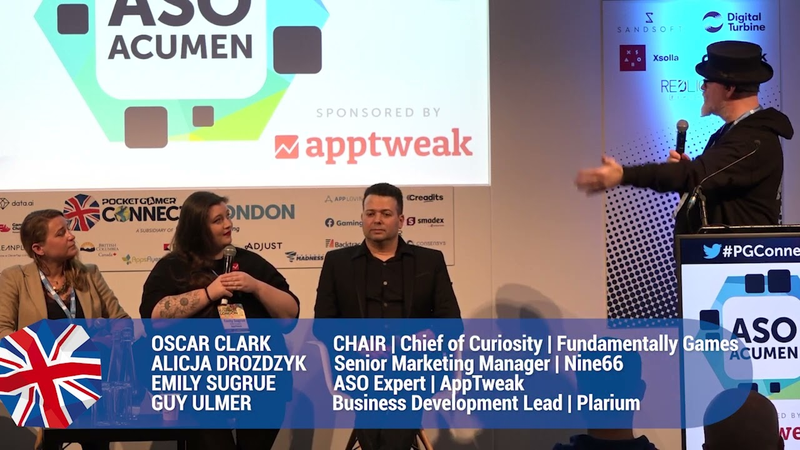
Panel: Getting Your ASO Kicked: Dealing With ASO in the Current Saturated Mobile Market.
App Store Optimization serves as a holistic, long-term strategy essential for navigating the increasingly saturated mobile gaming market.
- App Store Optimization (ASO) is not just keyword optimization; it is a holistic process encompassing creative assets, conversion rate optimization, and localization to ensure users download the app once they reach the store page.
- Developers must maintain a narrow focus on specific ASO goals—such as testing creatives or optimizing keywords—rather than attempting all strategies simultaneously, as doing too much makes it impossible to measure the impact of individual changes.
- Data privacy regulations and Apple's ATT (App Tracking Transparency) have created significant gaps in user data, with only approximately 20% of non-game users and 30% of game users opting into tracking, which complicates attribution and performance measurement.
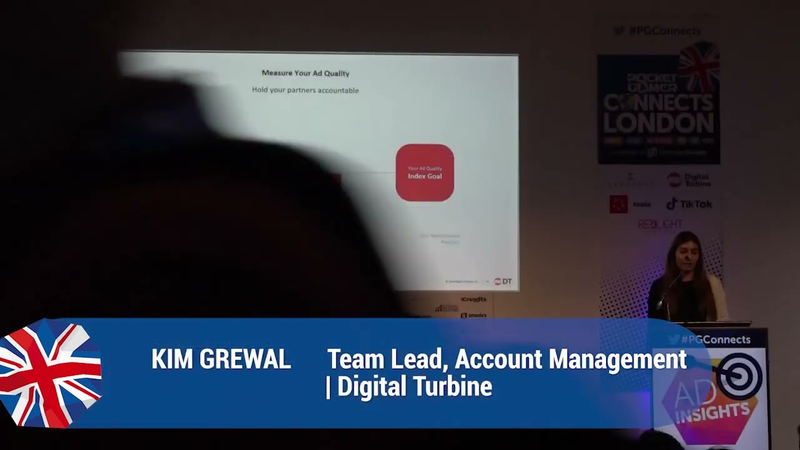
Keynote: WTF Is AQI Ad Quality Index - Kim Grewal, Digital Turbine.
The Ad Quality Index (AQI) serves as a critical metric for mobile game developers to evaluate how advertising experiences influence player retention and long-term revenue.
- The Ad Quality Index (AQI) is calculated by dividing the number of users who exit a game during or immediately after an ad by the total number of users exposed to that ad.
- Developers can isolate financial losses caused by poor ad quality by comparing the ARPDAU of user cohorts before and after exposure to specific ad networks.
- High fill rates and eCPMs often mask hidden revenue losses caused by user attrition, making AQI a necessary metric to balance short-term gains with long-term retention.
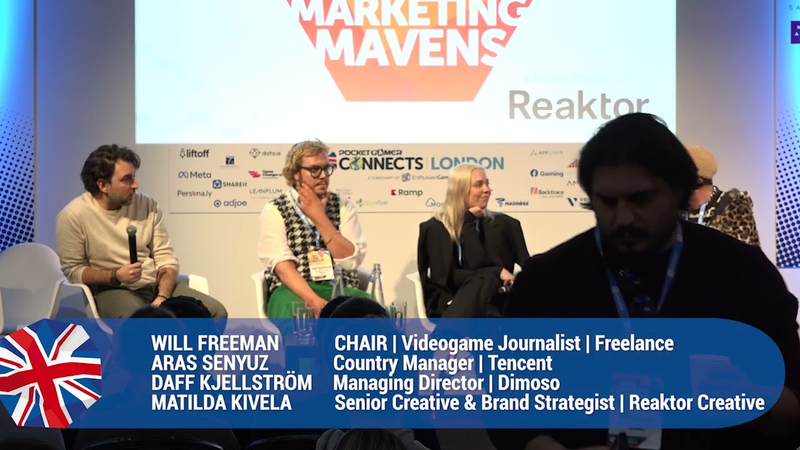
Panel: Accessible Marketing: How to Promote Growth With any Budget
This panel discussion explores strategies for effective game marketing within constrained budgets, emphasizing that financial limitations can be overcome through creativity, authenticity, and strategic planning.
- Integrate marketing into the game development process from the outset to establish a clear brand identity and prevent expensive strategic pivots later.
- Prioritize community engagement as a primary, low-cost growth driver by building platforms that allow players to contribute ideas and feel like stakeholders.
- Leverage the agility of smaller studios to rapidly test multiple creative concepts and use data to identify niche audiences that larger competitors often overlook.

Keynote: Gen Z Thinks Your Brand Is Cringe - Matilda Kivela of Reaktor Creative.
The gaming and marketing industries face a significant challenge in engaging Generation Z, a demographic that currently possesses $340 billion in purchasing power and exhibits high levels of mobile game consumption.
- Gen Z possesses $340 billion in purchasing power, yet only 8% of this demographic feels that current advertising resonates with them.
- A significant 78% of Gen Z consumers believe that brands fail to align their actual business practices with their stated corporate values.
- Brands must abandon top-down communication models in favor of a collaborative framework that treats Gen Z as equal partners in the creative process.