Market Forecast reports and market data
Documents
2025 Global Games Market Report
The global games market is entering a period of moderate maturation, with total revenue projected to reach $188.8 billion in 2025, a 3.4% increase over the previous year.
- The global games market is projected to reach $188.8 billion in 2025, a 3.4% year-over-year increase, driven by a player base that has expanded to 3.6 billion people.
- Mobile gaming remains the industry leader with $103.0 billion in revenue (55% of the total), while console gaming is expected to see the highest growth rate at 5.5%, reaching $45.9 billion.
- Average spend per player is declining, forcing a strategic shift toward long-tail engagement and retention rather than aggressive monetization in saturated markets.

Why the Games Industry Might Triple (Despite Its Challenges)
The global games industry stands at a pivotal inflection point, poised to expand into a $600 billion market by leveraging historical growth patterns and emerging technological shifts.
- The global games industry is positioned to triple in size to a $600 billion market by shifting away from high-stakes, traditional development models.
- Leadership should categorize games into four distinct quadrants based on casual versus immersive experiences and offline versus online play to better align developer skill sets and operational focus.
- The traditional AAA greenlight process is becoming obsolete, necessitating a shift toward a barbell strategy that balances stable 'forever games' with small, autonomous teams focused on iterative experimentation.

With no GTA, what are the biggest games still to come in 2025?
The 2025 gaming landscape is defined by a reliance on established intellectual property as the industry navigates a period without a major Grand Theft Auto release.
- The 2025 gaming market is anchored by established franchises including Borderlands 4, Mafia: The Old Country, Hollow Knight: Silksong, and Metal Gear Solid Delta: Snake Eater, which are currently driving the highest levels of social engagement and wish-list metrics.
- Publishers are shifting toward shorter, more focused development cycles to mitigate the financial risks associated with rising production costs and the volatility of live-service models.
- Germany has doubled its game development funding to €125 million, signaling a significant regional push to support the industry despite ongoing studio restructurings.


Mobile Gaming by Genre: Hypercasual
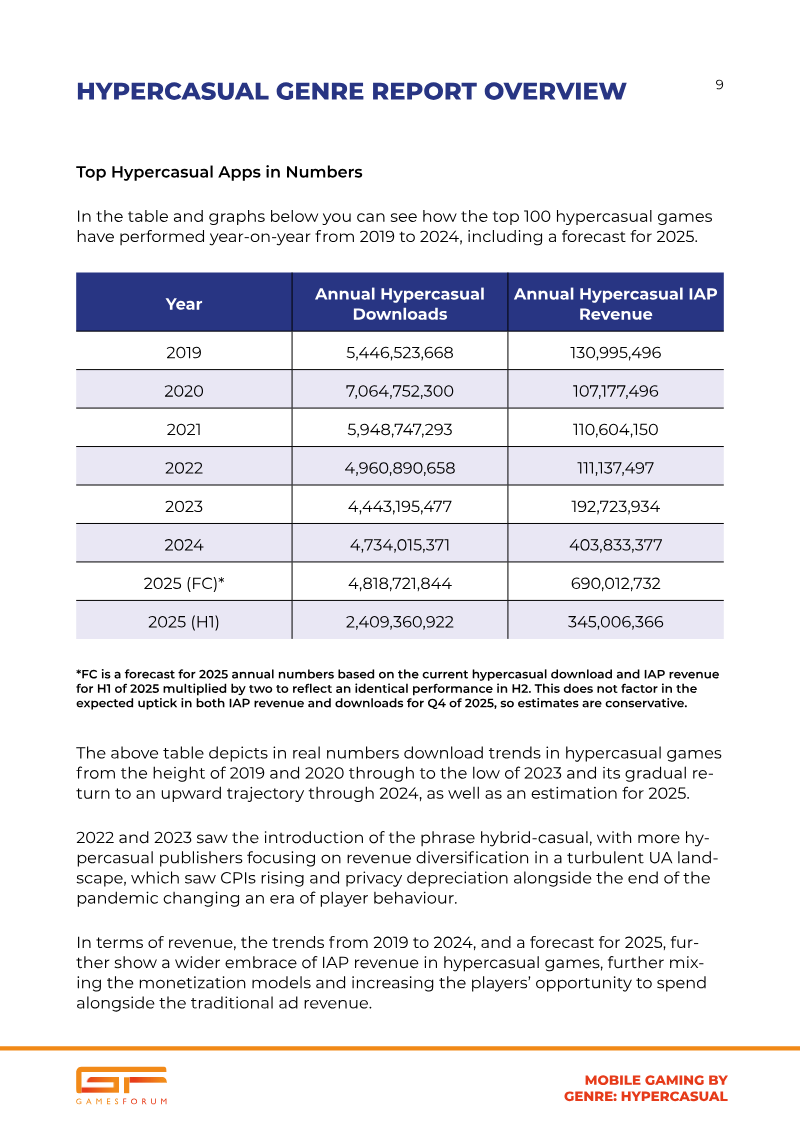
The hypercasual segment continues to dominate mobile gaming revenue, with the top 100 titles achieving 5.48 billion downloads and $345 million in in-app purchase (IAP) revenue during the first half of 2025—double the figures from 2024 and the highest ever recorded for this genre.
- Hypercasual revenue for the top 100 titles is projected to reach $690 million in 2025, a significant increase from $403 million in 2024.
- H1 2025 performance for the top 100 hypercasual titles hit record highs of 5.48 billion downloads and $345 million in IAP revenue, doubling the figures from the same period in 2024.
- Leading publishers like AZUR GAMES, Supersonic Studios, and Voodoo are shifting toward hybrid-casual models that blend traditional advertising with deeper IAP monetization to extend player engagement.

US consumers are planning to cut back on buying video games
Economic instability in the United States, characterized by rising costs for essential goods such as food, utilities, and insurance, has significantly dampened consumer sentiment to levels not seen since mid-2022.
- The US video game market growth forecast has been revised from a projected 4.3% increase to a 4.7% decline due to economic instability and rising costs for essential goods.
- Approximately 30% of US consumers intend to reduce their spending on entertainment and gaming as financial pressure reaches levels not seen since mid-2022.
- Consumer engagement is shifting toward high-value, low-friction platforms like Fortnite and subscription services, which allow users to maximize utility while minimizing discretionary spending.

Session: The State of Gaming 2025: Mobile Trends, Transmedia Impact & Global Shifts by Josh Skinner
The state of the global gaming industry in early 2025 reflects a period of stabilization and strategic evolution, characterized by a shift in revenue models and the increasing importance of cross-platform engagement.
- Strategy games have overtaken RPGs in quarterly consumer spend for the first time, while action games saw a 53% year-over-year growth in Q1 2025.
- Global mobile gaming revenue growth is currently driven exclusively by iOS, as Android gaming revenue experienced a decline in Q1 2025.
- While total worldwide mobile game downloads are down year-over-year, in-app purchase revenue has seen slight growth, indicating a shift toward higher monetization per user.

The Xbox handheld is unlikely to do big numbers, but that's not the point
The ROG Xbox Ally X represents a strategic shift for Microsoft, positioning a high-end, Windows-based PC handheld as a specialized tool for the most dedicated and lucrative segment of the Xbox ecosystem.
- The PC handheld market is projected to grow from an estimated 4.1 million units in late 2024 to nearly 13 million units by 2028.
- Microsoft is positioning high-end Windows-based handhelds as specialized tools for high-spending core users rather than mass-market competitors to the Nintendo Switch.
- Nintendo expects the Switch 2 to reach 30 million units sold by the end of its launch year, though concerns persist regarding the lack of a flagship 'system-seller' title at launch.

Nintendo Switch 2: Will Lightning Strike Twice? | Breaking Down the Upcoming Launch
The Nintendo Switch 2 launch represents a significant milestone for the gaming industry, building upon the success of its predecessor, which surpassed 140 million units sold.
- The Nintendo Switch 2 will launch with a base model price of $449 and a $499 bundle including Mario Kart, targeting a holiday market with minimal hardware competition.
- The console follows the original Switch, which achieved a significant market footprint with over 140 million units sold.
- Unity is partnering with Konami to remake the 1998 title Survival Kids, serving as a strategic test case for engine optimization and the viability of porting mobile-oriented games to the new architecture.

Mobile Gaming in 2025: 10 Trends That Matter
The global mobile gaming industry has entered a period of maturity characterized by stagnant download volumes and a shift toward long-term stability.
- The mobile gaming market has reached maturity with stagnant download volumes since 2020, forcing a strategic shift toward hybrid-casual models that combine accessible gameplay with deep meta-progression.
- New game launches are declining as developers extend soft launch periods to an average of 200 days to refine retention and overcome high market entry barriers.
- Revenue remains concentrated in established titles with deep content ecosystems, making intellectual property collaborations and market expansion—as seen with Monopoly Go—essential for new entrants.

The Xsolla Report: State of Play Q2 2025
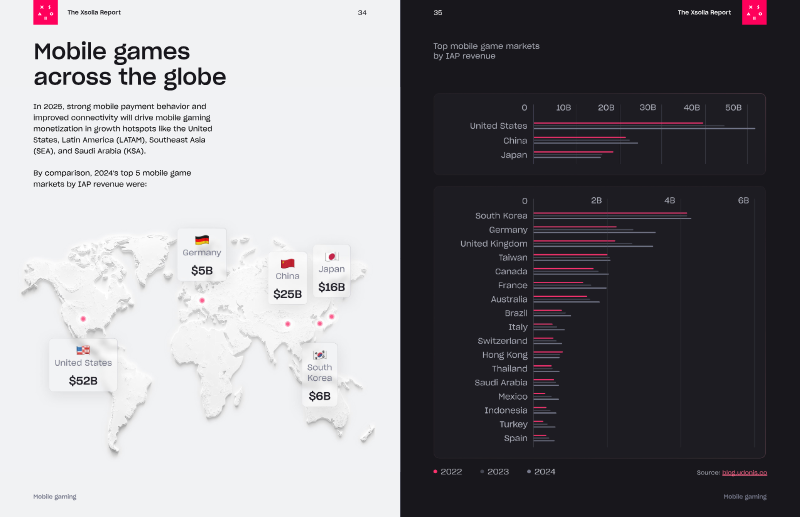
Mobile gaming has become the dominant engine of the global video-game market, now accounting for more than half of total industry revenue and projected to exceed $126 billion in 2025, with an overall forecast of $150 billion for the segment.
- Mobile gaming is the industry's primary revenue driver, projected to reach $126 billion in 2025 with a total segment forecast of $150 billion.
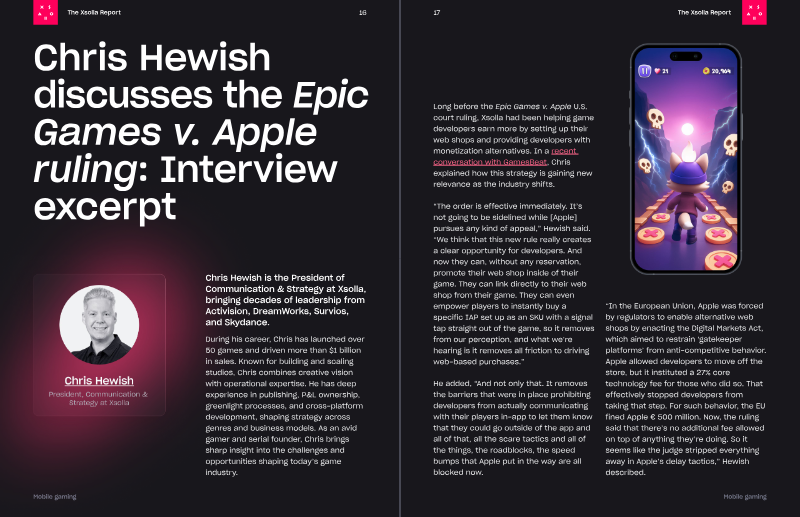
- Following the April 2025 Epic Games v. Apple court order, developers can now utilize direct-to-consumer web-shops to retain up to 95% of transaction value, with early adopters seeing millions in revenue recovery.
- Hybrid monetization models—combining in-app purchases, advertising, and subscriptions—are used by 72% of developers and account for approximately 75% of total mobile revenue.
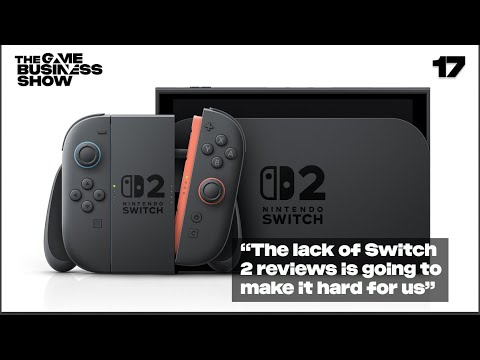
Major media outlets will not have Nintendo Switch 2 reviews at launch
Nintendo is adopting a conservative strategy for the upcoming Switch 2 launch, targeting 15 million units in the first fiscal year.
- Nintendo is targeting 15 million units for the Switch 2 in its first fiscal year while withholding review units from major media outlets at launch to accommodate day-one software patches.
- The delay of major titles like Grand Theft Auto 6 is projected to cause a $2.7 billion loss in console-related revenue, negatively impacting PlayStation 5 and Xbox Series sales.
- Hardware spending in the gaming market dropped 32% in the first quarter, reflecting a broader industry downturn and a shift toward margin improvement over expansion.
Press Start on Growth: Unlocking the Full Potential of the UK Video Games Industry
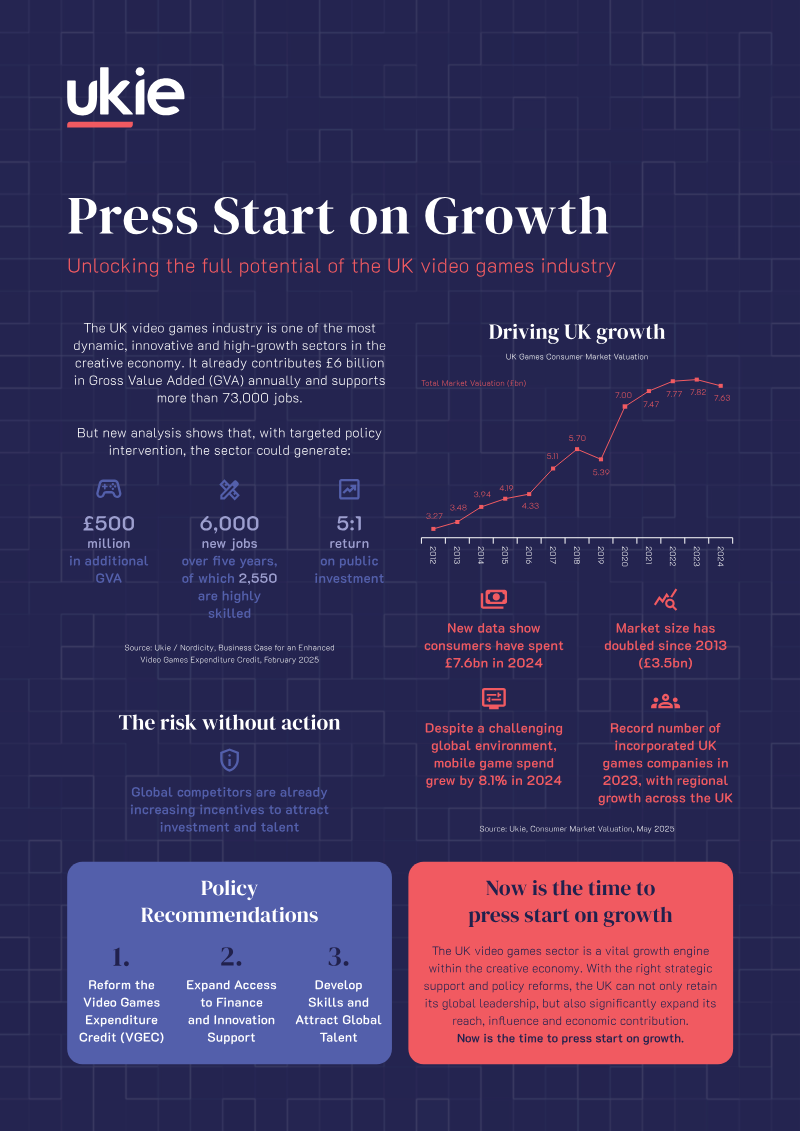
The analysis argues that the United Kingdom’s video-games sector is a high-growth pillar of the creative economy, already delivering roughly £6 billion in gross value added (GVA) and supporting more than 73 000 jobs, and that strategic policy action could lift its contribution to about £7.6 billion in 2024 and generate an…
- The UK video games industry currently contributes £6 billion in gross value added (GVA) and supports over 73,000 jobs, with the potential to add £5.7 billion in GVA and 5.4 million jobs over the next five years through strategic policy intervention.
- Physical boxed software sales have collapsed, falling 34% year-on-year to represent only 4% of total market spend.
- Esports experienced a significant surge of 44% year-on-year, driven by an increase in UK-based tournaments, contrasting with a 15% contraction in live-event spending.