1 free read left. Create a free account for unlimited reading + AI research.
Create free accountReport Anzu
Anzu
1 free read left. Create a free account for unlimited reading + AI research.
Create free accountReportAnzu
The audience moves away from the isolated young male stereotype toward a mainstream, diverse population. A significant portion falls into middle-to-high income brackets.
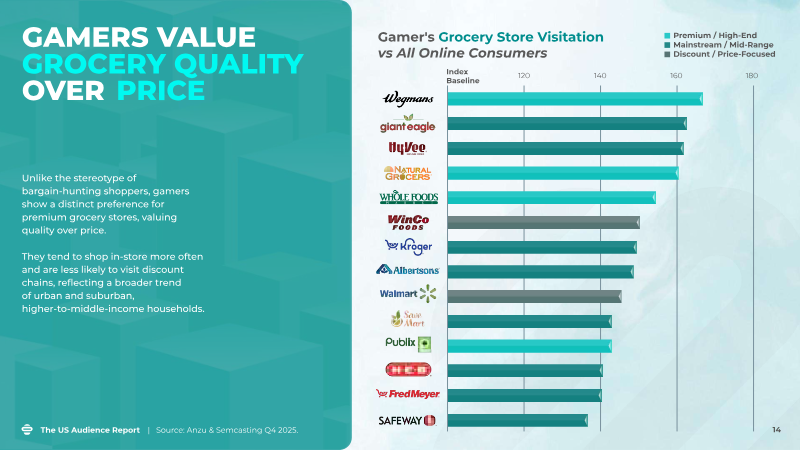
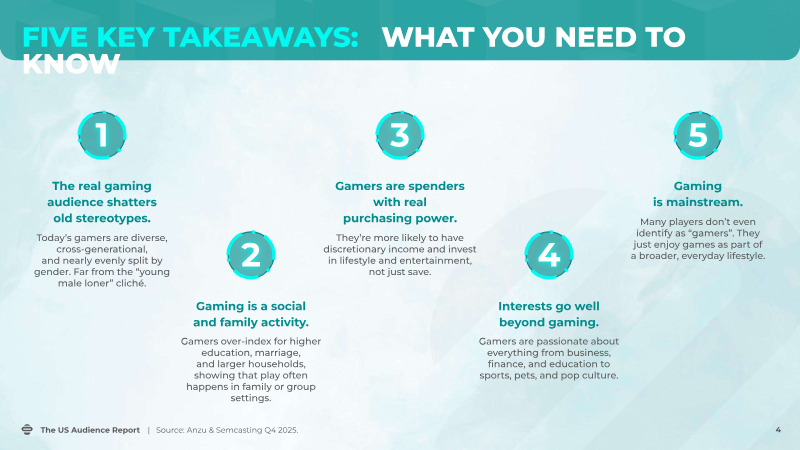
See it on page 11The 2025 United States gaming landscape reflects a profound demographic shift, moving away from the outdated stereotype of the isolated young male toward a mainstream, diverse population nearly evenly split by gender. Modern gamers are characterized by high levels of education and financial stability, with a significant portion of the audience falling into middle-to-high income brackets ranging from $51,000 to over $250,000 in net worth. This population views gaming as a social and familial cornerstone rather than a solitary pursuit, possessing substantial purchasing power that prioritizes immediate lifestyle quality, premium groceries, and discretionary spending over long-term asset accumulation.
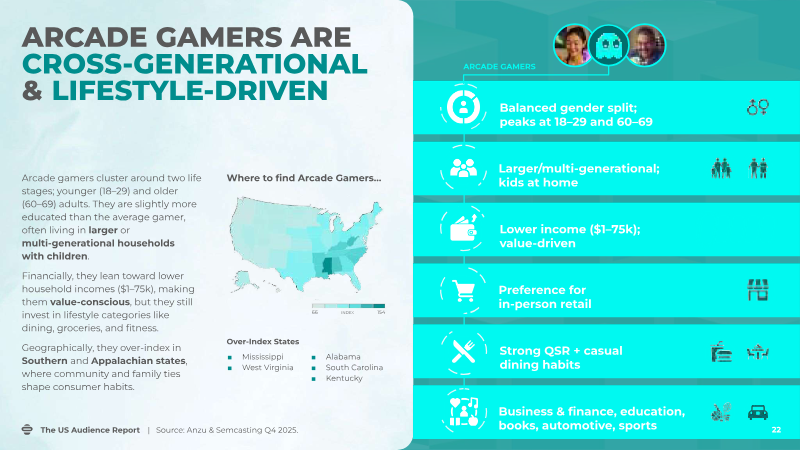
Physical activity and convenience define the daily habits of this audience, as they over-index in gym attendance and outdoor recreation. Consumer behavior remains nuanced across different genres; for instance, Action and Simulation players tend to be more tech-focused and affluent, whereas Casual and Arcade gamers often reside in multi-generational, value-conscious households. Despite these differences, a universal reliance on delivery services, mainstream fast-food brands, and budget-friendly fitness options persists across the entire segment. This suggests a consumer base that values efficiency and digital integration in their physical lives.
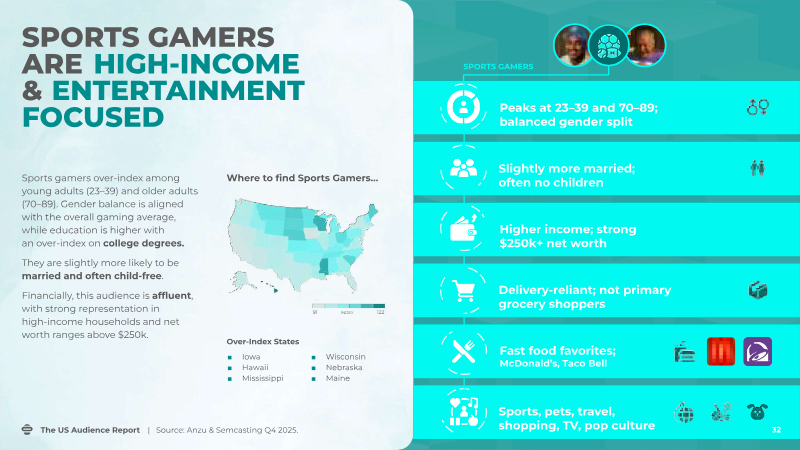
The market is further segmented into distinct personas ranging from tech-savvy "Young Lifestyle Explorers" to financially secure "Golden Fans" over the age of 70. High-value opportunities for precision targeting exist within specific niches, such as sports gamers who dominate the highest income tiers or board and trivia enthusiasts who exhibit practical, family-oriented spending patterns. Geographically concentrated in hubs like Iowa and Hawaii, these diverse audiences offer brands a sophisticated landscape of consumers who defy traditional tropes, presenting a high-value target for advertisers across nearly every life stage and socioeconomic category.