Global reports and market data
Documents


flâneur, a Walkthrough: Locative Literature as Participation and Play
The "flâneur" project explores the potential of locative literature, specifically the "textopia" system, to enrich the experience of everyday spaces through geotagged, user-contributed literary texts accessible via a smartphone application.
- Locative literature depends on user-generated content for its aesthetic aims, but contributions do not appear simply because they are invited; participation must be actively facilitated.
- The October 2008 textopia writing competition drew 46 submissions and offered cash prizes of around 1300 euro with notable media attention, yet it did not produce lasting use of the system.
- The flâneur game (2009–2010) yielded modest results, with its final online round producing only 13 texts despite generally positive participant feedback.


Digital Games as Experiment Stimulus
Digital games offer researchers a rich but demanding experimental stimulus, and this work argues that their careful use can advance experimental psychology and human-computer interaction.
- Digital games are a valuable experimental stimulus because they are familiar and engaging to most participants, can safely evoke emotions, and can simulate ethically sensitive scenarios that are hard to recreate in a lab.
- Survey evidence cited in the report shows broad population reach, with 72 percent of U.S. households and 54 percent of Finnish respondents being active gamers.
- Interactive games vary from player to player due to differences in skill, AI behavior, randomness, and prior familiarity, making stimulus control much harder than with conventional experimental materials.



Game Design Tools: Time to Evaluate
The game design industry currently operates without specialized tools tailored to the unique complexities of conceptualizing and balancing interactive systems.
- Game designers have historically relied on natural-language design documents and physical or simplified prototypes, both of which struggle to capture the systemic, emergent behavior of games.
- The central claim is that numerous formal frameworks and software tools for game design have been developed (including Machinations, Ludocore, and Sketch-It-Up), yet none have been meaningfully evaluated in practical settings.
- The field has lacked a common formal vocabulary and standardized notation for game mechanics, and critics have long pointed to reliance on anecdote and intuition as a barrier to rigor.



Meta-Synthesis of Player Typologies
The "Meta-Synthesis of Player Typologies" provides a comprehensive overview of player segmentation models within game research, aiming to refine understanding of player motivations for enhanced game design and marketing strategies.
- The literature on player typologies is surprisingly uniform: Bartle's four player types, Yee's three-factor motivational model, and other schemes cluster around psychographic and behavioral bases and share recurring concepts such as achievement and sociability.
- The authors argue the widely used hardcore/casual dichotomy is too simplistic and should be understood as a continuum rather than two discrete categories.
- Psychographic and behavioral categories resist clean separation, since motivation drives behavior and the two are difficult to disentangle empirically.

Visualizing Persuasive Structures in Advergames
The document, "Visualizing Persuasive Structures in Advergames," posits that effective advergame design necessitates a comprehensive approach beyond mere procedural rhetoric, advocating for the integration of diverse persuasive dimensions, notably narrative persuasion.
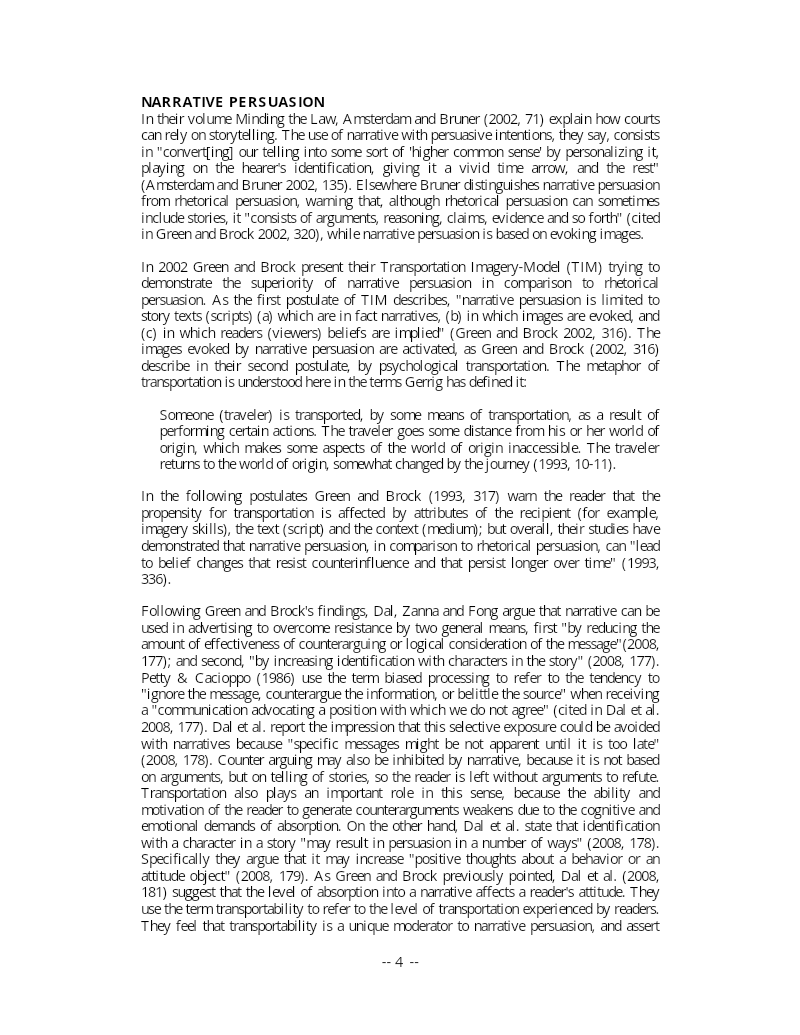
- Procedural rhetoric alone is insufficient for advergames; the authors argue they should combine narrative, visual, audiovisual, and textual persuasion across five communication levels, forming a "double pyramid" structure.
- In the double pyramid model, one persuasive dimension is dominant and guides players through the others, ensuring the intended message is received rather than left to optional content players may ignore.
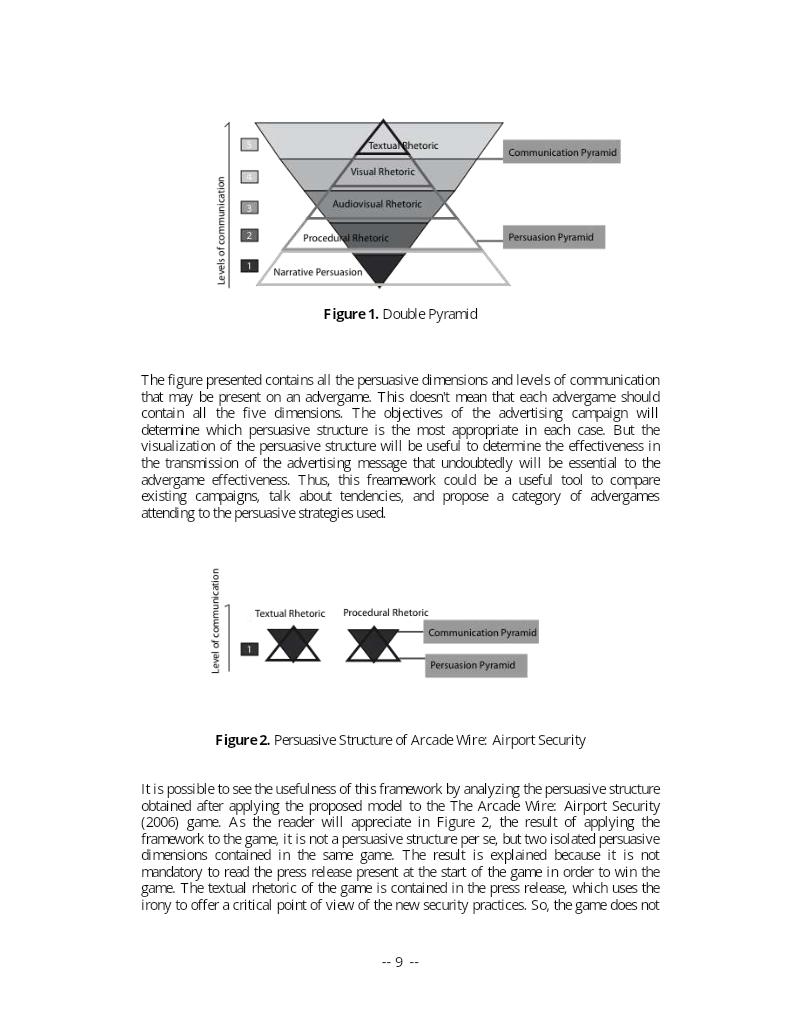
- Arcade Wire: Airport Security was found to lack full autonomy and to have a misalignment between learning and game goals, since players could succeed without absorbing the persuasive message.


Well Played: Volume 1, Number 1
Well Played establishes a scholarly framework for analyzing video games as complex cultural artifacts, prioritizing the intersection of mechanical design, player experience, and identity formation.
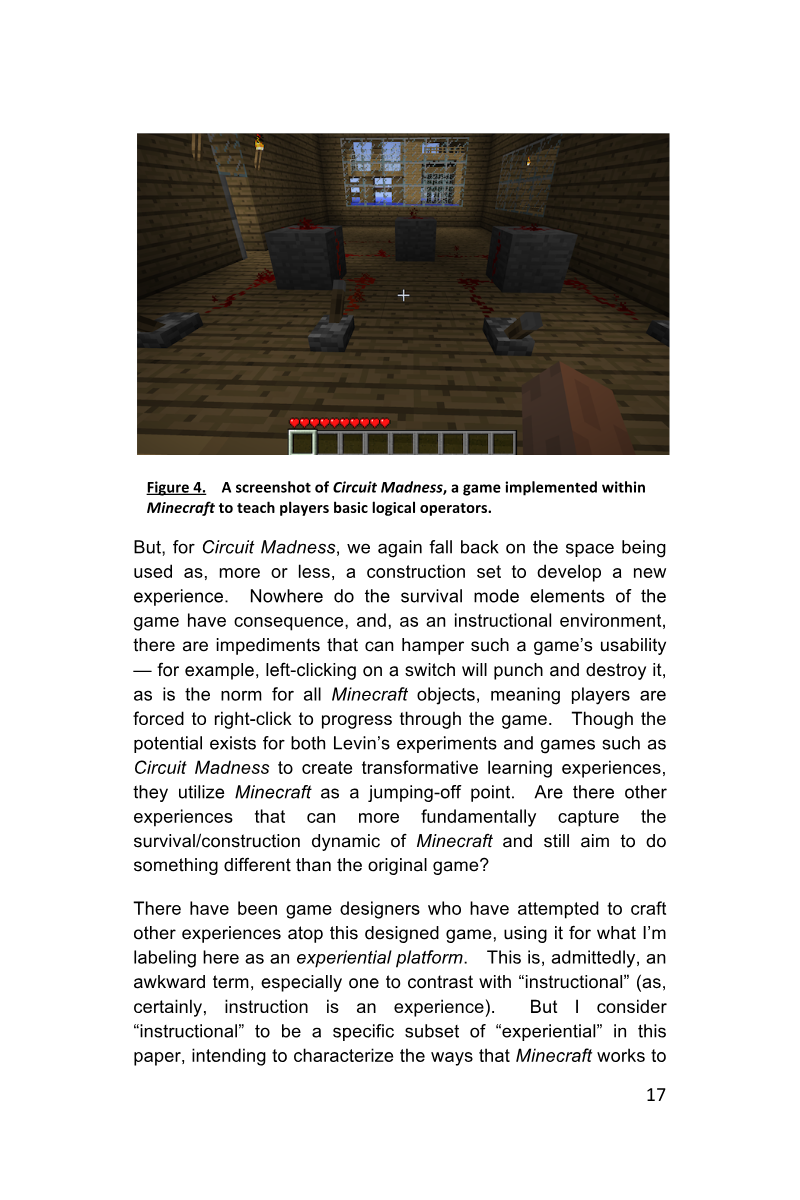
- Effective game design relies on balancing structured constraints with emergent behavior to guide player interaction rather than merely providing content.
- Players develop 'projective identities' by reconciling their real-world selves with virtual roles through a mix of solitary challenges and collaborative social environments.
- Design choices directly dictate player outcomes, such as Minecraft’s survival-creative tension fostering experimentation versus Left 4 Dead 2’s linear architecture mandating team synchronization.

First-Person Shooters: Immersion and Attention
First-person shooter immersion has been studied as a multifaceted and still-contested phenomenon, and the research discussed here frames it as a convergence of perceptual, attentional, and design factors.
- Immersion in first-person shooters lacks a single accepted definition, but scholars broadly agree it involves incorporation into the gameworld, emotional involvement, and perceived plausibility rather than strict realism.
- The research frames immersion as a sustained state of selective attention, in which players filter out their physical surroundings and focus on the gameworld, sustained by self-motivated engagement and a sense of progression rather than task difficulty alone.
- Routinized, automated control actions free cognitive resources for gameplay, and Brown and Cairns' three-level model (engagement, engrossment, total immersion) describes how attention shifts progressively toward the virtual environment.


Well Played 3.0: Video Games, Value and Meaning
Well Played 3.0 serves as a comprehensive collection of analytical essays dedicated to the "close reading" of video games, aiming to establish a rigorous framework for game literacy.
- Effective game design utilizes 'procedural rhetoric,' where specific mechanics—such as the restrictive corridors of Final Fantasy XIII or the demanding interfaces of Heavy Rain—are engineered to externalize psychological themes and narrative stakes.
- Games function as complex, multi-vocal texts that require a dual-methodological approach, balancing the subjective pleasure of the player with the objective distance of critical analysis.
- Titles like Pokémon and World of Warcraft serve as sophisticated informal learning environments where players independently master vast datasets and develop technical skills that often surpass formal classroom education.
Monstrous Textuality: Game Fiction between Postmodernism and Structuralism
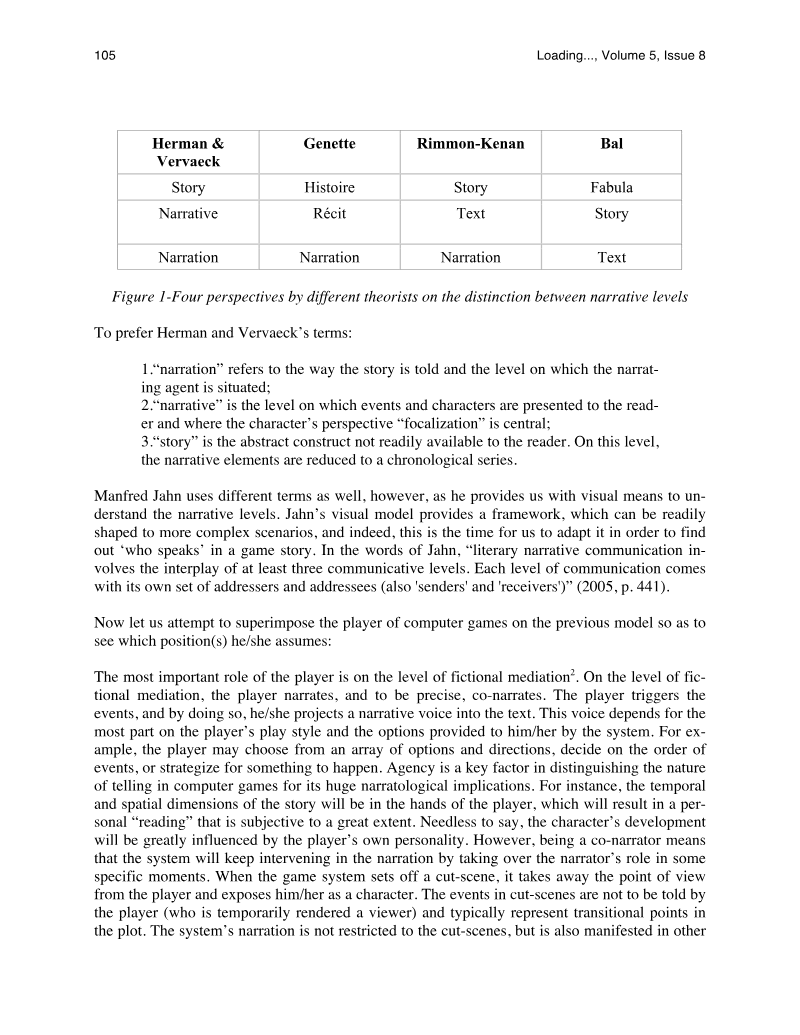
This analysis challenges the common characterization of computer game narratives as postmodern, "monstrous" texts that defy structuralist classification.
- Game narratives are not inherently chaotic or postmodern but are governed by rigid, rule-based structural prearrangements.
- The perceived 'monstrosity' or nonlinearity of digital fiction is an analytical illusion caused by applying inadequate theoretical frameworks rather than an actual lack of structure.
- Using the 2007 title BioShock as a case study, research confirms that player agency operates strictly within the parameters of the game’s programmed code and narrative architecture.
“There’s no fixed course”: Rhizomatic learning communities in adolescent videogaming
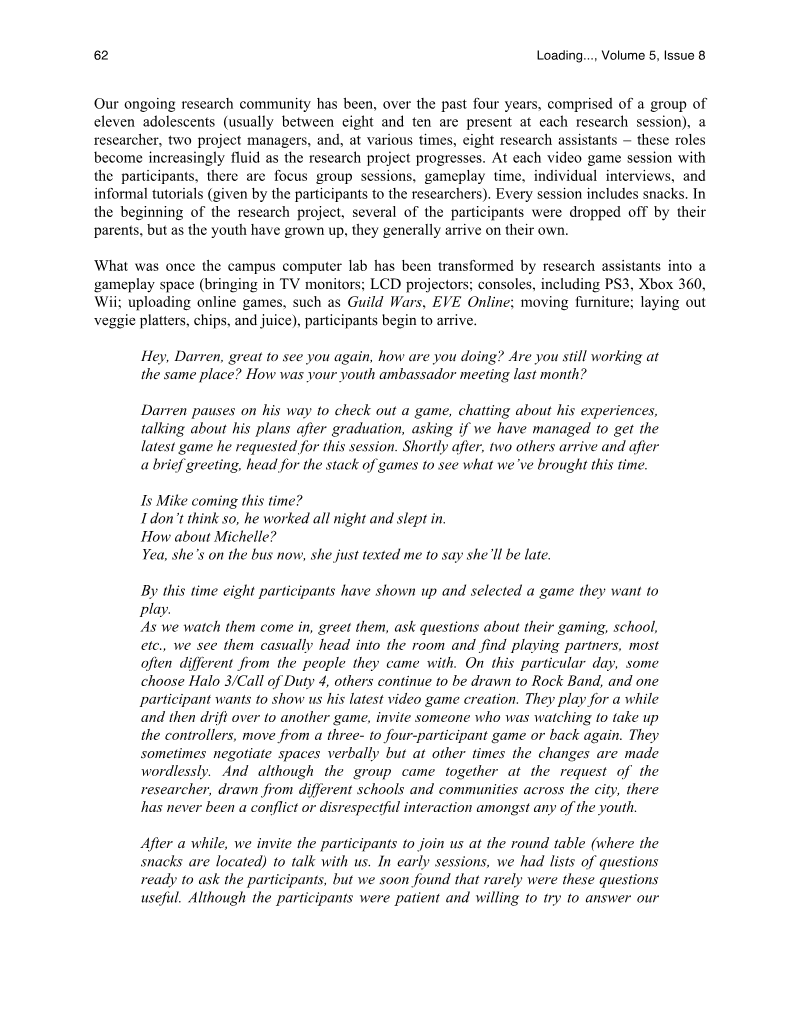
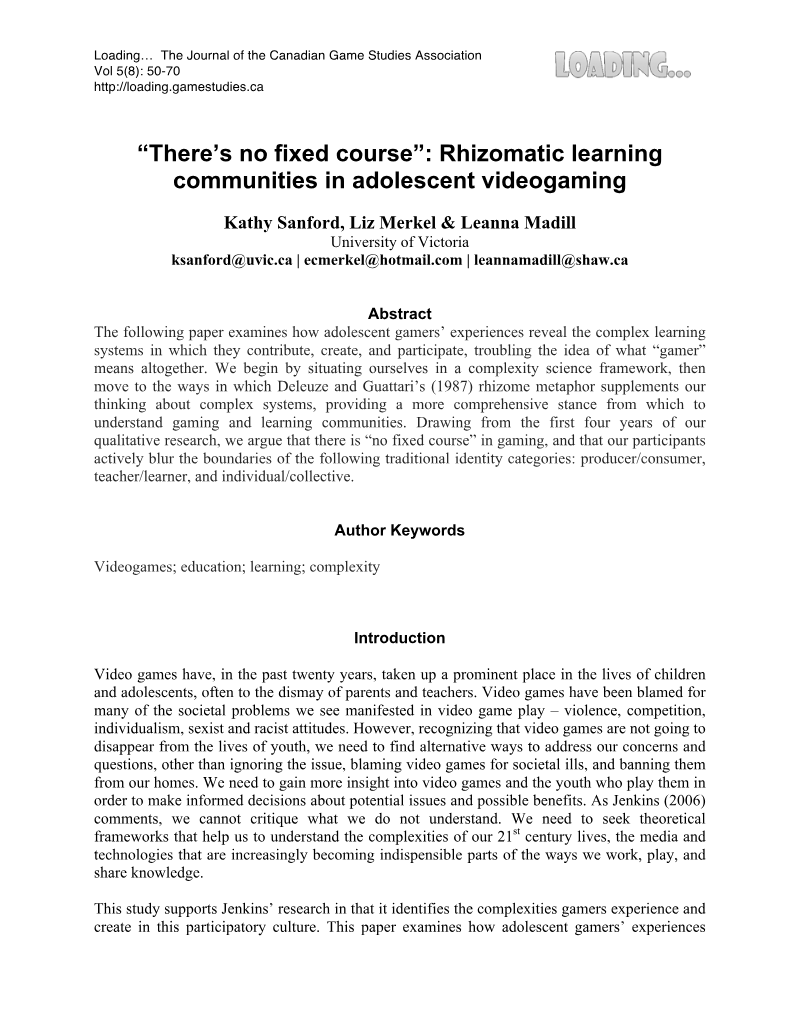
Adolescent gaming communities operate as decentralized, rhizomatic networks that fundamentally challenge traditional educational paradigms.
- Adolescent gaming communities function as decentralized, rhizomatic networks that prioritize organic, non-linear knowledge acquisition over static, outcome-based curricula.
- The traditional distinction between producers and consumers, as well as teachers and learners, is dissolved within these digital spaces, fostering fluid and hybrid roles.
- Participants actively develop creative and critical identities through collaborative activities such as modding, machinima, and collective content creation.
Video Game Presence as a Function of Genre
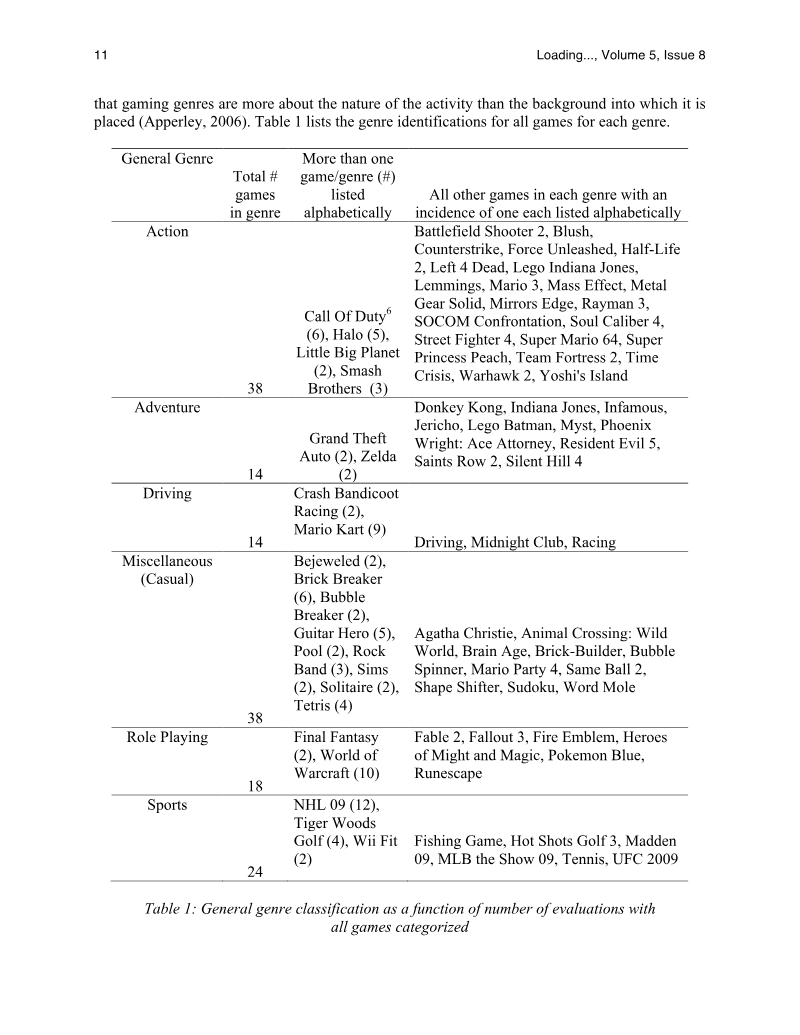
The experience of presence—defined as the psychological sensation of being immersed within a mediated environment—is fundamentally shaped by the structural characteristics of specific video game genres.
- Hardcore genres—specifically action, adventure, and role-playing games—consistently generate higher levels of psychological presence and immersion than casual or cartoon-style titles.
- A factor analysis of 155 controlled participants identified nine distinct components of presence that account for over 70% of the variance in player experience.
- The disparity in engagement between hardcore and casual titles is a measurable psychological response to specific design elements rather than an anecdotal observation.
What Defines Video Game Genre? Thinking about Genre Study after the Great Divide
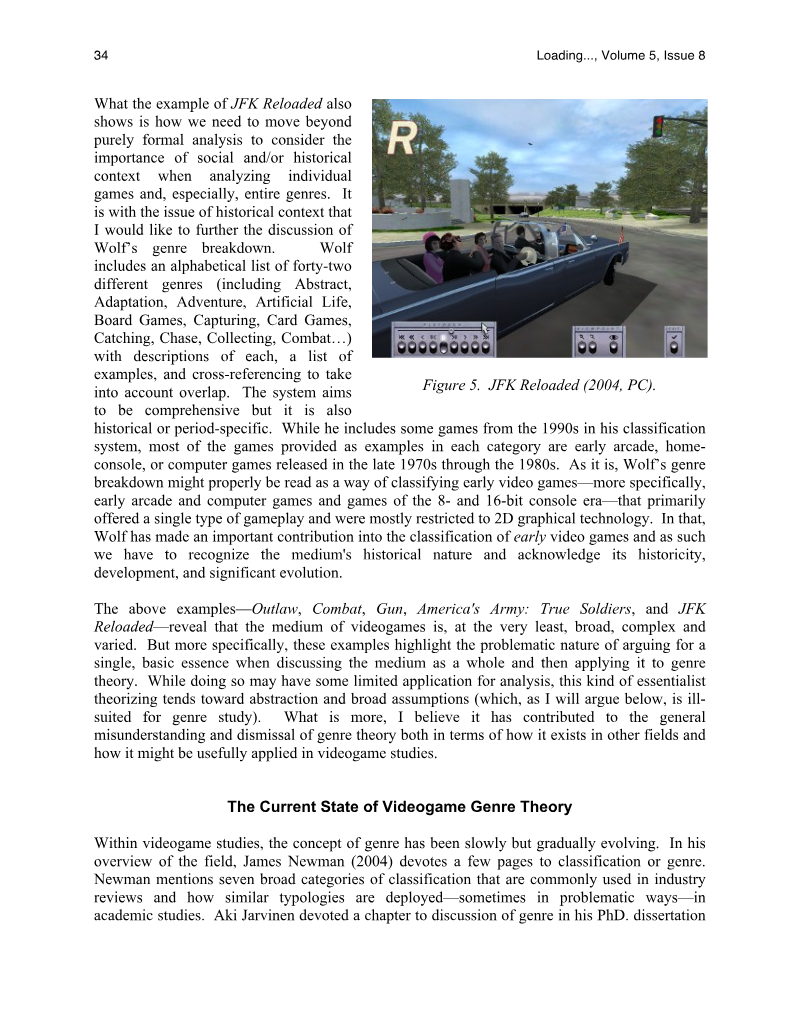
Video game genre study requires a fundamental shift away from rigid, formalist taxonomies toward a holistic, multi-dimensional framework.
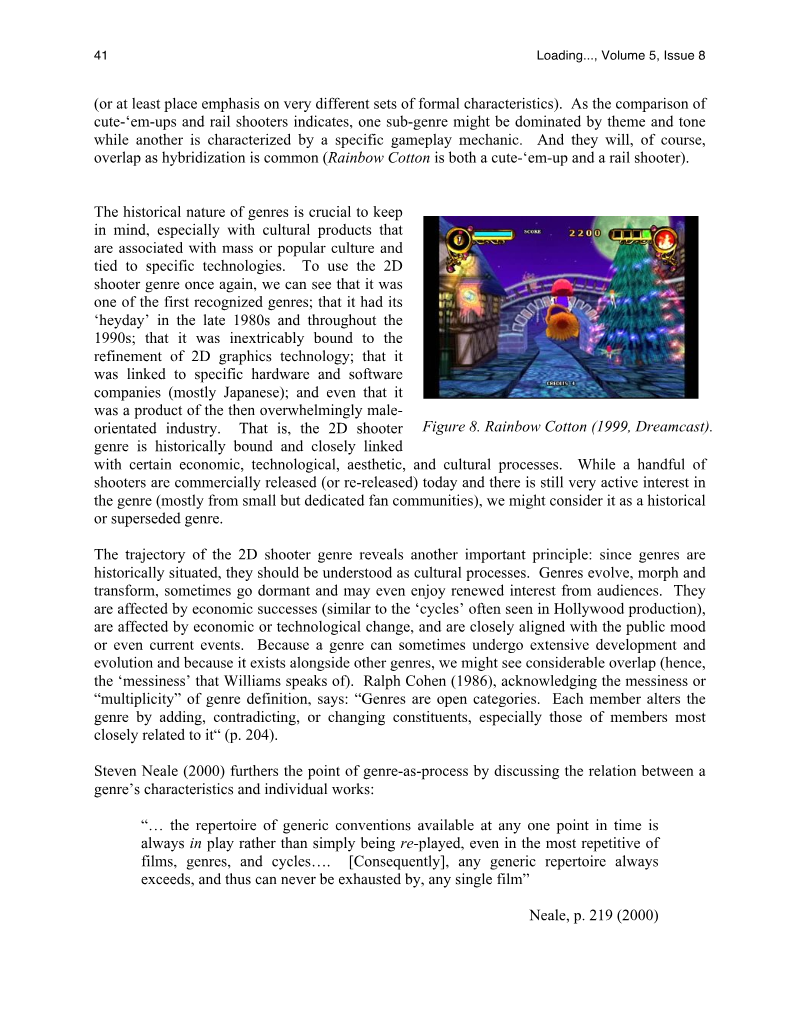
- Video game genre should be analyzed as a dynamic social construction shaped by hardware, marketing, and player expectations rather than as a rigid, formalist taxonomy.
- Traditional genre study is limited by the historical divide between narrative and ludology, which fails to account for the medium's inherent complexity.
- Genre classification is an intertextual process that emerges from the intersection of institutional production and diverse audience reception.