Game Studies reports and market data
Documents
How is Learning in Edu-Larp as a Method Described and Seen by Practitioners?
Educational live-action role-playing functions as a sophisticated pedagogical framework that leverages immersion, agency, and playfulness to foster deep learning.
- The efficacy of educational live-action role-playing (edu-larp) depends on the synthesis of experiential embodiment during play and rigorous post-experience reflection to solidify learning outcomes.
- Edu-larp functions as a constructivist pedagogical framework that utilizes immersion, agency, and social interaction to develop empathy and social competencies alongside academic content.
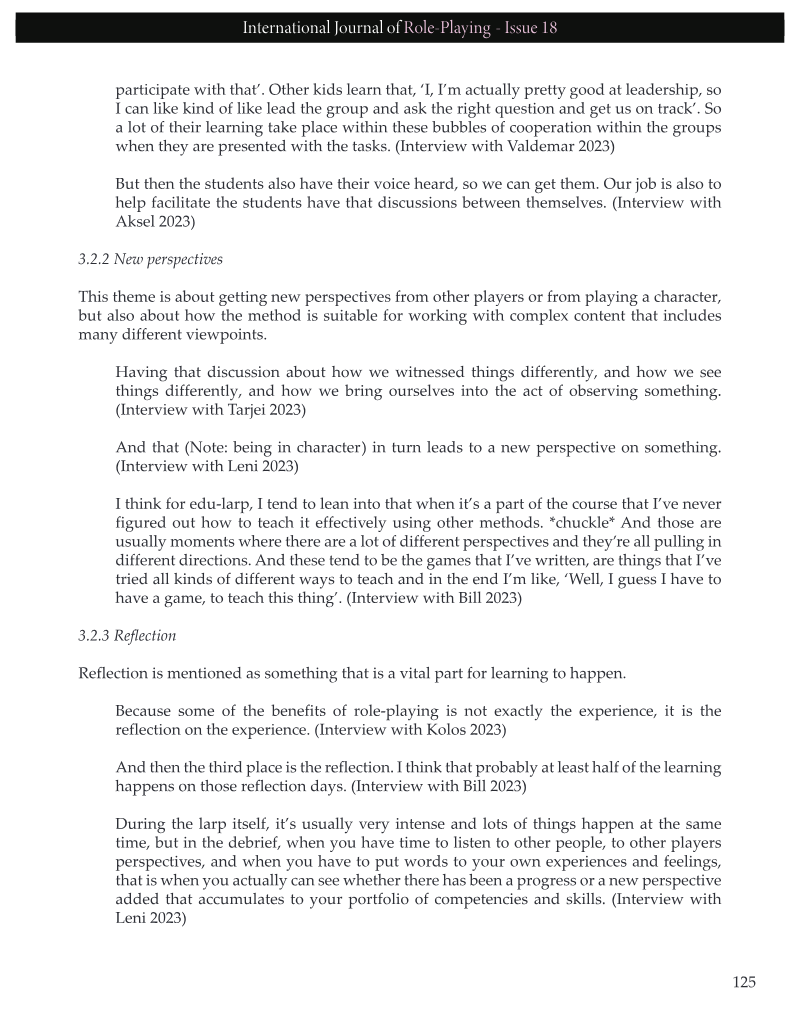
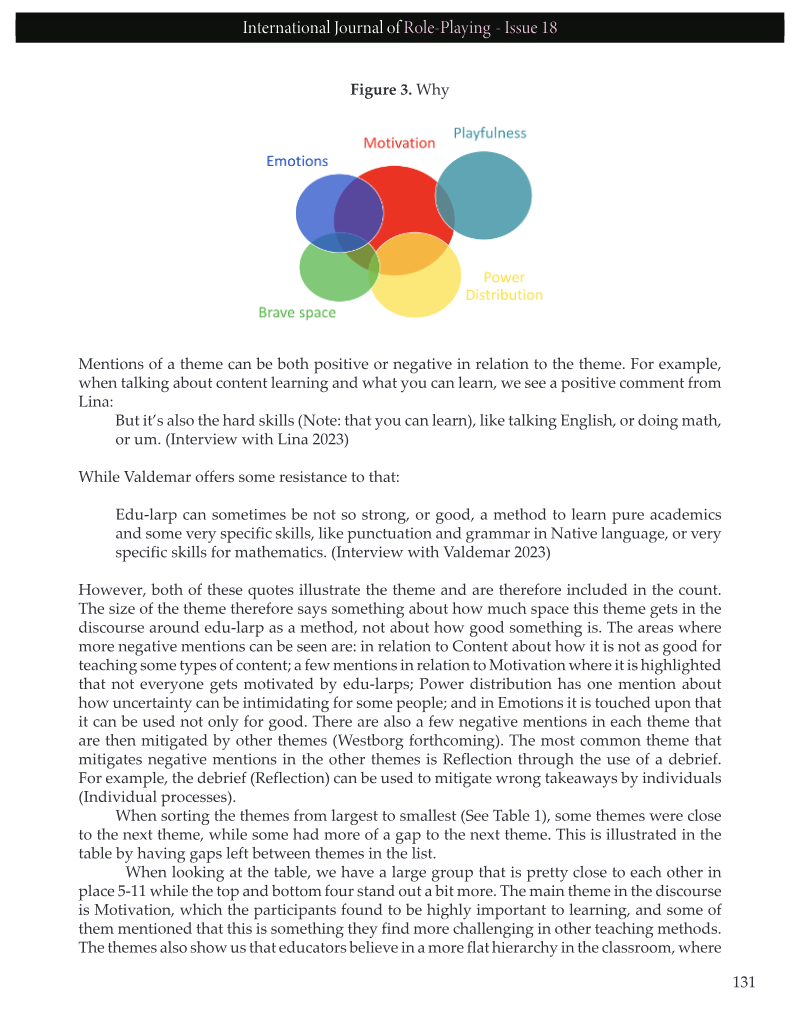
- The creation of a 'brave space'—a safe, immersive environment with distributed power—is identified by practitioners as the primary driver for student motivation.
The Dynamic Loop Model: A Systemic-Cybernetic Meta-Theoretical Framework for TRPGs
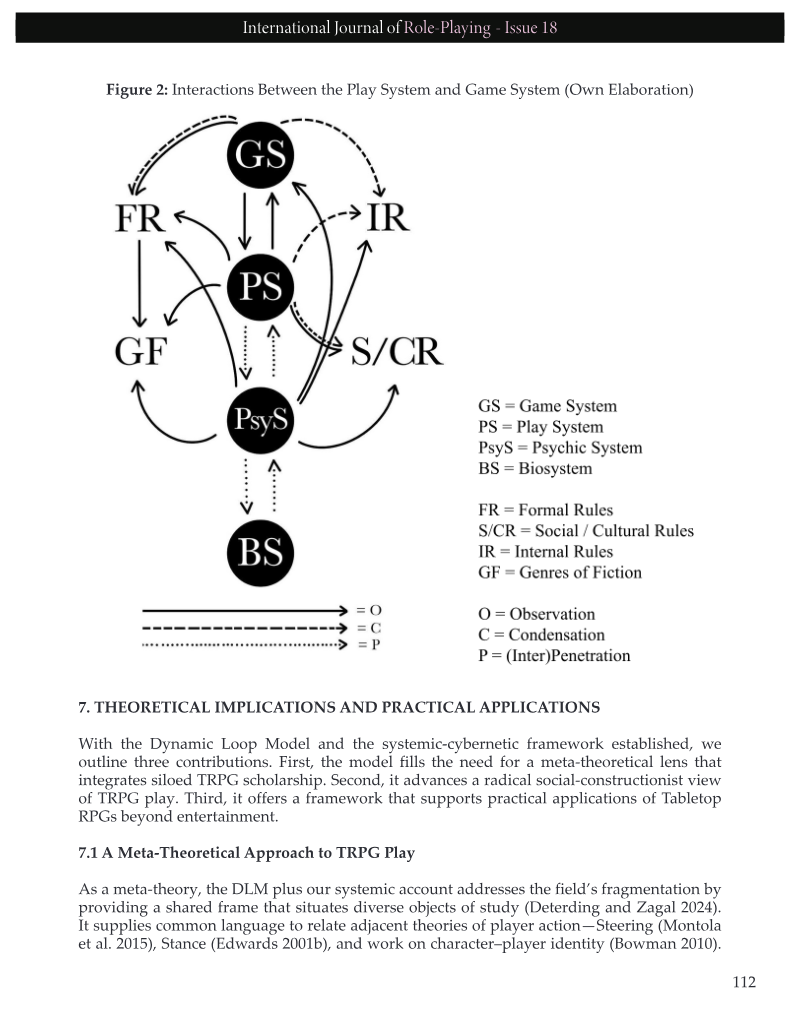
Tabletop role-playing games function as self-regulating, autopoietic systems of communication that maintain coherence through recursive feedback loops.
- TRPGs function as autopoietic, self-regulating systems that maintain narrative and mechanical coherence through recursive feedback loops.
- The model defines play as a systemic-cybernetic process that reduces complexity by continuously mediating between individual psychic systems and the broader social environment.
- Mechanical resolution acts as a structural coupling mechanism that triggers when narrative uncertainty arises, updating the game state to ensure system viability.
How Do You Want to Do This?: Us, Role-Playing Games, and the End of the World
This analysis examines the intersection of tabletop role-playing games (TTRPGs), digital media, and capitalist ideology, using the popular actual play series Critical Role as a primary case study.
- The transition of TTRPGs from private activities to monetized media like Critical Role has constrained narrative structures within capitalist ideological frameworks.
- High-fantasy narratives in actual play series often rely on 'gestural anti-capitalism,' where systemic failures are reduced to individual moral failings rather than structural exploitation.
- The mechanical reliance on combat and wealth acquisition within TTRPG systems inherently limits the potential for radical political critique, reinforcing the status quo.
Losing and Finding Oneself: Duo- and Autoethnographic Study of "Character" in the Larp Superrealism
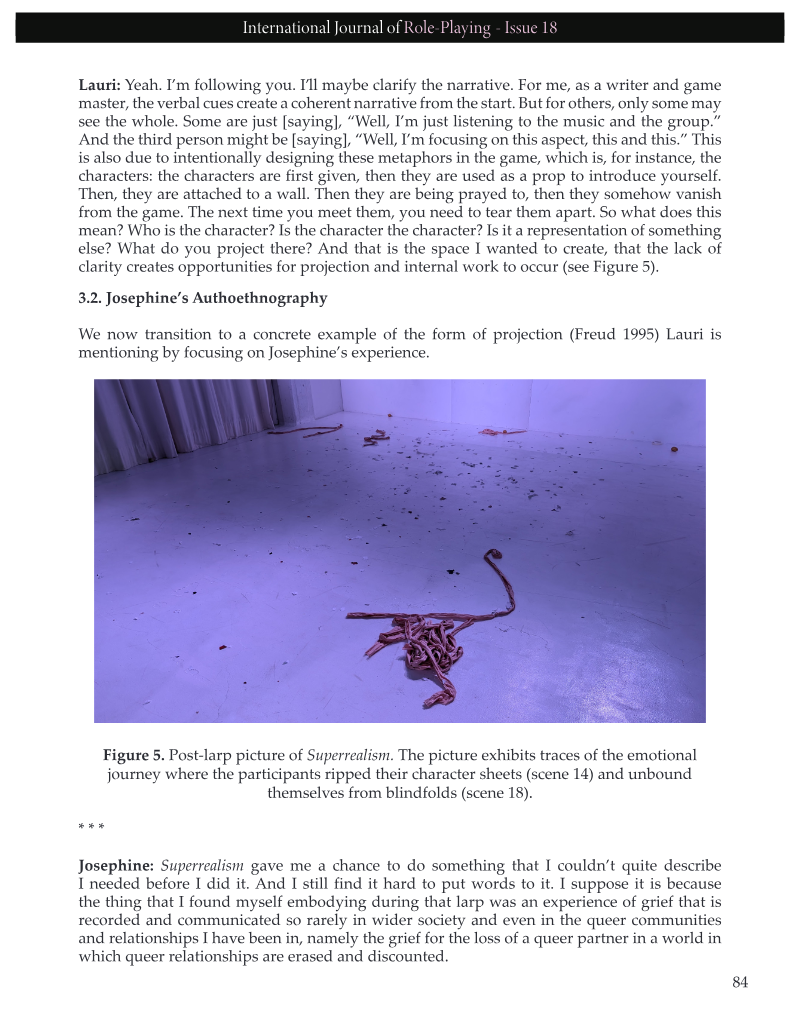
The larp Superrealism serves as a unique case study for understanding how abstract, non-verbal, and music-driven game design facilitates profound personal transformation.
- Minimalist character frameworks and vague narrative prompts act as primary catalysts for deep emotional processing and self-discovery in larp.
- The absence of explicit narrative structure shifts the value of the game from designer intent to the player’s ability to project internal histories and repressed emotions onto the experience.
- The phenomenon of 'bleed'—where personal emotions permeate the character—is a central mechanism for transformative play in non-verbal, music-driven environments.
Hack, Slash, Heal, Repeat: Theorizing the Concept of the Murderhobo in Dungeons & Dragons
This analysis examines the concept of the "murderhobo" within tabletop role-playing games, specifically focusing on Dungeons & Dragons.
- The 'murderhobo' playstyle is defined by a lack of permanent character roots, a focus on combat-driven loot acquisition, and the treatment of NPCs as expendable obstacles.
- This behavior is driven by the intersection of player habitus, the gaming field, and the accumulation of symbolic capital through mastery of game rules.
- Foundational components of this style include prioritizing adventure over narrative, accepting character death as an inevitable outcome, and emphasizing combat as the primary game function.
Another Kind of Future/Past: Decolonial and Asiafuturist Imagination in the Philippines
Contemporary Filipino tabletop role-playing games serve as a vital medium for decolonial storytelling, functioning as speculative projects that challenge Western-centric narratives.
- Contemporary Filipino tabletop RPGs, including titles like The Islands of Sina Una, Gubat Banwa, Karanduun, BALIKBAYAAN, and ON THE BONES OF BATALA, function as a medium for decolonial storytelling and cultural reconstruction.
- These games utilize speculative fiction and fantasy to subvert colonial tropes, actively reimagining pre-colonial indigenous mythology and folklore to dismantle lingering colonial structures.
- The movement draws direct intellectual lineage from 19th-century anti-colonial writers such as Pedro Paterno and Isabelo de los Reyes, bridging historical scholarship with modern interactive media.
Tabletop Role-Playing Games for Teamwork: A Pilot of a Methodology for Developing Socio-emotional Skills
Tabletop role-playing games serve as a potent experiential learning tool for addressing critical socio-emotional skill gaps within professional environments.
- A pilot study of 49 ICT professionals across ten teams demonstrated that Dungeons & Dragons 5th Edition serves as a viable, cost-effective methodology for improving workplace competencies.
- Participants engaged in 80 hours of online gameplay, which resulted in statistically significant improvements in self-efficacy regarding the creation of innovative work environments.
- Qualitative feedback from the 49 participants highlighted substantial gains in creative problem-solving abilities and the mitigation of workplace stress.
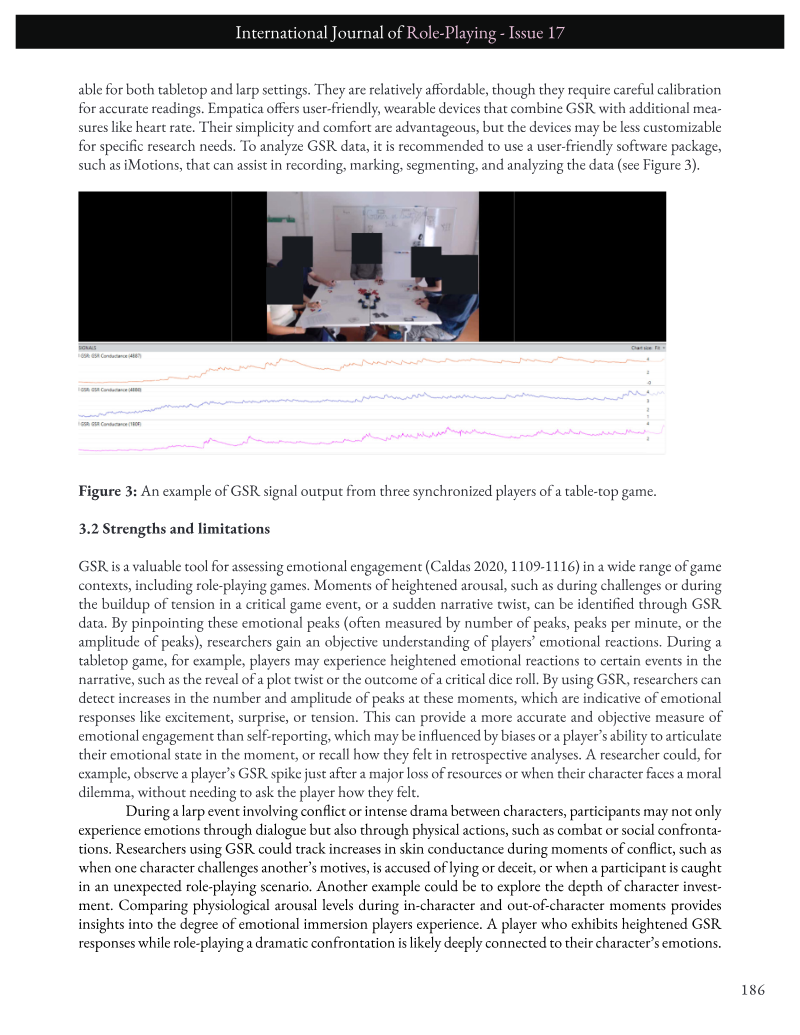
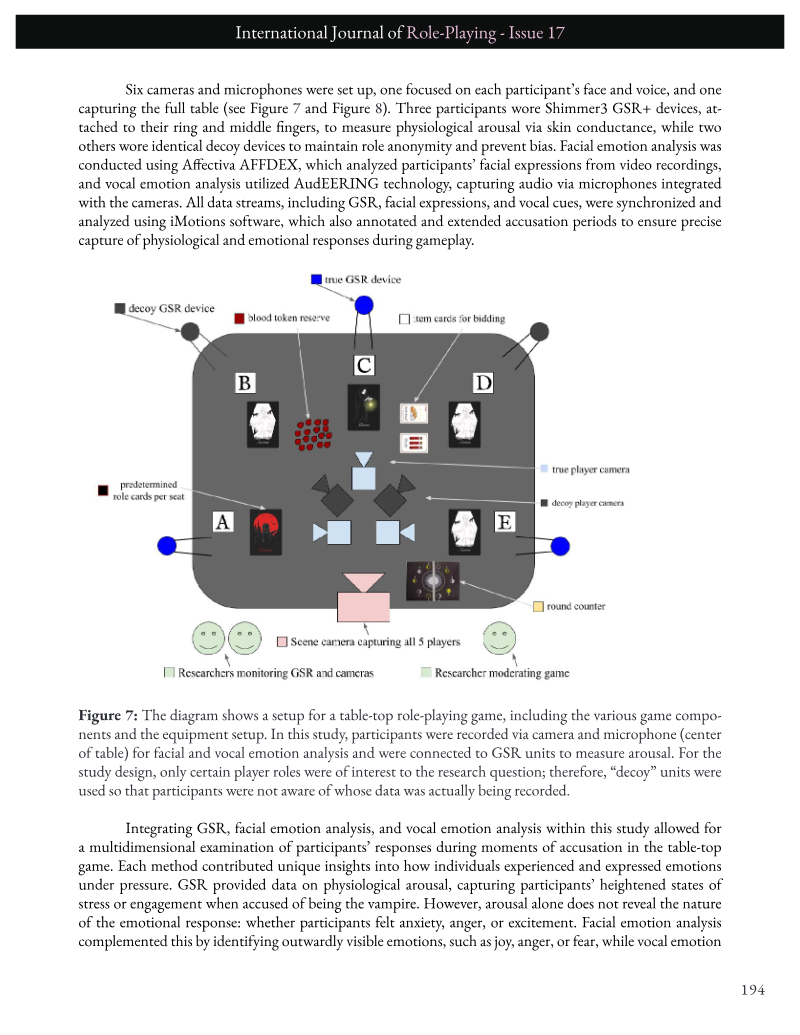
Utilizing Psychophysiological Measures in Role-playing Studies
The integration of psychophysiological measures into role-playing game research provides a robust framework for capturing objective, real-time data on player engagement, cognitive processing, and emotional arousal.
- Psychophysiological tools like eye-tracking, galvanic skin response, heart rate monitoring, and emotion analysis provide objective, real-time data on player engagement that surpasses the limitations of self-reporting.
- Integrating physiological metrics allows designers to precisely quantify immersion, cognitive processing, and emotional arousal during complex narrative and social interactions.
- A mixed-methods approach is essential to mitigate challenges such as individual variability, environmental noise, and the difficulty of isolating specific emotional states.
Rewriting the Rules: Game-based Learning for Affective and Cognitive Student Engagement
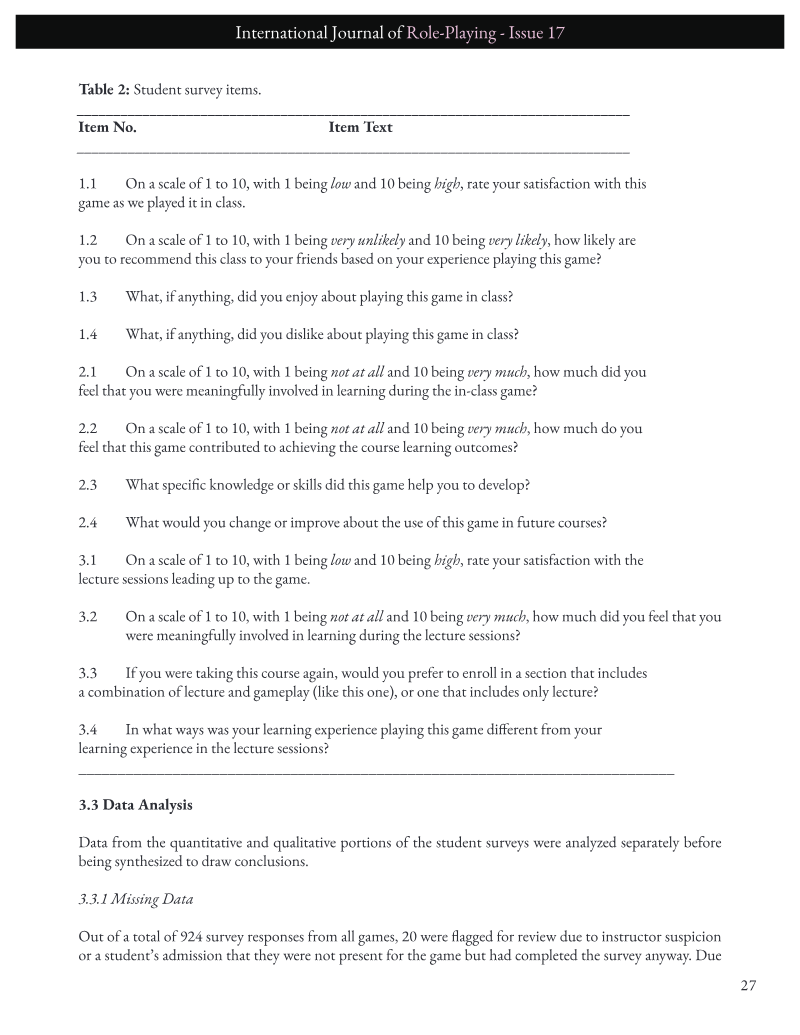
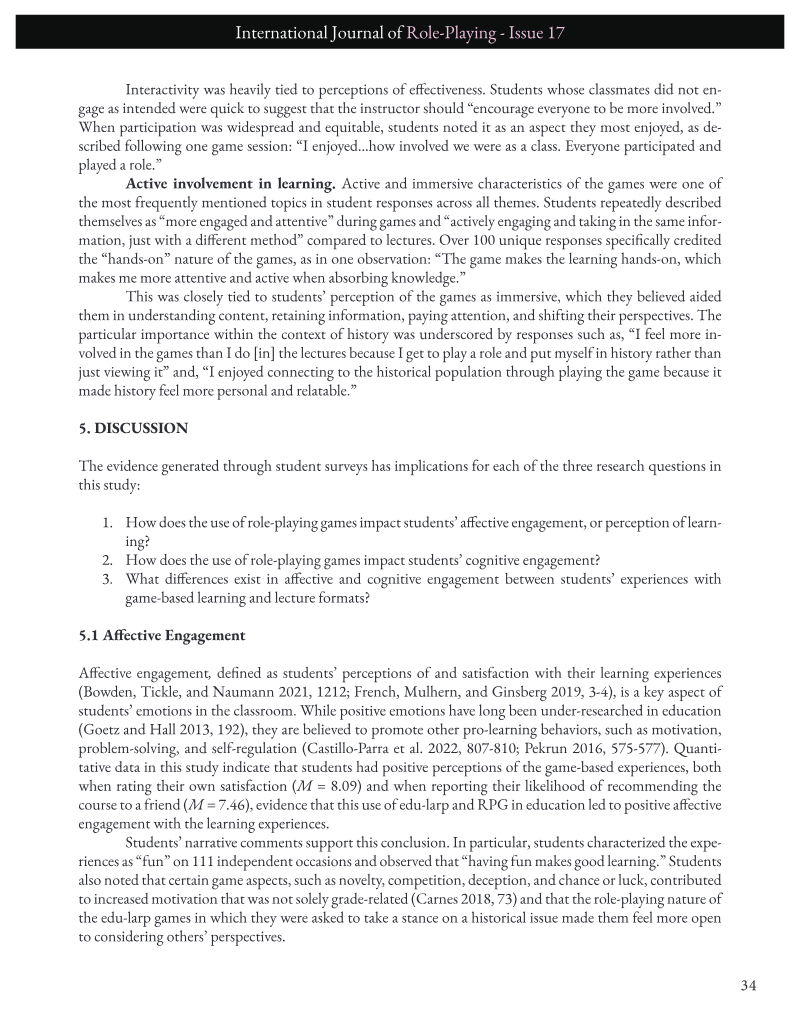
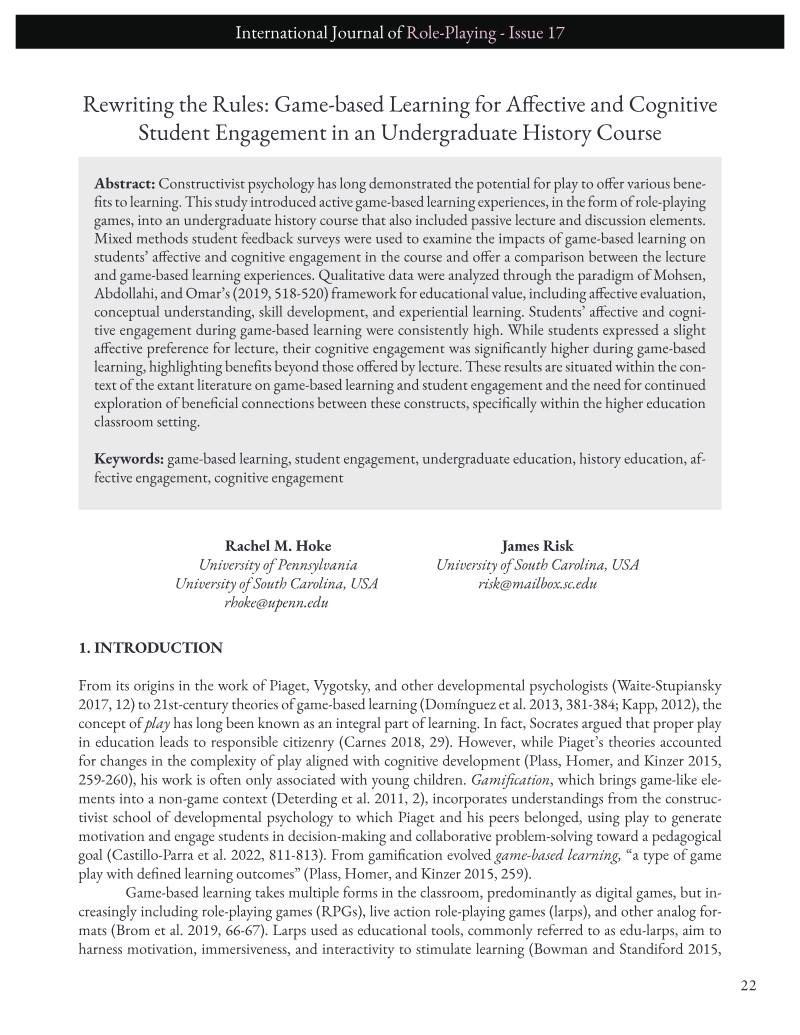
Integrating role-playing games and educational live-action role-playing games into undergraduate history curricula serves as a powerful pedagogical strategy for enhancing student engagement.
- Game-based learning, including role-playing and live-action simulations, significantly outperforms traditional lectures in fostering cognitive engagement and conceptual understanding among undergraduate history students.
- Data from a survey of 924 students reveals a dichotomy where participants express a preference for the comfort of traditional lectures despite demonstrating higher cognitive performance during game-based sessions.
- Immersive game-based strategies are effective tools for developing critical thinking, collaboration, executive function, and the ability to adopt diverse perspectives on complex historical topics.
From Tradition to Interaction: A Systematic Literature Review of Cultural Heritage Representation in Entertainment Videogames
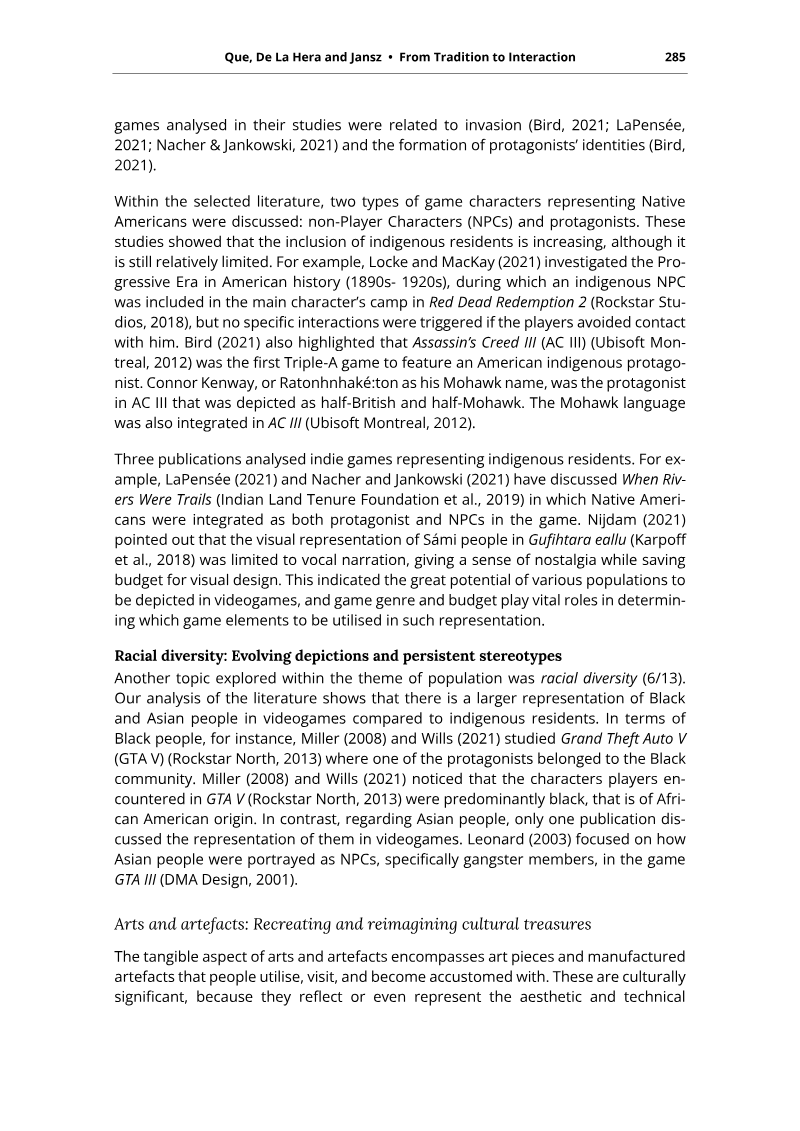
This systematic literature review examines how cultural heritage is represented in entertainment videogames, analysing 80 publications from 2005 to 2022 identified through a PRISMA-guided Scopus search and ASReview-assisted screening.
- The review analyses 80 publications from 2005 to 2022, identified via a PRISMA-guided Scopus search and ASReview-assisted screening, and applies a tangible/intangible heritage framework adapted from Balela and Mundy.
- Scholarship is heavily skewed toward European heritage (notably Nordic mythology and architecture) and modern American culture as depicted in Grand Theft Auto, while Asian heritage is markedly understudied.
- Research concentrates on Triple-A role-playing and real-time strategy titles on PC and consoles, leaving mobile and indie games largely unexamined.
Reified Gameplay: Revisiting Playbour Through Critical Theory
Manninen's article argues that the concept of "playbour," which blurs the boundary between play and labour in digital games, can be sharpened through critical theory.
- Manninen proposes 'reified gameplay' as a more rigorous alternative to the ambiguous term 'playbour,' built on Marx's alienation, Lukács's reification, and Adorno and Horkheimer's critique of the culture industry.
- The article argues that the liberal-romantic view of play as separate from work is outdated under neoliberal conditions, where play is increasingly absorbed into economic purpose.
- Reified gameplay is defined as play that becomes instrumentalised, repetitive, and economically purposeful, with play resembling labour through shifting goals, structurally limited player agency, and repetitive technical engagement.
The Infusion of Virtuality and Reality: Video Games in Exhibition Space and the Flow of Power
This research examines video games in exhibition spaces as ecosystems of human and non-human actors, focusing on how agency and power circulate among institutions, artists, audiences, and machines.
- Video games in exhibition spaces redistribute agency among institutions, artists, audiences, and machines, destabilizing traditional curatorial hierarchies and making exhibition power dynamics more complex and less stable.
- Games tend to attract more diverse visitor types and give audiences greater agency within the exhibition experience.
- Technological labour and machine maintenance function as non-human participants in game-based exhibitions, and are often overlooked because they are treated as mere tools.