Game Publishing reports and market data
Documents
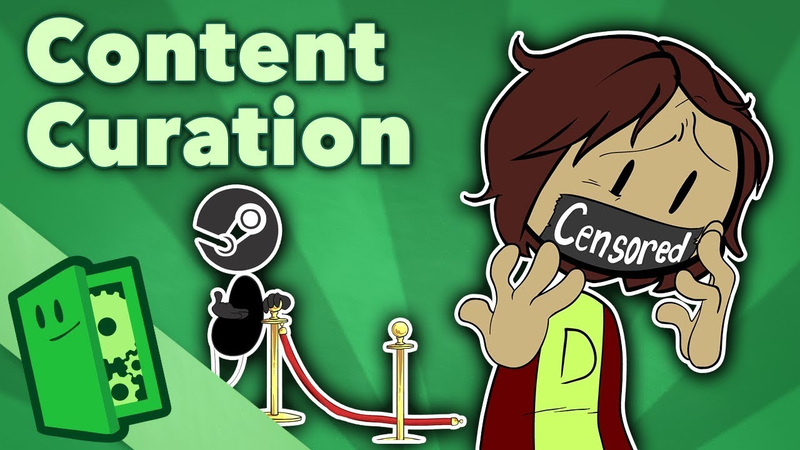
Content Curation - Why Digital Game Stores Are So Selective - Extra Credits
Digital game storefronts utilize content curation primarily as a strategic business decision rather than a moral one, aiming to define the user experience and align platform offerings with specific brand identities.
- Digital storefronts curate content as a strategic business decision to define brand identity and manage user experience, rather than as a moral or censorship-based initiative.
- Platform holders categorize curation into four distinct pillars: functionality (technical stability), quality (baseline value), content (brand safety), and relevance (niche alignment).
- Console manufacturers like Sony and Microsoft enforce strict functionality standards, whereas platforms like Steam historically maintain more open, less restrictive policies.

So You're Ready to Pitch to a Publisher? You're Not
Securing a publishing deal in the modern indie landscape requires a fundamental shift in perspective, moving away from unrealistic expectations of massive financial windfalls toward a pragmatic understanding of market viability.
- Publishers prioritize projects with realistic sales targets between 30,000 and 150,000 units rather than seeking massive financial windfalls.
- A successful pitch deck must be designed to stand alone, enabling internal stakeholders to advocate for the project without the developer present.
- The vertical slice or first playable demo must be tailored to the genre: action-adventure titles require high visual fidelity, while systems-based games must prioritize functional, proven design loops.
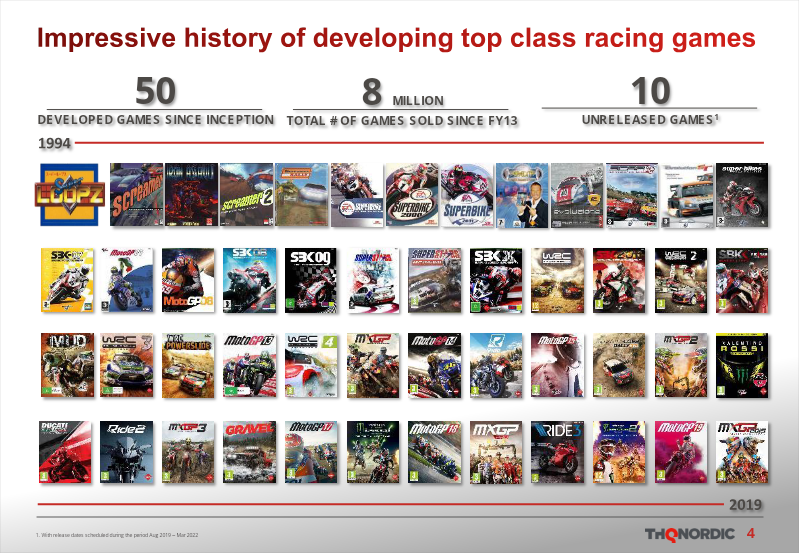
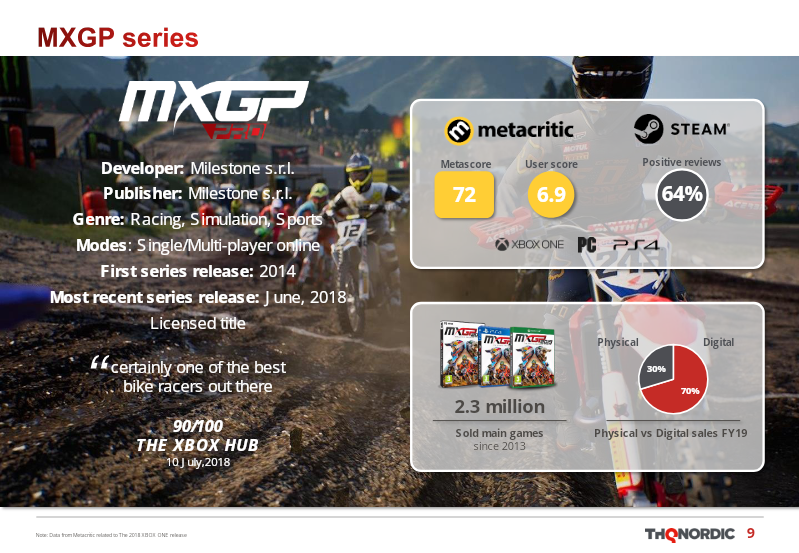

THQ Nordic AB Acquires Milestone s.r.l.: Investor Presentation
THQ Nordic AB finalized the acquisition of the Italian game developer Milestone s.r.l. on August 14, 2019, to bolster its position in the global racing simulation market.
- THQ Nordic acquired Italian developer Milestone s.r.l. on August 14, 2019, for a total upfront consideration of EUR 55.8 million, comprised of EUR 44.3 million in cash and EUR 11.5 million in B-shares.
- The acquisition includes an earn-out provision tied to Milestone’s adjusted EBIT performance through the end of fiscal year 2022.
- Milestone brings a portfolio of established racing franchises including MotoGP, MXGP, Monster Energy Supercross, and RIDE, supported by a pipeline of ten titles scheduled for release between 2020 and 2022.

Rogue Games | Publishing 57 Game Titles!
Rogue Games, a mobile game publisher founded by industry veteran Mike DeLaet, has established a significant market presence by managing a pipeline of 57 game titles with a lean team of ten employees.
- Rogue Games manages a portfolio of 57 titles with a lean team of only ten employees, focusing on a licensing model rather than high-risk upfront development.
- The company utilizes a data-driven methodology that prioritizes iterative improvements, including rigorous critiques of first-time user experience, retention, and monetization before committing to worldwide marketing.
- By leveraging soft launches to gather analytics, the firm avoids the financial risks of large-scale, rigid marketing commitments common in traditional publishing.

Skybound | IP Licensing & Publishing in Video Games
Skybound functions as a multi-faceted media entity that prioritizes the preservation and expansion of creator-driven intellectual property through strategic video game licensing, publishing, and co-development.
- Skybound operates as a multi-platform entity across mobile, PC, and console, focusing on the preservation and expansion of creator-driven intellectual property.
- The company prioritizes deep, collaborative partnerships over high-volume production, utilizing standard financial structures including minimum guarantees, advances, and revenue shares.
- To maintain creative integrity, the firm integrates television production models into game development, employing production executives to work directly alongside developers.
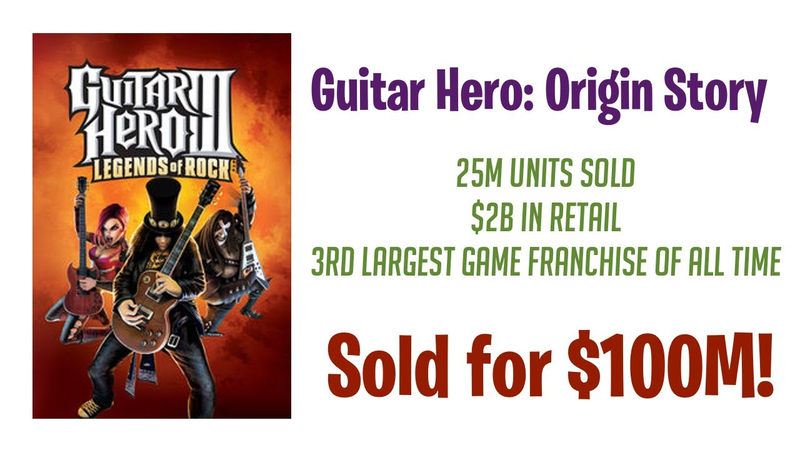
Guitar Hero Origin Story | Lessons Learned with Kai Huang former CEO and Co-Founder of Red Octane
RedOctane emerged as a pivotal force in the mid-2000s gaming landscape by transitioning from an online rental service to a specialized hardware and publishing powerhouse.
- RedOctane achieved financial stability by pivoting from an online rental service to a high-margin hardware business, specifically focusing on niche accessories like dance pads before partnering with Harmonix for Guitar Hero.
- Product pricing should be based on the perceived value delivered to the consumer rather than a cost-plus calculation to maximize profitability.
- To maximize the return on fixed marketing expenditures, companies must execute simultaneous product launches across all platforms and territories to ensure immediate market penetration.
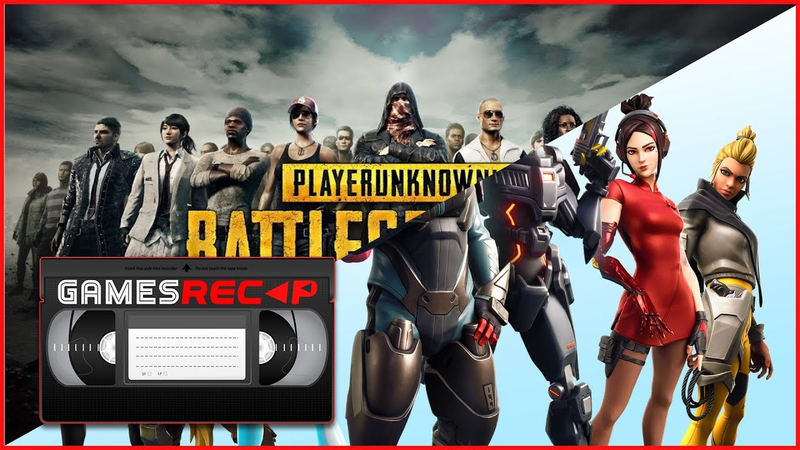
PUBG Corp Burying the Hatchet with Fortnite | Games ReCAP Episode 029
The legal friction between PUBG Corporation and Epic Games has officially concluded, marking the end of a contentious period defined by allegations that Epic leveraged its role as an Unreal Engine provider to replicate the battle royale mechanics of its partner.
- PUBG Corporation has officially ended its legal dispute with Epic Games, which was originally triggered by allegations that Epic misused its position as an Unreal Engine provider to replicate PUBG's battle royale mechanics.
- To combat the current stagnation of the battle royale genre, developers are being urged to move beyond the 'last-man-standing' formula and the reliance on shrinking play zones, which are viewed as design shortcuts that limit innovation.
- Future viability for battle royale titles depends on shifting away from transient, loot-focused gameplay toward persistent, snowball-style mechanics and emergent social systems that foster deeper player engagement.
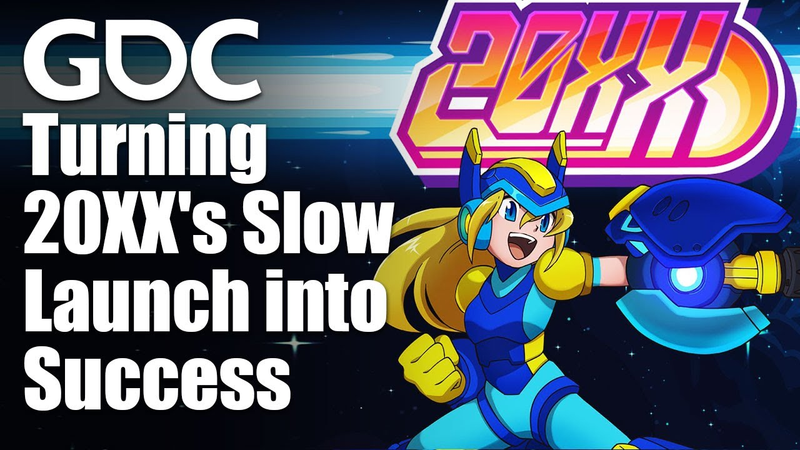
Thriving in Steam Early Access: Turning 20XX's Slow Launch into Success
Steam Early Access serves as a critical development phase that, when managed with intentionality, can transform a modest initial launch into a sustainable, high-retention product.
- Community engagement must be treated as a core development pillar, requiring approximately 20% of total production time to ensure long-term product success.
- Maintaining a rigid, predictable update schedule is essential for building the player trust necessary to sustain momentum during the iterative Early Access process.
- Developers should leverage public platforms like Discord and forums to crowdsource high-quality bug reports, effectively using the community as an extension of the internal quality assurance team.

Indie vs Steam | Games ReCAP Episode 026
The current landscape of the digital games industry is defined by a growing rift between independent developers and Valve, primarily driven by the platform’s shift toward an opaque, algorithm-heavy discoverability model.
- Valve’s shift from human-led curation to an opaque, algorithm-heavy discoverability model has caused extreme market oversaturation, making organic traffic an unreliable strategy for indie developers.
- Independent developers must now treat aggressive, self-directed marketing as a fundamental business necessity rather than an optional growth tactic.
- Valve is facing significant criticism for prioritizing high-revenue publishers over the indie community, leading to a growing rift between the platform and its smaller partners.

How much money will your FIRST INDIE GAME make?
The primary objective for aspiring independent game developers is to shift their focus from immediate financial gain to the acquisition of essential production skills.
- The primary objective for a first indie game should be skill acquisition and project completion rather than immediate financial profit.
- Initial projects rarely generate significant revenue, often yielding little to no direct sales or only negligible amounts from ad revenue.
- Successful developers, such as Edmund McMillen, typically release a high volume of smaller, lesser-known titles before achieving commercial success.

Netflix Model Bad for Games? | Games ReCAP Episode 023
The gaming industry is undergoing a fundamental shift toward subscription-based distribution models, mirroring the streaming strategies popularized by platforms like Netflix.
- Subscription models provide developers with upfront capital and guaranteed licensing revenue, effectively mitigating the financial risks associated with market oversaturation.
- Distributing games via subscription platforms allows studios to bypass consumer purchase delays, which are often caused by waiting for future retail discounts.
- Usage-based compensation models, such as pay-per-minute royalties, create a valuation bias that favors high-engagement, long-form titles over shorter, narrative-driven experiences.

Indie Game Business with Jay Powell | Game Dev Unchained Episode 0197
The modern video game industry faces a significant disconnect between creative production and commercial viability.
- Independent developers must treat game development as a business from inception, prioritizing marketing and audience engagement alongside product creation to ensure long-term sustainability.
- The shift toward subscription-based distribution models, such as Xbox Game Pass, necessitates that developers focus on accessibility and the efficient management of digital assets.
- AAA studios often prioritize quarterly financial targets over product quality, leading to the release of under-tested titles, particularly around fiscal deadlines and holiday windows.