Game Development reports and market data
Documents
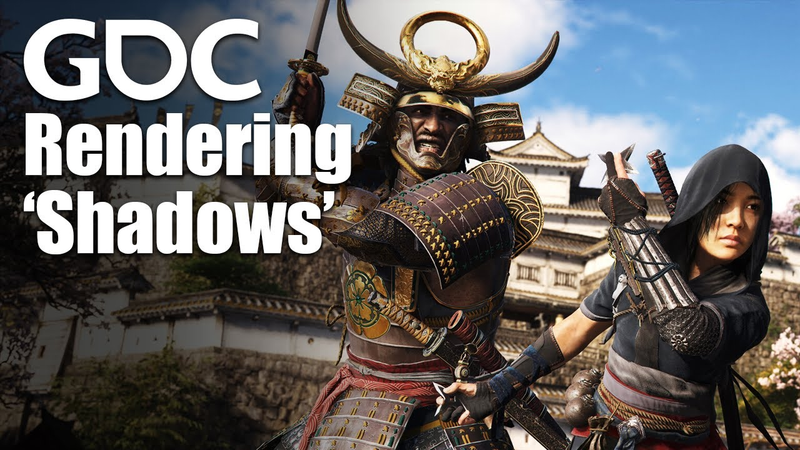
Rendering 'Assassin's Creed Shadows'
Assassin’s Creed Shadows represents a significant technical evolution for the Anvil engine, transitioning to a unified, monorepo codebase designed to streamline development across Ubisoft’s diverse portfolio.
- Assassin's Creed Shadows utilizes a multi-tiered rendering system for its open world, employing LOD meshes up to 4km, point cloud mass-imposter rendering up to 8km, and baked terrain vistas for distances beyond 8km.
- The engine architecture uses a database-driven approach to manage mesh relations and properties, allowing for C++-like data structures that automatically generate getters and setters for both CPU and GPU storage.
- The rendering pipeline incorporates a hybrid approach to Global Illumination (GI), combining baked volumetric GI with hardware and software-accelerated ray tracing to balance performance and visual fidelity.
Session: Pushing To The Edge: Unlocking Gameplay Potential With The Cloud - Jason Attwood.
The gaming industry increasingly relies on cloud infrastructure to manage the complex requirements of modern titles, ranging from real-time multiplayer games to asynchronous experiences like turn-based strategy and leaderboard-driven titles.
- Cloudflare utilizes a global network of 335 points of presence across 125 countries, employing an anycast system to route traffic to the nearest data center for low-latency performance.
- Serverless 'Workers' allow developers to execute custom logic at the network edge, billing only for active computation time rather than total request duration to optimize costs.
- The platform provides integrated security layers designed to mitigate volumetric DDoS attacks and credential stuffing, acting as a proxy between users and core infrastructure.
Session: Playhop: Current State & Opportunities For Developers - Nikita Bokarev, Playhop.
Web-based gaming has emerged as a critical strategic pivot for mobile developers facing rising user acquisition costs and stagnant lifetime values.
- Web gaming serves as a high-margin alternative to mobile, where revenue contributes directly to profit rather than being absorbed by rising user acquisition costs.
- Playhop currently hosts over 20,000 games and reaches 10 million monthly active users who spend an average of more than 50 minutes per session.
- Successful midcore titles on the platform now derive up to 85% of their total revenue from in-game purchases rather than traditional ad-based monetization.

Fat Cats, Steaming Decks, all GaaS and no Subscriptions with Rhys Elliott of Alinea Analytics
The modern gaming industry is undergoing a significant correction as the limitations of massive, high-budget development cycles become increasingly apparent.
- The gaming industry is pivoting away from high-budget, five-year development cycles as the 'fat cat' executive model of securing massive funding based on reputation fails to produce sustainable returns.
- Subscription services like Xbox Game Pass have hit a growth plateau because gaming’s high-engagement, time-intensive nature is incompatible with the passive consumption habits seen in other media sectors.
- Studios are retreating from the 'live service' gold rush, as firms without specialized live-ops expertise cannot compete with established market leaders like Fortnite and Roblox.

Ubisoft's Lisa Opie: Shorter, story games can grow the games industry
The global games industry is currently navigating a period of necessary maturation and market adjustment, characterized by intense competition for player time and evolving consumer habits.
- The games industry must prioritize shorter, narrative-driven titles to capture audiences with limited time and diversify content offerings.
- Addressing the industry's skills gap requires stronger collaboration between educational institutions and private studios to better align curricula with professional requirements.
- Future growth depends on the convergence of gaming with film and television, leveraging high-quality storytelling to facilitate cross-media engagement.
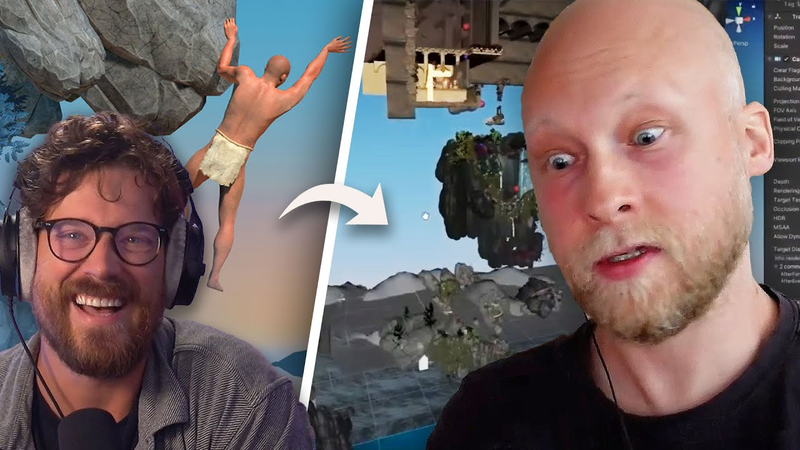
What A $1,000,000 Game Looks Like In Unity (PontyPants' "A Difficult Game About Climbing")
A Difficult Game About Climbing demonstrates how sophisticated technical optimization allows a single developer to achieve high-fidelity visual results within Unity.
- To maintain high performance and keep draw calls around 100, use MeshBaker to combine individual meshes and create texture atlases, which significantly reduces the overhead caused by multiple materials and draw calls.
- For precise gameplay in rage-style games, use an orthographic camera setup to ensure consistent player movement and avoid the visual distortion inherent in perspective rendering.
- Implement a foreground camera layer to render non-climbable objects in perspective, using depth-ramping shaders to darken these elements as they approach the camera to visually communicate their status to the player.

Pontypants: Making Games Alone, Burnout, Coming Up With Viral Ideas & Finishing Games | Ep. #044
Successful indie game development requires a strategic balance between personal creative passion and rigorous market awareness.
- Game development success often relies on identifying unique movement or physics mechanics, such as the mouse-driven hammer physics in Bennett Foddy's games, which provide depth for exploration.
- The final 10% of game development is critical because it is the stage where the core identity of the project is often discovered, frequently during periods of high stress and emotional pressure.
- While strong mechanics like those in 'Balatro' can drive viral success, a focus on mood, story, and aesthetic properties—similar to 'Bioshock'—can effectively satisfy a niche audience of approximately 100,000 players.

TWIG #332 Finland’s Game Industry Woes, Supercell's Transmedia Moves and Roblox's Commercialization
The global gaming industry is currently navigating a period of significant structural realignment, characterized by the decline of established regional hubs and the aggressive pivot of major platforms toward monetization.
- Take-Two Interactive recorded a $6.2 billion write-down on its Zynga acquisition, highlighting the significant financial risks associated with large-scale industry consolidation.
- Finland’s game development ecosystem is contracting, with talent and investment shifting toward emerging hubs like Istanbul due to widespread layoffs and studio closures.
- Roblox is pivoting toward a business-centric model by integrating physical e-commerce and Shopify support to meet investor demands for increased commercialization.
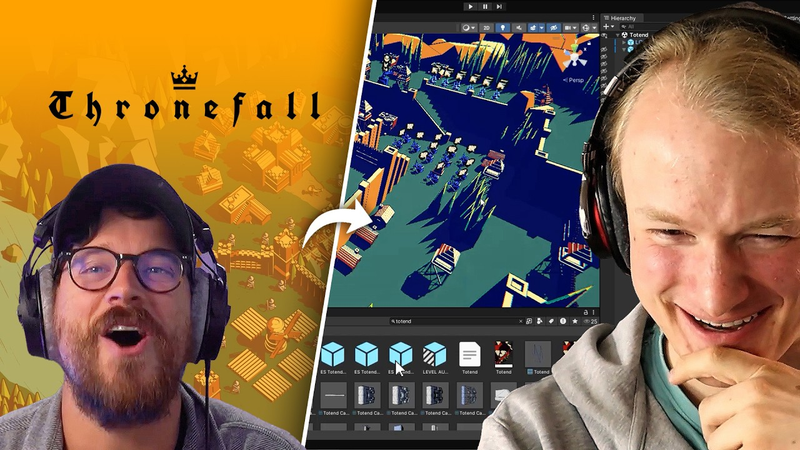
What A Million Dollar Game Looks Like Behind The Curtain (Jonas Tyroller's "Thronefall")
The development of Thronefall demonstrates that indie game success relies on prioritizing development speed and visual cohesion over rigid technical perfection.
- Prioritize development speed and visual cohesion over technical perfection to ensure rapid iteration and a polished final product.
- Utilize a minimalist, low-poly aesthetic combined with strategic lighting and color theory to achieve high-quality visual identity without the cost of complex assets.
- Centralize game balance using ScriptableObjects to enable rapid, global adjustments to mechanics and weapons without the need to edit individual prefabs.

What's behind the success of Japan's big video game companies?
The global video game industry is currently undergoing a significant period of rationalization, shifting away from aggressive, broad-market expansion toward operational efficiency and disciplined resource allocation.
- Japanese industry leaders like Capcom and Konami are achieving record-high share prices and robust financial performance by prioritizing existing intellectual property over chasing fleeting industry trends.
- The global gaming industry is shifting from aggressive, broad-market expansion toward operational efficiency and disciplined resource allocation to combat market volatility.
- Success is increasingly driven by a strategy of scarcity and high-quality, fan-centric content rather than inflating production budgets or over-extending project scales.

Full Steam Ahead: How Steam trends influence Mobile games?
The mobile gaming industry is increasingly leveraging Steam as a primary incubator for market validation, utilizing successful PC titles to identify engaging mechanics and creative loops for mobile adaptation.
- Mobile developers are increasingly adapting Steam hits into mobile titles, with some 'copy-paste' clones generating significant short-term revenue, such as one title that earned $1.3 million in ad revenue within 90 days.
- Successful mobile adaptations often involve 'remixing' Steam mechanics into established mobile genres, such as integrating survival or idle mechanics into 4X strategy frameworks, rather than performing direct ports.
- Genre-specific mechanics like digging simulators, Plinko-style roguelites, and idle RPGs show high potential for mobile conversion due to their simple, repeatable loops that align with mobile play patterns.

Bots in Gaming: The Good, The Bad, and The Future with GGWP's George Ng
The integration of bots in gaming represents a complex, evolving landscape that balances player experience, game design, and security.
- Bot impact is defined by origin: developer-created bots enhance onboarding and immersion, while player-created bots drive anti-competitive behavior, toxicity, and player churn.
- The industry faces a resource-intensive 'cat-and-mouse' game where studios must balance the high cost of sophisticated anomaly detection models against the scale of their player base.
- Cheating trends are regionally distinct, with North American markets primarily seeing competitive-focused exploits like aimbots and boosting, while Asian markets are dominated by gold farming and real-money trading.