VideoThe Game Business
Ubisoft's Lisa Opie: Shorter, story games can grow the games industry
27 May 202537 min video
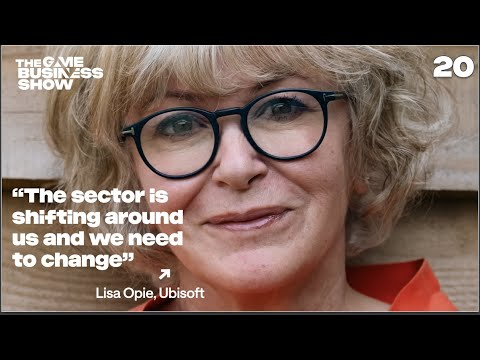
These are personal decisions we're making. We're making decisions because the the whole sector is shifting around us and we need to adjust to that and and change. We are in the process of bringing people back into our studios within Reflections in Newcastle and I was there last week and I'll be there tomorrow and it's actually really brilliant to be working with people in a physical space. It's so exciting. It's inordinately exciting. Hello and welcome to the game business show with me, Christopher Dream. Today we're talking to the managing director of Ubisoft's Reflection Studio, Lisa Opie. Lisa joined Ubisoft and the games industry, I think back in 2021 after a career in TV and notably in various senior roles at the BBC. I've spoken to Lisa about all sorts of issues over the years, including what games can learn from TV. But more recently, we've been chatting about studio culture and diversity, the skills gap, generally managing increasingly complicated teams in an increasingly complicated and
challenging industry. And frankly, she's always been a real font of wisdom and knowledge. So, I've been really eager to have Lisa on the show, and I'm delighted that she's agreed to do it. So, hello, Lisa. Welcome to the Game Business Show. Good morning, and thank you for having me. We've spoken many times in the past and a few times about your time on TV with the likes of the BBC. I know it's a little while ago now and granted a lot of the time I'm asking that question because I'm a massive Doctor Who fan, but have you found but I'm interested to know what have you found more challenging sort of managing the shifting digital transformation that was sort of going on at TV at the time or the sort of shifting expectations and the world of video games. You seem to have gone from frying pan into the fire. I didn't realize I was doing that at the time. That wasn't the plan. And how have I managed it? Um I you know I think to a certain extent across all of the creative sector there is real challenge and you know some of the challenges are similar and some I think are distinctly different within the BBC. I I was very
much involved in the move of BBC in-house production becoming a commercial entity in its own right. So that challenge was about taking people who'd worked within a public service broadcaster for a long long time for decades and introducing them to a commercial world and not just a commercial world but an increasingly digital world uh in which you know the dominance of streamers was becoming much more of a thing. You know the real commissioning power of public service broadcast and terrestrial was challenged enormously by the arrival of streamers and the entire right situation impacted you know how you operated within that world. So that all of that was a challenge. It was an extraordinary challenge and what I really enjoyed by the way it's great fun. in comparison I suppose within games I've been really struck by you know it too as a market is radically shifting um and I happen to believe that in all radical shifts come
radical opportunities too but within the game sector you know achieving cutthrough being noticed even when you've got a brilliant game is more challenging than it was there are big beer moths sort of eating up the top 10 in video games that that tend to retain people's time attention and and you know hold on to their communities and therefore competing with that I think is really really hard and video games production is actually software development is quite difficult too in many ways I'd argue quite a lot more difficult than making TV programs people have been making TV programs in much the same way for a long long time but we tend to innovate in everything we do all the time in video games production so it has some real distinctive challenges I When you made the move, was there anything that you brought with you that Games wasn't maybe doing that's maybe helped you with your job or maybe taught some of your fellow leaders and maybe we should try doing things this way because this is how we did things before. Have you brought anything with you? Well, you
should ask them that. Has she brought any valuable thinking? Um, yes, I think so. I think so. I unsurprisingly arrived with a sort of real focus on narrative that when I arrived I rapidly learned that of course narrative whilst being incredibly important wasn't the be all and end all and within the TV sector you know because the the sort of fundamental structure of a television program hasn't much changed over the decades there has been innovation tech from a technology perspective but most of the innovation is in the storytelling the power of the storytelling. That was I arrived with a focus on narrative that went beyond what I saw around me. And I was also when I first came into the sector, the games that I played Last of Us 2 completely blew me away from a narrative perspective. I thought it was just I was really surprised when I played it. I was it's such brilliant storytelling. So I I suppose I brought a focus for narrative
that for a bit I had to get my head around the fact that it's not the most important thing, Lisa. It's one of many really, really important things, but there are other things that are equally important. You can have a fantastic story, but if you don't have a fantastically compelling call loop, it really doesn't matter how good your story is, people won't stay, won't play, won't be retained. So, so I had to learn a lesson about putting it into perspective. But I think that sort of my fascination for storytelling, for character probably is one of the things that I bang on about with teams more than maybe previously people have banged on about it within the scheme of things. It's something I've always got a mind for. I also sort of arrived with a with a very much a sort of view that you know I was really proud at studios that that we delivered on time on budget you know within a sort of very tightly held constraint and I think because video games is so iterative because you are in you know sort of building the engine and
building the game and building the features all at the same time it's much harder to I think to innovate within in video games. So whilst I I brought some rigorous thinking about how you can constrain and articulate your ambition early um I also learned some lessons about how much more difficult that was to do. H I guess in TV and film and as well um by extension this you start off with quite a small people like maybe a producer and a script and whatever. Yeah. The risk is quite low and once you've got something there then you can go right the machine can get building and then it gets much bigger and then and that kind of stuff. Whereas in games you've got you, you should say you're doing all these things at the same time. You've already got a big team from the start. We are seeing that model I guess in some places start to shift. But when you're producing a big production on TV or film, it can start in a way that once it gets going, you can be a little bit more like it's going to hit this budget, this target, and it's going to do these things. You can be obviously a little bit more exact with it. That's exactly what I think I was pointing to. you know, we would go through a green light process because if you're working in a
drama, you've got your script writer, you've got, you know, which everybody knows from the beginning, you you know who's going to direct, you know who your producers are, you know who your cast is going to be, and then you build from that. And in that green light process, you create a mandate effectively for the production, which is really really tight and clear. And even when you're working, cuz I oversaw the natural history unit, which is more akin to games in that you you start with some theories about the stories that you're going to tell, but you're genuinely waiting for the animal behavior that's going to demonstrate and and illustrate that story that you're hoping to tell. So, it's a little bit more risky and it takes longer to create as a result, but but your understanding of what you're going to deliver is really really tight. And I think you know within the game sector that is much more challenging because the team is fundamentally bigger. The innovation happens on more axes if you like um and therefore there's a greater complexity. But clearly you know the discipline of saying let's prove that we have a
prototype which is really compelling and as tight and as small as it can be before we grow is is absolutely where everybody seeks to strive and as do we you know prove prove that the that this call works that this is compelling and then build from there is the best practice obviously I can't imagine what it must be like to have joined the industry at point such a high point in May I know may not necessarily been the case at Ubisoft, but certainly from an industry point of view, but this really super high point in terms of success and growth and all these big news and big exciting things. And then what followed was a period of consolidation and focus just sort of decline and and sort of pulling back. You've had that experience yourself over reflections the last few months as well. That's got to have been quite a whiplash. I don't know from somebody who started at one point and then then found yourself with one set of challenges and having to basically be confronted with so many others so quickly. I mean it feels quick. I guess it's been a while now. It's been you know it's been 4 years and and you know
what they say it takes you a good 12 months to get your head around what you're doing and in my case it really really did. This was an enormous learning curve for me. Best thing I've ever done actually really and absolutely fascinating and fortunately I'm very curious and very nosy so that helped but by the time I got my head round the new language that I needed to speak the market in that time had shifted and I think what I also brought when I first arrived was a real passion for what I mean my the best thing I like doing is working with teams of people and creating cultures where people feel that they have the freedom to be creative and speak openly and bring their true selves into into the workplace. All of those things I think were really important from day one and have sustained us. I think across that period within the studios we created and have created and and and still have a really constructive and respectful working environment where people feel as I said that that that
they can be as creative as they like. They can have the best ideas. that's remained really important I think over that period of time even when things have been harder it's even more important arguably I don't really know how to how you'd answer this but I guess when you're trying to deal with that uncertainty in the in the world you're trying to keep morale up to be that creativity you talked about there your solution being people being able to be honest and be their true selves and and and that kind of thing but even you know when things can seem a little bit glum maybe that true self isn't maybe people aren't I don't know it's so I get your point and I think having a clear business perspective about the realities of the sector. I mean, I think you're absolutely right. This is a sector that has been through enormous growth. Ubisoft is 40 years old next year, but you know what? In the scheme of things, that isn't, you know, people making theater for a lot longer and television programs for a lot longer. This is a sector that that that you know
is fully mature that has been through extraordinary growth. I would argue there is still extraordinary growth to be has you know not all of the population plays video games. The underlying growth story I think is and trajectory is still there. but how people play games, what they're interested in, what buys them to engage with a new IP, all of that through a period of growth when your your your audience, your players are growing, we've built off that, I think, really effectively. So, it feels like we're sort of we're going through a period of having to adjust to the market around us. You know, I just think just a few years ago, we wouldn't have thought that um there was a sort of we wouldn't have focused on that sector of casual gamers who may actually just be hooked to 10 episodes of of some White Lotus or whatever it is on Netflix and therefore don't buy that next game because they are time poor and will make a different set of choices because actually we've
still been building fans. So at now we're quite mature and those movements and shifts are the things that impact whether a game is successful or not. So I think there's a period of of market adjustment. So what I'm trying to say in a long-winded and khanded way is you know there is a a maturity that we need to find within our within our workforce and within our approach and within our sector and business that enables us to adjust to those market shifts. you know I in television in commercial television and and TV production you you stay quite close to the commercial road if you what I mean it it because you make lots more you can make a lot more programs in one time it's not you deliver it in a much tighter time scale you have you know a very much open market to go and sell your programs into you are really commercially aware of the of the fundamental drivers of your business you
know feel it if there is less commissioning happening from one broadcaster or one streamer above another you know and in the TV sector at the moment it's really challenging time as a result in the game sector where there's much less flexible workforce people tend to be loyal and stay within their own companies and studios and you know plus video games take quite a long time to make I think you can have a cushioning and I think what you can see at the moment is people waking up to the fact that there are commercial challenges within our sector that are driving what is happening. You know, this isn't these aren't personal decisions we're making. We're making decisions because the the whole sector is shifting around us and we need to adjust to that and and change. It's difficult. It's challenging, but that is the reality. At the end of the day, we have to be driven by the by the players who buy our games. Yeah. I mean there is
success happening out there. Yes, there are hits um quite we were writing about them every week. Yeah, completely still brilliant games. You were on a panel last year that I put together. I didn't host it, but it it was around um you did a great breakdown of how different generations work going from baby boomers all up to Gen Z. I have to say it feels strange for me to ask you to repeat that for the listeners for viewers here. Can you look? It was really It's really It was really quite interesting to see how the challenges you've got. They all have different expectations, don't they? Yes, they really do. Um, so with another hat on, I'm chair of an organization for screen skills. Predominantly focused on television and and film, but support skills across the sector. works very very closely with industry to make sure that we have the skills that we need given how important the creative industries are to the UK economy and and to our culture. So I do have a real interest in skills and what people bring to the table. So yes, I think it's
really interesting to look at how uh people operate within the workforce and what they uniquely bring. And I think there's a loss of research to say um and I think you know experience to say that people of different generations bring something else and that increasing bring something distinct to the workforce and to the workplace and increasingly the need to adapt to that is important for us as a business and for different businesses. I was really interested there was a piece of research done by the workforce institute that looked at Gen Z's. I think they interviewed about 3,000 Gen Z's across the world. So, in different countries around the world, by the way, those are people who are aged between 13 and 28. And they asked them about their readiness for work, about what they what they thought they could effectively bring into the workplace and what they would be challenged to bring into the workplace. And the research is really interesting. 51% of them felt that their university education didn't actually equip them to enter the
workplace, which I think is something of a worry in the first place. But when they talked about the challenges that they thought they would have, uh, one in four of them felt that they would have challenges negotiating with people or having difficult conversations with people or putting their opinion. Um, one in five said that they felt that they would have challenges being managed by somebody else or managing somebody else in a conversation. Um, and quite a lot of them sort of expressed concern about working long hours or being asked to sort of contribute beyond your average working day into the workplace. And I just think that's really interesting. Um because when I look at the skills that people bring to work, um I think some of them we as an industry underestimate some of those soft skills that people need to to deliver within the workplace. I think are some of the things that we have a tendency to overlook. We talk a
lot about the hard skills that we've got as or don't have and the challenges that we have. You don't have to talk for long in the sector to know we need people more people who can you know focus on art or AI or come from senior producer level in order to support complex projects but you hear less about some of those soft skills. So, you know, I think one of the big benefits of having a workforce that stretches increasingly from sort of um gen um Z through to baby boomers who are by the way the sort of top at the from an age perspective the extremes of those that we have within the workforce. I think all of them bring different skills into the into the sector. What the positives I think that Gen Z's bring is huge amounts of focus on authenticity. um a great deal of respect uh a demand for respect which I think is really really valuable and a need to understand purpose fundamentally it's really
important to people whereas if you look at Gen X for example they prefer much more rigid frameworks around them and Gen X are are um as an age between the ages of 45 and 60 they like a clear objective they like a clear framework they don't mind coming into the office. They don't mind being there 5 days a week. It's absolutely fine. They're probably less inclined to take a view about purpose and authenticity and respect. Not that they don't care about those things, but it may not be as front of mind. So I think you know for all of us as organizations as we're trying to manage a really diverse sector of of people from all different age groups working out how they work well together and how you make the most of them collectively um is a really interesting challenge and a really good one a really positive one. One of my slight concerns is that I came out of university and I when I got a job as as a journalist I got a job at NCB magazine. Yeah. I had never done an
interview before. I'd never even spoken on the phone in front of people before. Yeah. These are all things that you have to do in a news room. Yeah. And it was terrifying. But the good news is I'd gone I joined this company and they said, "Right, I need you to call up 10 retailers and find out how much games costs." Yeah. They need you to email all these PRs. You need to do all these sort of very very basic simple jobs and I was being taught how to do it. University didn't teach it to me. I was learning it through this this process. And now we live in this world where, you know, you've got an increasingly freelance world. You got people who are coming in and there's not necessary jobs at the big companies that happen to perhaps be contractors. You're living in a world where there's AI that's also able to do a lot of these sort of more mundane jobs that can they can lift it off. And I'm sitting there hearing, you know, we're coming out university and we don't have the soft skills that we need be successful. I'm now worried that that we're get entering a world actually even the the companies don't have the processes necessarily or not the processes but the way things are being
built actually it's even harder to develop those soft skills coming out of education. So I guess that puts even more pressure and more importance on those skills being developed at a university or college level. Yeah, I think it is. So, I've been um a visiting professor at Newcastle University Business School, which has just been really brilliant over the course of the last year. It's been really good fun. It really is important that some of those things are considered soft actually in a world where increasingly you know your ability to challenge and prompt and question and align is really really important in an AIdriven world where we all need to be mindful to sense check and and and think outside of the box. Those um skills I think are really vital. the ability, as you say, to work as part of a team. Um, to be able to take feedback or give feedback, all of those kinds of things. I think it's increasingly important that universities offer that up. You know, we we take a
lot of effort at in our studios and at Ubisoft to invest in uh training for teams to give them the skills that they need. So, we run leadership courses that have been properly accredited. We run mentoring schemes. We run communities of practice across the whole ind industry um organization that kind of brings best practice together and enables people to learn from each other and I think it's really important that that we focus on doing that within business but but I think needs to begin in education too without a doubt and I think you've been actively looking to address the skills gap situation which is not just in the UK. What is the situation there? How are we looking in regards to that? So I always talk about skills gaps and skills shortages because I think skills shortages is where you haven't got enough senior producers or AI programmers or machine learning experts or art directors, animation directors go can't find enough of those either. And they're clear gaps where you kind of go
there's a an identified recognized need but we don't have enough people with those skills at the moment. And then you have sorry that's the shortages. Then you have the gap which is about where do we not have a focus on on training as yet. Tiger did some really good research in 2024 that identified that that people felt that for the most part they had the skills that they needed but when they were looking at gaps management, managing teams, writing pitches, uh dealing with external partners, all of those sort of softer skills are areas where they feel there are gaps. So you may have people with the harder skills but not the softer skills. So I think you know there there are still challenges for us as a sector and and I I would argue you know what brings game studios to make their games in the UK is a combination of things. It it's obviously about tax relief we can offer but it's also about the skills that we have to support the sector. We really
need to make sure we continue to have really strong skills and we absolutely do, but I think we need to make sure that we we're keeping an eye on those gaps and those shortages. Um, and I think too that we don't necessarily work as collectively together as we could. We're quite a um commercially sensitive sector. Um, and unlike TV where there's a, you know, 70% of the workforce move from production company to production company and therefore there are really defined job roles out there that people can immediately identify. Everybody knows that a researcher at one production company does pretty much the same as a researcher at another one. That isn't the same case within the game sector. We tend to be, you know, people stay within the same organization, don't necessarily move from organization to organization as easily. And as a result, I think that we have some work to do on aligning where those gaps currently lie and how we're all going to fill them collectively. Um, and it's one of the
things that that that I bag on about and have been talking to Nick Paul at Yuki about too about how we could do that more effectively so that we continue to bring people in because for me it is mad. I think it's what 44% of video games players in Europe are women. In the US it's something like 48%. And yet, if you look at the workforce of video games production in Europe, only 24% of the workforce are women. I think that's an issue for us as a sector. And that the way we're going to get more women to come and join our sector is to be clearer about what those opportunities are, to put some effort into creating those opportunities and making them transparent so people go, I might go and watch your video games cuz it's a place for me. Whereas at the moment, I'm not sure they all do. Are you finding because obviously we're in a different spot now as there's a lot of people out there looking for work. Yeah. You're talking about bringing through the next generation of people um when there's actually there's a existing generation of people that are trying to also fight for those roles. Then you've got you're
talking about the the diversity of the industry which is still a vitally important thing but there's almost been this sort of backlash to EDI or DEI. Are you experiencing challenges in these missions as a result of all that or or is it still you still feel most people are very much aligned with this mission? I'm sure that you know I I absolutely hear what you're saying about the fact that there are people who are available and that's difficult and challenging. It's not always about entry level by the way. Um I think it is about how you move from you know intermediate to to senior. It's about progression within the industry. It's having the the right skills at the right level and having those right soft skills. And as I said, there are some clear gaps. Um, and I think if we were more aligned, finding ways of of filling those gaps would be a would be a really strong thing for us to do and provide opportunity for people. Um, do I still think it's important? fundamentally I can't you know I I just
think that that if you want to continue to grow your industry creatively commercially then then having authenticity and the creation of your creative product is incredibly important and and and therefore and and apart from the fact that balance within the workforce is really really important so yeah still important I clear I wasn't suggesting it wasn't important you I absolutely absolutely agree with you there. It was more the the fact that the spotlight was so on this so long. Yes. For a period of time, maybe not so long, but for a period of time it seemed quite exciting and now the spotlight seems to because there's other fires that need putting out and other issues and other concerns and stuff to deal with. I I I was just wondering if you if you'd encountered uh um I don't want to say push back. I don't think push back is the right word, but perhaps a little bit like yeah, we we have to you know, we've got other things to deal with. I know that from a Ubisoft point of view and I spoke to um one of your team only a few weeks ago at GDC when we talked about
the accessibility um initiative they're putting on there. So I know it's still a very important I think from a Ubisoft point of view. I haven't got many questions left, but uh you mentioned Yuki and you've obviously just done a big call for more support for UK studios from the government basically and it's sort of cleaning up the some stuff around the tax uh uh relief that's offered there, create more jobs and and they've got this I think it's called time to press start to grow or something uh equally uh catchy. Had a chat with um Rebellion last week and um and I sort of said it does feel like there's a there's some challenges going on in the UK space. I mean how are you feeling about it? I don't know if you if you how familiar are Vuki's um requests but very familiar and support their requests. Yeah, it's really important as I said you know we are a really important producer what is it sixth largest in the world market for video games. It's a position of of great strength and it's one we really need to sustain I would argue. I also think we have a really healthy ecosystem within the UK. So, a
really good mix of smaller independent studios who, you know, are are driving IP creation and and innovation within the market, coupled with some really wellestablished studios who support a skills infrastructure, I'd say, is incredibly important. Um, who who create important IP that that is that is successful globally. Um and and as I said, we have a really good mix of skills within the UK to support all of that. And and I think you know the mix of skills is supported by companies like Ubisoft who are investing in training and development and skills to the benefit I'd argue of the whole sector which I think is really important. So so I think what Yuki continues to push for in terms of continued support for our sector is really important. you look too at the adjacent sectors around video games um and around, you know, we're not alone. There are lots of other sectors
that require many of the same skills that that we require to be successful going forward. So, so for me um you know, continuing to support and and invest in video games is critical um and has a benefit that goes be far beyond um the the sort of small or immediate need of video games. has the ability to go further than that. So no, I would support absolutely what Yuki are pushing for. I'm conscious of the time. So I thought maybe I'll ask one final quite general question because somebody's come in from a different world, experienced quite radical change already and has been thinking about the future of the medium in and the studios. What do you think a video game studios are going to be even looking like in I I'll keep it short window actually in like 5 years time. I'll say 10 years time but I mean um who can I can't time's challenge. How do you feel? What do you think game studios will look like in in 5 years? Do you do you mean what how they'll be structured, how they'll operate? It's crystal ball time. I mean, where you
feel the things are heading? So, we're going through an interesting time at the moment. We we have, you know, quite a few people who now work remotely and then we are in the process of bringing people back into our studios within reflections in Newcastle. And I was there last week and I'll be there tomorrow. And it's actually really brilliant to be working with people in a physical space. It's so exciting. It's inordinately exciting. Yeah. I mean, we've had a policy where people have come back into the office and lots of people have, but we've put quite a bit of energy and effort into making sure that our space is organized to be as creative as possible. So, you know, I I do think the power of of connecting with people will remain really, really strong. Um, I think that when I look forward to the future, I know you're going to say you're bound to say that given your background, but I still think that narrative there is still opportunity for us to tell extraordinary stories and immersive stories. So, I
think you'll see greater diversity and breadth. And I I think that games, you know, will become more distinctive, more diverse, more potentially accessible than that they are at the moment. I don't mean that. I mean accessible in a sort of a time commitment perspective. So shorter rich experiences rather than you know that that battle to retain people has to be countered by innovation and I think it'll some of that will be innovation in storytelling. I think we'll see greater flexibility between TV um and video games. You see those skills crossing over now consistently. The TV's kind of just woken up to it. Don't don't tell them I said that. But but I think you will see more of that. So many of the skills that you see in TV will are transportable. And I think we will all begin to think differently about the skills you need to drive your career. Um and I think we as employers and as you
know screen skills need to think about how people manage their careers in an increasingly um great opportunity for people but navigating your way through those opportunities as it becomes more complex and those areas begin to converge supporting people to navigate their careers across those opportunities is going to be really important. That was a bit of brain dump. Yeah. Well, it was a it was a very broad question. Um, in my in your defense, it's interesting you talk about the narrative thing because one of the things that gets thrown around a lot in this industry is video games is the biggest entertainment medium in the world. It's not actually quite true. I mean, you have to cut things in a certain way for that to be true. And when it comes to ubiquity, I don't, you know, TV is ubiquitous. Like, you find somebody who doesn't watch TV and you go, I'm sorry, what? You find someone who doesn't watch doesn't play video games and that's perfectly normal. I do think narrative actually telling stories, it's what people engage with, right? Whether it's a story in a song or story in a in a book, a story in a film,
a story in a TV show. I think that's sort of really important. I think sometimes I don't know what the exact numbers are, but I looked at the Last of Us first TV show and it had way more people watch that than played the game. Oh god. Yes. I know. I had friends in TV who kind of didn't clock that it was a video game. I was kind of going, "No, it really is." and and and how interesting it is when you've played the game and then you watch the series and go that's not how I did that or I didn't, you know, I didn't manage this scene like that or and and I sat in that car. You know, the power of that I think is really exciting and we've only just begun to play with that. I mean, you know, Fallout amazing success. Yeah. Last of Us 2 as you said, but I still think there are some imaginative ways that you can play across those mediums that we haven't quite tapped into. Ubisoft has made obviously some really great and is continuing to make some really brilliant TV versions, but what
Last of Us 2 did, I think, was was took it somewhere else. It was so authentic to the game. Yeah. You know, it was really powerful. I also think, you know, I think you one of the coolest things Ubisoft does, I think, in the motion pictures or TV space actually was Mythic Quest, which isn't really based on any game. Yes, maybe. Yeah, it's really brilliant. Yeah. Um, so yeah, it's interesting. We actually do have a panel at our event in a couple of weeks, um, where we've got who are the Russo brothers thing, we've got Netflix, and we got Wizards of the Coast. Ah, talking about some of this stuff, and they just did some cool things with Electric State. I think there's a Peppa Pig thing going on between the the game and the the thing. Well, it's all I mean this isn't overly new, but there certainly is a lot more development, a lot more investment and um interest in that kind of thing. Yeah, completely. Sorry, Lee, I've taken up too much of your time. Um thank you so much for joining us and good luck with handling all of the different challenges and and opportunities as you said at the beginning that your job has. Brilliant. Thank you very much. It was good to talk
to you. That's it for today's episode of the Game Business Show. We'll be back later in the week with our news and analysis show where we'll be looking at uh uh the latest and big stories going on in video games and some of the latest market data as well. Until then, thank you for tuning in. Biggest challenge in managing games teams today. Dealing with me complexity. What's the first thing you do when you get into work in the morning? Make a cup of coffee. Greatest album of all time. Oh god. Um so that's a really difficult question. I'm going to be really dull and say probably a Coldplay album. I can't even think which one. Um, but then Anita Shimone's Baltimore. There you go. That would be one of my favorite albums of all time. That's a bit quirky. If you could be the managing director of any other company in games or otherwise, what would it be? Uh, Preton. Really? There's a reason for it. I'll tell you. I could tell you one day. Greatest TV show of all time? 24. Planet
Earth 3 I thought was incredible. Blue Planet I thought was amazing. Adolescence was great. You'd have to shut me up. You named four, but none of them were Doctor Who, so we'll move on. Um, sorry. The one thing you'd recommend every Games Leader reads or watches? Reads only just because it's the last thing I read. Tomorrow, tomorrow. Tomorrow, which I just thought was brilliant.
Auto-generated captions from YouTube — names and numbers may be misheard.
The global games industry is currently navigating a period of necessary maturation and market adjustment, characterized by intense competition for player time and evolving consumer habits. Despite these commercial headwinds, the sector maintains a robust growth trajectory, provided that studios embrace rigorous early-stage prototyping and foster organizational cultures rooted in adaptability and open communication. The inherent complexity of game production requires a shift toward more agile development processes that can balance the need for constant innovation with the realities of a shifting economic landscape.
A critical bottleneck to this growth is a persistent skills gap, particularly regarding a shortage of senior technical expertise and a lack of essential soft skills among new entrants. Many Gen Z graduates report feeling unprepared for the professional environment, highlighting a misalignment between academic curricula and industry requirements. Addressing this disparity necessitates stronger collaboration between educational institutions and private studios, alongside a concerted effort to improve workforce diversity and standardize professional roles. Sustaining the United Kingdom’s competitive edge in this global market will require both collective industry action and continued government support to cultivate a more capable and inclusive talent pipeline.
Future expansion hinges on increasing accessibility by diversifying the types of content available to players. Shorter, narrative-driven experiences are essential for capturing audiences with limited time, while the convergence of gaming with television and film offers significant opportunities for cross-media growth. Successful adaptations demonstrate that high-quality storytelling can bridge the gap between mediums, creating new avenues for engagement. To capitalize on these trends, industry leaders must prioritize the development of collaborative physical workspaces and support professionals in navigating careers that increasingly span multiple interconnected entertainment sectors.

The Game Business · 2026

The Game Business · 2026

The Game Business · 2026

The Game Business · 2026

The Game Business · 2026

The Game Business · 2026

The Game Business · 2026

The Game Business · 2026

The Game Business · 2026

The Game Business · 2026

The Game Business · 2026

The Game Business · 2026

The Game Business · 2026

The Game Business · 2026

Naavik · 2026

Naavik · 2026
Deconstructor of Fun · 2025

Deconstructor of Fun · 2025

The Game Business · 2025

Deconstructor of Fun · 2024
Naavik · 2024
Naavik · 2024
Room 8 Group · 2024

Two & a Half Gamers · 2026
Comments