Game Development reports and market data
Documents
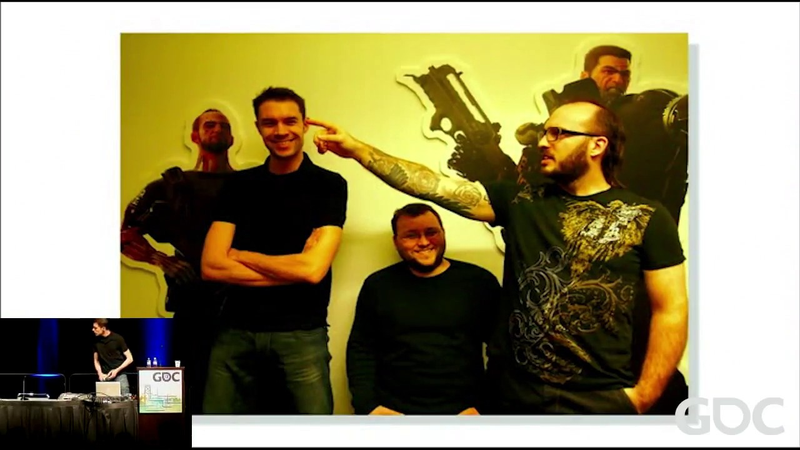
Reimagining a Classic: The Design Challenges of Deus Ex: Human Revolution
The development of Deus Ex: Human Revolution centered on the challenge of modernizing a beloved franchise while preserving its core identity.
- To ensure design consistency, the Eidos Montreal team established core pillars—choice, consequence, and spectacular/rewarding gameplay—which were physically posted on walls to guide all development decisions.
- The 'Blueprint' process was used to map the entire game in advance, documenting every location, conversation, and player choice to ensure a cohesive, story-driven experience.
- Balancing the game was achieved by separating the critical path from exploration, ensuring players could complete the game without needing to find every optional item.
Non-Professional Game Dev - The Joy of Making - Extra Credits
Non-professional game development serves as a vital, often overlooked creative outlet that exists independently of the commercial pressures defining the mainstream industry.
- Non-professional game development provides a unique creative outlet free from the commercial pressures, investor interests, and market-driven risks that constrain AAA studio projects.
- The history of game development is rooted in non-professional collaboration, exemplified by early experiments like Spacewar, which relied on student-led innovation rather than commercial intent.
- Modern game engines have significantly lowered the barrier to entry, enabling individuals to pursue development for personal amusement, education, and creative expression.
Indie Development & The Economy of Favors
The modern independent game development landscape has transitioned from a solitary endeavor into a complex, interdependent ecosystem defined by an economy of favors.
- Independent game development has shifted from solitary work to an interdependent 'economy of favors' where professional tribes exchange essential resources like marketing, production management, and QA testing to remain viable.
- Collaborative networks formed through shared workspaces, game jams, and community events serve as a primary risk-mitigation strategy to overcome high market barriers to entry and discoverability without requiring large capital investments.
- Formal legal agreements regarding intellectual property are mandatory in collaborative projects to prevent conflicts of interest and protect the long-term ownership and creative integrity of the developer's work.
The 2016 Narrative Innovation Showcase
Modern game design is undergoing a significant shift toward experimental storytelling, moving away from traditional branching paths and cinematic cutscenes in favor of mechanics that prioritize player agency and emotional specificity.
- Modern narrative design is shifting away from traditional branching paths and cinematic cutscenes toward mechanics that treat storytelling as a sculptural or collaborative experience.
- Games like Icebound and Elenor demonstrate a move toward systems that replace static choices with thematic editing and time-loop constraints to subvert player power fantasies.
- The Church in the Darkness utilizes randomized, modular narrative systems and combinatorics to explore complex, shifting moral landscapes that linear plots cannot achieve.
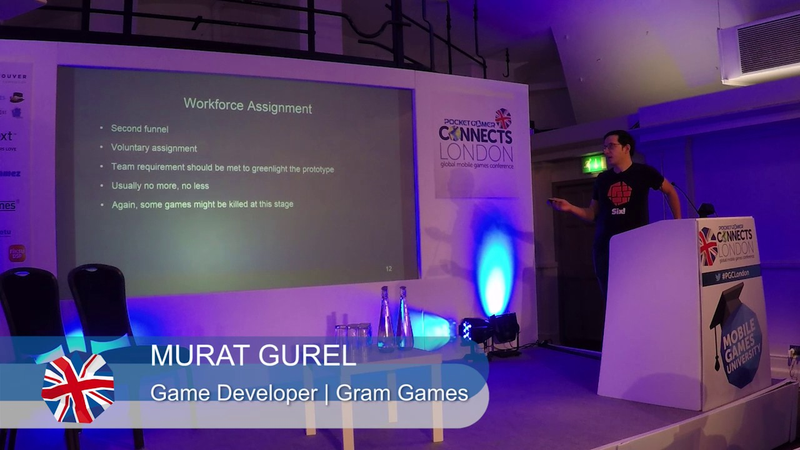
Making a global hit - The road to Six!
Gram Games utilizes a structured, rapid prototyping methodology to identify and develop global mobile gaming hits, as evidenced by the success of titles like Six!, Merged, and 1010!.
- Gram Games validates potential hits by targeting a day-one retention rate of 40% to 45% during a 'fake launch' phase on app stores.
- The studio enforces a strict two-day time limit for all prototypes to prioritize core gameplay mechanics over high-fidelity art or complex animations.
- Development teams are formed voluntarily and must include at least one developer and one artist to ensure the production of a functional, playable demo.
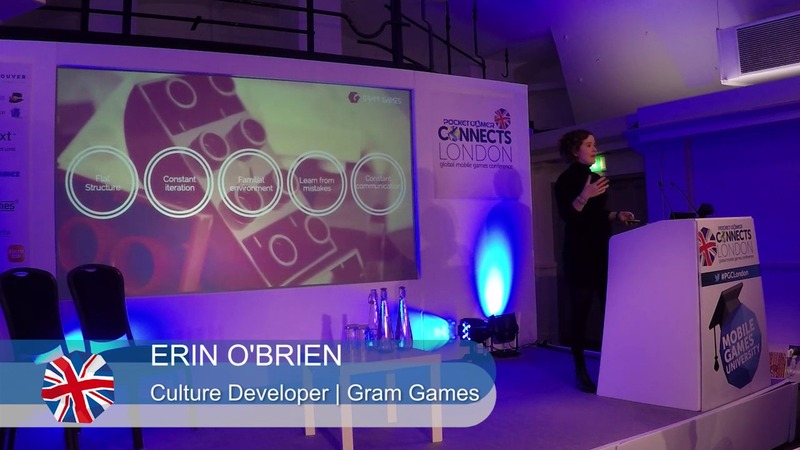
Developing culture as product: How Gram Games sets itself apart
Gram Games operates on the core thesis that organizational culture should be treated as a live, iterative product rather than a static set of rules.
- Gram Games treats organizational culture as a live, iterative product by applying the same rigorous development and maintenance cycles used in their game production.
- The company utilizes a flat organizational structure that replaces traditional hierarchies with fluid responsibilities to encourage innovation and agility.
- To foster creative risk-taking, the studio mandates weekly prototype days where all employees, regardless of role, pitch and develop new game concepts.

Luck and Skill in Games
The interplay between luck and skill is a fundamental component of game design, serving as the primary driver of indeterminacy—a necessary quality for any engaging game.
- Luck and skill are not a binary dichotomy but a multidimensional relationship where the perceived level of luck depends on a player's ability to navigate the game's decision tree.
- Adding luck to a game does not remove skill, but it increases the number of trials required to achieve a consistent, measurable result.
- Designers should use luck as a strategic tool to broaden the audience and facilitate social play, as it provides psychological comfort by allowing players to attribute losses to chance.
Games Accelerators for the Arts, Not for Monetization
The Stugan game accelerator, established in Sweden in 2014, serves as a non-profit initiative designed to foster the artistic development of independent games rather than prioritizing commercial monetization.
- Stugan is a non-profit Swedish game accelerator founded in 2014 that prioritizes artistic innovation over commercial monetization by taking zero equity from participating developers.
- The program hosts 20 to 23 global developers for an eight-week, distraction-free residency in the Swedish wilderness to focus exclusively on creative project development.
- Operational costs for the inaugural year totaled approximately $150,000, funded through a mix of private sponsorships, regional grants, the Swedish Innovation Fund, and in-kind facility donations.
Advanced Game Literacy - Finding Meaning in Games - Extra Credits
Advanced game literacy involves the ability to interpret and analyze the deeper meaning behind game mechanics, themes, and narrative structures, moving beyond surface-level evaluation.
- Advanced game literacy requires moving beyond surface-level evaluation to analyze the deeper meaning behind mechanics, themes, and narrative structures.
- Developers must prioritize intentional design and cohesive vision over derivative content to provide the necessary substance for meaningful cultural discourse.
- Elevating the medium to the status of literature or film does not require increased budgets, but rather disciplined project management and a commitment to resonant experiences.

Faerie Dust and Sparkles: Bringing Your AI Characters to Life
This presentation explores the craft of designing non-combat artificial intelligence (AI) to create believable, lifelike characters within video games.
- Achieve character immersion by prioritizing behavioral consistency over graphical fidelity, ensuring NPCs demonstrate constant, subtle activity like breathing, fidgeting, and shifting attention.
- Avoid the unnatural precision of mathematical paths and rigid animation loops by 'fuzzifying' movement through asynchronous blending and varying playback speeds.
- Utilize a bottom-up design methodology that layers granular behaviors—such as head-tracking, blinking, and environmental reactions—to construct complex, lifelike performances.
Location-Based Interactive Storytelling the Walt Disney Imagineering Way
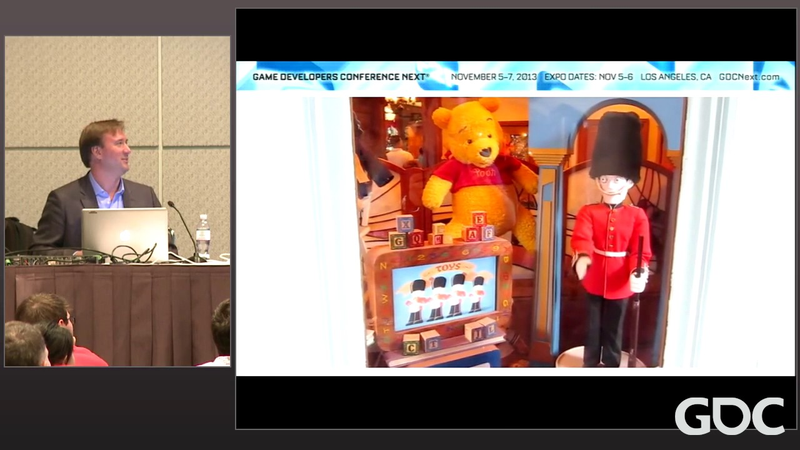
Walt Disney Imagineering integrates core game design principles into physical theme park environments to transform passive observation into active, immersive storytelling.
- Walt Disney Imagineering transforms theme park environments into immersive narratives by treating guests as protagonists through physical exploration and agency.
- Effective location-based experiences prioritize intuitive, 30-second onboarding to ensure accessibility across multi-generational demographics.
- Designers manage high-traffic operational constraints by utilizing non-linear quest structures and tiered difficulty levels to prevent bottlenecks and excessive backtracking.
Art Direction Bootcamp: How Being Different Makes All The Difference
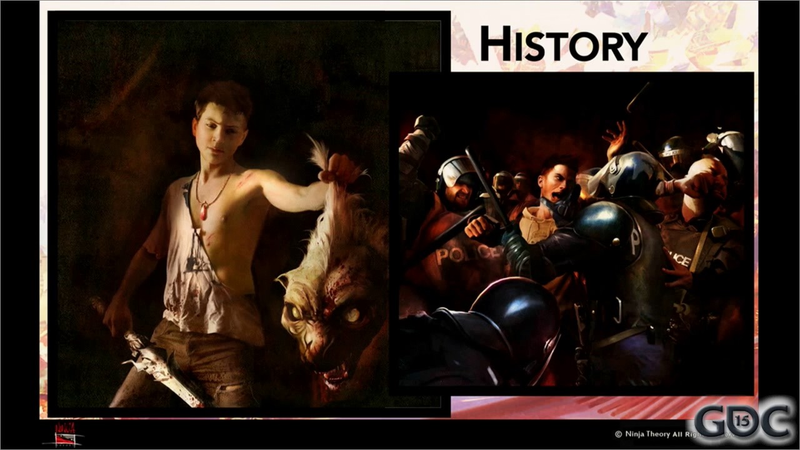
In this 2015 GDC presentation, Ninja Theory’s visual director Alessandro Taini outlines a philosophy of art direction centered on the pursuit of originality through unconventional creative processes.
- Art direction should prioritize originality by resisting generic industry tropes and avoiding literal keyword-based brainstorming, which often leads to clichéd visual results.
- Creative teams should derive inspiration from non-gaming sources such as fine art, experimental animation, and real-world materials to ensure a distinct and authentic aesthetic.
- Visual direction should function as a 'digital double' of the creator, incorporating personal history and diverse cultural influences to move beyond derivative design.