Game Development reports and market data
Documents
A/B Testing for Game Design Iteration: A Bayesian Approach
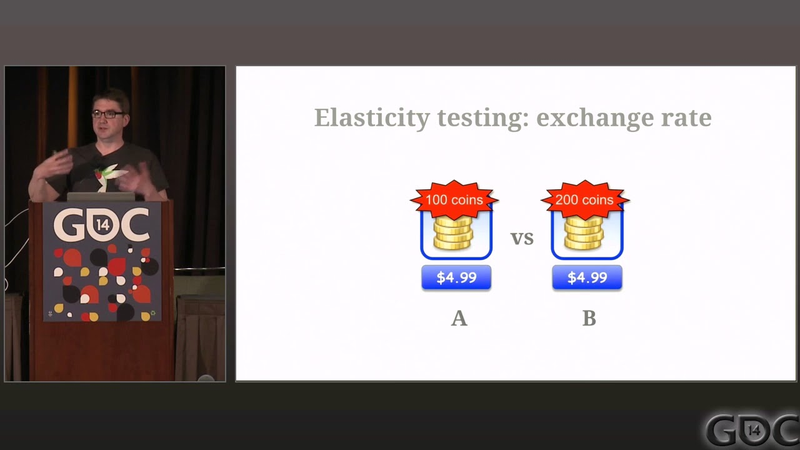
Bayesian A/B testing provides a superior framework for mobile game development, offering a dynamic and actionable alternative to traditional frequentist methods.
- Bayesian A/B testing allows for real-time optimization by providing a direct probability (0 to 1) that one variant is better than another, unlike frequentist methods which only provide a binary rejection of a null hypothesis.
- Frequentist testing is prone to the 'family-wise error' problem, where the risk of false positives increases significantly as more variants are added to a test (e.g., the false positive rate for two treatments is approximately 9.75%).
- Bayesian analysis incorporates 'priors'—existing business knowledge or historical data—to inform the test, allowing developers to start with a baseline (such as a known 30% retention rate) rather than assuming zero knowledge.

OVUS NOVA - New Abilities! - [Resource Management?] - Dev Log
Ovus Nova, a real-time strategy game, has undergone a significant design shift by integrating resource management and a suite of active abilities to increase tactical depth.
- Ovus Nova has shifted from a simple strategy game to a complex, choice-driven experience by integrating a resource management system fueled by unit sacrifice.
- Players generate a specific currency by detonating existing units, which is then reinvested into active abilities such as spawning creatures, area-of-effect damage, or instant egg hatching.
- To prevent exponential power growth and maintain balance, the developer implemented a scaling cost system where each consecutive use of an ability becomes more expensive.

Applying Machine Learning Like a Responsible Adult
This presentation provides a foundational guide for game developers on integrating machine learning (ML) into game artificial intelligence, addressing common industry skepticism regarding performance, transparency, and reliability.
- Machine learning in game development should shift from basic neural networks toward specialized statistical techniques to ensure real-time performance and reliability.
- Feature engineering—the transformation of raw game data into structured input vectors—is the most critical process for ensuring model accuracy and system adaptability.
- Decision trees offer a 'white box' advantage by providing transparency and ease of interpretation, making them a preferred alternative to opaque, complex models.

Ovus Nova Dev Log - More Control Over Your Units - [Improving the Gameplay]
The development of Ovus Nova focuses on transitioning the title from a passive experience toward a more active real-time strategy framework.
- Ovus Nova is shifting from a passive experience to an active real-time strategy framework to increase player agency over unit movement and combat.
- A new directional cursor system replaces random unit behaviors, allowing players to control unit orientation and attack trajectories.
- Developers introduced directional cues during the unit hatching phase to enable strategic deployment and improve combat efficiency.

Sand Rendering in Journey
The technical implementation of sand rendering in the 2013 title Journey prioritizes the subjective human experience of an environment over strict photorealism.
- The development of Journey prioritized a 'feel-real' aesthetic over photorealism to evoke emotional responses, using field research at Pismo Dunes rather than photographic references.
- To manage PlayStation 3 performance, the team utilized sharpened mipmaps for distance graininess and a custom view-dependent specular shader to simulate sand sparkle.
- The rendering pipeline employed a multi-layered height map system, combining high-resolution tiling maps over low-resolution base geometry to achieve a sense of scale.
Art Direction Bootcamp: Building a Visual Threshold
Art direction serves as a critical tool for player orientation, utilizing visual tropes and stereotypes to establish an immediate threshold of understanding.
- Art direction should utilize cultural shorthand and visual tropes to establish an immediate threshold of understanding, allowing players to intuitively grasp mechanics without extensive exposition.
- Designers should employ a 'snow globe' approach to world-building, focusing on key landmarks and consistent visual rules to create cohesive, manageable environments.
- Teams should replace dense, static style guides with concise one-sheets to ensure alignment and prevent the misuse of clichés.

CoalFire Played My Game Ovus Nova! - (Reaction) [First Let's Play]
The developer of the indie strategy game Ovus Nova provides a reaction and analysis of a Let’s Play video featuring their early-access title.
- The core gameplay loop of Ovus Nova centers on a two-button real-time strategy mechanic focused on managing creature growth and tactical detonations.
- Technical deficiencies identified in the current build include broken health bar UI, a lack of direct unit movement control, and missing level-transition screens that cause input carry-over between stages.
- The developer is refining a 'slowdown' balancing mechanic intended to prevent exponential growth when eggs are clustered too closely, aiming to differentiate the game from passive clicker titles.

Level Design in a Day: A Series of First Steps - Overcoming the Digital Blank Page
Overcoming the creative paralysis associated with the digital blank page requires a disciplined, structured approach to level design that prioritizes functional flow over immediate visual detail.
- Overcome creative paralysis by prioritizing functional flow and spatial layout over visual detail during the initial design phase.
- Define project scope early by establishing clear constraints, including campaign duration, player count, and technical limitations.
- Utilize bubble diagrams to map out areas of intent before drafting a formal top-down layout to anchor the space around a dominant feature.

Let's Fix Ovus Nova! - (Does my Game Suck?)
The development process for the PC strategy game Ovus Nova is currently focused on iterating upon a prototype based on extensive community feedback.
- The developer is redesigning the strategy game Ovus Nova based on qualitative feedback from a public prototype released on itch.io.
- Core gameplay improvements focus on addressing UI clarity, repetitive loops, and a lack of immediate player feedback through the addition of real-time score indicators and post-match statistics.
- Strategic depth will be increased by implementing a resource management system where detonating units generates currency for special abilities like stunning enemies or spawning new creatures.

AAA Academics: Superstar Designers in Academia
The transition of veteran AAA game designers into academia represents a strategic effort to formalize game design education by bridging the gap between high-level industry production and theoretical instruction.
- Veteran AAA designers are transitioning into academia to formalize game design education by mirroring the iterative, system-based methodologies used in professional studio production.
- The primary objective of these academic programs is to accelerate student development, effectively shortening the timeline for graduates to reach leadership roles within the industry.
- To ensure curricula remain grounded in current industry practices, institutions must allow faculty to maintain active external studio ties rather than shifting to purely theoretical instruction.

Math for Game Programmers: Fast and Funky 1D Nonlinear Transformations
This presentation explores the application of 1D nonlinear transformations, often referred to as easing functions or normalized utility functions, to enhance the "juice" and organic feel of game mechanics.
- Apply nonlinear transformations to the 0 to 1 input range of any parametric equation to enhance the organic feel of animations, AI, and UI without altering the underlying function.
- Replace computationally expensive native math library calls like POW or square roots with simple polynomial operations to achieve high-performance results.
- Approximate power functions using weighted blends of lower-order polynomials to maintain 99% accuracy while significantly reducing CPU overhead.
3 Game Names! - Which ONE? [Jonas is confused.]
Selecting an appropriate title for a game represents a significant challenge for independent developers, often requiring a balance between memorability, uniqueness, and aesthetic potential.
- Visual experimentation with typography, fonts, and graphic treatments is essential to determine how a game title functions as a brand identity.
- Quantitative scoring systems are often insufficient for selecting a game title when candidate names yield nearly identical ratings between 7.7 and 7.9.
- Independent developers must balance the strategic trade-offs between rhythmic memorability, search engine optimization, and general auditory appeal when naming a project.